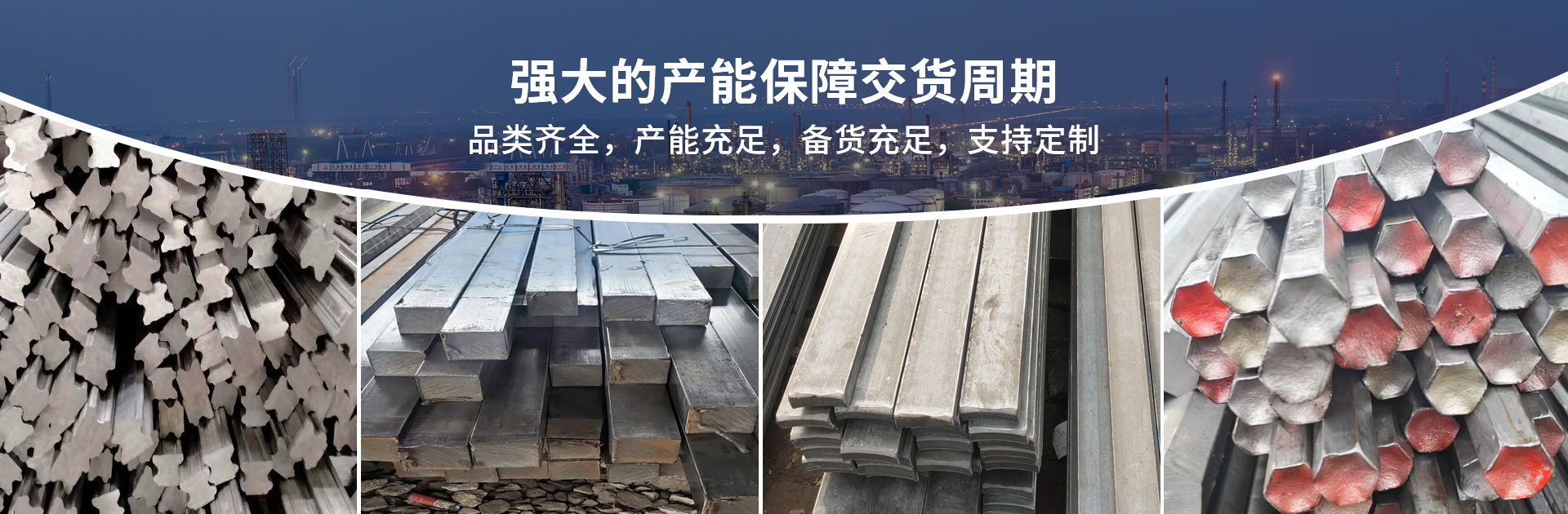
The surface oxidation and rust of special-shaped steel are primarily caused by the reaction between the metal and oxygen and moisture. Due to the complex cross-section of special-shaped steel (with many grooves, angles, and welds), it is prone to residual oxidation scales and moisture accumulation, which exacerbates corrosion. To reduce such defects, we need to focus on four key stages: "source blocking (isolating oxygen/water), process control (inhibiting reactions), post-treatment enhancement (cleaning + protection), and storage closure (long-term protection)." These measures should be tailored to the cross-sectional characteristics of the steel. Specific actions include:
Original Control: Raw Material Pretreatment (Reduction of Initial Oxidation Base)
The oxidation scale on the surface of the raw material (steel billet) is the primary source of scale on special-shaped steel, which must be thoroughly removed before forming to prevent residue or exacerbation during subsequent processing.
- Standardized Surface Cleaning for Steel Billets
- Utilizing an integrated pretreatment process of "pickling → phosphating → washing → drying": During pickling, use HCl (concentration 15%-20%) or sulfuric acid (concentration 20%-25%), controlling the temperature at 40-60℃ and the time for 15-30 minutes to ensure complete dissolution of the oxide scale; for grooves and sharp edges, ultrasonic-assisted pickling can be employed to avoid residual dead spots.
- After pickling, the material must undergo 2-3 rinses (with the last using deionized water) to thoroughly remove any acid residue (to prevent subsequent corrosion), followed by drying with hot air (at 80-120°C, for 10-15 minutes) to ensure the surface is free of moisture.
- Phosphatizing Treatment (optional, suitable for cold-rolled special-shaped steel): Forms a dense hydrochloric salt film on the surface (thickness 5-10μm), enhancing subsequent lubrication and anti-corrosion capabilities, particularly suitable for areas prone to corrosion such as grooves and welds.
- Raw Material Quality Control:
- We select steel billets with smooth surfaces, free of visible oxidation scales and rust, and reject raw materials with extensive rusting or inclusions.
- Steel billets are stored under a rainproof shed with wooden blocks to support them, preventing direct contact with damp ground conditions. The storage period does not exceed 3 months (rust-proof oil should be applied for long-term storage).
Process Control: Molding Process Optimization (Oxidation Inhibition During Processing)
The temperature, lubrication, and cooling methods during the shaping process (hot rolling/cold drawing/welding) of special steel directly affect the rate of oxide scale formation, requiring targeted adjustments.
1. Heat Treatment (Hot Rolling / Hot Extrusion) Process Control
- Control Heating Ambiance and Temperature:
- AdoptNatural GasHeating furnaces, or electric heating furnaces, should be used to avoid coal-burning furnaces (high in sulfur content, accelerating oxidation); during heating, inert gases (such as nitrogen) or reducing gases (such as hydrogen) should be introduced to minimize contact between the steel billet surface and oxygen, reducing the formation of scale.
- Maintain Strict Heating Temperatures: Low-carbon steel ≤ 1250°C, medium-high carbon steel ≤ 1200°C, to avoid overheating (excessive heat can lead to thickening and difficult removal of oxide scale); heating time should not be prolonged (adjust according to billet thickness, generally ≤ 2 hours), to minimize oxidation time.
- Optimized Cooling Method:
- The product undergoes a "slow cooling + segmented cooling" process: first, it is cooled down to below 600℃ in a slow cooling pit (to prevent the rapid cooling from causing the oxide scale to adhere too tightly to the matrix, making it difficult to remove), and then it is allowed to cool naturally to room temperature.
- Avoid direct water spray cooling (especially at grooves and weld seams, where water accumulation can lead to secondary oxidation); instead, opt for air cooling or spray cooling with controlled moisture residue.
- Lubrication Protection During the Molding Process
- During hot processing, apply a high-temperature protective agent (such as graphite emulsion, ceramic-based lubricant) to the mold or roller surface to form an insulating film, reducing friction and oxidation between the metal and air or the mold.
- Regularly clean the oxidation scale and metal shavings from the mold and roller surfaces to prevent them from being pressed into the surface of the special-shaped steel (forming slag, which is prone to rusting later on).
2. Cold working (cold drawing / cold extrusion) process control
- Lubricant Protection: Use specialized cold-drawn lubricants containing extreme pressure additives and rust inhibitors (such as extreme pressure emulsions, oil-based lubricants) to ensure complete coverage of the metal surface with the lubricant during molding,隔绝air.
- Maintain processing temperature: During cold working, friction generates heat, causing the surface temperature to potentially rise to 80-150°C. It is essential to promptly cool the mold and workpiece (e.g., with circulating water cooling) to prevent accelerated oxidation at high temperatures.
- To prevent residual impurities after processing: Promptly remove the surface lubricants and metal shavings (especially in the grooves) after cold drawing to avoid moisture absorption by impurities, which may lead to rust.
3. Special Control for Welding of Non-standard Steel Shapes
- Pre-Weld Cleaning: Thoroughly remove oxidation scale, rust, and oil污 from the bevel and both sides (width ≥10mm) prior to welding. Sanding with an angle grinder or acid washing can be used to ensure a clean surface in the welding area.
- Welding Process Protection:
- Utilizing gas shielded welding methods (such as TIG or MIG welding) to avoid shielded metal arc welding (which can produce slag, accelerating corrosion upon residue).
- Ensure timely removal of slag and spatter from weld seams and heat-affected zones after welding, then smooth them with an angle grinder to prevent accumulation of dirt and debris under the slag.
Post-processing Enhancement: Residue Removal + Active Protection (Core Process)
After forming, it is essential to thoroughly remove the oxidation scale generated during the processing, and then apply protective treatment to block contact between oxygen and water, with particular attention to the dead corners such as grooves, edges, and welds of the special-shaped steel.
- Comprehensive Oxide Scale Removal
- For heat-treated special-shaped steel: Utilizing a "shot blasting/sandblasting + acid pickling" composite treatment process: First, blast the surface with steel shots (diameter 0.8-1.2mm, pressure 0.4-0.6MPa) to remove most of the oxide scale (small shot blasting machines or manual sandblasting can be used in grooves); then, perform a secondary acid pickling on the remaining oxide scale (concentration lower than the first pickling).HCl Achieve 10%-15% concentration in 5-10 minutes, ensuring no residue remains.
- For cold-rolled special-shaped steel: If the surface oxidation scale is thin, mechanical polishing (angle grinder + wire brush) or electrolytic acid washing can be directly used to avoid excessive acid washing that may cause surface corrosion.
- Post-Cleaning Inspection: Visually inspect or use a magnifying glass to check the grooves and weld joints, ensuring no oxidation scale remains and the surface is free of pockmarks or corrosion pits.
- Active Protection Treatment (select based on usage scenario):
- Hot-Dip Galvanizing: Immerse the shaped steel into molten zinc (temperature 440-460℃), forming a zinc coating on the surface (thickness ≥85μm). The zinc coating acts as a sacrificial anode to protect the base material. Ensure that the zinc liquid fully wets the grooves and weld seams to avoid incomplete galvanization.
- Electroplating (Galvanized / Chrome Plating): Suitable for precision-shaped steel with high accuracy requirements, zinc layer thickness of 10-20μm, requires controlling electroplating parameters to prevent coating detachment.
- Before painting, apply a primer (such as an epoxy zinc-rich primer, thickness 40-60μm) to enhance adhesion and rust prevention; then coat with topcoat (such as polyurethane topcoat, fluorocarbon paint, thickness 60-80μm), and use a brush to assist in painting grooves and welds to avoid missed spots.
- Powder Coating (Spray Painting): Suitable for high-demand applications, with a coating thickness of 80-120μm, strong density, and superior corrosion resistance compared to paint. Ensure even powder coverage in recesses during spraying.
- Select anti-rust oil (such as hard film anti-rust oil, dehumidifying anti-rust oil), and use a combination of spraying and immersion to ensure complete coverage of crevices and welds (immersion time: 5-10 minutes).
- After lubricating, drain off excess oil to prevent oil stains. Regularly inspect the integrity of the oil film during storage, and reapply as needed.
- Oiling to Prevent Rust (suitable for short-term storage or subsequent processing of special-shaped steel):
- Powder Coating / Spray Plastic Protection (for non-standard steel used in long-term or outdoor environments)
- Electroplating / Hot-Dip Galvanizing Protection (Suited for high-corrosive environments such as marine areas and humid regions):
- Edge / Weld Seam Treatment:
- Edge and切口 should be rounded (Radius R=1-2mm) to prevent sharp edges from damaging the coating.
- After smoothing the welds, an additional layer of rust-proof primer is applied to enhance protection.
Four: Storage and Transportation: Closed-loop control (to prevent later rusting)
The irregular cross-section of the special-shaped steel is prone to being crushed and accumulating moisture during storage. Proper storage and transportation are necessary to maintain its protective effects.
- Storage Environment Requirements:
- The storage area must be dry and well-ventilated (relative humidity ≤ 65%), and outdoor storage should be avoided. If outdoor storage is necessary, a rainproof shed must be constructed, supported by wooden blocks (height ≥ 15cm) to keep it elevated from the moist ground layer.
- Storage of corrosive substances such as acids and alkalis is prohibited in the warehouse to prevent gas corrosion.
- Stacking Methods Standardized:
- Products are sorted and stacked by specifications and models to prevent mixing different types of steel with dissimilar materials (such as carbon steel with stainless steel, which is prone to galvanic corrosion).
- Stack heights should not exceed 1.5 meters to prevent bottom profiles from being compressed and deformed, while ensuring good ventilation to avoid water accumulation in grooves.
- For irregular steel used for oiling and painting, cover the top with waterproof plastic film to prevent rainwater from splashing.
- Transportation Protection:
- Cover with tarpaulin during transportation to prevent rain and direct sunlight.
- Handle with care during loading and unloading to prevent collisions that may damage the coating; if the coating is damaged, promptly repair it with touch-up paint or rust inhibitor.
V. Targeted Control: Special Area Protection for Special-shaped Steel
Due to the grooves, welds, and edges of the special-shaped steel being prone areas for oxidation scale residue and rust, additional reinforcement is required.
- Groove Area:
- Use a high-pressure water jet (water pressure ≥ 10MPa) for cleaning, or inspect for remaining scale with an endoscope.
- Our protective process utilizes a combination of "dipping + brushing" to ensure that the rust preventive oil/latex completely fills in the grooves, free of any air bubbles.
- Weld Seam Area
- Anti-rust treatment completed within 24 hours after welding, to prevent preferential rusting in the heat-affected zone.
- For thick welds, after sanding, perform penetrant testing to ensure no cracks are present (cracks can become pathways for corrosion).
- Edge Area:
- To prevent the coating from being too thin around sharp edges, apply an extra 1-2 coats during painting.
- Protect sharp edges during storage and transportation by wrapping them with rubber sleeves or foam to prevent coating damage.
Six: Quality Inspection and Maintenance: Long-term Assurance
- Process Inspection:
- After each batch of special-shaped steel is processed, a sample inspection is conducted to check the surface oxidation scale removal (no residue, no pitting) and protective layer thickness (measured by a coating thickness gauge; only upon meeting the standards can the batch be stored).
- Inspect monthly during storage, focusing on checking for signs of rust at the grooves and welds, and address promptly.
- After-Sales Maintenance:
- Provide users with usage instructions, recommending timely application of anti-rust oil or paint to new exposed metal surfaces such as installation holes and cut surfaces after installation.
- For non-standard steel used outdoors, it is recommended to inspect the coating integrity every 1-2 years and repaint for maintenance as needed.
Key Summary
The key to reducing surface oxidation and rust on special-shaped steel is **"thoroughly removing residuals (scale + acid + impurities) + completely blocking contact (oxygen/water) + focusing on protecting hard-to-reach areas (grooves/welds/edges)"**. Through full-chain control over raw material pretreatment, forming process optimization, post-treatment enhancement, and storage closure, the rate of scale residuals and the incidence of rust can be reduced to an extremely low level. Additionally, the appropriate protective method is selected based on the usage environment of the special-shaped steel (such as hot-dip galvanizing for outdoor use, oil coating for short-term indoor use), balancing protection effectiveness and cost.