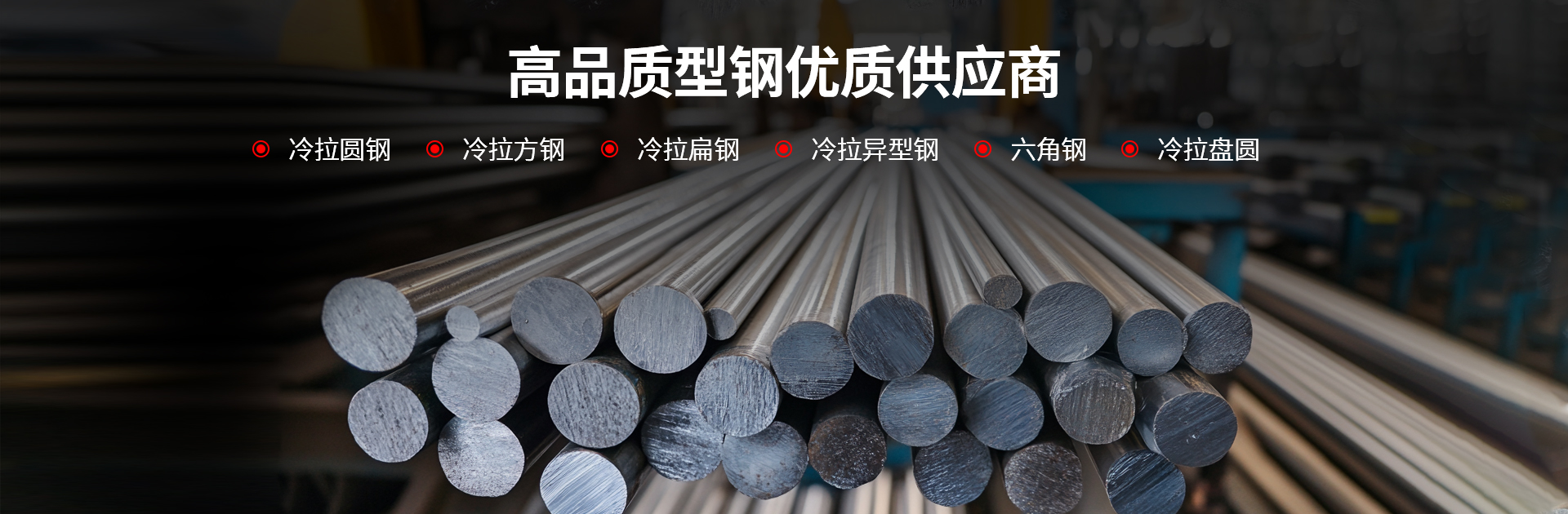
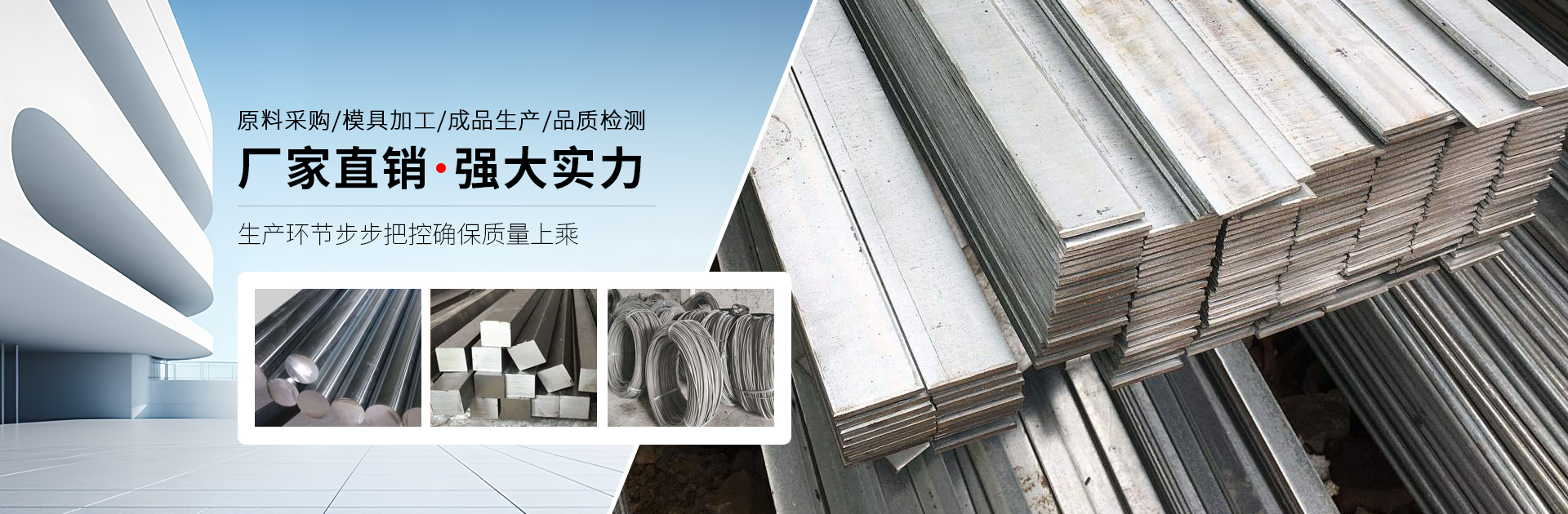
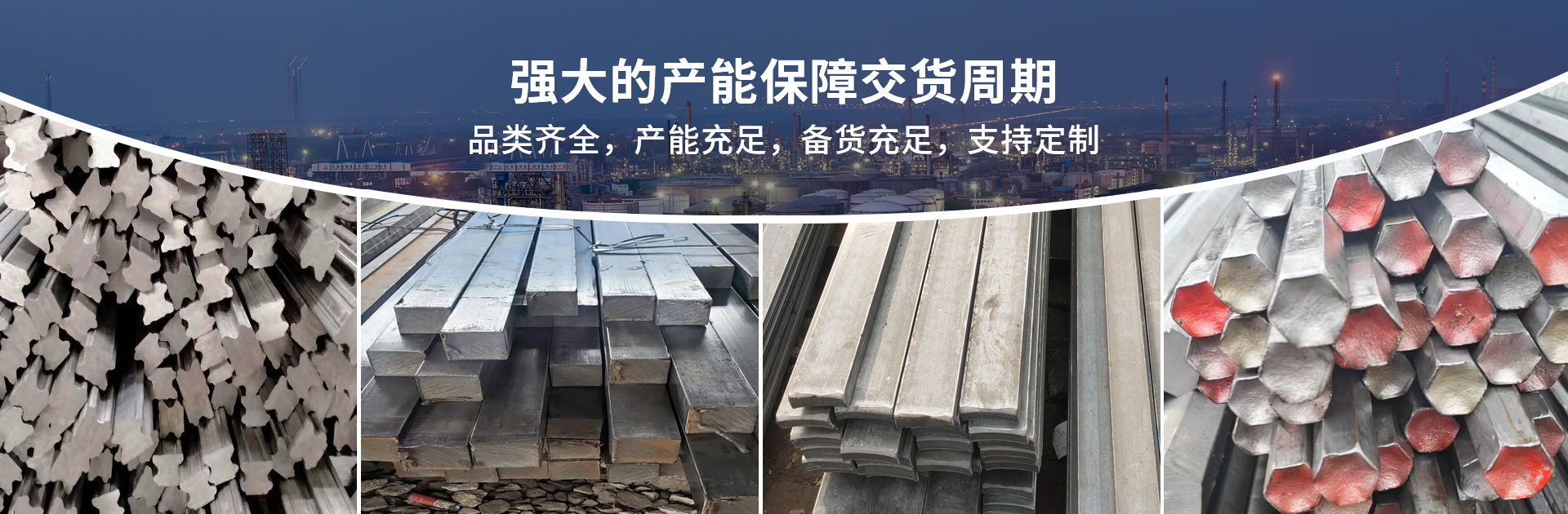
The core advantage of special-shaped steel lies in its "customized cross-section shapes based on application scenarios"—compared to standard materials like round or square bars, it can more accurately meet the needs for "load optimization, spatial adaptation, and functional integration." As a result, it is widely used in various fields including construction engineering, mechanical manufacturing, transportation, new energy, chemical, and medical industries, often serving as critical structural components, functional parts, or customized components. Below, we categorize by industry and detail the specific applications, combining the cross-sectional characteristics of special-shaped steel (such as H-shaped, T-shaped, channel-shaped, and special composite sections).
Building and Civil Engineering (largest consumption, focusing on "structural load-bearing + spatial compatibility")
The core role of special-shaped steel in the construction industry is to "optimize load-bearing structures, save space, and enhance construction efficiency," commonly used in large-scale buildings, bridges, and infrastructure.
- Building main structure
- High-rise / Supertall Buildings: Hot-rolled H-shaped steel (optimized for non-standard sections) serves as frame columns and beams, offering more even stress distribution and lighter self-weight compared to standard I-beams. Non-standard steel reinforced concrete components (such as non-standard steel columns, hollow non-standard beams) are suitable for complex architectural designs (like curved building volumes, large-span spaces).
- Large-span Structures: Special-shaped steel trusses (such as triangular, trapezoidal cross-sections) for stadiums and convention centers, and special-shaped node steel for spatial grid structures, balancing span requirements with structural stability; special-shaped steel for glass curtain walls (like custom groove-shaped, L-shaped steel), fitting the curvature of the facade while ensuring support strength.
- Bridges and Transportation Infrastructure
- Bridge Structures: Special-shaped main beams for long-span bridges (such as box-shaped and I-shaped beams), special-shaped steel sleeve boxes for pier supports, and special-shaped anti-slip steel grating for deck paving; special-shaped steel rail pads for high-speed rail/metro tracks, and vibration-proof special-shaped steel sleepers.
- Municipal Engineering: Atypical crash barriers for elevated city overpasses, unconventional support steel for underground tunnels (such as U-shaped and curved steel), and atypical grate steel for wastewater treatment plants (customized aperture/cross-section to fit water flow channels).
- Decorative Building Materials and Hardware
- Decorative Renovation: Unconventional stainless steel profiles (such as curved, wavy steel) are used for hotel lobbies and shopping mall ceiling joists, wall decorative strips; customized unconventional steel staircase railings and handrails (such as elliptical, polygonal cross-sections) that combine aesthetics with anti-slip properties.
- Building Hardware: Special-shaped steel sliders (T-shaped, groove-shaped) for windows and doors, special-shaped hinges, and special-shaped lock core seats for door locks, designed to accommodate spatial constraints in door and window structures, enhancing smooth operation.
Mechanical manufacturing and general equipment (with a focus on "function integration + torque / wear resistance requirements")
Special-shaped steel, achieved through custom cross-sections, offers "positioning, torque transmission, or wear resistance without additional processing," making it the core material for mechanical components.
- Transmission and Axial Components
- Universal Machinery: Custom-shaped shafts (such as stepped, spline, and hexagon-shaped shafts) for motor, reducer, and pump valve drive shafts, capable of transmitting torque without key connections; gear blanks made from shaped steel (such as tooth-shaped pre-molded shaped sections) to reduce subsequent machining allowances.
- Specialized Equipment: Non-standard guide rail steel for machine tools (such as dovetail槽形, rectangular non-standard guide rail), ensuring motion accuracy; non-standard wear-resistant steel linings for crushers and conveyors (such as wavy, toothed non-standard cross-section), enhancing wear resistance life.
- Industrial Fixtures and Molds
- Mold Components: Special-shaped ejector pins and guide posts (such as stepped, T-shaped steel) for cold stamping molds and injection molds, compatible with mold cavity structures; special-shaped steel for mold frames (such as channel, box-shaped steel) to enhance mold rigidity.
- Workholding Fixtures: Non-standard locating steel for machine processing (such as V-shaped, curved non-standard blocks) and custom-section clamping rods to ensure part positioning accuracy.
- Universal Mechanical Components
- Agricultural Machinery: Special-shaped steel for tractor and combine harvester frames (such as U-shaped, channel-shaped composite sections), and special-shaped seed-metering parts for seeders.
- Special-shaped steel for fan and compressor impellers (arc-shaped, twisted-shaped special cross-section) optimizes airflow efficiency; special-shaped steel for crane and forklift booms (box-shaped special cross-section) balances strength and lightweight design.
Transportation Equipment (Automotive / Marine / Aviation, focusing on "Lightweight + High Strength")
The transportation industry demands "weight reduction, energy conservation, and impact resistance." Special-shaped steel achieves a "balance between strength and self-weight" through cross-sectional optimization.
- Automotive Industry
- Passenger Vehicles: Use of custom-shaped high-strength steel in body frames (such as hot-formed custom-shaped steel columns, U-shaped crash beams), custom-shaped control arms for the undercarriage suspension system (stamped custom-shaped steel), and custom-shaped steel for battery trays (trench-shaped, box-shaped composite sections, compatible with battery dimensions).
- Commercial Vehicles: Non-standard frame beams (slot-shaped, box-shaped steel) for trucks and buses, and non-standard support beams for trailers, enhance load capacity while reducing vehicle weight; Non-standard conductive busbars (copper/aluminum non-standard cross-section) for new energy vehicles, optimizing current conduction efficiency.
- Ship and Ocean Engineering
- Vessel Structure: Non-standard anti-slip steel for the deck, non-standard steel partition plates (wavy, grooved) for cabin separation, and non-standard railings for vessels; non-standard corrosion-resistant steel for ocean-going vessels (such as non-standard stainless steel tubes, titanium alloy components) for parts in contact with seawater.
- Ocean Engineering: Special-shaped steel for offshore wind platform supports (such as jacket special-shaped steel, platform deck special-shaped grating), and corrosion-resistant steel for desalination equipment (custom cross-sections for filter channels).
- Aerospace (High-End Applications)
- Aircraft Structure: The fuselage frame is constructed using special-shaped aluminum alloy and titanium alloy profiles (such as hollow special-shaped beams and special-shaped frames), achieving extreme lightweight and shock resistance; the engine's special-shaped heat-resistant steel blades (twisted, hollow special-shaped cross-section) are designed for compatibility with high-temperature gas channels.
- Aerospace Equipment: Non-standard load-bearing components for satellites and rockets, such as carbon fiber composite non-standard steel and titanium alloy non-standard brackets, balancing strength and weight reduction requirements.
Section 4: New Energy & Power Equipment (Focus on "Weatherproof/Heat-resistant + Functional Adaptation)"
Special requirements for "corrosion resistance, heat resistance, electrical / thermal conductivity" of special-shaped steel are prevalent in the new energy field, often seen in photovoltaic, wind power, and power transmission.
- Photovoltaic and Wind Power
- Photovoltaic Mounts: Custom-shaped steel mounts (such as C-shaped, U-shaped cold-formed steel), tailored to photovoltaic panel angles, while saving installation space; Corrosion-resistant steel piles for offshore photovoltaics (helical, conical cross-sections), enhancing wind and wave resistance.
- Wind Turbine Equipment: Special-shaped steel flanges for wind turbine towers (large diameter custom cross-sections), special-shaped support steel for the nacelle interior (such as channel or box shapes), and special-shaped connection steel at the blade root (matching the blade profile).
- Power Transmission and Equipment
- Transmission and substation equipment: Special-shaped steel crossbeams (L-shaped, T-shaped) for high-voltage power poles, special-shaped steel structures for substation buildings (e.g., triangular trusses), and special-shaped steel for cable trays (grooved, stepped).
- Transformer accessories: Non-standard cooling steel plates (wavy, toothed non-standard cross-sections, to increase the cooling area), generator accessories: Non-standard conductive steel strips (copper/aluminum non-standard cross-sections, to optimize conductivity efficiency).
Five, Chemical & Medical Equipment (with focus on "Corrosion-resistant + Sanitary / Precise Fit)"
This scenario demands extremely high requirements for the "corrosion resistance, hygiene, and dimensional accuracy" of special-shaped steel, with stainless steel and non-ferrous special-shaped steel being widely used.
- Chemical and Environmental Protection Equipment
- Chemical Equipment: Non-standard corrosion-resistant steel linings for reactors (such as titanium alloys, Hastelloy non-standard sections), non-standard connectors for chemical piping (such as non-standard flanges, elbows), and non-standard anti-slip steel platforms for storage tanks (customized grid non-standard steel).
- Environmental Equipment: Custom-shaped steel filter gratings for waste gas treatment (with specified aperture/surface area), custom-shaped steel scraper blades for wastewater treatment (curved, toothed shapes), and custom-shaped heat-resistant steel grate for waste incinerators (high-temperature and wear-resistant).
- Medical Devices and Food Machinery
- Medical Equipment: Non-standard steel components for surgical instruments (such as scissors with non-standard blade edges, forceps with non-standard jaws), non-standard support steel for medical beds (stainless steel, anti-corrosive and easy to clean), and non-standard adjustment rods for rehabilitation equipment (custom cross-sections for ergonomics).
- Food Machinery: Non-standard stainless steel guide tracks (T-shaped, slot-shaped) for conveyor belts, non-standard mixing blades (curved, spiral-shaped steel) for mixers, and non-standard steel trays for sterilization equipment (sanitary-grade stainless steel, easy to clean with no dead corners).
Section 6: Other Specialized Scenarios (Niche but Critical, Emphasizing "Customized Features")
- Agricultural and Mining Machinery
- Mining Equipment: Non-standard jaw plate steel for crushers (wear-resistant alloy non-standard cross-section), non-standard support steel for underground coal mines (U-shaped, I-beam non-standard optimization), and non-standard sieve steel for beneficiation equipment (customized hole shape/cross-section).
- Agricultural Equipment: Special-shaped steel for combine harvesters (toothed, curved) and for greenhouse structures (curved, grooved, to match the curvature of the greenhouse).
- Electronics and Precision Instruments
- Electronic Devices: Custom-shaped steel frames for smartphones and computers (ultra-thin, high-strength cross-sections), and custom-shaped copper/aluminum heat sinks for heat dissipation modules (toothed, grooved, to increase the heat dissipation area).
- Precision Instruments: Customized thin-diameter shaped shafts for gauges, high-precision cold drawn steel shaped cylinders for printers, and shaped steel enclosures for sensors to fit installation spaces.
- Security Equipment
- Armored Security Equipment: Custom-shaped steel plates (curved, composite irregular cross-section) for bulletproof vests, and irregular steel reinforcing bars (U-shaped, channel-shaped) for security doors.
- Equipment: Armored vehicle's special-shaped armor steel (composite special-shaped cross-section, shock-resistant) and special-shaped transmission steel components for weapon systems (high precision, wear-resistant).
"Core Logic for the Application of Special-Shaped Steel"
The essence of its application is to "address the needs that standard profiles cannot fulfill" through customized cross-sections.
- When the scenario requires "optimized stress distribution" (e.g., beams, bridges) → design non-standard cross-sections (H-shaped, box-shaped) to enhance strength and reduce self-weight.
- When requiring "space adaptation" (such as curtain walls, battery trays) → customized curved, channel, and other non-standard cross-sectional profiles for fitting the installation environment.
- When integrating functions (such as drive shafts, radiators) → use non-standard cross-sections to achieve "positioning + torque transmission" or "increased heat dissipation area."
Focus on different scenarios for various non-standard steel types:
- Hot-Rolled Special Shape Steel: Commonly used in large structural components for construction and bridges (medium to low precision, capable of bearing heavy loads).
- Cold Drawn Special Shape Steel: Often used in mechanical parts and electronic equipment (high precision, small size, low machining allowance).
- Welded Special Steel: Widely used in customized large structures (such as bridge girders, equipment frames, offering flexible cross-sectional designs).
- Non-ferrous alloy shapes (aluminum, copper, titanium): commonly used in lightweight, corrosion-resistant, and conductive applications (automotive, aviation, chemical industry).
For more specific applications related to specific types of profile steel (such as cold drawn profile steel, welded profile steel) or industries (new energy, medical equipment), please further clarify your requirements.