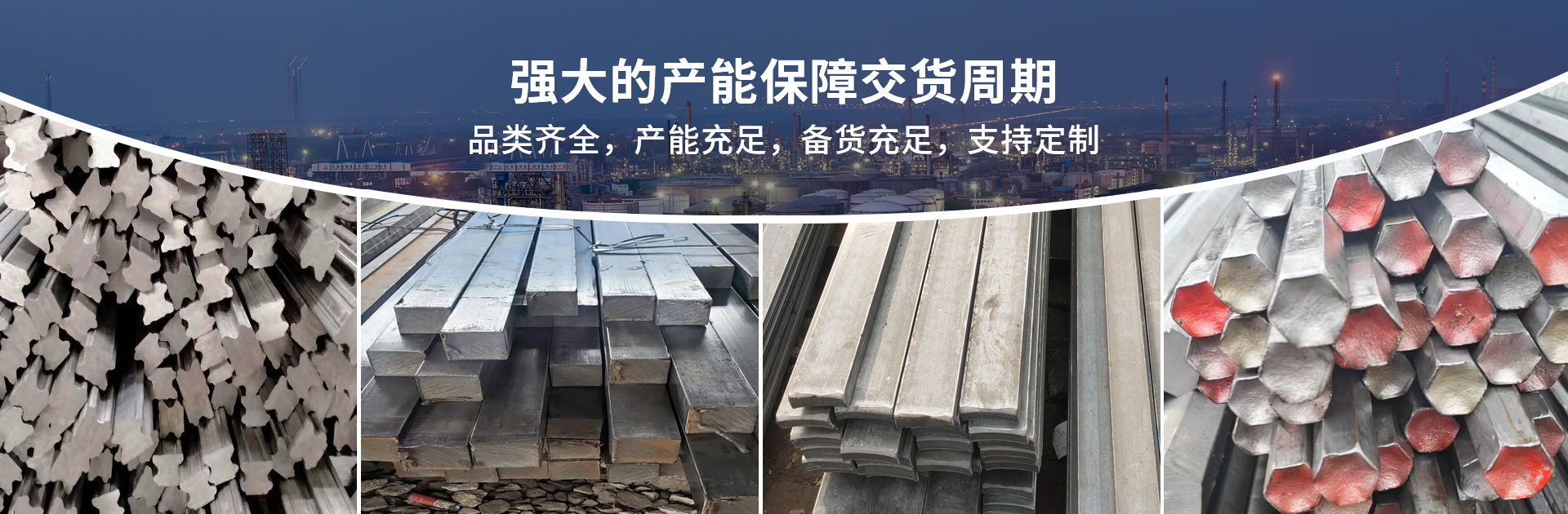
Hexagonal steel (including hot-rolled hexagonal steel and cold-drawn hexagonal steel, characterized by its hexagonal cross-section and excellent grip, positioning, and torque transmission capabilities) finds its applications centered around its "structural properties" — unlike round steel, it can achieve stable holding/positioning without additional processing; compared to square steel, it distributes forces more evenly and experiences less edge wear, thus widely used in mechanical manufacturing, fasteners, tool accessories, and other scenarios requiring "torque transmission, precise positioning, and easy assembly." Below is a classification of specific applications and typical uses:
One: Fasteners and Connectors (Core Application Fields)
The hexagonal cross-section of the hexagonal steel is the "natural fit shape" for fasteners, allowing for direct threading or use in fastening without the need for milling or grooving. It is the core raw material for globally standardized fasteners.
- Bolts/Screws:
- The Hex Bolt (most common): From small-scale bolts for microelectronic devices to high-tensile bolts for large machinery, the hexagonal cross-section of steel can be precisely gripped by a wrench to transfer torque, preventing slippage.
- Hexagon Head Screws, Hexagon Flange Bolts: Widely used in automotive, machinery, construction, household appliances, etc., the high precision (small size tolerance) of cold drawn hexagonal steel can reduce the allowance for thread processing, enhancing production efficiency.
- Nuts and Washers:
- Hexagon Nut (for use with external hex bolt): The hexagonal shape facilitates easy handling with wrenches, and its large surface area of contact ensures more even force distribution during tightening, making it less prone to deformation.
- Hexagonal washers, lock nuts: Utilize the positioning of the hexagonal cross-section to prevent loosening during vibration (such as securing automotive undercarriages and motor equipment).
- Shaft Nuts / Lock Nuts
- Hexagon shafts, split pins (partly made from hexagonal steel blanks): Used for part positioning or anti-loosening, the hexagonal shape prevents the shaft from rotating within the hole, enhancing the stability of the connection (such as joint connections in agricultural machinery and construction equipment).
Section II: Mechanical Manufacturing & Transmission Components (Torque Transmission + Positioning Requirements)
The hexagonal steel's cross-sectional shape ensures "uniform force transmission" and "precise positioning," making it suitable for shafts and rods that need to withstand torque or prevent rotation.
- Axles and Drive Shafts:
- Small motor shafts, gear shafts, worm shafts (especially for low-speed, high-load applications): Hexagonal cross-sections can be directly coupled with gears, couplings, and other components, transmitting torque without the need for key connections (reducing machining processes).
- Manual tool drive shafts (such as ratchet and socket drive shafts): Utilizing the torque transfer efficiency of a hexagon shape to prevent slippage during operation.
- Positioning and Guidance Components:
- Machine Tool Guideway Sliders, Mold Guiding Pins (partly made of hexagonal steel): The hexagonal cross-section limits the rotational freedom of the components, enhancing positioning accuracy (as opposed to round steel, which requires additional slots for positioning, it is more efficient).
- Jaw Rods, Positioning Pins: Precision positioning for fixture clamps, with a large hexagonal contact area for enhanced stability (such as in workpiece positioning during machining).
- Handle and Control Lever:
- Hand tool handles (such as wrenches, screwdriver handles), equipment operating rods (such as machine tool handwheel shafts, valve handles): Hexagonal for easy grip by hand or to work with wrenches, and less prone to slipping in the hand.
- Levers for Agricultural and Construction Machinery: They must withstand certain thrust and torque forces. The sharp edges of the hexagonal steel can increase the friction grip, enhancing operational safety.
Tools and Machining Equipment (Wear Resistance + Torque Requirements)
Tool products demand high standards for material strength, wear resistance, and torque transmission capabilities; hexagonal steel, particularly alloy hexagonal steel, is the core raw material.
- Raw Cutting Tools
- Rod sections for drill bits, taps, and milling cutters (cold drawn hexagonal steel): The hexagonal shape is convenient for mounting in machine tool chucks, offers precise positioning during processing, and the rod sections must withstand cutting torque; the cross-sectional strength of hexagonal steel is superior to round steel.
- Wrench and socket working ends: forged from hexagonal steel, utilizing the perfect fit between the hexagon and bolt/nut to transfer tightening torque.
- Industrial Fixture and Mold Accessories
- Clamping Rods, Mold Push Rods (Hexagonal): Strong positioning, preventing rotation during assembly or operation, enhancing the repetitive accuracy of molds or fixtures.
- Measurement accessories (such as caliper and micrometer adjustment rods): Hexagonal for fine adjustment, with high dimensional accuracy (cold drawn hexagonal steel has small tolerances).
Section 4: Construction and Engineering Sector (Structural Connections + Decorative Applications)
- Structural Connectors:
- Bone connection bolts for building curtain wall and high-strength hexagonal bolts for steel structure joints: The hexagonal shape facilitates on-site installation and tightening, and high-strength hexagonal steel (such as 45#, 40Cr) can bear the loads of the building structure.
- Scaffolding connecting pins, guardrail fixing bolts: The hexagonal steel's tightness and wear resistance are suitable for long-term outdoor use, and are not easily loosened due to vibration.
- Decorative Hardware & Accessories:
- Door hinge shaft, lock cylinder shaft (hexagonal): Strong positioning, preventing the hinge or lock cylinder from rotating out of place.
- Hardware for furniture (such as bolts for connecting table and chair legs, wardrobe rods): Hexagonal bolts are easy to install and offer a neat appearance, balancing practicality with decorative appeal.
Automotive and Transportation Equipment (High-Strength + Easy Assembly)
Automotive parts demand high reliability and assembly efficiency, with the characteristics of hexagonal steel perfectly fitting the requirements.
- Engine Parts: Valve Rocker Arm Shafts, Oil Pump Drive Shafts (hexagonal torque transmission, no additional keyway required)
- Chassis Components: Link rod bolts for the suspension system, fixed bolts for the braking system (high-strength hexagonal steel to withstand impact loads).
- Body Parts: Seat adjustment shaft, door hinge bolts (hexagonal for easy assembly and maintenance).
Section 6: Exclusive Uses for Special Material Hexagonal Steel
- Stainless Steel Hexagonal Bar (e.g., 304, 316)
- Chemical equipment accessories (such as valve bolts, pipeline connectors), food machinery (such as mixer shafts), medical devices (such as surgical instrument handles): corrosion-resistant, easy to clean, and hexagonal for easy assembly and disassembly.
- Alloy hexagonal steel (e.g., 20CrMnTi, 42CrMo)
- Automotive Gear Shafts, Construction Machinery Drive Shafts: High strength, high wear resistance, capable of withstanding heavy loads and alternating torques.
- Low-carbon steel hexagonal bar (e.g., Q235)
- Standard fasteners, lightly stressed connectors (such as bolts for appliance casings): Cost-effective, good machinability.
Six-Sided Steel's "Application Core Logic"
Its fundamental purpose is to meet the requirements of "torque transmission + precise positioning + convenient assembly."
- When components require "transmitting torque without slipping" (such as bolts, drive shafts), "positioning without additional processing" (such as clamps, guide pins), and "easy on-site assembly and disassembly" (such as construction bolts, tools), hexagonal steel offers more advantages than round or square steel.
- Cold drawn hexagonal steel emphasizes "high precision, low machining allowance" (e.g., fasteners, tool rods), while hot rolled hexagonal steel focuses on "medium to low precision, load-bearing" (e.g., structural connectors, rough machining shafts).
To narrow down, specific application directions can be further locked by material (carbon steel, stainless steel, alloy), precision (cold drawn / hot rolled), or industry (automotive, mold, construction).