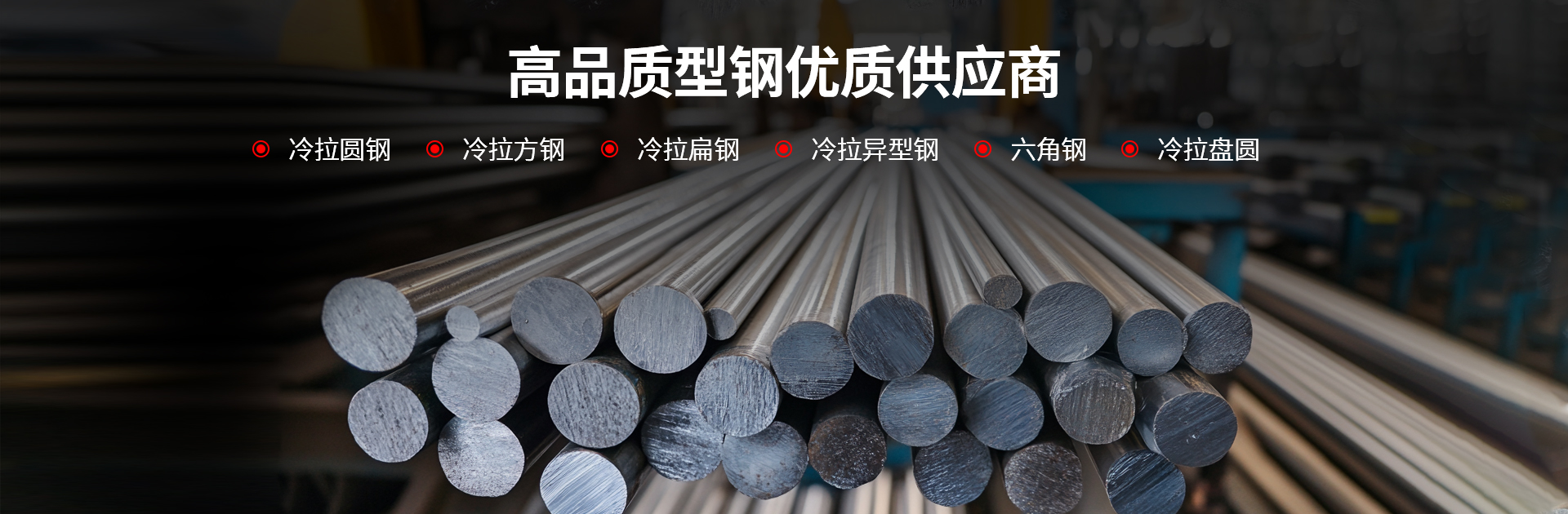
Cold drawn round steel is processed through the cold drawing process (stretching, straightening, and finishing at room temperature) to produce round-section steel. Its core advantages include high dimensional accuracy (small tolerances), good surface finish, and higher mechanical strength (tensile/yield strength) compared to hot-rolled round steel, as well as excellent straightness. It also requires no additional machining or only minimal finishing before use, making it widely applicable in scenarios that demand precision, strength, and appearance, such as machinery manufacturing and engineering components. The following are its main categories of use and specific applications:
I. Mechanical Manufacturing and General Parts (Core Application Areas)
Cold-drawn round steel, with its high precision and strength, serves as the "basic raw material" for mechanical parts, particularly suitable for standardized, precision components in mass production.
- Axle Components:
- Medium and small-sized motor shafts, reducer shafts, drive shafts, machine tool spindles (for small diameters), pump shafts, valve shafts, etc., require high rotational accuracy and fatigue resistance. The straightness and dimensional consistency of cold-drawn round steel can reduce machining allowance and enhance production efficiency.
- Home appliances (air conditioner compressor shafts, washing machine motor shafts), small machinery and equipment (gearbox drive shafts).
- Fasteners (Standard Components):
- Bolts, nuts, screws, rivets, pins, and more; the high hardness and uniform material of cold drawn round steel ensure the tensile strength and shear resistance of fasteners, and the smooth surface after cold drawing prevents burrs during thread machining.
- Connectors for vehicles and machinery, high-strength screws for construction.
- Gear and Transmission Components:
- Small gears, gear shafts, sprockets, chain pins, etc., must withstand the impact and friction forces of meshing transmission. The tensile strength and toughness of cold-drawn round steel meet the transmission requirements, and the dimensional accuracy facilitates subsequent gear shaping processes (such as hobbing and broaching).
- Guidance and Support Components:
- Guide slider, guide pillar, guide sleeve, bearing ring (blank), bushes, etc., must ensure motion accuracy and wear resistance. The surface finish of cold drawn round steel can reduce friction loss, and small dimensional tolerances can improve assembly accuracy.
- Machine tool guide ways, mold guide posts, cylinder liners.
Section II: Automotive Industry (High Precision + High Strength Demand Scenarios)
Automotive parts demand high reliability and lightweight, with cold drawn round steel being a key raw material.
- Engine Parts: Valve lifters, push rods, connecting rods (small diameter), oil pump shaft, injector nozzle sleeve.
- Chassis Components: suspension rods, steering knuckle pins, brake shoe shafts, bearing mounts.
- Body & Accessories: Door Lock Pulls, Seat Adjustment Shafts, Window Regulator Gear Shafts.
Mold and Tooling Equipment
Die-making demands high precision and stability of materials, with cold-drawn round steel serving as a core component or auxiliary tooling for molds.
- Mold Accessories: ejector pins, guide pins, guide bushes, return rods, and pull rods (suitable for both cold forging and injection molds).
- Industrial Fixtures: Locating pins, clamping shafts, and fixture rods must ensure repeatable positioning accuracy and durability.
- Mold blanks: cores and cavities for small molds, requiring subsequent heat treatment and finishing.
Section 4: Construction and Engineering Sector (Special Application Scenarios)
Although less common than hot-rolled round steel, it is still used in high-precision architectural components.
- Mullion connection pieces, stainless steel tensile cables (require cold drawn round steel for strength and straightness).
- Hardware for construction: hinge shafts for doors and windows, lock cylinder shafts, and clothesline lifting shafts.
Electronics, Electrical Appliances, and Precision Instruments
Miniaturized, high-precision electronic devices rely on the dimensional control and surface quality of cold drawn round steel.
- Electronic Components: Motor Rotor Shafts, Sensor Probes, Relay Contact Shafts
- Precision Instruments: Gauge Pointer Shafts, Printer Roller Shafts, Medical Equipment (such as surgical instrument shafts).
VI. Other Special Scenarios
- Stainless Steel Cold Drawn Round Bar: Used for corrosion-resistant applications (such as chemical equipment accessories, food machinery shafts).
- Alloy Cold-Drawn Round Steel (e.g., 40Cr, 20CrMnTi): Used for high-strength, wear-resistant components (such as automotive gear shafts, machine tool spindles).
- Small Diameter Cold Drawn Round Steel (φ1-φ20mm): Used for miniature shafts in electronics and home appliances, or as welding wire and rod core material.
Core Application Logic for Cold Drawn Round Steel
Its primary purpose is to meet the needs of "high precision + high strength + low processing cost": When parts require strict dimensional tolerances (such as h8-h10), need to be finished directly without rough machining, or need to bear certain loads, cold-drawn round steel offers better cost-effectiveness compared to hot-rolled round steel, particularly suitable for mass production scenarios (reducing processing time and material waste).
Further segmentation can be achieved by selecting specific application directions based on material (carbon steel, stainless steel, alloy), diameter (micro, small, medium), or industry (automotive, mold, electronics).