Belt Conveyors, Granulating Pulling Lines, Circular Conve...

The conveying speed of Nanjing's conveyor lines is typically adjustable. Below are some common adjustment methods and their introductions:
Hydraulic Speed Regulation Method
In some large or heavy-duty conveying lines, hydraulic drive systems are sometimes used to power the conveying components, with the conveying speed controlled by adjusting the flow or pressure of the hydraulic system. Hydraulic speed regulation offers advantages such as high output force, wide speed adjustment range, and the ability for stepless speed control, making it particularly suitable for applications requiring high torque drive and speed control, such as in mining and port material conveying lines. However, hydraulic systems are structurally complex, costly, and have stringent requirements for oil cleanliness and maintenance, necessitating the use of auxiliary equipment like hydraulic pump stations, filters, and coolers. Consequently, their application scope is relatively narrow, mainly concentrated in specific industrial sectors and large conveying line systems with special requirements for conveying capacity and speed regulation performance.
Electrical Speed Regulation Method
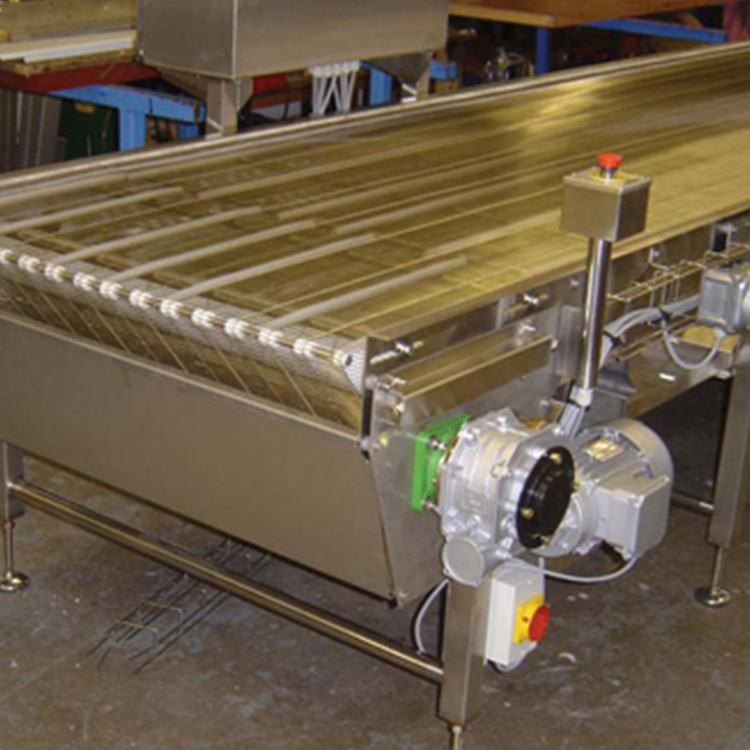
Variable Frequency Speed Regulation: This is a widely used speed regulation method in conveying lines. By adjusting the supply frequency of the drive motor, the motor's speed is controlled to regulate the speed of the conveying line. As the core control component, the variable frequency inverter can achieve stepless speed regulation within a certain range according to the requirements of the production process, featuring a wide speed regulation range, high precision, and significant energy-saving effects. Additionally, the variable frequency speed regulation system can be integrated with an automated control system to enable remote control and automated speed regulation, greatly enhancing the intelligence level and production efficiency of the conveying line. It is widely applied in conveying lines of various scales and types, particularly suitable for production processes that require high precision and stability in speed control.
Electromagnetic Speed Regulation: The electromagnetic speed regulation motor consists of a driving motor and an electromagnetic slip clutch. The output speed of the clutch is adjusted by changing the excitation current of the electromagnetic slip clutch, thereby controlling the conveyor belt speed. Electromagnetic speed regulation features a wide speed range, simple structure, and reliable operation. However, due to its certain slip rate, the speed regulation efficiency is relatively low, and insufficient torque may occur at low speeds. It is generally suitable for conveyors with non-demanding speed regulation requirements, such as small material handling or simple assembly production lines.
Mechanical Speed Regulation Method
Transmission Speed Regulation: In some conveyor drive units, speed regulation is achieved by installing a variable speed transmission. The transmission can alter the transmission ratio between the output shaft of the drive motor and the conveying line drive components, thereby adjusting the conveying speed. Common types of variable speed transmissions include gearboxes and worm gear reducers. This method of speed regulation has a relatively simple structure and lower cost, but the speed regulation range may be limited, and generally requires manual operation for gear shifting, which is not as flexible or convenient. It is commonly used in simple conveyor line systems that do not require high precision in speed regulation and have minimal changes in conveying speed.
Belt Pulley Speed Regulation: Utilizing combinations of belt pulleys with different diameters to alter the transmission ratio, thus adjusting the conveyor line speed. By replacing pulleys of different sizes, the drive motor's rotational speed can be transmitted to the conveyor belt at varying ratios, achieving speed adjustments. This method is relatively easy to operate, yet it has the issue of limited speed adjustment range. Additionally, frequent replacement of belt pulleys may affect the equipment's operational uptime, reducing production efficiency. It is generally suitable for small or light-duty conveyor lines and situations with lower frequency of speed adjustments.


b2b.china9.net © Zhongshang 114 Hebei Network Technology Co., Ltd.Address: Room 6009, Oriental New World Center, No.118 East Zhongshan Road, Qiaoxi District, Shijiazhuang City, Hebei ProvincePlatform Service Hotline: 4006299930