Belt Conveyors, Granulating Pulling Lines, Circular Conve...

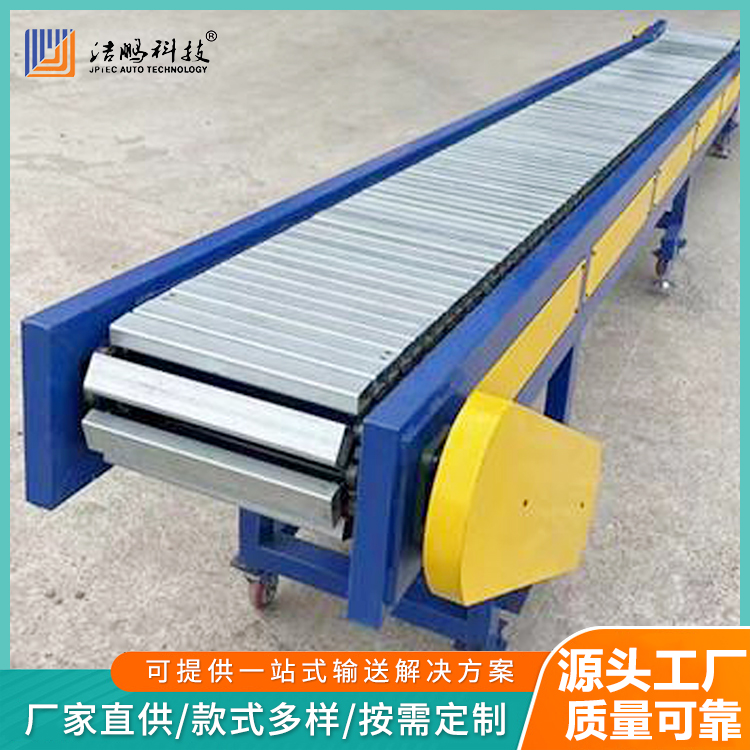
Belt conveyors require design and adjustments from multiple aspects when handling irregular materials to ensure stable and efficient transmission. Here are some methods to cope with irregular materials:
Speed Control and Material Inspection
Adopting Variable Speed Conveying: Irregular materials may require different conveying speeds during the process. For instance, during the loading and unloading stages of materials, to avoid accumulation or dropping, a lower speed can be used; during the steady conveying stage, the speed can be appropriately increased to enhance production efficiency. By installing variable frequency drives and other speed-regulating devices, the conveying speed of the belt can be adjusted in real-time according to the material's condition and production process requirements.
Material Inspection Devices Installed: Material inspection devices, such as photoelectric sensors and laser sensors, have been installed on the belt conveyor line to monitor the position, quantity, and condition of materials in real-time. In the event of anomalies like material blockages, shortages, or misalignments, the system will automatically trigger an alarm and stop the conveyor line, allowing operators to address the issue promptly and prevent production accidents or quality issues.
Conveyor Layout and Auxiliary Equipment
Optimized Conveyer Line Layout: Rationalize the arrangement of the belt conveyer line based on the shape and size of irregular materials. For larger or uniquely shaped materials, a segmented conveyer line can be employed, with different conveying methods or auxiliary devices set at various conveying sections to accommodate the material characteristics. For instance, an inclined belt section at the starting end of the material facilitates loading; a horizontal belt section in the middle for smooth conveying; and a buffer belt section at the end to prevent collisions or drops at the end of conveying.
To ensure accurate positioning of irregular materials during the conveying process, auxiliary positioning devices can be added to the belt conveyer line. For instance, guide plates can be installed on both sides of the belt to restrict lateral movement of the materials; for materials with specific directional requirements, positioning clamps or sensors can be set up to automatically locate or adjust their direction upon passage.
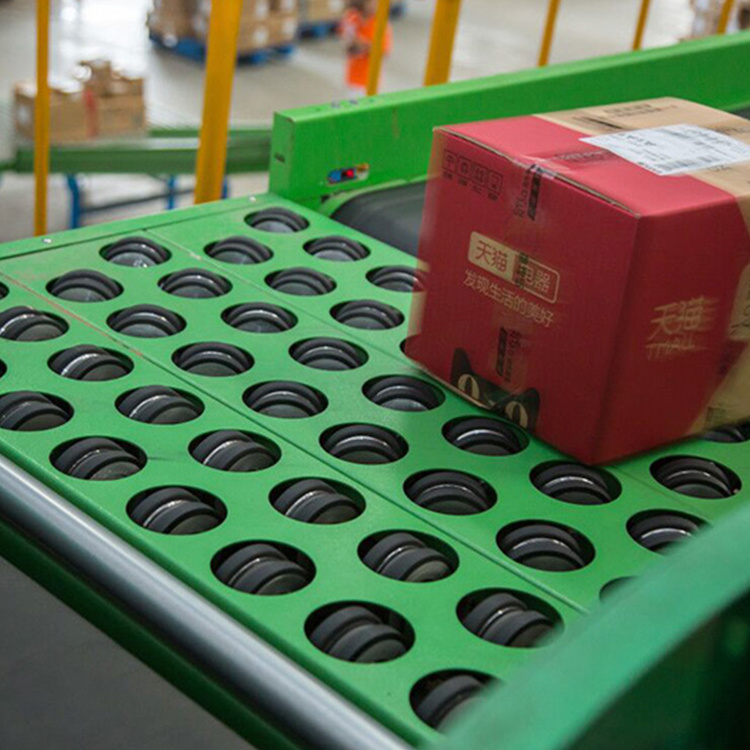
Belt Selection and Design
Selecting Appropriate Belt Material: Choose the appropriate belt material based on the characteristics of irregular materials, such as weight, hardness, and coefficient of friction. For materials that are heavier and have sharp edges, a high-strength and wear-resistant rubber belt is recommended. For materials with a smooth surface, select PVC or PU belts with a higher coefficient of friction to enhance the friction between the material and the belt, preventing the material from sliding.
Design Special Belt Surfaces: To better accommodate and transfer irregular materials, special structures can be designed on the belt surface. For instance, adding baffles or aprons to the belt can prevent materials from slipping during conveyance; for irregularly shaped and easily rolling materials, grooves or ridges can be set on the belt surface to increase the contact area and friction between the materials and the belt, ensuring the materials are stably placed on the belt.
Employee Training and Operational Standards
Enhanced Employee Training: Professional training for employees operating the belt conveyor line is being conducted to familiarize them with the characteristics and handling requirements of irregular materials. They are being taught the correct operational methods and emergency response techniques. Employees must understand how to adjust the belt speed based on the shape and size of the materials, how to properly use auxiliary devices, and how to address various issues that may arise during the material handling process.
Establish Operation Standards: Develop detailed operation guidelines for the belt conveyer line, clearly defining the requirements and precautions for employees during operation. The standards should encompass operational steps for loading, conveying, and unloading, as well as safety protection measures. By strictly adhering to the operation standards, ensure the stable and safe operation of the belt conveyer line, and enhance the efficiency and quality of irregular material conveyance.


b2b.china9.net © Zhongshang 114 Hebei Network Technology Co., Ltd.Address: Room 6009, Oriental New World Center, No.118 East Zhongshan Road, Qiaoxi District, Shijiazhuang City, Hebei ProvincePlatform Service Hotline: 4006299930