




- AllProduct Category


Recommended Products

详情描述
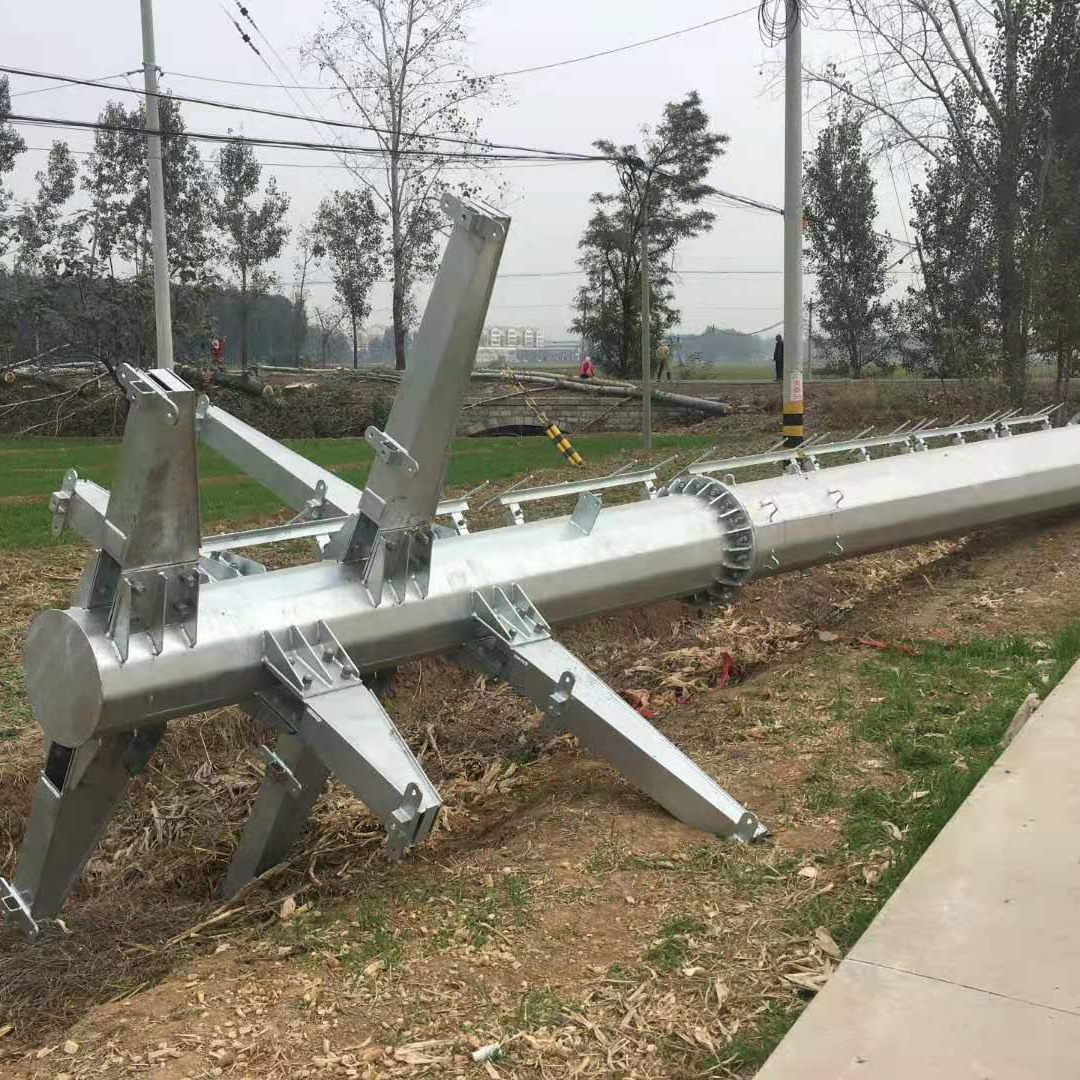
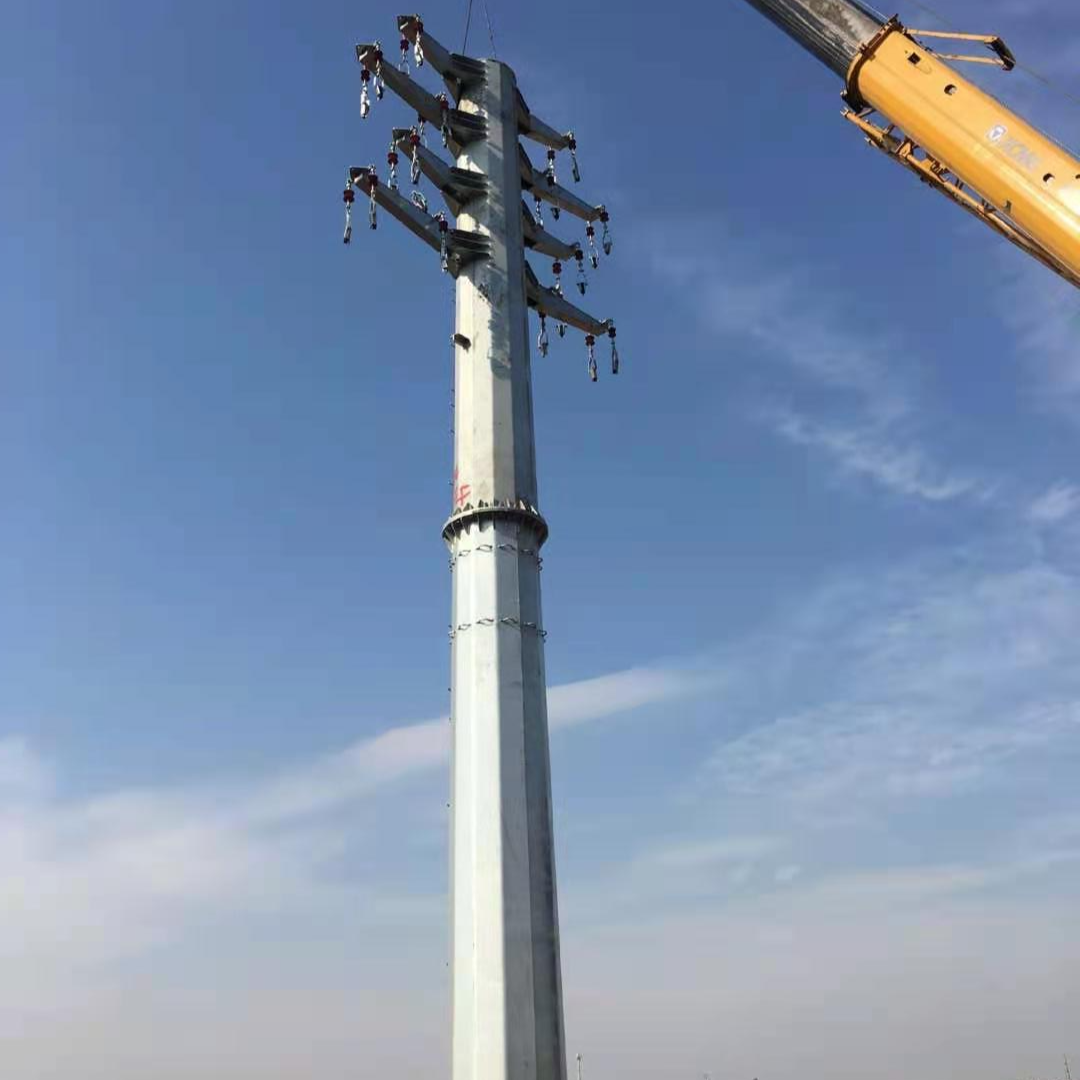
Wind Measurement Tower: The "Weather Sentry" for Wind Farm Construction
Wind measurement towers are an indispensable key facility in wind farm development, acting as towering "weather sentinels" that provide precise wind energy data support for the construction and operation of wind farms. The following will analyze the wind measurement tower from dimensions such as definition, structure, working principle, application value, and technological development.
I. Core Definitions and Functions
A wind measurement tower is a specialized structure designed for measuring wind energy parameters near the ground, typically installed within the proposed site of a wind farm. Its core function is to collect the following data around the clock through sensors:
- Wind Speed: Measure wind speeds at different altitudes (e.g., 10 meters, 30 meters, 50 meters, 70 meters) to evaluate the distribution of wind energy resources.
- Wind Direction: Monitor wind direction changes to optimize wind turbine layout.
- Environmental Parameters: Temperature, humidity, air pressure, etc., assist in evaluating the stability of wind resources.
These data, gathered over a 3-5 year long-term observation, can generate key indicators such as wind rose diagrams and Weibull distributions, providing a scientific basis for the siting of wind farms, selection of wind turbines, power generation forecasting, and economic benefit evaluation.
II. Structure and Equipment Composition
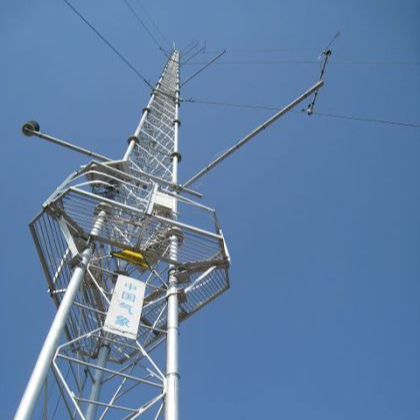
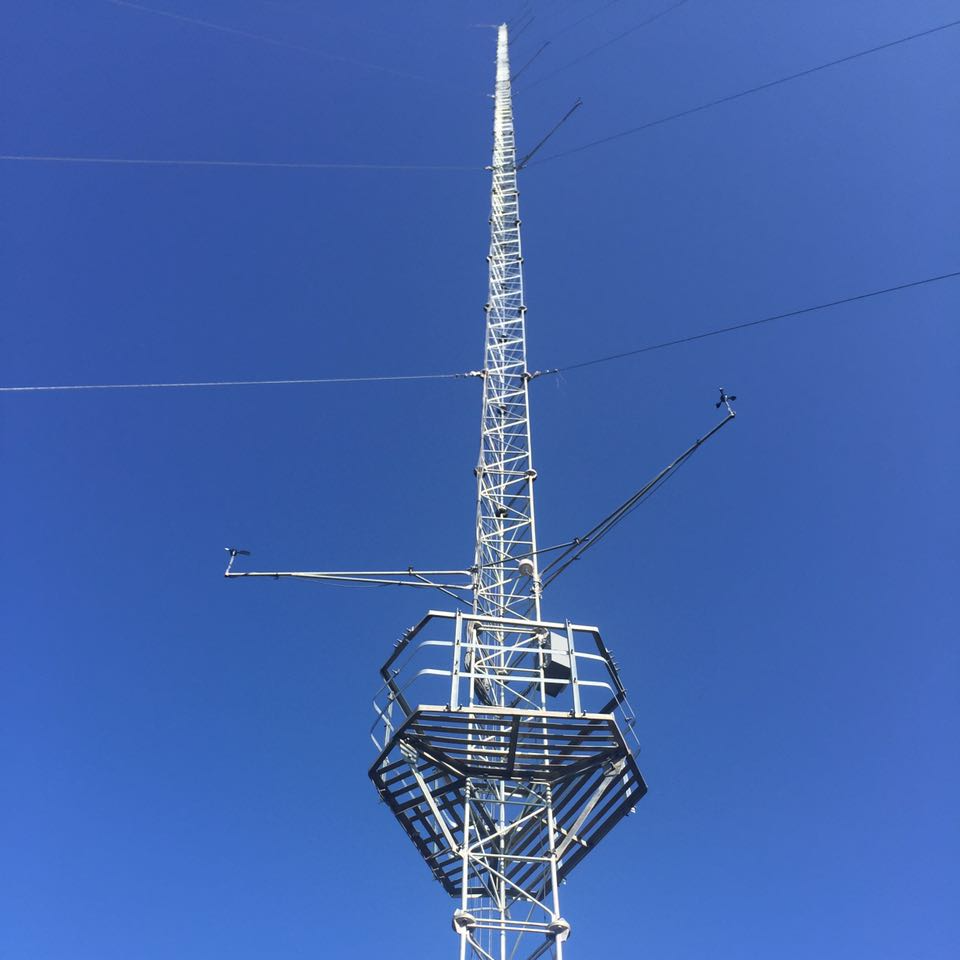
The structural design of wind measurement towers must balance stability with data collection requirements, common types include:
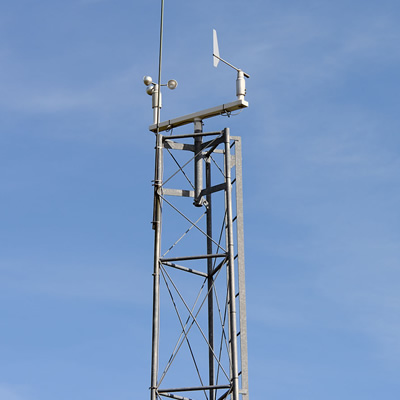
- Freestanding Tower: Wide foundation, high material requirement, suitable for flat terrain.
- Cable Tower: Reasonably loaded, material-saving, but complex in construction, requiring multiple cable ties for stabilization.
- Truss Tower: Reinforced with steel wire ropes, heights typically range from 10 to 150 meters, with 100 meters being common.
Primary Equipment:
- Sensor:
- Wind Speed Meter: Utilizes ultrasonic technology to calculate wind speed by measuring the phase difference of frequency-modulated signals, avoiding interference from rain and snow.
- Wind Vane: Utilizes a Gray code disk and photoelectric tube to output wind direction signals, with some models equipped with a heating system to prevent freezing.
- Humidity and Temperature Sensor: Monitors environmental parameters with an accuracy of ±0.5°C.
- Data Recorder: Such as NOMAD-2, capable of connecting to various sensors, automatically stores data, and remotely transmits it via a wireless module (e.g., GSM).
- Power supply system: Typically utilizes a combination of solar panels and battery packs for long-term stable operation.
III. Working Principle
The wind tower collects data in real-time via sensors and transmits it to the ground station or cloud platform for analysis. For instance, with an anemometer:
- Ultrasonic Principle: Emitting continuous frequency-modulated signals to calculate wind speed and direction by measuring the phase difference of the signals, thus avoiding mechanical wear and weather interference.
- Data Calibration: Combine multi-height layer data to correct the impact of surface roughness (such as urban skyscrapers, vegetation) on wind speed.
IV. Core Value in Wind Farm Construction
- Resource Assessment
- Quantify the richness and stability of wind resources through Weibull distribution parameters (such as shape parameter K, scale parameter A).
- Case: A project in Anhui, due to abnormal wind speed at a single tower, added multiple towers to optimize data reliability and avoid investment decision risks.
- Fan selection and layout:
- Match fan power curves with local wind speed distribution to enhance power generation efficiency.
- Optimize turbine spacing based on the wind rose diagram to minimize wake effects.
- Long-term operational support:
- Monitor equipment status and alert for extreme weather conditions (such as typhoons, thunderstorms).
- Provide data support for wind farm operation and maintenance strategies (such as maintenance schedules).
V. Technological Development and Future Trends
- Emerging Wind Measurement Technology:
- Lidar Wind Tower: Utilizes laser pulses interacting with aerosols to achieve high-precision 3D wind field scanning, suitable for complex terrains.
- Millimeter wave radar wind tower: Operates round-the-clock, but with high costs and requires professional maintenance.
- Smart Upgrade:
- Integrate 5G and IoT technology for remote monitoring and big data analysis.
- Marine wind measurement towers are constructed with corrosion-resistant materials, suitable for marine environments.
- Policy Support:
- The National Development and Reform Commission and the Energy Bureau require scientific wind measurement prior to the construction of wind farms, promoting standardized development within the industry.


