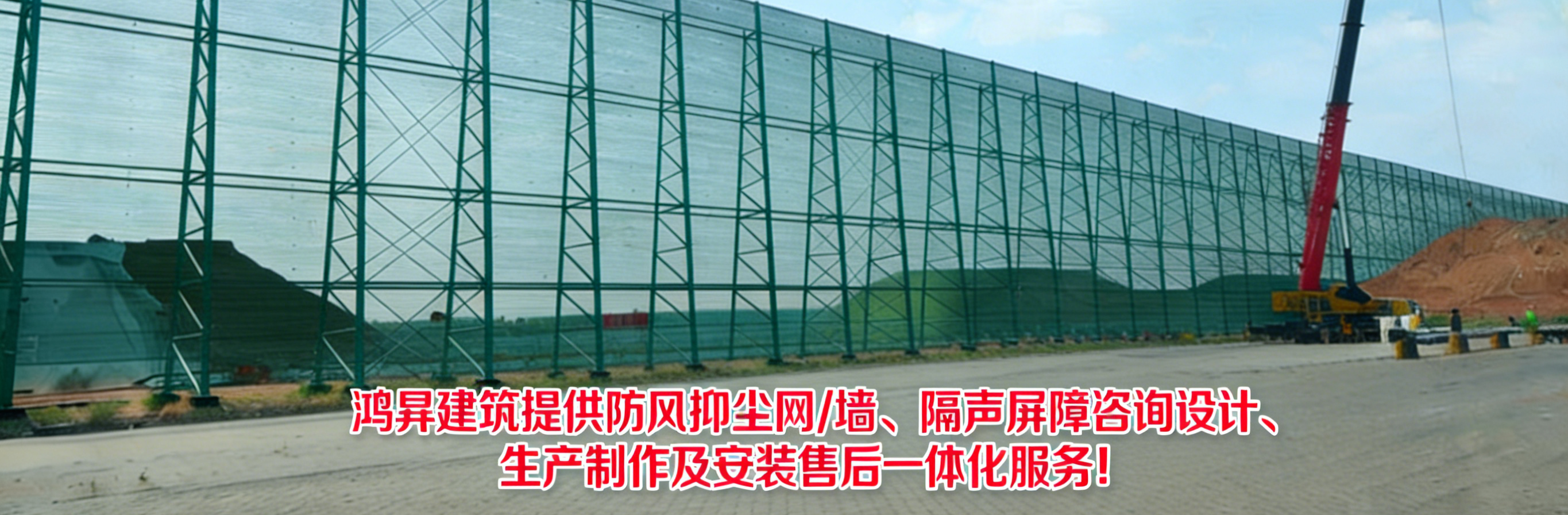
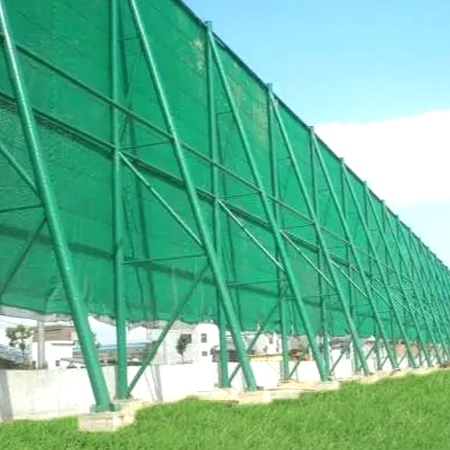
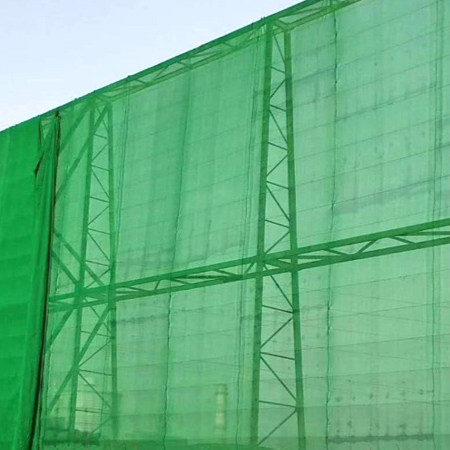
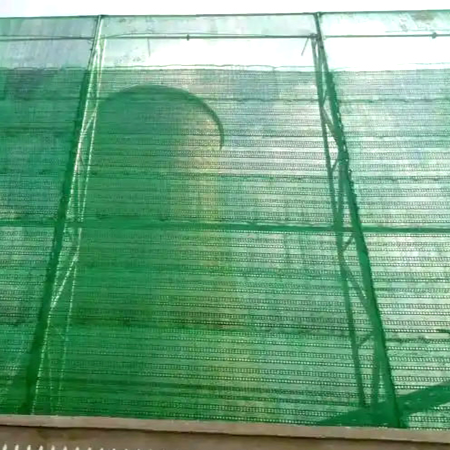
Dezhou Hongsheng Construction specializes in the research...

The key mechanism behind the Windbreak Dust Control Net's ability to significantly reduce dust emissions from open coal piles lies in lowering the wind velocity of the incoming airflow; maximizing the loss of kinetic energy from the incoming wind; and avoiding the formation of significant vortices, reducing the turbulence of the wind. According to aerodynamic principles, as the wind passes through the "Windbreak Dust Control Wall" composed of "Windbreak Dust Control Nets," two phenomena occur at the back of the wall: separation and adhesion, creating upward and downward interfering airflows, which lower the wind velocity and dissipate the kinetic energy of the incoming wind; decrease the turbulence of the wind, eliminate the vortices of the incoming wind; and reduce the shear stress and pressure on the surface of the coal pile, thereby decreasing the dust emission rate.
The metal windbreak dust suppression net should be kept clean and dry during transportation and provided with necessary moisture and rain protection.
2. Metal windbreak dust suppression net requires even loading and unloading with forklifts or cranes or stacking neatly by hand; it is not allowed to be hoisted directly with wire ropes or dropped from a height of 2 meters or more.
3. During the transit of the metal windbreak dust suppression net, it should be stored in a dry location. The bottom should be lined with dry wooden mats to ensure ventilation, and the top should be covered with a rain tarp.
4. Metal windbreak dust suppression nets should be stored in a clean, dry workshop.
5. The metal windbreak dust suppression net may produce a slight white film during storage and transportation, which is still considered acceptable as it does not constitute grounds for rejection based on the quality of the zinc coating.


b2b.china9.net © Zhongshang 114 Hebei Network Technology Co., Ltd.Address: Room 6009, Oriental New World Center, No.118 East Zhongshan Road, Qiaoxi District, Shijiazhuang City, Hebei ProvincePlatform Service Hotline: 4006299930