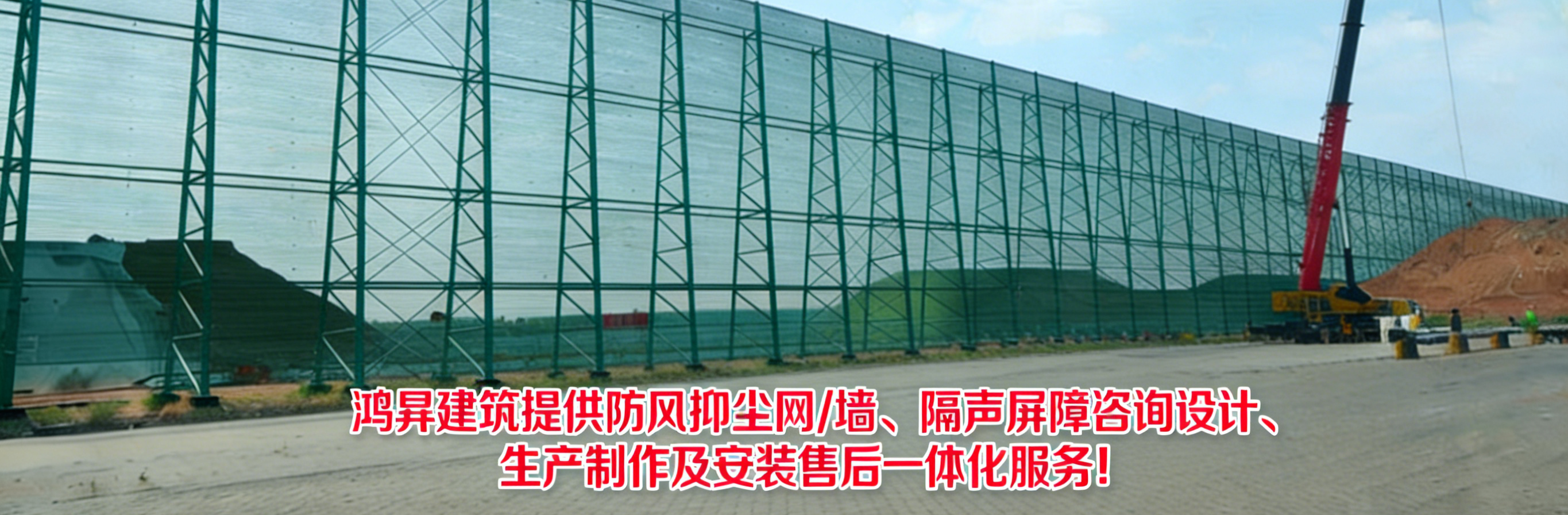
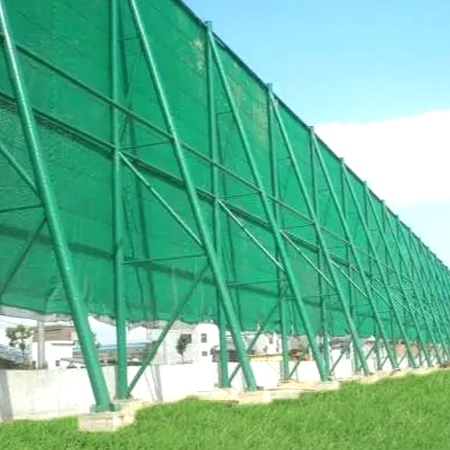
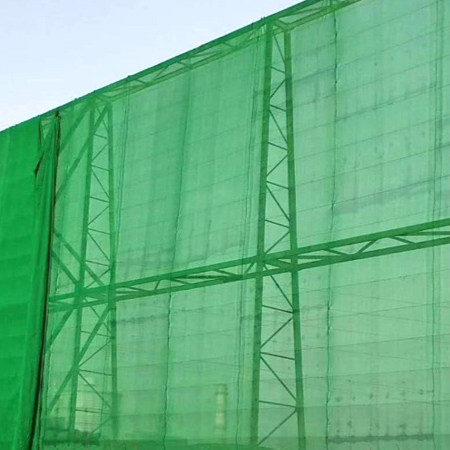
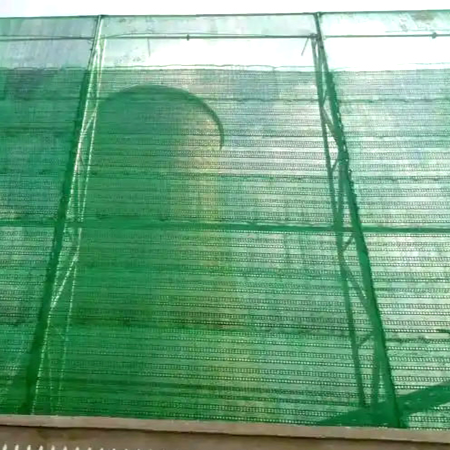
Dezhou Hongsheng Construction specializes in the research...

The Windbreak Dust Suppression Net primarily serves to reduce the wind velocity downstream. A portion of the incoming wind flows along the windbreak wall, known as the bypass flow. This results in a turbulent shear layer above the height of the windbreak, forming a wake zone. Additionally, some of the incoming wind passes through the holes in the windbreak, expends a certain amount of energy, and continues to flow downward, referred to as the infiltration flow.
After installing windbreak nets, on one hand, the incoming wind speed was reduced, thereby decreasing the amount of dust generated by the shearing force on the windward side of the material pile. On the other hand, the instability of the incoming wind was minimized, significantly reducing the speed fluctuations near the pile and related vortices. This led to a decrease or disappearance of vortices on the leeward side of the pile, ultimately reducing the amount of dust generated downwind.
Upon passing through the windbreak dust suppression net, the airflow forms distinct swirls and seepage. Between the windbreak net and the material pile, a low-speed zone is created, with a high-speed zone above it. The swirls of wind bypass the windbreak dust suppression net and accelerate directly away, while the seepage wind continues to flow downward after passing through the net, reaching the material pile and then flowing upward along the windward face of the material. At the top of the material pile, a boundary layer separation occurs, with part of the airflow and swirls merging and flowing downstream, and the other part forming a speed recirculation zone on the leeward side.


b2b.china9.net © Zhongshang 114 Hebei Network Technology Co., Ltd.Address: Room 6009, Oriental New World Center, No.118 East Zhongshan Road, Qiaoxi District, Shijiazhuang City, Hebei ProvincePlatform Service Hotline: 4006299930