

Focused on tissue culture racks, culture racks, tissue culture equipment, and tissue culture room design.
158-6661-1552





Tissue Culture EquipmentManufacturer Explains: It can produce new individuals directly without the need for the fusion of two germ cells, and there is no recombination of genetic information, meaning the genetic material of its offspring is identical to that of the parents. Difference: Asexual reproduction does not require the fusion of two germ cells, while sexual reproduction involves the fusion of two germ cells to form a zygote, which then develops into a new individual.
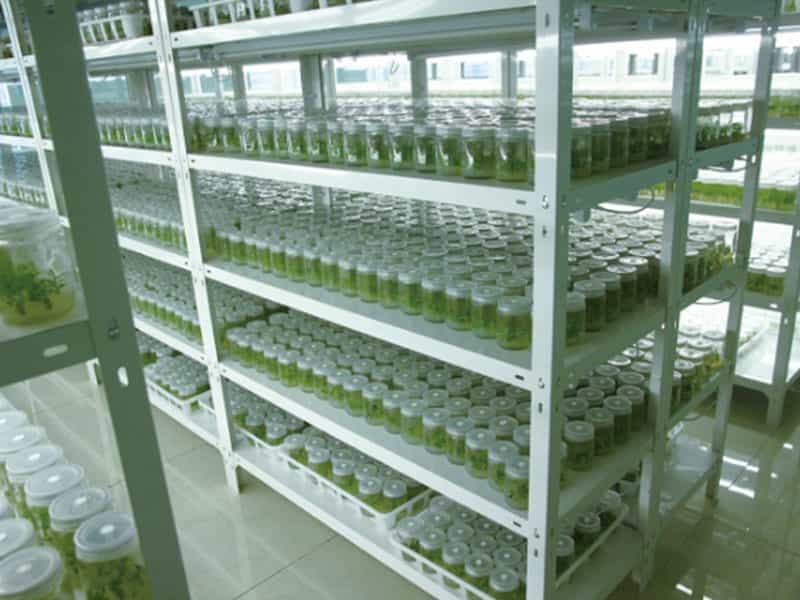
Definition of Asexual Reproduction:
What are asexual reproduction methods?
Asexual Reproduction, also known as asexual reproduction, refers to the process of forming new individuals without fertilization, including modes such as binary fission, budding, spore reproduction, and vegetative propagation.
2. Asexual Reproduction Characteristics
(1) Asexual reproduction produces new individuals without the need for the fusion of two reproductive cells.
(2) Asexual reproduction does not involve embryonic development and does not lead to genetic information recombination, ensuring that the genetic material of the offspring is identical to that of the parent, thus preserving the parent's desirable traits.
(3) Asexual reproduction has a faster rate of propagation and can rapidly expand the population size.
Category 3
(1) Binary Fission: The division of an organism into two new individuals.
(2) Budding Reproduction: A bud, similar to the parent, grows on the parent organism, awaits growth, and eventually matures into a new individual.
(3) Spore Reproduction: Algae, fungi, and other organisms can produce reproductive or dormant cells known as spores, which then develop into new individuals in a suitable environment.
(4) Somatic Propagation: Separated somatic organs from the parent, which then dedifferentiate and develop into new individuals
What's the Difference Between Asexual and Sexual Reproduction?
1. Asexual reproduction can produce new individuals without the need for direct maternal union; whereas sexual reproduction involves the combination of two germ cells to form a zygote, which then develops into a new individual.
2. Sexual reproduction allows offspring to exhibit greater variation, produce new traits, and is more advantageous for adapting to the environment and for the propagation of the population; asexual reproduction, on the other hand, results in less variation among offspring and weaker adaptability to the environment.
3. Sexual reproduction has a slower rate of propagation, whereas asexual reproduction is faster.
Contact us

Service Hotline
15866611552
Company Telephone
158-6661-1552

Address
399 Hualong Road, Licheng District, Jinan City
b2b.china9.net © Zhongshang 114 Hebei Network Technology Co., Ltd.Address: Room 6009, Oriental New World Center, No.118 East Zhongshan Road, Qiaoxi District, Shijiazhuang City, Hebei ProvincePlatform Service Hotline: 4006299930




