

Focused on tissue culture racks, culture racks, tissue culture equipment, and tissue culture room design.
158-6661-1552



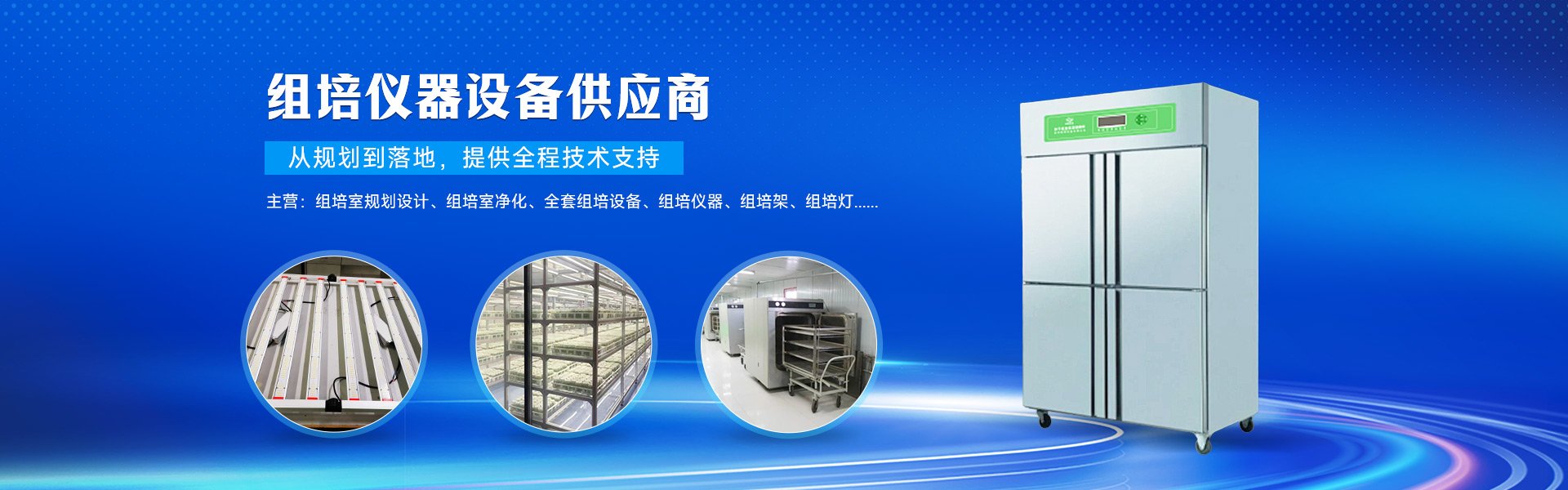
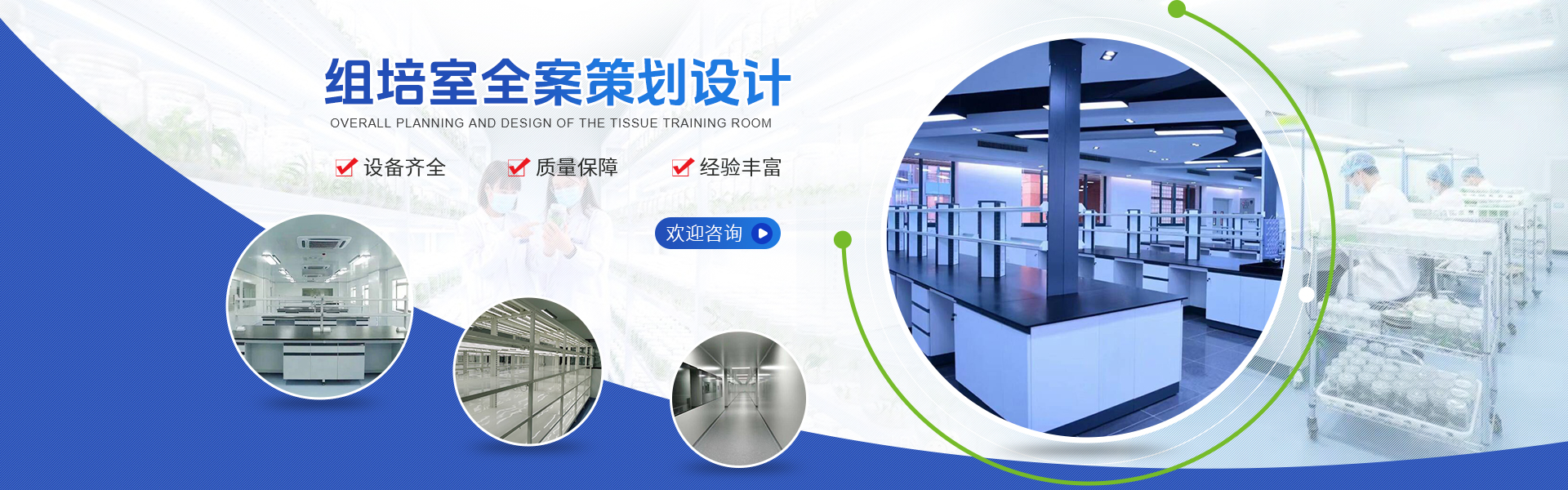
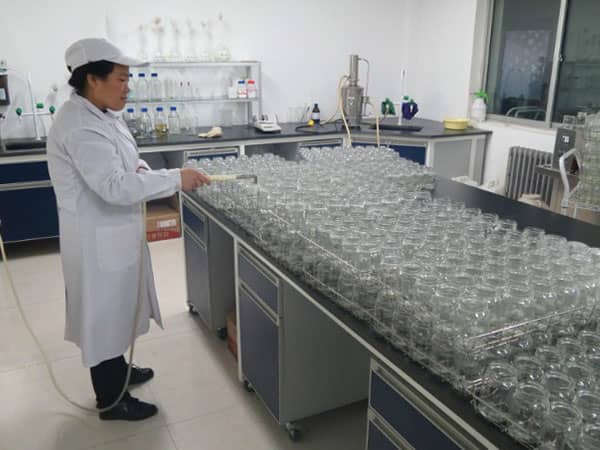
The tissue culture room design technology is utilized for the industrial production of plant seedlings, encompassing processes such as selecting and obtaining explants, sterilizing explants and inducing their culture, propagating sterile materials, and subsequent propagation, as well as the individual root formation, extracting seedlings from bottles, and packaging them for market distribution.
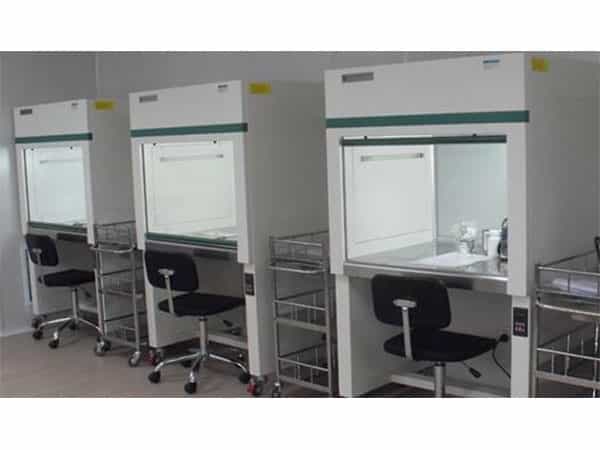
Due to the aseptic conditions under which tissue culture seedlings are produced from bottling to export, the scale of a tissue culture facility is generally measured by the number of aseptic workstations procured. In principle, depending on the variety, each aseptic workstation can produce between 150,000 to 200,000 seedlings annually. For instance, to plan a tissue culture room with a production capacity of 5 million seedlings, one would need between 25 to 30 aseptic operation stations.
Another calculation method is to determine the quantity of sterile workstations by dividing the demand during the supply peak by the monthly output, based on market demand patterns.
Once the number of workbenches is determined, the placement of sterile workbenches can be designed, and the required area for the inoculation room can be calculated. Based on the daily production of tissue culture bottles and the cultivation cycle, combined with the crop rotation cycle, the number of culture racks required can be calculated, making it easy to determine the required area for the culture room. Typically, sterile workbenches should be equipped with culture racks. Four racks (1.2m x 0.5m, 5 layers), the area ratio of the sterile operating room to the operating room culture is 1:(1.5-2.0), or the area of the cultivation room is determined based on the number of cultivation racks, usually requiring 1.0-1.2 square meters per rack. Adjustments and expansions can be made according to your own situation later.
In relation to the construction of tissue culture production facilities, the quantity of additional配套设施, equipment, and operation tools should be calculated based on the requirements of each sterile workbench. Sufficient spare parts for commonly used tools such as scalpels and forceps should also be available. Tube seedlings should be placed in a transitional growth greenhouse or within a greenhouse. Modern tissue culture plants require the construction of germplasm resource conservation nurseries, original seed nurseries, production crop display areas, and more. The size of the area should vary according to the type of plant.
The construction of a plant tissue culture room requires significant equipment investment and a corresponding amount of space. Procedures such as surgery and sterilization demand frequent and substantial electrical power, leading to high costs. The training room becomes passive. Typically, it takes 1 to 2 years from the formal investment to product sales.
1. Considering the domestic consumption habits of flowers in previous years, there is still a need to coordinate and adapt the prices and costs of flowers. In most small and medium-sized cities, the market capacity for ornamental plants remains limited, and conventional productivity has not been fully utilized. Therefore, establishing large-scale tissue culture enterprises should be done with greater caution.
2. As a commercial nursery operator, before deciding to adopt group cultivation, it is essential to thoroughly research and investigate its advantages and issues, conduct market analysis, and personally inspect the site to assess its potential. Train the company by first having an internship period or hiring experts with practical experience as technical advisors before deciding on investment. If the market is limited, constructing an organizational maturation room with significant costs may become uneconomical, as it could bring unnecessary risks at the startup stage.
3. Develop production plans based on the scale of production.
Firstly, based on market demand and transplanting schedules, we have established the full process of plant tissue culture for the entire year. When formulating the production plan, the following points should be taken into consideration:
(1) Conduct actual estimates of plant propagation, root formation, and survival rates after transplantation.
(2) Possess technical reserves for the entire process of plant tissue culture.
(3) Master the appropriate stages, including rooting, transplanting times, and production processes for various tissue culture seedlings.
4. An Organizational Formation Room has been established. In addition to research needs, in terms of production, we must also consider how to achieve greater economic benefits with less investment.
(1) Align production with market demands, achieve a certain scale of production, reduce costs, and increase profits to enhance economic efficiency.
First and foremost, there must be professionals who are skilled in organizational training. Operators who are proficient in handling seedlings have a lower contamination rate and higher yield of finished products.
Next, reduce equipment investment, extend shelf life, minimize utensil consumption, and utilize inexpensive substitutes, such as: sucrose in tissue culture can replace edible sugar, and as long as the saltwater concentration is not high, tap water can be used to prepare culture media; rainwater can replace non-ionic water or distilled water.
(4) The propagation room maximizes natural light and temperature to save on electricity costs. Additionally, while maintaining the original superior variety characteristics, we strive to increase the breeding frequency, enhancing the root formation rate and the survival rate of transplanted seedlings.
Therefore,Tissue Culture Room Design and ConstructionCareful planning, precise calculations, and sound investments are crucial to achieve a balance between systematic and practical solutions, maximizing production potential. In the face of future market competition, aim to minimize costs while enhancing product quality and reliability.
Contact us

Service Hotline
15866611552
Company Telephone
158-6661-1552

Address
399 Hualong Road, Licheng District, Jinan City
b2b.china9.net © Zhongshang 114 Hebei Network Technology Co., Ltd.Address: Room 6009, Oriental New World Center, No.118 East Zhongshan Road, Qiaoxi District, Shijiazhuang City, Hebei ProvincePlatform Service Hotline: 4006299930




