
 Spiral Pipe - Shantou Bridge Support Spiral Pipe Manufacturer
 Bridge Support Spiral Pipe, Jieyang Piling Spiral Pipe Manufacturer
 Q235B steel casing, Shenzhen large diameter steel casing processing factory
 Q235B Spiral Pipe, Wan Ning Spiral Welded Pipe Manufacturer
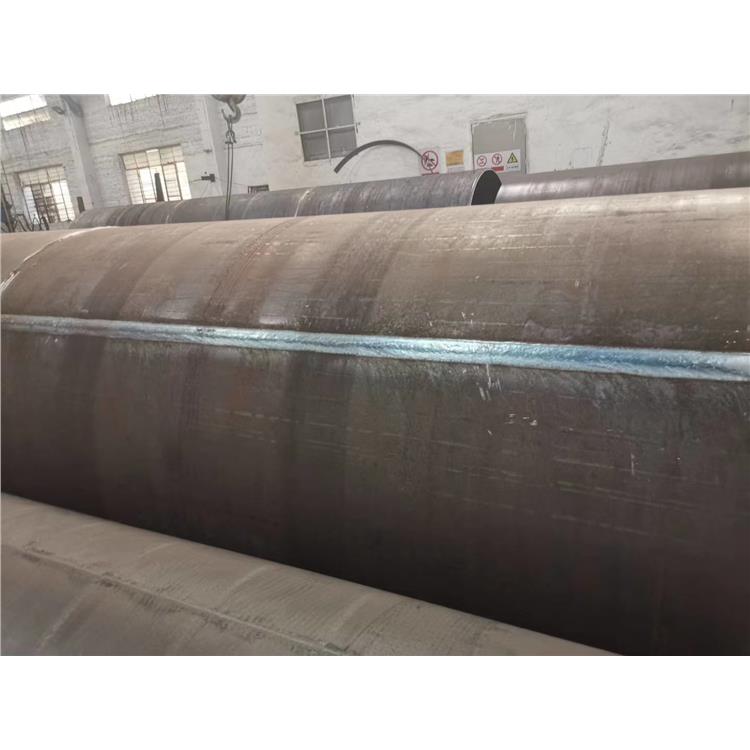 Welded Steel Pipe, Wanming Welded Steel Pipe Price List
 Spiral Pipe, Maoming Q235B Spiral Pipe Price List
 Welded Steel Pipe - Zhanjiang's Leading Manufacturer of Welded Steel Pipe
Product Details

Spiral Pipe Manufacturer, Welded Steel Pipe Manufacturer, Steel Casing Manufa...
Soule Star Diamond Member
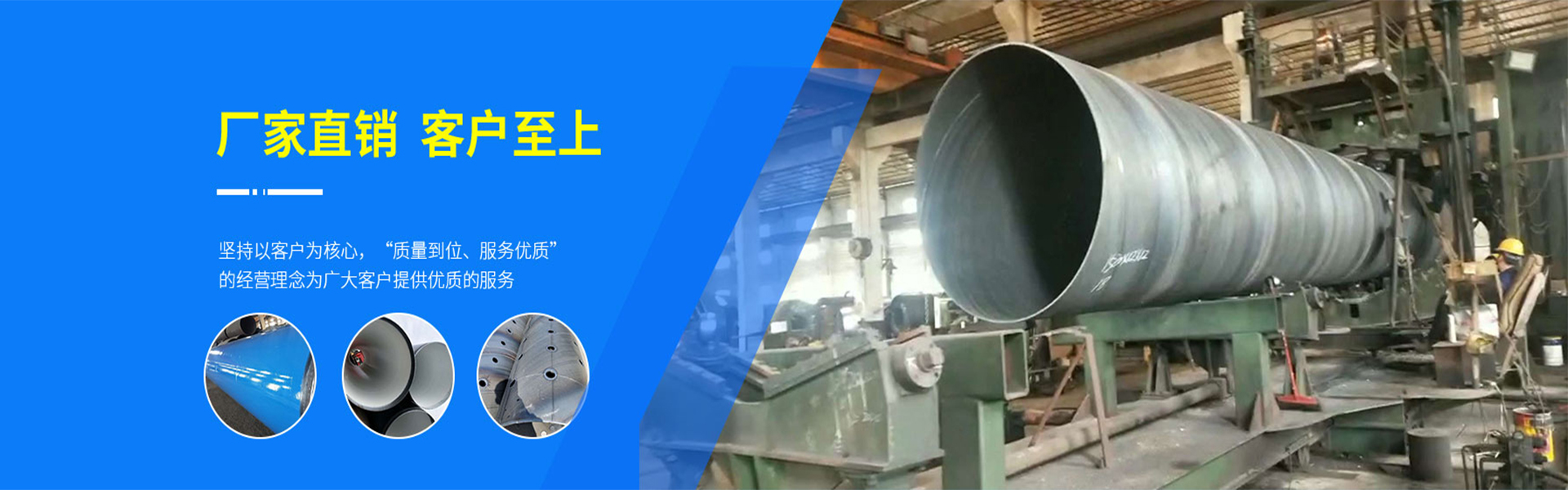
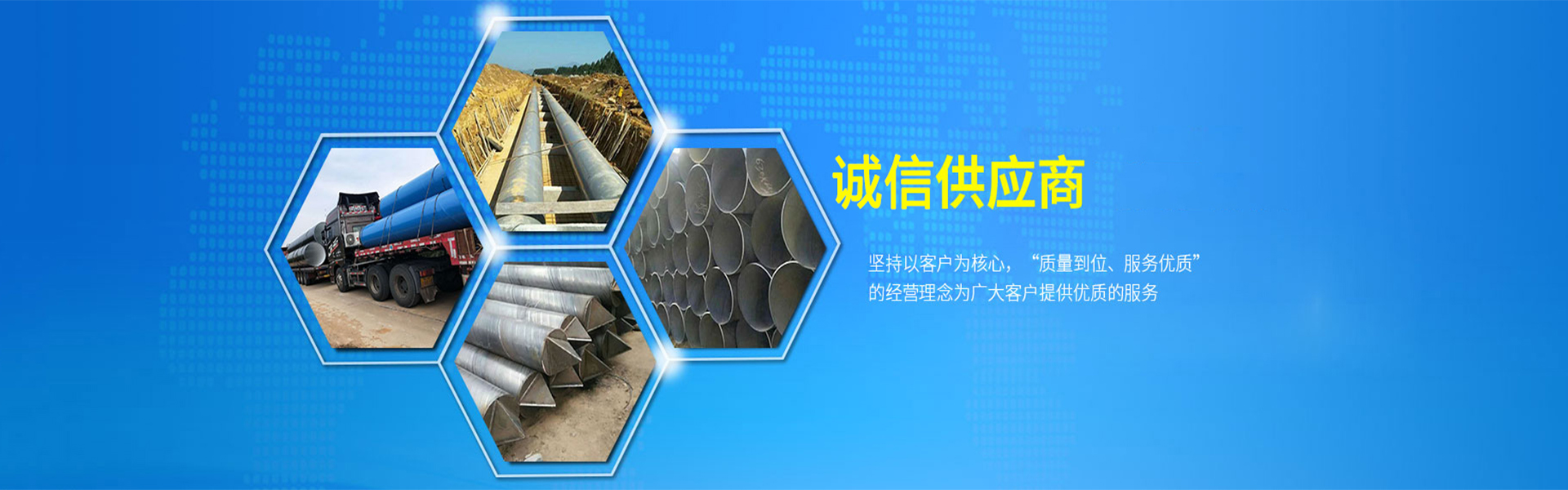


产品Price 3000.00/ton
最小起订Quantity:1 ton 供货总Quantity: 1000 ton


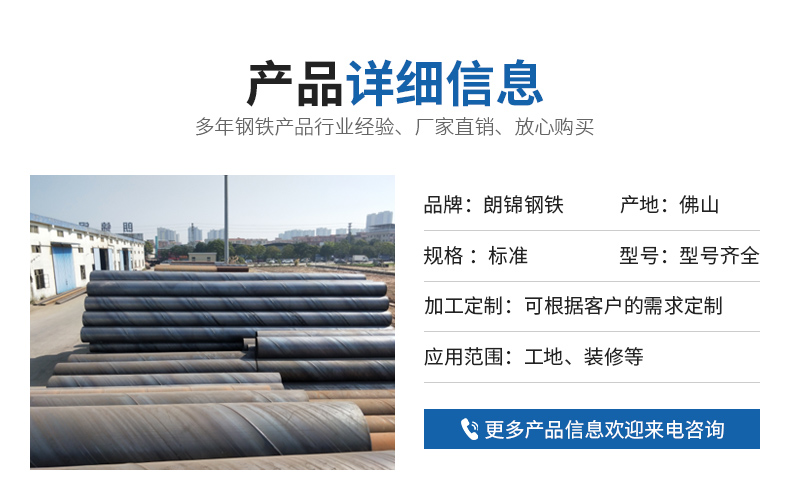
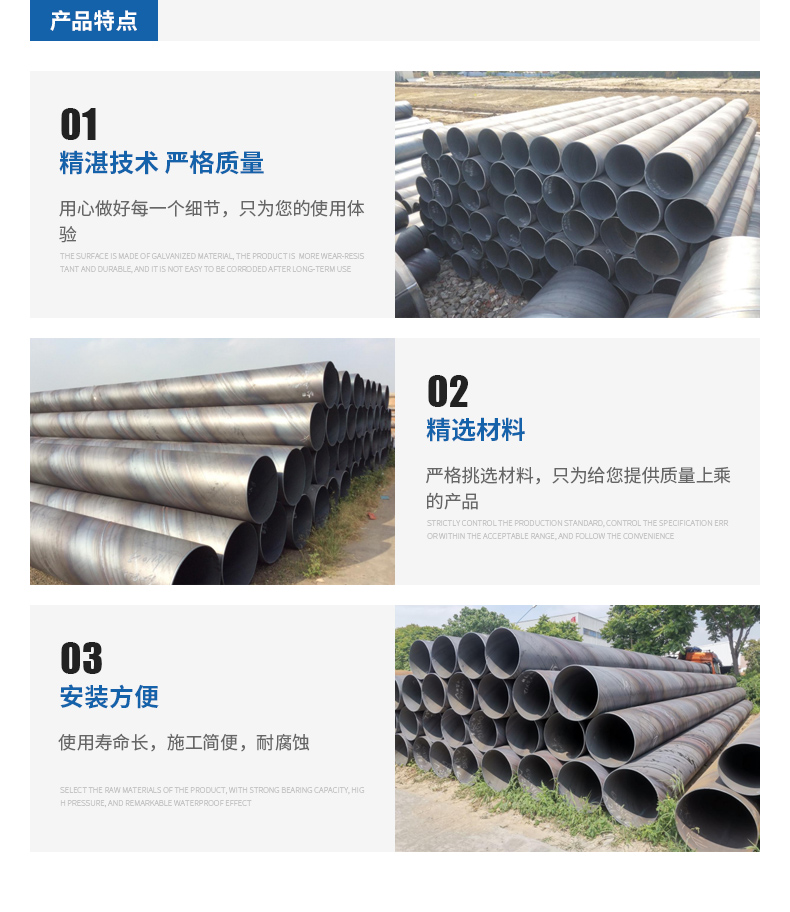
Helical pipes are primarily used for oil and natural gas transmission pipelines, with their specifications indicated by outer diameter * wall thickness. Helical pipes come in single-sided and double-sided焊接 varieties. Welded pipes must ensure that the hydrostatic test, tensile strength of the welds, and cold bending properties meet the specified requirements. 1. Raw materials, including steel coils, welding wire, and welding flux, must undergo rigorous physical and chemical testing before use. 2. Steel strip ends are joined using single or double wire submerged arc welding, and after rolling into steel pipes, automatic submerged arc welding is used for reinforcement welding. 3. Prior to forming, the strip steel undergoes leveling, trimming, edge trimming, surface cleaning conveyance, and pre-bending treatment. 4. The electric contact pressure gauge controls the pressure of the hydraulic cylinders on both sides of the conveyor, ensuring the smooth transport of the strip steel. 5. Utilizing external or internal roller forming. 6. Employ a weld gap control device to ensure that the weld gap meets welding requirements; the pipe diameter, misalignment, and weld gap are all strictly controlled. 7. Both inner and outer welds are performed using Lincoln welding machines for single or double wire submerged arc welding, ensuring stable welding specifications. 8. All welded seams are inspected by an online continuous ultrasonic flaw detector, ensuring full coverage for the spiral welds' non-destructive testing. In the event of any defects, an automatic alarm is triggered and marked with paint, allowing production workers to adjust process parameters in real-time and promptly eliminate the defects. 9. Cut steel pipes individually using an air plasma cutting machine. 10. After cutting into individual steel pipes, each batch must undergo a stringent initial inspection system, checking the mechanical properties of the welds, chemical composition, fusion condition, surface quality of the pipes, and undergo non-destructive testing to ensure the pipe-making process is qualified before production can begin. 11. Areas with continuous ultrasonic flaw detection marks on the welds are subject to manual ultrasonic and X-ray re-inspection. If defects are confirmed, they are repaired and re-inspected non-destructively until the defects are eliminated. 12. All pipes with longitudinal welds of strip steel and T-joints intersecting spiral welds have been subjected to X-ray television inspection or filming. Each steel pipe undergoes hydrostatic testing with radial sealing. The test pressure and time are strictly controlled by the steel pipe water pressure microcomputer detection device. Test parameters are automatically printed and recorded. 14. Machining at the pipe end ensures precise control of the end face perpendicularity, bevel angle, and burr. Helical Steel Pipe Applications: Spiral welded pipes are primarily used in water supply projects, petrochemical industry, chemical industry, power industry, agricultural irrigation, urban construction, and are among the top 20 key products developed in China. For liquid transportation: water supply and drainage. For gas transportation: coal gas, steam. For structural purposes: used as pile pipes, for bridges, wharfs, roads, and building structures. Helical steel pipes are made from strip steel coils, formed at room temperature through extrusion, and welded into spiral seam pipes using the automatic double-sided submerged arc welding process. Helical tubes, also known as helical cylinders or helical bodies, have an outer diameter of approximately 30 nanometers and an inner diameter of about 10 nanometers, with adjacent helical spacing at about 11 nanometers. Each complete helix is composed of 6 nucleosomes, with H1 histone proteins located on the inner surface of the helical tube, playing a crucial role in maintaining its structure. The 10-nanometer fiber composed of nucleosomes spirals to form a 30-nanometer thick fiber, further compressing the DNA length by a factor of 6. The trend of rapid and stable growth in the demand for spiral steel pipes is unlikely to undergo a fundamental change. Whether the market for spiral steel pipes can maintain its rapid and stable development hinges on changes in demand. Macroeconomic policies will regulate the economy, which will likely slow down the rate of market growth in the future.

Phone Consultation