
 Spiral Pipe - Shantou Bridge Support Spiral Pipe Manufacturer
 Bridge Support Spiral Pipe, Jieyang Piling Spiral Pipe Manufacturer
 Q235B steel casing, Shenzhen large diameter steel casing processing factory
 Q235B Spiral Pipe, Wan Ning Spiral Welded Pipe Manufacturer
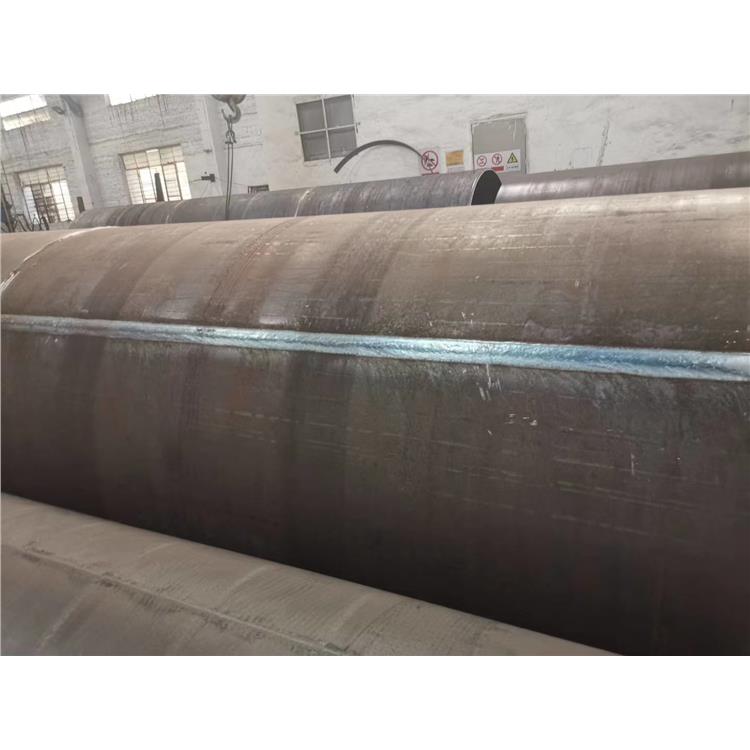 Welded Steel Pipe, Wanming Welded Steel Pipe Price List
 Spiral Pipe, Maoming Q235B Spiral Pipe Price List
 Welded Steel Pipe - Zhanjiang's Leading Manufacturer of Welded Steel Pipe
Product Details

Spiral Pipe Manufacturer, Welded Steel Pipe Manufacturer, Steel Casing Manufa...
Soule Star Diamond Member


产品Price 3300.00/ton
最小起订Quantity:1 ton 供货总Quantity: 1000 ton


T shape welded steel pipes are prone to hard bending and misalignment during welding due to their poor shape and size accuracy at the ends without cutting the edges. Simulation parameter range: Vertical pipe: diameter D = 10mm, length L = 660mm; Three vertical T shape welded steel pipes: diameter D = 10mm, the ratio of the curvature diameter to the helical pipe diameter varies as Dc/D = 15, 20, 25, helical pitch Pt = 20mm, pipe lengths are L = 503mm, L = 660mm, L = 817mm. Mass flow rate G = 200~400 Kg/(m³).2·s), heat flux density q = 5~15 kW/m²2. Saturated pressure p, saturated = 0.414880 MPa, saturated temperature T, saturated = 283.15 K. Tee-welded steel pipes containing Ni exhibit strong corrosion resistance in acidic environments. In environments containing or susceptible to corrosion, the higher the Ni content in the tee-welded steel pipes, the greater the corrosion resistance. Under normal conditions, adding Cr to tee-welded steel pipes is sufficient to prevent erosion. Poor edge condition of the steel strip is another significant cause of misalignment. Variations in mass flow rate, heat flux density, and structural parameters (the ratio of helical curvature diameter to tee-welded steel pipe diameter, Dc/D) affect the saturated bubble boiling heat transfer coefficient inside vertical spiral pipes. Advantages of Spiral Seam Submerged Arc Welded Steel Pipe: 1. General low-pressure fluid conveyance spiral seam submerged arc welded steel pipes (SY5037-2000) are manufactured from hot-rolled steel strip coils as billets, formed through cold-rolled spiral method, and produced using double-sided automatic submerged arc welding or single-sided welding processes for conveying water, coal gas, air, and steam, among other low-pressure fluids. 2. General low-pressure fluid transmission spiral seam high-frequency welded steel pipes (SY5039-83) are manufactured from hot-rolled steel strip coils as billets, formed into spirals at room temperature, and welded using high-frequency butt welding method for general low-pressure fluid transmission spiral seam high-frequency welded steel pipes. 3. Steel Pipe for Piling (SY5040-2000) is manufactured from hot-rolled steel strip coils, formed by normal temperature spiral rolling, and joined by double-sided submerged arc welding or high-frequency welding. It is used for steel pipes in civil engineering structures, wharfs, bridges, and other foundation piles. 4. Welded steel pipes for low-pressure fluid conveyance (GB/T3092-1993), also known as general-purpose welded pipes or black pipes, are used for conveying water, gas, air, oil, heating steam, and other low-pressure fluids, as well as for various other applications. These pipes are categorized by wall thickness into ordinary and thick-walled pipes; and by end form into unthreaded (smooth) pipes and threaded pipes. The specifications of the pipes are indicated by the nominal diameter (mm), which is an approximate value of the inner diameter. It is customary to express the nominal diameter in inches, such as 11/2. In addition to being used directly for conveying fluids, welded steel pipes for low-pressure fluid conveyance are also extensively used as the base pipes for galvanized welded steel pipes for low-pressure fluid conveyance. 5. Galvanized Welded Steel Pipe for Low-Pressure Fluid Transportation (GB/T3091-1993), also known as galvanized electric welding pipe or commonly referred to as white pipe, is used for conveying water, coal gas, air oil, heating steam, warm water, and other general low-pressure fluids or for other purposes. The pipe is hot-dip galvanized welded (furnace welding or electric welding) steel pipe. The wall thickness of the pipe is categorized into ordinary galvanized steel pipe and thickened galvanized steel pipe; the end forms are available in plain-end galvanized steel pipe and threaded-end galvanized steel pipe. The specifications of the pipe are indicated by the nominal diameter (mm), which is an approximate value of the inner diameter. It is customary to express the nominal diameter in inches, such as 11/2. 6. Standard carbon steel wire conduit (GB3640-88) is a steel pipe used for protecting electrical wires in electrical installation projects for industrial and civil buildings, as well as the installation of machinery and equipment. 7. Seamless Welded Steel Pipe (YB242-63) is a type of steel pipe where the weld is parallel to the longitudinal axis of the pipe. It is commonly categorized into metric welded steel pipes, thin-walled welded pipes, transformer cooling oil pipes, and so on. 8.螺旋缝埋弧焊钢管 for pressure fluid transmission (SY5036-83) is made from hot-rolled steel strip coils as pipe billets, formed by normal temperature spiral forming, and welded using double-sided submerged arc welding method. It is used for spiral seam steel pipes for pressure fluid transmission. These pipes have strong pressure-bearing capacity, excellent welding properties, and have passed various stringent scientific inspections and tests, ensuring reliable use. The large bore pipes offer high transmission efficiency and can also save investment in pipeline laying. They are mainly used for oil and gas pipeline transmission. Welded steel pipes showcase their economy and aesthetics in high-precision, low-pressure fluid applications. The production process of welded steel pipes is simple, with high efficiency, low cost, and rapid development. The strength of spiral-welded pipes is typically higher than that of straight-seam welded pipes. Larger diameter pipes can be produced from narrower billets, and pipes of different diameters can also be made from the same width billets. However, compared to pipes of the same length, the length of the weld seam increases by 30% to 100%, resulting in lower productivity. Therefore, smaller diameter pipes usually use straight welding, while larger diameter welded steel pipes mostly use spiral welding.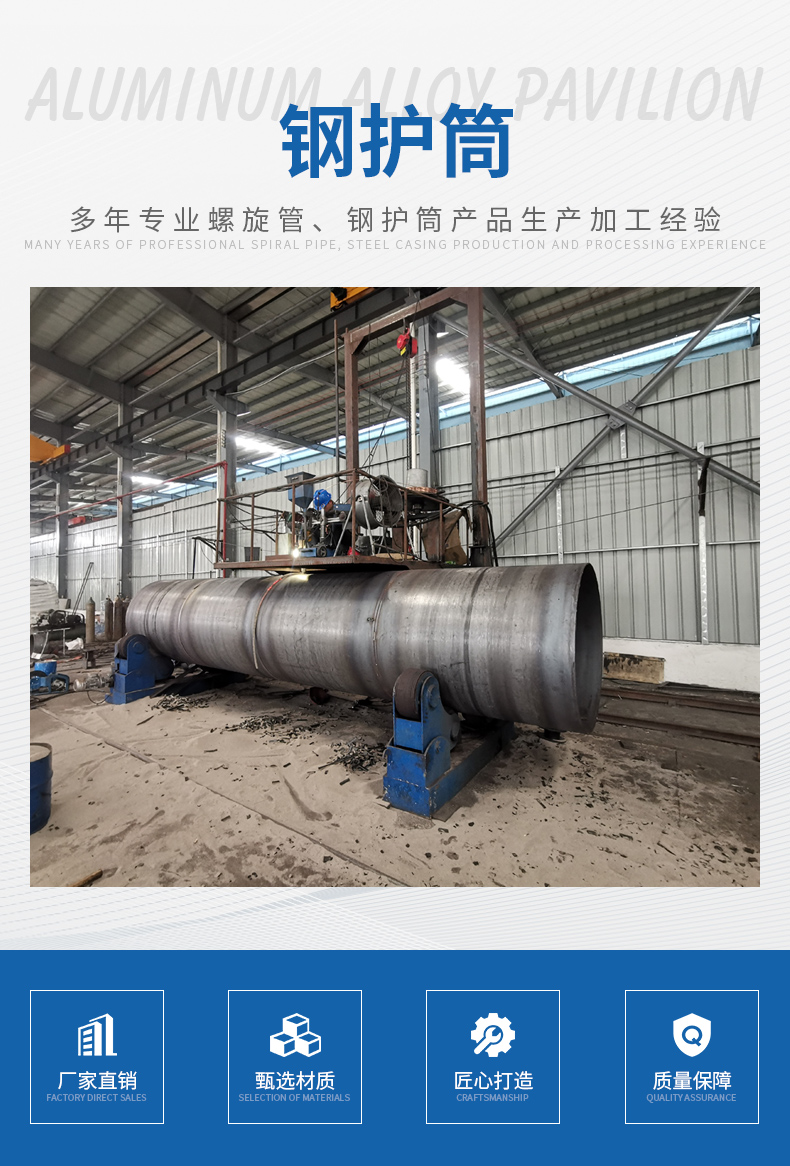

Phone Consultation