

Titanium Plating Processing Manufacturer - Characteristics of Titanium Coating
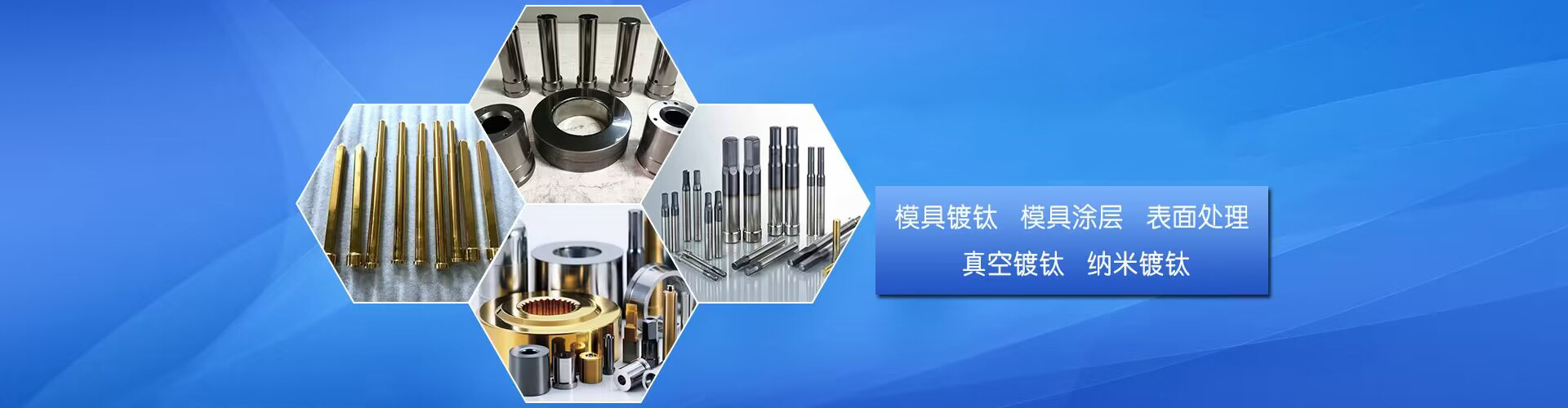
Titanium Plating Manufacturer's Titanium Nitride Characteristics: A typical, general-purpose wear-resistant coating with a microstructure of fine nano-sized particles, offering high tenacity and hardness. It has excellent resistance to high temperatures and corrosion. The operating temperature of this coating is within 350 degrees. Applications: Suitable for high-speed dry cutting, milling cutters, drills, and gear-type cutting tools. Due to its low coefficient of friction, it is widely used in medium-range applications. The high tenacity, hardness, and resistance to high temperatures of this coating can fundamentally address early failure issues caused by wear, adhesion, corrosion, bonding, and abrasion in items, molds, and parts.
Titanium nitride coating from TiN processing factory: Characterized by a composite coating with multiple layers, it has higher hardness than TiN, lower friction coefficient, lower internal stress due to the presence of carbon, higher toughness, lubricity, and excellent hardness and wear resistance. The operational temperature of this coating is within 250 degrees. Applications: Suitable for processing materials with high toughness, such as stainless steel, titanium alloys, cast steel, and other hard materials. Its low friction coefficient and high surface hardness make it particularly suitable for automotive molds, stamping dies, stretching dies, edge pressing dies, punch rods, valve pins, sliders, pins, etc. However, it is not suitable for high-temperature environments.
Titanium Plating Manufacturer Shares the Rise of New PVD Titanium Coating Technique
PVD (Physical Vapor Deposition) is a process that uses physical methods to transfer materials, moving atoms or molecules from a source to the surface of a substrate. Its effect is to coat particles with special functions (high strength, wear resistance, thermal conductivity, corrosion resistance, etc.) onto a substrate with lower functions, thereby enhancing the substrate's performance. PVD Basic Methods: Vacuum Evaporation, Sputtering, Ion Plating (Hollow Cathode Ion Plating, Hot Cathode Ion Plating, Arc Ion Plating, Reactive Sputtering Ion Plating, Radio Frequency Ion Plating, Direct Current Discharge Ion Plating).
Why does the vacuum titanium plating manufacturer recommend heat treatment before the workpiece is plated with titanium? What effects does heat treatment have on mold steel?
1) Vacuum镀钛 manufacturers refer to annealing as a heat treatment process that involves heating the metal or alloy to an appropriate temperature, holding it for a certain period, and then slowly cooling it in the furnace. Essentially, it is the process of heating the steel to austenitize it before transforming it into pearlite.
Titanium Vacuum Coating Manufacturer's Annealing Effect:
Reduce the hardness of the steel to enhance its plasticity, facilitating cutting and cold deformation processing.
② Refine grain structure, eliminate arrangement defects caused by forging and welding, evenly distribute the steel's composition, improve the steel's properties, or prepare for future heat treatment.
③Eliminate internal stresses in the steel to avoid deformation or cracking.
Methods for Annealing Titanium Coating Manufacturers Common annealing methods include full annealing, spheroidizing annealing, stress relief annealing, recrystallization annealing, dispersion annealing, and isothermal annealing, among others.
① Full Annealing, also known as recrystallization annealing, involves completely austenitizing the iron-carbon alloy, followed by slow cooling to achieve a balanced condition. It is suitable for medium carbon steels and medium carbon alloy steels with a carbon content of 0.3% to 0.6%.
② Spheroidizing Annealing - a heat treatment process that transforms carbides in steel into a spherical shape. Common types include general spheroidizing annealing and isothermal spheroidizing annealing. This process is primarily used for dies, gauges, and cutting tools made of eutectoid and hypoeutectoid steels.
③ Stress Relieving Annealing - A heat treatment process to eliminate residual stresses that exist within forgings due to plastic deformation processing, casting, welding, etc.
④ Recrystallization Annealing, also known as central annealing, is a heat treatment process where the metal, after cold deformation, is heated above the recrystallization temperature and held for the appropriate duration to allow the deformed grains to recrystallize into uniform, equiaxed grains, thereby eliminating deformation strengthening and residual stresses.
⑤Isothermal Annealing is a heat treatment process where steel or billets are heated above the Ac3 (or Ac1) temperature, held for an appropriate duration, then rapidly cooled to a specific temperature within the pearlite temperature range and isothermally held, causing the austenite to transform into a pearlitic arrangement, and finally cooled in air. This method of annealing is primarily used for alloy steels with a stable Ac hypoeutectoid.
(2) Annealing is a heat treatment process where steel or steel parts are heated to above Ac3 by 30~50°C, held at this temperature for a suitable period, and then cooled in still air.
Vacuum Titanium Plating Manufacturer's Normalizing Effect:
Eliminates the network carbides in hyper-eutectic steel, improving the steel's machinability.
② Refine overheated casting and forging grain structure and eliminate internal stress.
③ Medium and low carbon steels with carbon content less than 0.4% can use normalizing instead of annealing for preliminary heat treatment.
④Workpieces with carbon content between 0.4% and 0.7%, which are not very critical, can be used under normalizing conditions.
(3) The quenching process of a vacuum titanium plating factory involves heating the steel above the Ac3 or Ac1 point to a certain temperature, holding it for a specific duration, and then cooling it at an appropriate rate to achieve a martensitic and/or bainitic structure.
Quenching effect makes the supercooled austenite transform into martensite (or bainite), achieving a martensite (or bainite) arrangement, followed by tempering at different temperatures to obtain the desired mechanical properties. Vacuum TiN coating
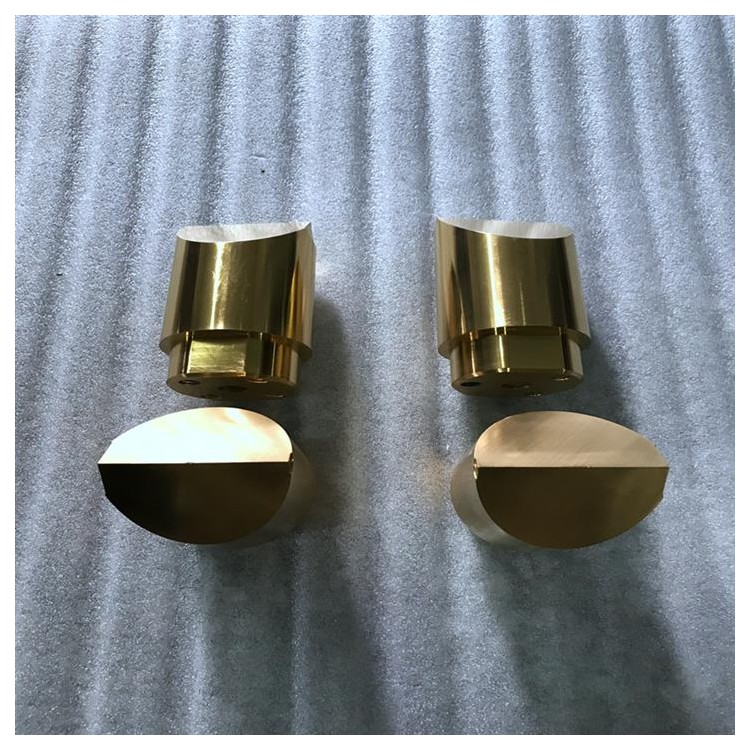
Titanium Plating Molding Manufacturer's Collaboration Results: Our nano titanium plating process excels in this field. The coated gear cutters processed by the titanium plating molding manufacturer showed a 9.3% increase in lifespan, with the blade edge wear reduced from 0.3mm to 0.1mm, resulting in less need for re-grinding and reduced re-grinding frequency. This accelerated cutting speeds, improved production efficiency (significantly reducing unit costs for final gear processing units without coating or poor coating quality), and enhanced production reliability, quality, and efficiency while shortening the production cycle. Molding Titanium Plating
Mold PVD Titanium Plating
