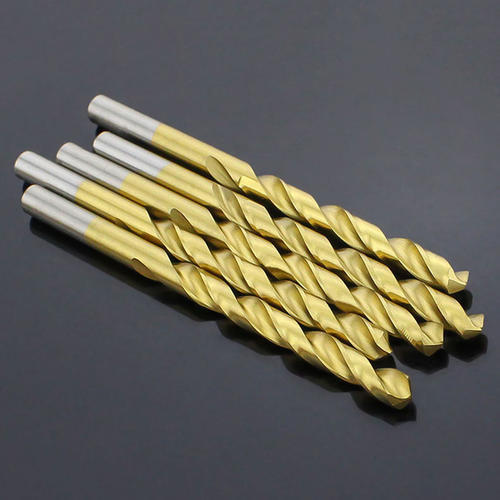

Titanium plating is commonly used to enhance the wear resistance of objects' surfaces, such as taps and drills for high-speed machining centers, which can be coated with titanium to improve tool wear resistance. Similarly, piston ring surface treatment also involves titanium plating, with the same objective of increasing wear resistance.
Decorative titanium plating, akin to the gold rings one can purchase on the street for a few dollars, is generally found in the titanium plating process. It primarily features a golden yellow color, looking attractive. It is used to prevent oxidation and rust on the surface of objects.
Titanium Plating Techniques Include: Vacuum Coating and Spraying Processes
Vacuum coating techniques include magnetron sputtering and arc ion plating. Introducing nitrogen during the coating process can create titanium nitride, resulting in a golden yellow coating color; otherwise, it remains white. This method yields thin coatings, typically around 15 micrometers, with a glossy finish that requires no further processing. Spray coating methods include cold spray, which can produce coatings as thick as millimeters. The surface is rough and requires subsequent finishing.
Titanium Carbonitride vs. Titanium Nitride Coatings: The color differs, with Titanium Carbonitride (black) and Titanium Nitride (golden). The hardness of Titanium Carbonitride is higher than that of Titanium Nitride, but Titanium Carbonitride is not as resistant to high-temperature oxidation as Titanium Nitride, leading to the development of Titanium Carbonitride-Nitride coatings. In recent years, Titanium Aluminum Nitride and Chromium Nitride coatings have also been quite popular. In terms of processing, Titanium Carbonitride is more difficult than Titanium Nitride, with a narrower control range. Both coating processes are very mature, categorized into decorative and tool coatings. Decorative coatings are typically very thin, no more than 1 micron, while tool coatings require a thickness of 3-5 microns.