


PVD coatings enhance the wear resistance of mold surfaces, resulting in higher hardness.
2. The PVD coating has a low coefficient of friction, resulting in excellent lubricity.
3. The molds have seen a significant enhancement in their resistance to chemical corrosion through the application of PVD coating technology.
The role of PVD is to spray certain particles with special properties onto a substrate with lower performance, thereby enhancing the substrate's performance. Basic methods include vacuum evaporation, sputtering, and ion plating (hollow cathode ion plating, thermal cathode ion plating, arc ion plating, reactive ion plating, radio frequency ion plating, and DC discharge ion plating).
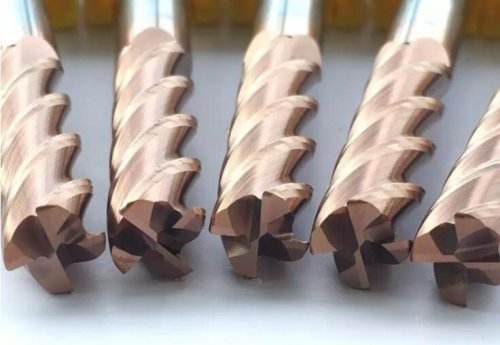
The successful application of PVD in the high-speed steel tooling field initially garnered significant attention from the manufacturing industry. While developing high-performance and high-reliability coating equipment, there has also been a more in-depth research into the application of coatings on hard alloy and ceramic tools.
The PVD process has low treatment temperatures, with no effect on the bending strength of cutting tool materials below 600℃; the internal stress state of the film is compressive, making it particularly suitable for coating on precision complex hard alloy cutting tools; the PVD process has no adverse environmental impact, aligning with the development direction of modern green manufacturing.
The PVD coating technology is now widely used in the coating treatment of hard alloy end mills, drills, step drills, oil hole drills, reamers, taps, indexable milling inserts, turning inserts, special-shaped tools, and welding tools.
PVD technology not only enhances the bonding strength between the film and the tool substrate material, but also evolves the coating composition from the **generation TiN to a variety of composite coatings such as TiC, TiCN, ZrN, CrN, MoS2, TiAlN, TiAlCN, TiN-AlN, CNx, DLC, and ta-C.
