Fasteners, Hardware Products, Metal Products, Steel Rails...

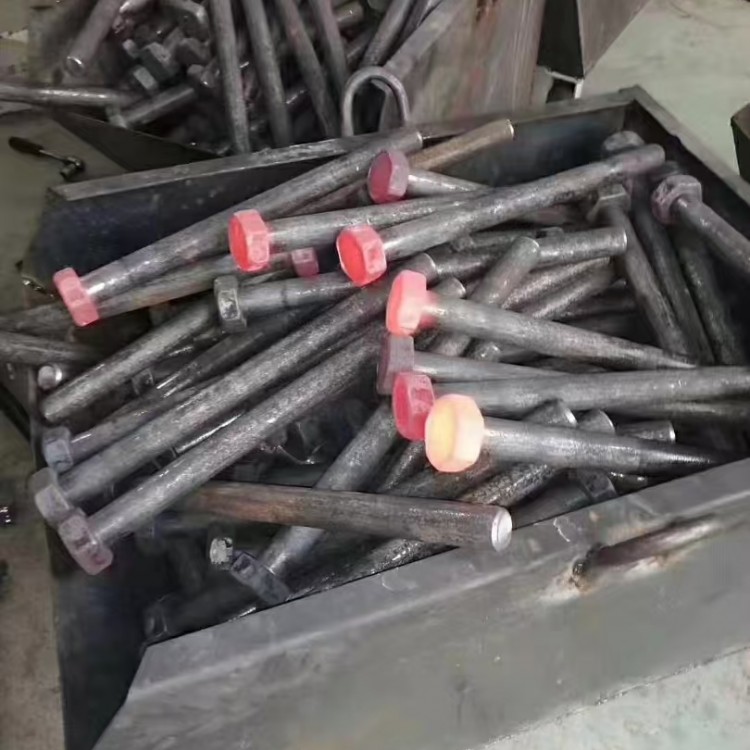
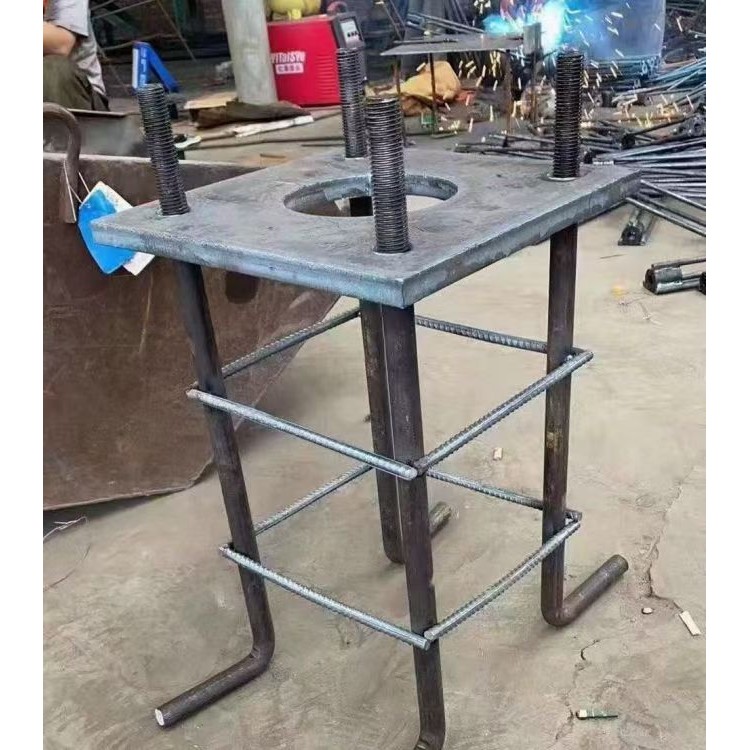
I. Pre-embedded Component Design and Calculation Issues A portion of the curtain wall projects, particularly small and medium-sized ones, do not place enough emphasis on professional curtain wall design. Some designs consist only of a few simple drawings, lacking placement diagrams for pre-embedded components and structural mechanical calculation books. Although some may have calculation books, they do not include calculations for pre-embedded components and have not been reviewed. II. Welding Quality Issues with Flat Pre-embedded Components 1. Welding Quality Issues with Pre-embedded Components Common forms of pre-embedded components are composed of anchor bars welded to anchor plates (anchor bars must not be cold-rolled steel bars; use Grade II deformed steel bars with diameters ≥10mm, including crescent and threaded bars, as specified in "Reinforced Concrete Structure Pre-embedded Components" JSJT-203). Early practices involved bending the steel bars and welding them directly to the anchor plate, but now, the more reliable method is to drill holes in the anchor plate and insert the bars. The welding quality between the anchor plate and the anchor bar is crucial for the quality of the pre-embedded component. To ensure welding quality, electric welders must be trained and certified. The inspection of pre-embedded components is also critical, involving not only appearance quality checks to prevent false or loose welds but also strength checks of the welds between anchor plates and steel bars according to regulations. 2. Misalignment Issues with Pre-embedded Components (1) Pre-embedded components were embedded during civil construction but became unusable due to changes or modifications in the curtain wall design. (2) Poorly secured pre-embedded components can shift or tilt during concrete pouring and compaction during construction. 3. Post-installed Anchor Bolt Construction Quality Issues (1) Installing post-installed anchor bolts on lightweight walls, which should not be connected to brick or stone masonry, let alone lightweight walls. (2) Inadequate and unreliable anchor base material, such as insufficient concrete strength or inadequate edge distance, can lead to cracking of the concrete base material and failure of the anchor. (3) Misalignment of post-installed anchor bolts. Drilling often encounters steel bars, causing misalignment and tilting, and incomplete removal of debris from the holes can lead to loosening of the anchor bolts during use. 4. Low Quality Chemical Anchor Bolts The construction of the glass curtain wall industry commonly uses chemical bolts for post-installed embedment. In the 1990s, chemical bolt products were introduced from overseas and applied in civil engineering. In recent years, many domestic manufacturers have followed suit, producing in large quantities, with market prices ranging from a few to several dozen yuan, making the market brand diverse, mixed, and of varying quality. The bonding adhesive of chemical bolts plays a role in bonding concrete base material with anchor bars. Currently, there are various chemical anchor adhesives on the market, with the most commonly used being modified epoxy resin, ethylene resin, and unsaturated resin. The physical and chemical properties of the bonding adhesive directly affect the anchoring effect. Although some imported brands provide test data on the durability, temperature resistance, and freeze-thaw resistance of the bonding adhesive, most manufacturers only offer vague claims such as "resistant to acid and alkali, heat-resistant, and low temperature sensitivity." Despite meeting design requirements in field pull-out tests, the durability of the bonding adhesive is currently only predictable through laboratory tests, and the effects of high-temperature welding on the anchor adhesive are unclear, leading to concerns among industry professionals about the durability of the bonding adhesive and the excessive use of low-cost products. (1) Some projects do not have pre-embedded components and use various specifications of chemical bolts as post-installed embedments. The exposed length of the bolts varies, and some clearly show insufficient effective contact length between the bolts and the concrete base material. (2) Some projects only conduct pull-out tests on test blocks in the laboratory without performing on-site tests or only test 1-2 types of bolts, such as a project using 4 different specifications of chemical bolts but only testing 2 types. (3) Inadequate number of on-site pull-out tests, with some projects only conducting symbolic tests. (4) There is no verification of test results against design calculations to ensure that the design value of the anchor bolt's bearing capacity should not exceed 50% of its ultimate bearing capacity. 5. Slot-type Pre-embedded Component Issues Slot-type pre-embedded components have good adjustability, flexible connection, no need for welding, and ease of embedding, and are widely used in architectural curtain wall projects. However, like other pre-embedded components, they are also prone to misalignment, tilting, and penetration into structural walls during installation.


b2b.china9.net © Zhongshang 114 Hebei Network Technology Co., Ltd.Address: Room 6009, Oriental New World Center, No.118 East Zhongshan Road, Qiaoxi District, Shijiazhuang City, Hebei ProvincePlatform Service Hotline: 4006299930