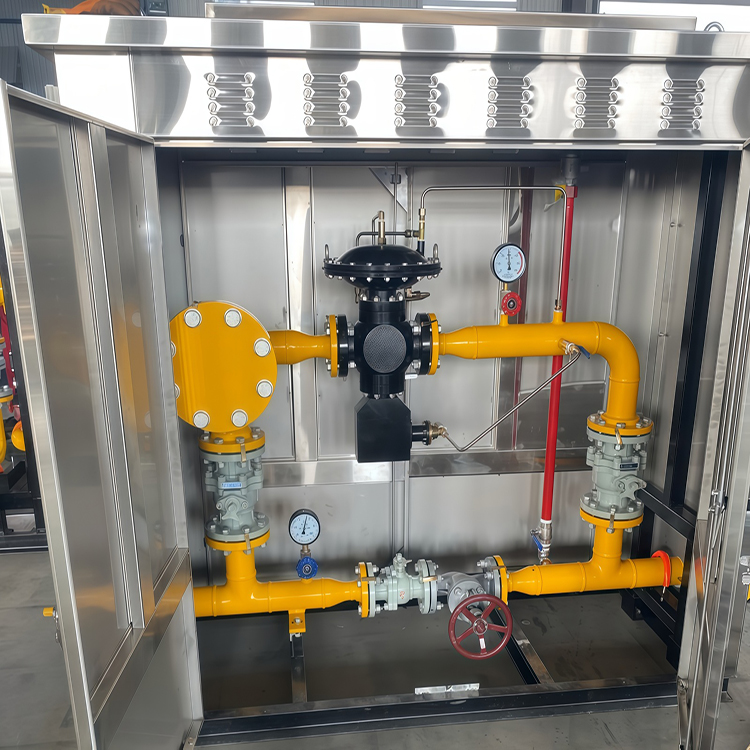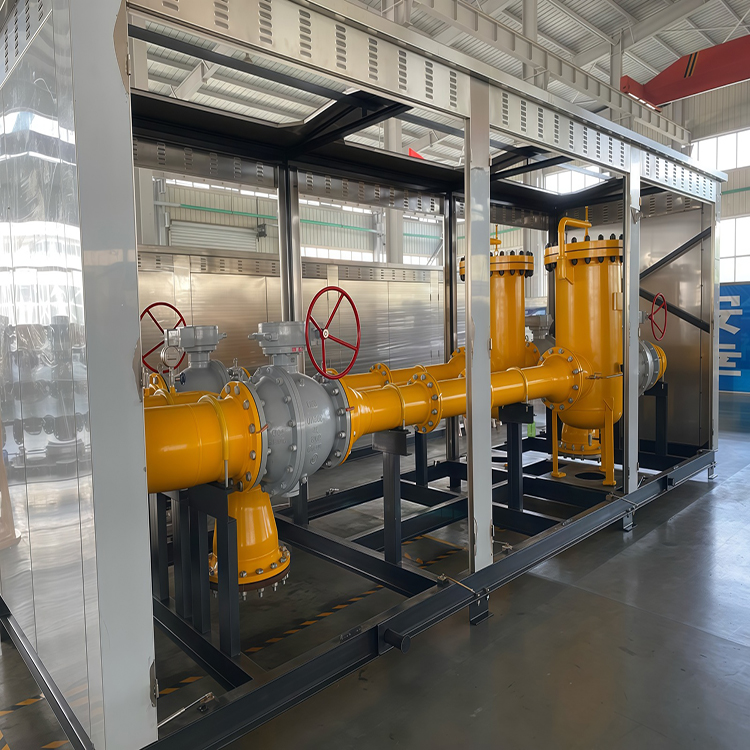
Specializing in the production of CNG pressure reducing e...

The Working Principle of Gas Pressure Regulating Cabinets
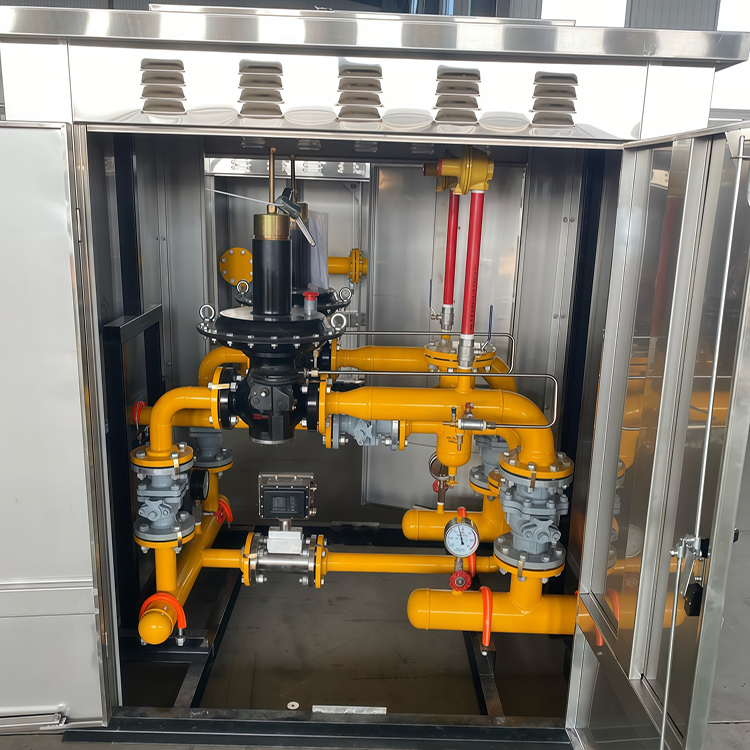
The gas pressure reducing cabinet is a critical equipment in gas transmission, playing a core role in stabilizing high-pressure gas from the upstream pipeline to the low-pressure gas required by downstream users (such as residents and commercial and industrial customers) while ensuring safe transmission.
The process can be simplified into three steps: "Filtering - Pressure Regulation - Safety Assurance." Firstly, high-pressure gas enters the pressure regulator cabinet and first passes through a filter to intercept impurities and dust in the gas, preventing blockage in subsequent components. Then, the clean gas flows into the core pressure regulator, where internal elements like diaphragms and springs automatically adjust the valve core opening based on the outlet pressure —— when the outlet pressure is too high, the valve core closes to reduce the gas flow; when it's too low, the valve core opens wider to increase the gas supply, thus maintaining a stable outlet pressure. Finally, the cabinet is equipped with safety valves and over-pressure cutoff valves and other protective devices. If pressure regulation goes awry and exceeds the limit, the protective devices will automatically activate, either by releasing pressure or cutting off the gas supply, to prevent safety accidents.
The entire process requires no continuous manual operation, achieving precise control and safe transmission of gas pressure through the automatic response of the mechanical structure.


b2b.china9.net © Zhongshang 114 Hebei Network Technology Co., Ltd.Address: Room 6009, Oriental New World Center, No.118 East Zhongshan Road, Qiaoxi District, Shijiazhuang City, Hebei ProvincePlatform Service Hotline: 4006299930