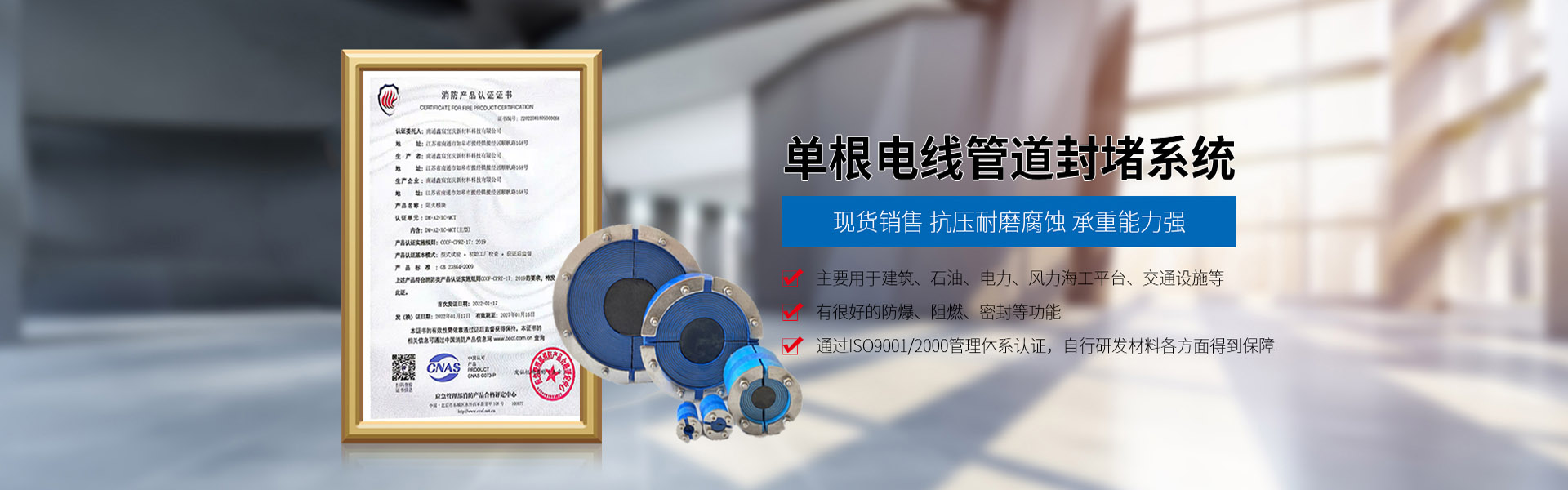
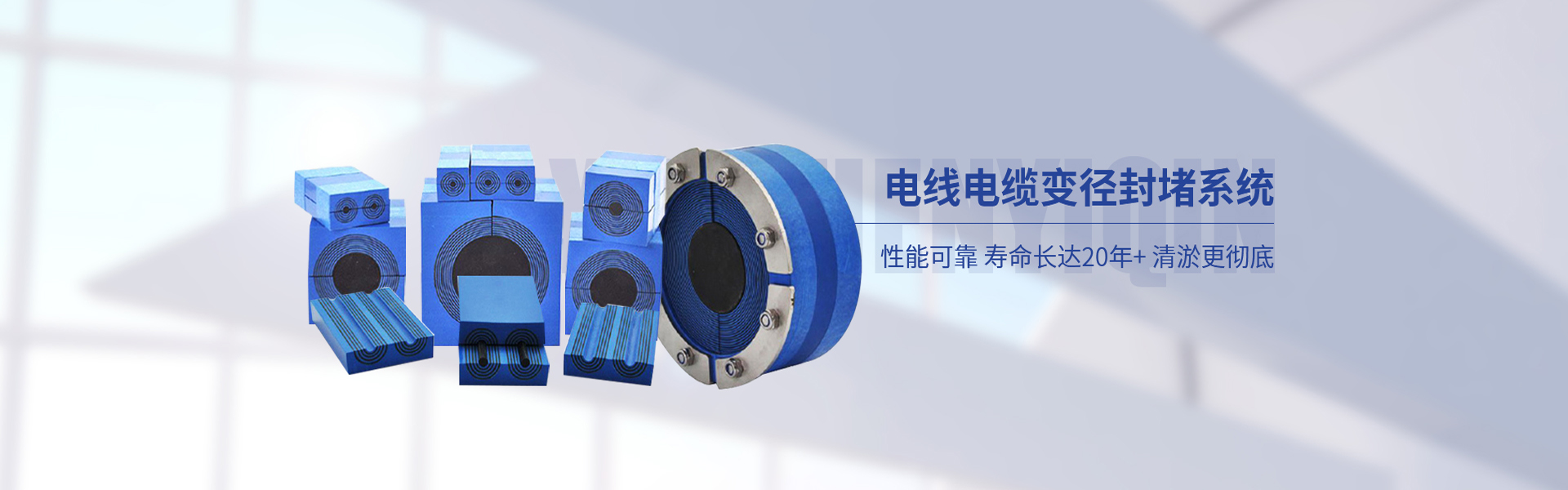
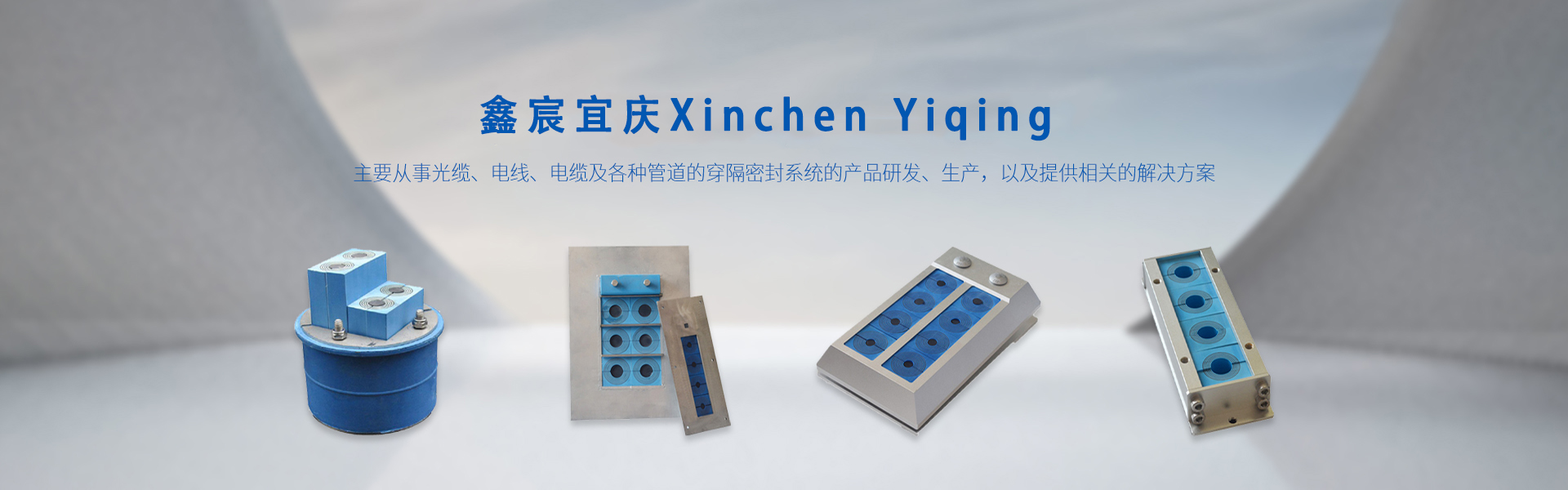
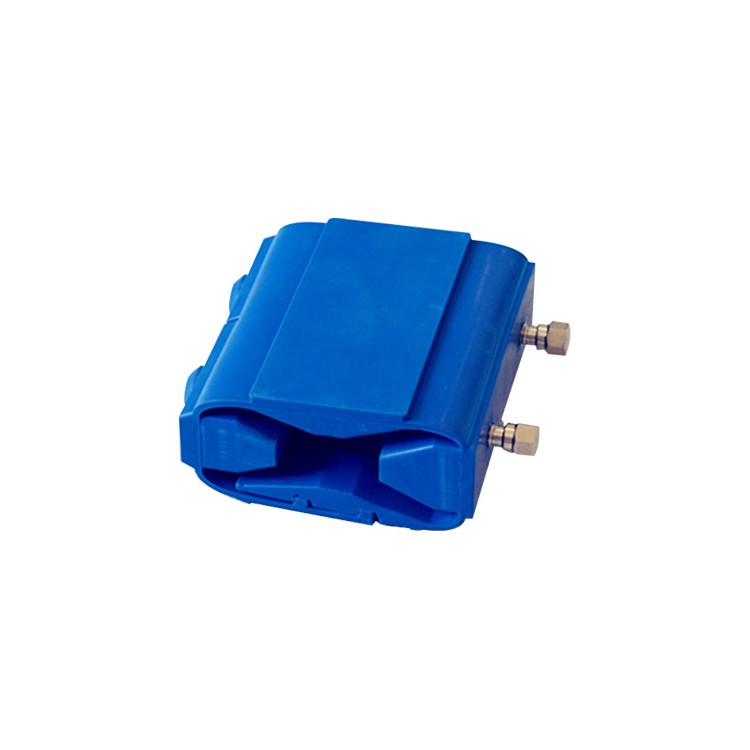
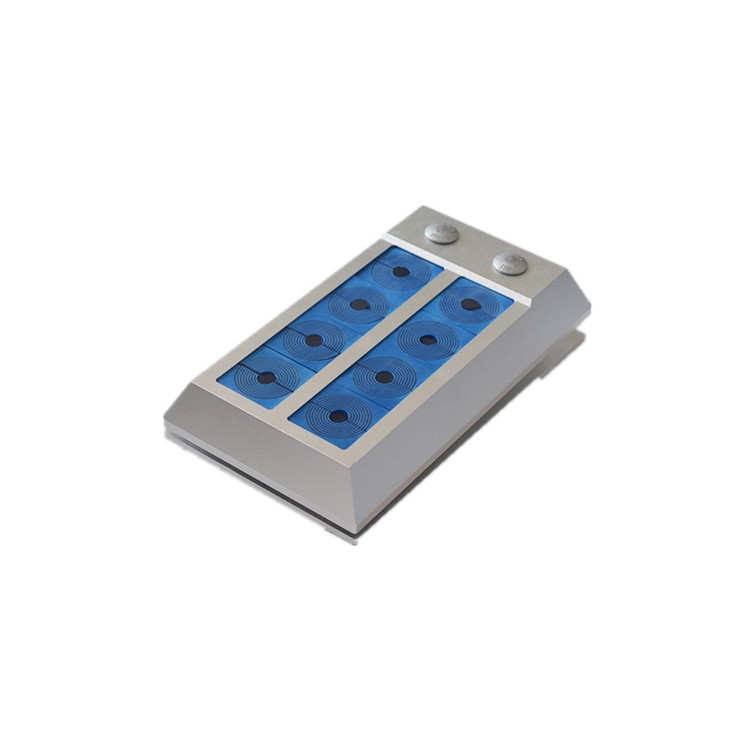
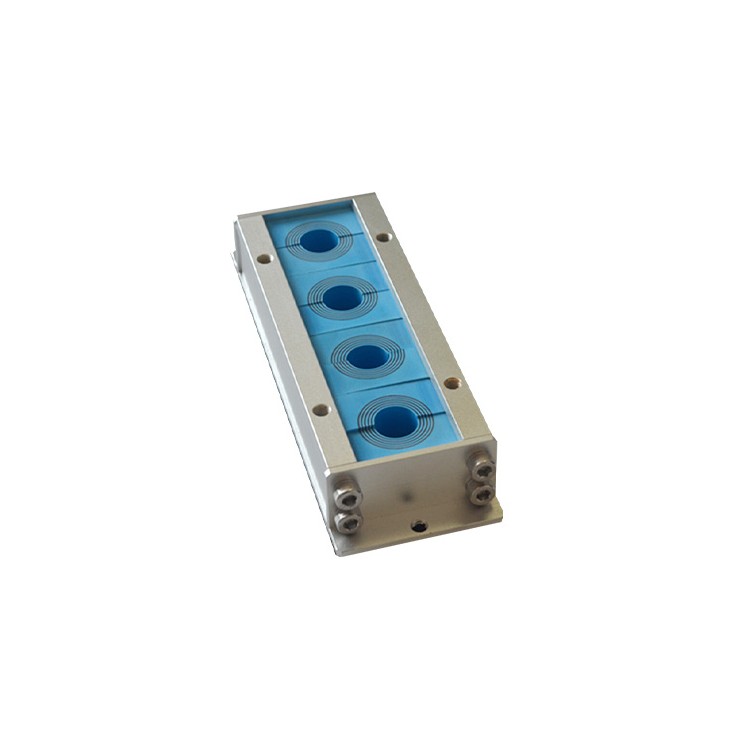
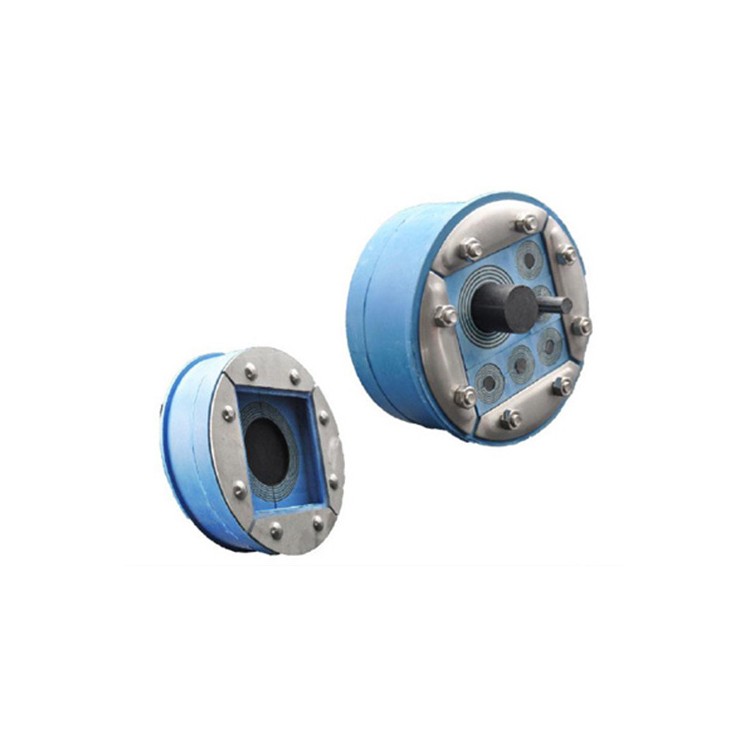
Fiber optic, electrical wire, cable, and various pipeline penetration and sealing systems
18962721276
Currently, China is experiencing rapid development in the exploitation and utilization of underground spaces such as integrated utility tunnels and subway systems. However, the application level of traditional wall penetration sleeves seems relatively lagging (as evidenced by 1, 2, and 5). To address and meet the specific needs of underground space environments for corrosion resistance, insulation, flame retardancy, sealing, and economy, we have developed waterproof components.
2.1 Clarifications and responses have been made regarding evidence items 1 and 2 (2 items).
2.11 Evidence 1: Two flanges are used with mud in the opposite direction through the threaded bore of the sleeve, and the compressed mud moves to form the filling.
Right 1 utilizes the opposing force of the screw in the clamp sleeve to deform the rubber component, resulting in axial stretching to form the filling.
Difference 1, Direction of Force Vectors: Right 1 experiences vertical force, while Evidence 1 is subjected to rotational torque.
Difference 2, Material properties vary: Putty is a plastic solid, while rubber is a thermoplastic thermosetting elastomer.
Compared to Evidence 1's advantage: The force applied by the clamp sleeve is more direct and effective, without generating friction with the sealing parts; the rubber components are not distorted by torque, have resilience, and provide a more resistant counterforce against high pressure. Installation and removal are convenient, with greater adaptability to accommodate cables of different diameters.
2.12 Regarding the internal structure of Evidence 2: The rubber sealant layer and support components are positioned vertically. Both have several cable holes. The circular pillar is designed to intersect with the circular platform hole at a conical angle, creating a forceful compression.
The distinctions: Different in shape and internal structure from Power 1
Power 1 and Evidence 1, Evidence 2 differ significantly in shape and construction. Power 1 boasts strong practicality, with easier installation and disassembly, uniform force application, good rubber seal suitability, and more reliable filling and sealing performance, while also exhibiting creativity.
Responding to Evidence 5, 6, 7, 8, 9, 10, 17, and 18 (8 items)
The above eight pieces of evidence are commonly used waterproof sleeve and manifold fittings in the construction installation industry, with various forms.
Compared to Power 1, the differences lie in its structure and combination form. Power 1 boasts more pronounced functionalities, highlighting practicality, novelty, and creativity.
Respond to Evidence 3, 4, 11, 12, 13, 14, 15, and 16 (8 items)
The above 8 pieces of evidence are all owned by the same entity, with the elements mentioning that the compressible rubber preformed parts (bases) have a peripheral and inner circumference with an剥片 layer that is not limited by shape and possesses characteristics that are not limited, and includes two or more base components surrounding each cable, wire, and pipe.
Evidence 3 defines all potential technical methods except for single-layer rubber piece rings or circles (e.g., having two or more bases with peelable layers of different characteristics on the inner and outer circumferences). It is not difficult to see that the wording of this claim is overly broad, almost defining the technical direction for this shape.
The distinguishing feature is that Power 1 consists of a rubber part with multiple rings, which differs in shape and assembly from Evidence 3, 4, 11, 12, 13, 14, 15, and 16, as is clearly evident.
From common sense, the shape of the blocked opening and the shape of the object passing through the opening are the optimal options for determining the peripheral and inner peripheral shapes of the blocking material. Secondly, if the filling material cannot fit the filling space of the peripheral and inner peripheries, the thickness of the blocking material's peripheral and inner peripheries should be increased or reduced. Many people can think of these conventional and habitual methods, therefore, the claim "obtaining technical启示 from evidence 3, the 3-removable layered technology" is not valid.
The basis for combining Rights 1, 2, 3, and 4:
To address and meet the application requirements for wall sealing under harsh and complex underground conditions, we have undergone a lengthy process of argumentation, selection, and testing.
A requires a pre-buried structural water-sealing and leakage-preventing system as an underground building's wall sleeve, necessitating the installation of multiple water stop flanges.
B, as a building material, requires corrosion and aging resistance, as well as affordability and easy availability, making PVC a preferred solution among the options.
For electrical conduit, C requires flame-retardant insulation, thus considering PVC as one of the preferred solutions.
To accommodate different diameter cable piercing sealing requirements, consider rubber sealing elements with concentric rings, which are easy to remove excess inner filling layers.
Due to the high groundwater level and the pressure difference between the pipe and its surroundings, it is necessary to install limit sleeves to prevent rubber components from being forced out by water pressure.
The combination of Powers 1, 2, 3, and 4 requires a certain degree of creative effort and is not easily attainable; the shape, structure, and combination have not been disclosed.
4 Summary:
Right 1, 2, 3, and 4 waterproof components have brought a qualitative change to the wall sealing application in China's underground facility construction and installation industry. Moreover, due to their cost-effectiveness and functionality, the products have gained a high degree of market application in a short period of time, demonstrating their practicality. Clearly, the product is highly innovative in its shape, structure, and combination.
Contact us

Service Hotline
18962721276
Company Telephone
18962721276

Address
168 Shunfan Road, Bajing Community, Bajing Town, Rugao City, Jiangsu Province
b2b.china9.net © Zhongshang 114 Hebei Network Technology Co., Ltd.Address: Room 6009, Oriental New World Center, No.118 East Zhongshan Road, Qiaoxi District, Shijiazhuang City, Hebei ProvincePlatform Service Hotline: 4006299930