




- AllProduct Category
-
Submersible Pump
Self-Priming Pump
Axial Flow Pump
Chemical Pumps
Mixed Flow Pump
Magnetic Pump
Desulfurization Pump
Screw Pump
Press Filter Pump
Slurry Pump
Multi-Stage Pump
Vortex Pump





详情描述
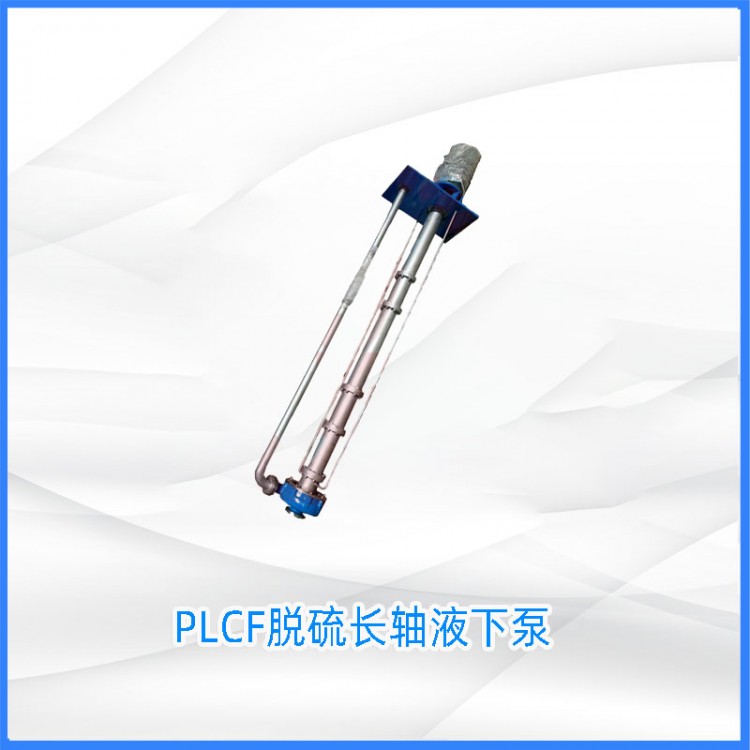
I. Introduction to the Submerged Impeller Pump for PLCF Desulfurization Long Shaft
The PLCF series pumps are a type of long-shaft submersible pump (also known as absorption tower sump pump) developed by the company based on the research and development of PLC series pumps, specifically designed for the desulfurization underground sump positions in power plant flue gas. These pumps have a submersion depth of 3 to 6 meters and are suitable for transporting suspensions, corrosive, abrasive, viscous fluids, and liquids with scaling characteristics, as well as gas-containing liquids. The pump is designed with advanced technology, high overall reliability, and a long service life, and has been widely used in the power plant flue gas desulfurization field.
Section II: Structural Features of the Submerged Pump for PLCF Desulfurizing Liquid
(1) Segmented structure with each section as a rigid shaft; both sides of the bearing are equipped with dust covers, eliminating the need for lubricant; a forced lubrication system ensures the sealed service life.
(2) The impeller features a closed, wide flow design to the impeller, facilitating the passage of solid-containing media without causing blockages. The impeller has forward and rear vanes, with the forward vanes used to prevent media backflow towards the pump inlet, and the rear vanes designed to balance axial forces and reduce axial leakage pressure to enhance pump efficiency.
(3) The shaft seal employs a packaged double-end mechanical seal structure, ensuring stable operation of the pump for long periods underwater.
(4) Intelligent Monitoring Protection Device, prevents working fluid leakage, improves the external operating environment for sealed operation, overcomes the technical issue caused by seal failure leading to bearing damage, and enhances the reliability and service life of the entire pump unit. The device is ingeniously designed, structurally simple, easy to manufacture, and delivers effective performance.
(5) Large shaft diameter, fewer shaft steps, and good steel properties of the shaft.
(6) The support pipe and bearing housing designs have excellent steeliness, ensuring smooth operation of the pump.
Section 3: Model Significance
PLCF65-310
PLCF - Wear and Corrosion Resistant Long Shaft Submersible Pump
65 - Discharge Diameter
310 - Impeller Outer Diameter
4. Submerged Desulfurization Pump Structural Analysis
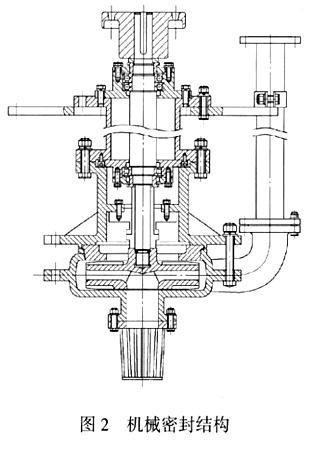
Currently, there are two types of submersible pump structures used in desulfurization systems: the type without shaft seal and the type with shaft seal (mechanical seal).
V. Key Points of the Liquid Submerged Pump shaft Seal Structure in Desulfurization System
In desulfurization systems, the long shaft submersible pump shaft seal should be a mechanical seal. Due to the special operating conditions of the long shaft submersible pump, the requirements for the mechanical seal are different from those of a standard mechanical seal.
1) To ensure that the friction pair has wear and erosion resistance in a particle medium, the hardness of the friction pair material must be higher than that of the abrasive particles. Typically, a hard-on-hard pairing can be chosen, with materials such as tungsten carbide or silicon carbide. Compared to tungsten carbide, silicon carbide boasts higher hardness, better thermal conductivity, better chemical stability, and self-lubricating properties, although it is more expensive. Additionally, the width of the friction pair should be wider than that of the mechanical seal for clear water pumps, and it should have sharp edges to minimize the entry of solid particles between the sealing surfaces. The spring is of the static type, utilizing a stationary ring for compensation. Placing the spring inside the pressure cover ensures it does not come into contact with solid particles, reducing wear and preventing failure due to spring blockage. This ensures the flexibility, stability, and reliability of the compensation.
2) Due to the large amount of medium particles in the slurry, the sealing chamber is designed to be open to prevent particle sedimentation around the mechanical seal after the pump stops, which could affect the pump's next startup operation. This design also facilitates the removal of medium particles from the sealing chamber by the backwash water in the desulfurization system.
3) In the design of the sealed cavity structure, ensure that the gas within the sealed cavity can be evacuated to prevent mechanical seal dry friction. Drilled exhaust holes on the rear pump housing.
4) The structural form of the mechanical seal varies depending on the solid content of the slurry. When the solid content is low, a single face mechanical seal is used, cooled and lubricated by the medium itself. However, the structural design of the mechanical seal should avoid the accumulation of medium particles around the friction pair. When the solid content is high, the lubricating effect of the medium deteriorates due to the increase in particles, so a double face mechanical seal is used, cooled, lubricated, and sealed by external shaft seal water.
Section 6: Summary of Submerged Liquid Pumps for Desulfurization
In the long shaft submersible pump of the desulfurization system, all are supported by submersible bearings to minimize impeller deflection and prevent vibration. For low slurry concentration, a single face mechanical seal without flushing water is used; for high slurry concentration, a double face mechanical seal with shaft seal water is employed. Additionally, during structural design, it is crucial to consider the prevention of sedimentation and accumulation around the friction pairs, as well as the evacuation of gases surrounding the mechanical seal friction pairs.


