Specializing in the production of signboards, surveillance poles, signal lights, distribution boxes, filters, etc.
13942176610
Traffic Sign Manufacturing Standards: Color, Size, and Font Requirements; Reflective Film Grades As vehicles increase and traffic develops, the demand for traffic signs in cities is also on the rise.
Traffic signs manufactured by sign makers serve a crucial role in ensuring travel safety, acting as another "deaf and mute traffic" on the road.
Next up, we will share the requirements for the production of traffic signs, including color, shape, size, font, and reflective material requirements.
Color
Shape, pattern, and color requirements: Strictly adhere to the provisions of GB5768-2009 "Road Traffic Signs and Markings" standard and the design drawings.
The basic meanings of traffic sign colors are generally as follows:
Red: Indicates prohibition, stop, and danger, used for the borders, backgrounds, and slashes of prohibition signs, as well as for cross symbols, slash symbols, and the backgrounds of warning linear guiding signs. Yellow or fluorescent yellow: Represents a warning, used for the backgrounds of warning signs.
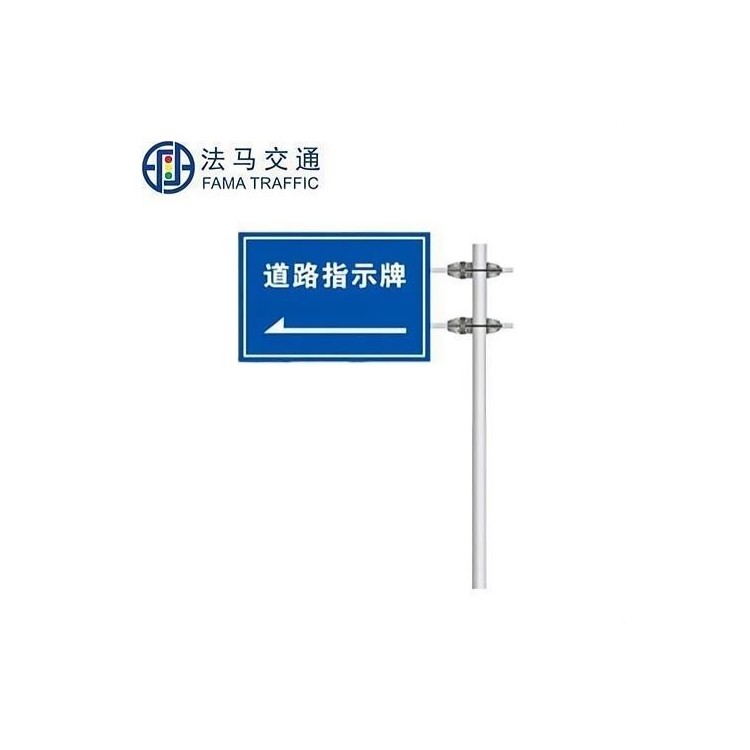
2. Blue: Used to indicate instructions and adherence, serving as the background color for directional signage: representing place names, routes, directions, etc., and used as the background color for general road sign guidance.
3. Green: Represents information such as place names, routes, and directions for driving, used as the background color for highway and urban expressway signage.
Brown: Indicates signs for tourist areas and prominent attractions, used as the background color for tourist area identification.
5. Black: Used for identifying text, graphic symbols, and the background color of some identifiers.
6. White: Used for background color, text, graphic symbols, and the borders of some logos
7. Orange or Fluorescent Orange: Used for warning and directional signs in roadwork zones
8. Fluorescent Yellow-Green: Indicates a warning, used to alert pedestrians and children. General rules for the use of traffic sign shapes with warning标识.
Two, Shape
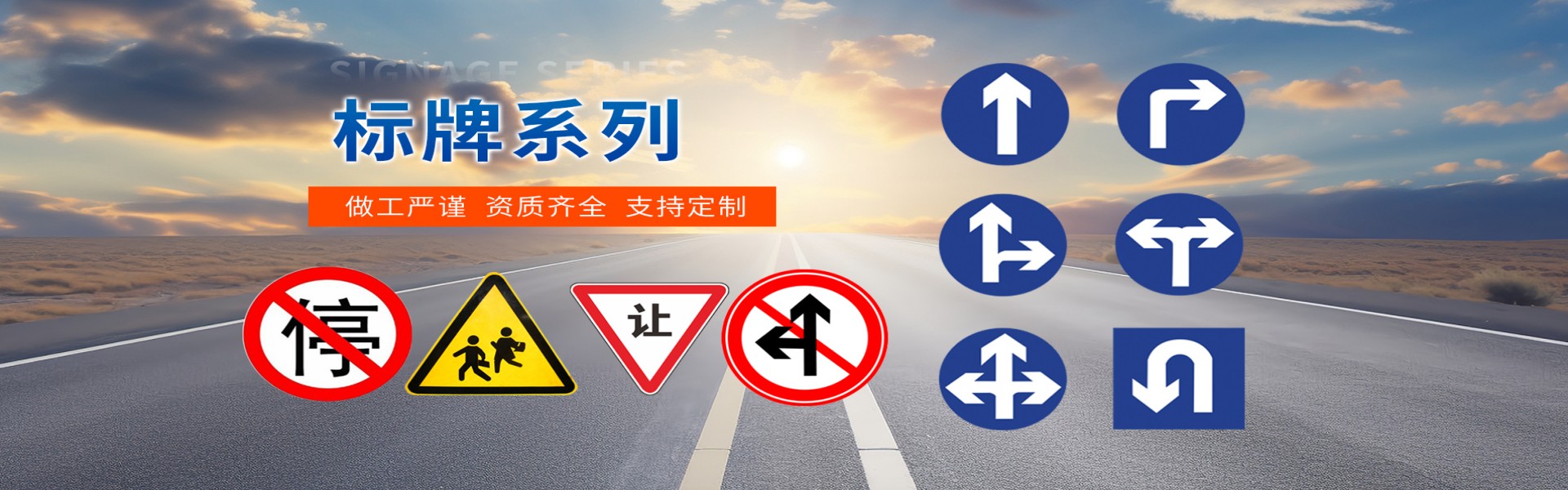
Equilateral Triangle: Used for Warning Symbols
Circular: Used for Prohibitory and Directive Signs
Inverted equilateral triangle: Used for "yield" prohibition sign
Octagon: Used for "Stop and Yield" Prohibition Sign
X-shaped: Used for the warning sign of "railway level crossing X-shaped symbol"
Square: For directional signage, some warning, prohibition, and instructional signs, tourist area signage, auxiliary signage, bulletin signage, etc.
All labels, except for specific identifiers, should have border colors matching the color of the label's graphics or characters. Additionally, the color of the label's outline should match the background color, except for directional indicators.
Three, size
Triangle Standard Sizes: 700mm, 900mm, 1100mm
Square standard sizes: 600*600mm, 800*800mm
Circular Standard Sizes: 600mm, 800mm, 1000mm
Standard Rectangle Traffic Sign Sizes: 2400*1200mm, 3000*2000mm, 3500*2000mm, 4000*2000mm, 4000*2400mm
Font Requirements
To ensure the visibility of directional signs, the Chinese characters on directional signs must use the internationally规定的 traffic-specific font, and Arabic numerals should also comply with the national standards. Other fonts are not permitted.
The character size requirements are designed in accordance with the provisions of GB5768-2009 "Road Traffic Signs and Markings." To ensure that drivers and passengers both domestically and internationally can correctly identify the signs, the text on the sign panels is presented in both Chinese and English.
Five, reflective film requirements
Reflective Material Requirements for Signs: Considering indicators such as reflective performance, aging resistance, service life, and cost, in conjunction with the characteristics of the sign, enhance nighttime visibility. Currently, 3M reflective film is commonly used!
What are the differences between the five types of reflective film?
Ⅰ Class—typically a prism-embedded glass bead structure, known as engineering-grade reflective film, with an average lifespan of 7 years, suitable for permanent traffic signs and work zone facilities; applicable markets: municipal signs, rural and county road signs, traffic facilities, etc.
Category II - Typically a lens-embedded glass bead structure, known as ultra-engineered reflective film, with a lifespan of about 10 years, suitable for long-lasting traffic signs and work zone equipment; applicable markets include municipal signage, county road signage, traffic facilities, and more.
Ⅲ Class—typically a sealed capsule-type glass bead structure, known as high-strength reflective film, with an average lifespan of 10 years, suitable for long-lasting traffic signs and work zone facilities; application markets include municipal signage, rural and county road signage, and mid-to-high-end traffic facilities.
Category IV—typically featuring a micro-prism structure, with a lifespan of about 10 years, suitable for long-lasting traffic signs, work zone equipment, and outline markers; used in high-speed signs, municipal signs, and mid-to-high-end traffic facilities.
Category V - Typically features a micro-prismatic structure, known as wide-angle reflective film, with a lifespan of 10 years. It is suitable for long-lasting traffic signs, work zone equipment, and road marking retroreflectors.
Six, Secrets to Distinguishing the Quality of Reflective Films
In terms of material: The current market for high-end reflective film production mainly includes three types: PET, PC, and PMMA. PET material is not weather-resistant and has a short service life. PC material is generally weather-resistant with a service life of about 3-5 years. PMMA, also known as acrylic, is highly weather-resistant with a service life of around 7-10 years. PTE material is generally used for temporary signs, warning posts, lift posts, and other traffic facility products, while PC and PMMA are mainly used for traffic sign films.
Reflectivity (Retroreflectivity Coefficient): The quality of a reflective film is primarily determined by its service life and retroreflectivity coefficient. Municipal signage typically requires a lifespan of 5 to 7 years, while highway signage requires 7 to 10 years. The retroreflectivity coefficient is detailed in national standard documents. How can you determine the brightness of a reflective film? Place your phone on your bridge of your nose (the closer to your eyes, the better) and shine a flashlight on the reflective film. The brighter the film, the higher the retroreflectivity coefficient.
By Hand: PET materials are thick and difficult to tear, while PC products are easier to tear, leaving a jagged edge. PMMA (acrylic) products are the easiest to tear; bending them can leave a white mark. Currently, all national standard products on the market are made of PMMA.
Contact us

Service Hotline
13942176610
Company Telephone
13942176610

WeChat Number
zx6610-7992

Address
Liaoning Province, Chaoyang City, Lingyuan City, Tongchuang Industrial Park, Building B2 (Fama Intelligent)
b2b.china9.net © Zhongshang 114 Hebei Network Technology Co., Ltd.Address: Room 6009, Oriental New World Center, No.118 East Zhongshan Road, Qiaoxi District, Shijiazhuang City, Hebei ProvincePlatform Service Hotline: 4006299930