



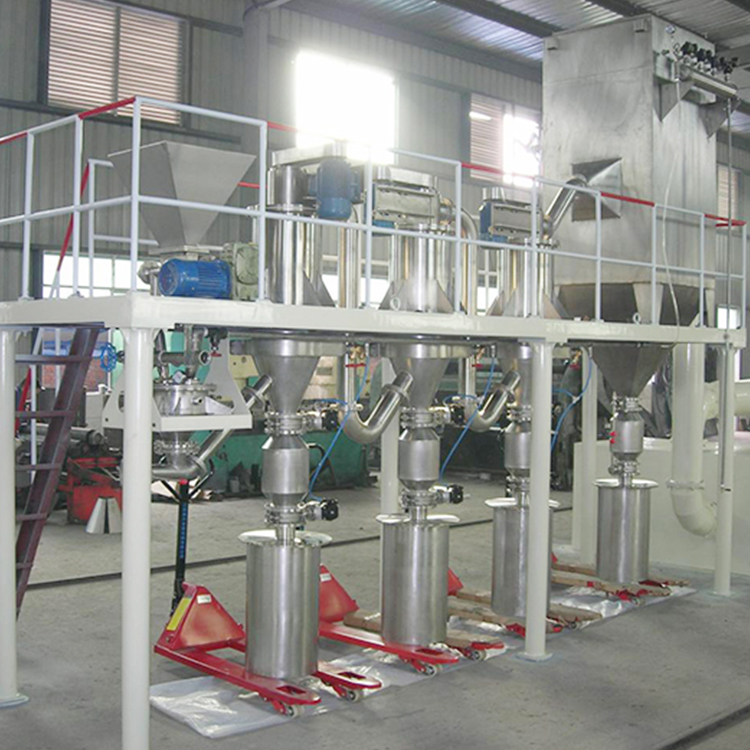
 DWF Precision Airflow Classifier
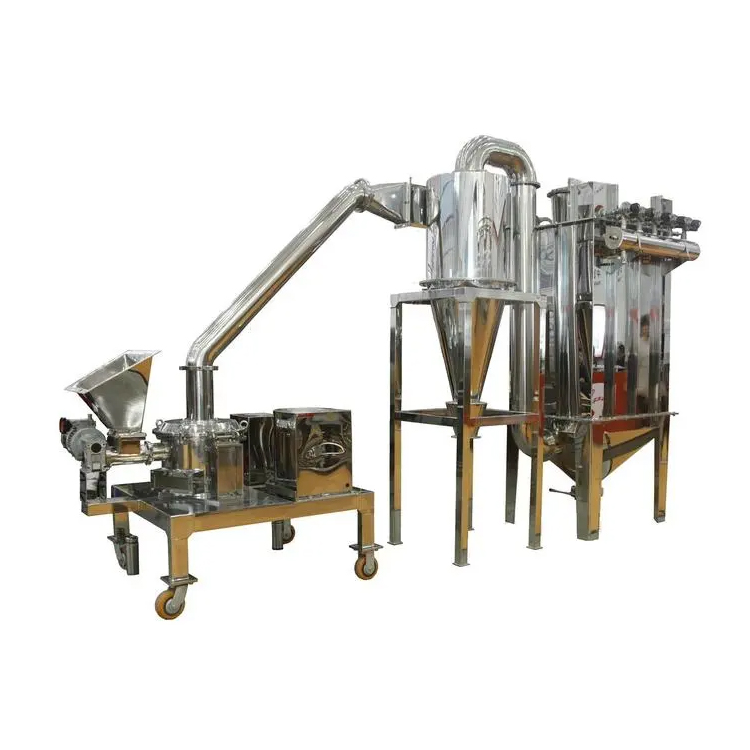 Western Medicine-Specific Food Ul
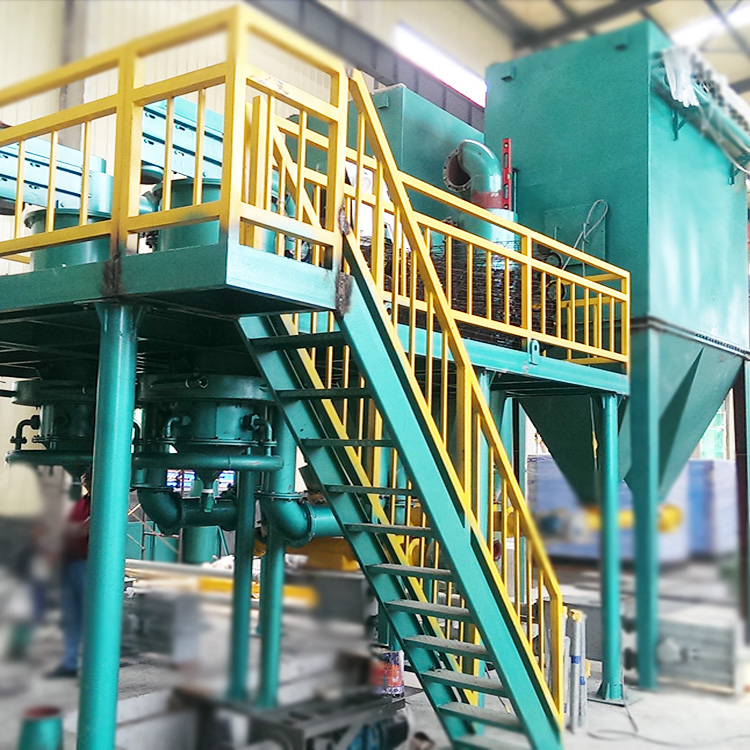 High-Efficiency Energy-Saving Air
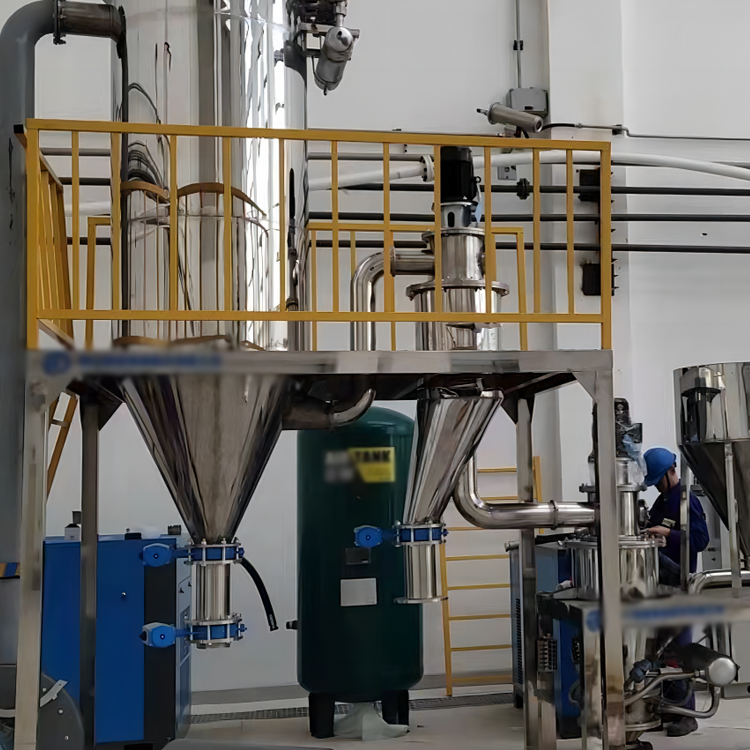 Airflow Super Fine Pulverizer
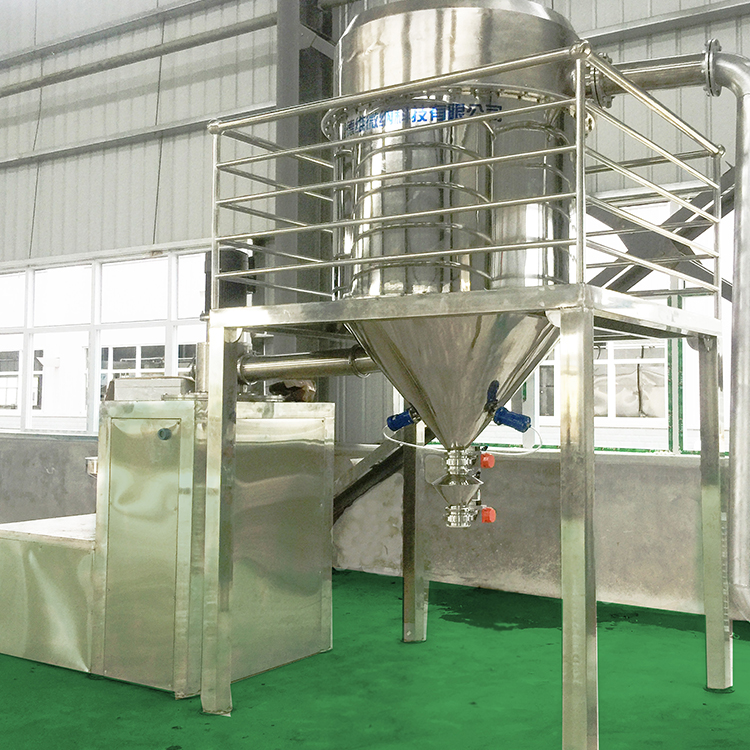 Fluidized Bed Airflow Milling and
Operating Principle
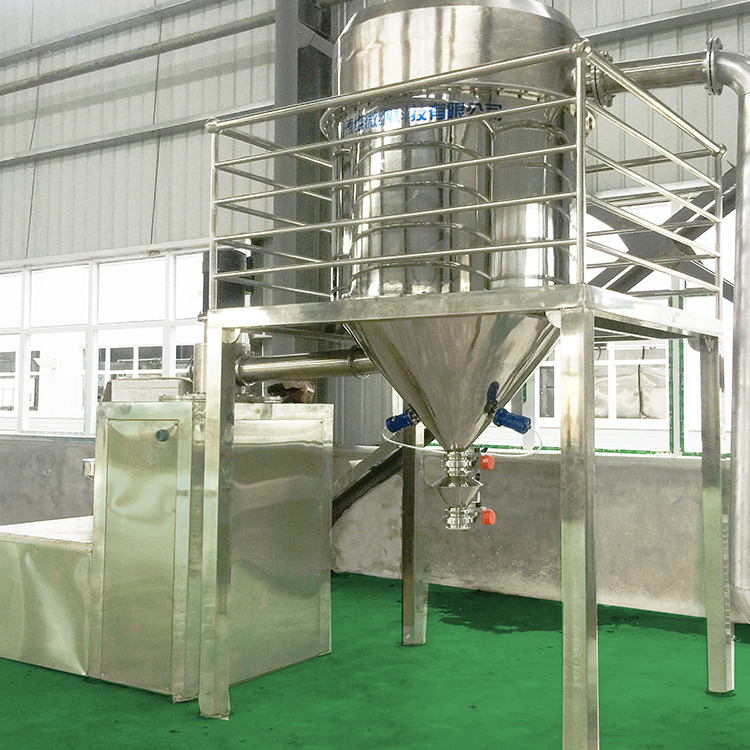
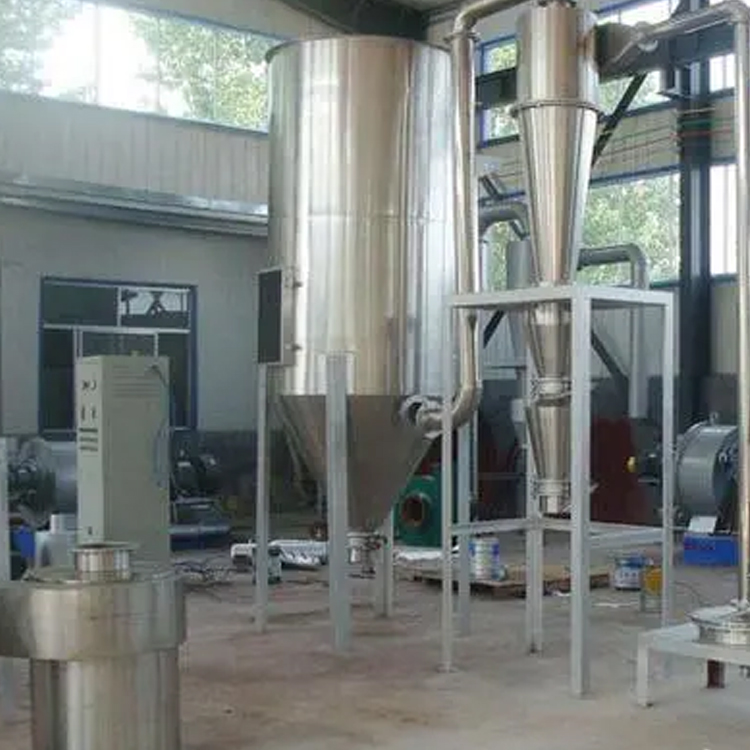
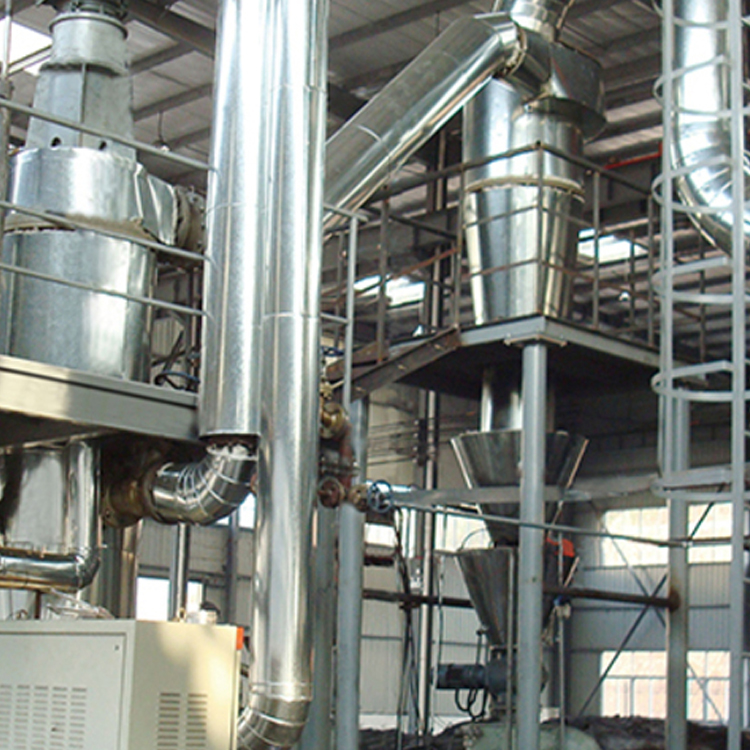
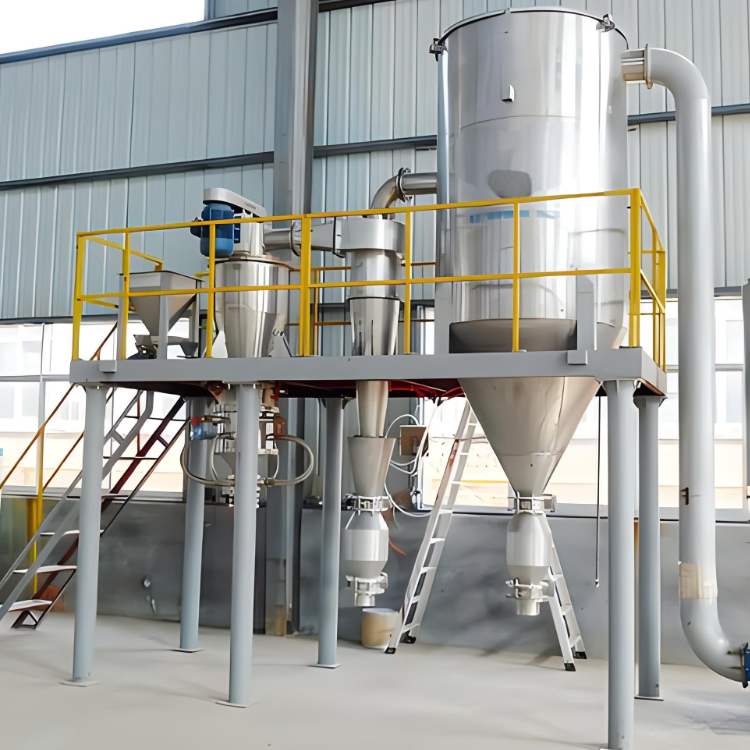
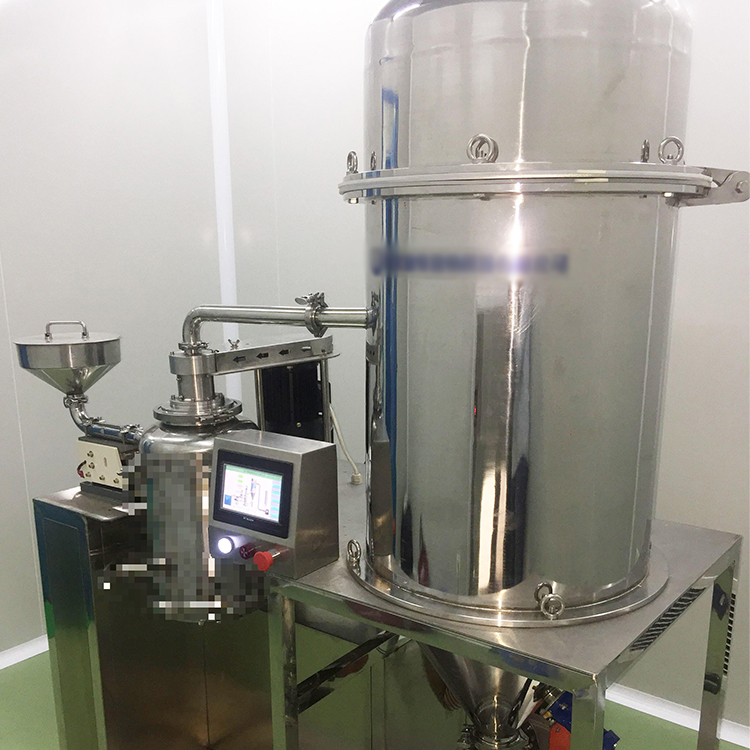
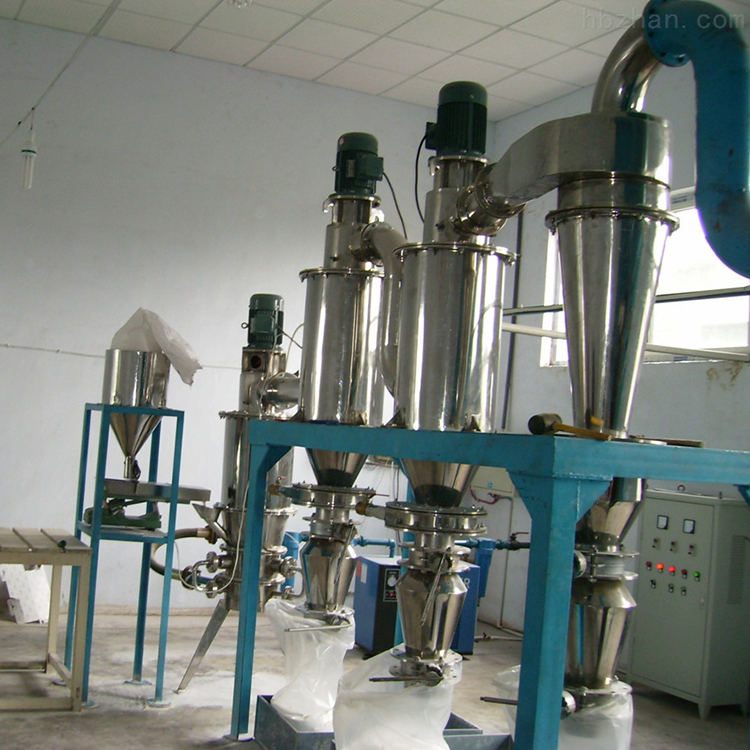
Utilizing the principle of ultrasonic airflow grinding, powered by high-pressure steam as compressed air, materials collide, shear, and friction at speeds twice that of traditional airflow mills, achieving ultra-fine pulverization. Under the centrifugal force of the classifier wheel and the action of the fan, qualified fine powder enters the dust collector, while coarse powder returns to the crushing chamber for further pulverization. The purified air is then exhausted through the induced draft fan.
Additionally, for certain materials, structural improvement can be achieved using a graded impact mill, and a high-temperature energy-saving graded impact mill design is available.
Features
1. Under dry steam conditions, nanoscale materials can be obtained in a dry state.
2. Higher crushing strength, over twice that of traditional air jet mills, with an impact force four times greater than traditional air jet mills.
3. Finer particle size grading, achieving nano-scale grading, with D50=0.8μm and D95=2.5μm (limestone).
4. Because steam, as a crushing medium, has drying and static electricity removal properties.
5. PLC full automation control, easy to operate and learn.
6. The equipment operates under full vacuum throughout the production process, ensuring an environmentally friendly and hygienic working environment with no dust contamination.
7. Materials up to Mohs hardness 10 can be processed
8. The low-pressure air mill saves up to 30% in energy compared to conventional models, featuring low energy consumption, strong crushing power, and a stable equipment system, making it an economical and cost-effective option for high-temperature energy-saving air mills.
Application Fields
Hard Materials: Adhesives/Sealants, Silicone, Ceramics/Glass, Ceramic Pigments.
High purity, ultra-hard materials: Typical materials include phosphorescent powder, titanium dioxide, silicon, aluminum, copper, and various high purity pigments.
Fine Chemicals, Ceramics, Abrasives, and Refractory Materials: Typical materials include garnet, silicon carbide, corundum, cerium oxide, aluminum oxide, boron carbide, tungsten carbide, and金刚砂.
Food & Medicine: Typical materials include: pollen, hawthorn, pearl powder, stomach medicine, nimodipine, antibiotics, contrast agents, Ganoderma lucidum, holly berry, Polygonum multiflorum, etc.
Magnetic powders, mobile phone electromagnetic powders, copier toner powders, and electronic materials: Typical materials include lead-acid batteries, nickel-chromium batteries, nickel-manganese batteries, ferrites, manganese(IV) oxide, manganese dioxide, lithium cobalt oxide, lithium manganese oxide, and carbon.
Non-metallic minerals and powder metallurgy: Typical materials include quartz, barite, kaolin, heavy calcium, talc, mica, graphite, wollastonite, etc.
Reflective materials, pigments, dyes, and powder coatings: Typical materials include iron oxide, titanium dioxide, glass beads, etc.
Application Examples: Silicon carbide: d50=0.4um; Aluminum oxide: d50=0.3um; Wollastonite: d50=0.3um;
Talc: d50=1.2um; Zirconia: d50=0.43um