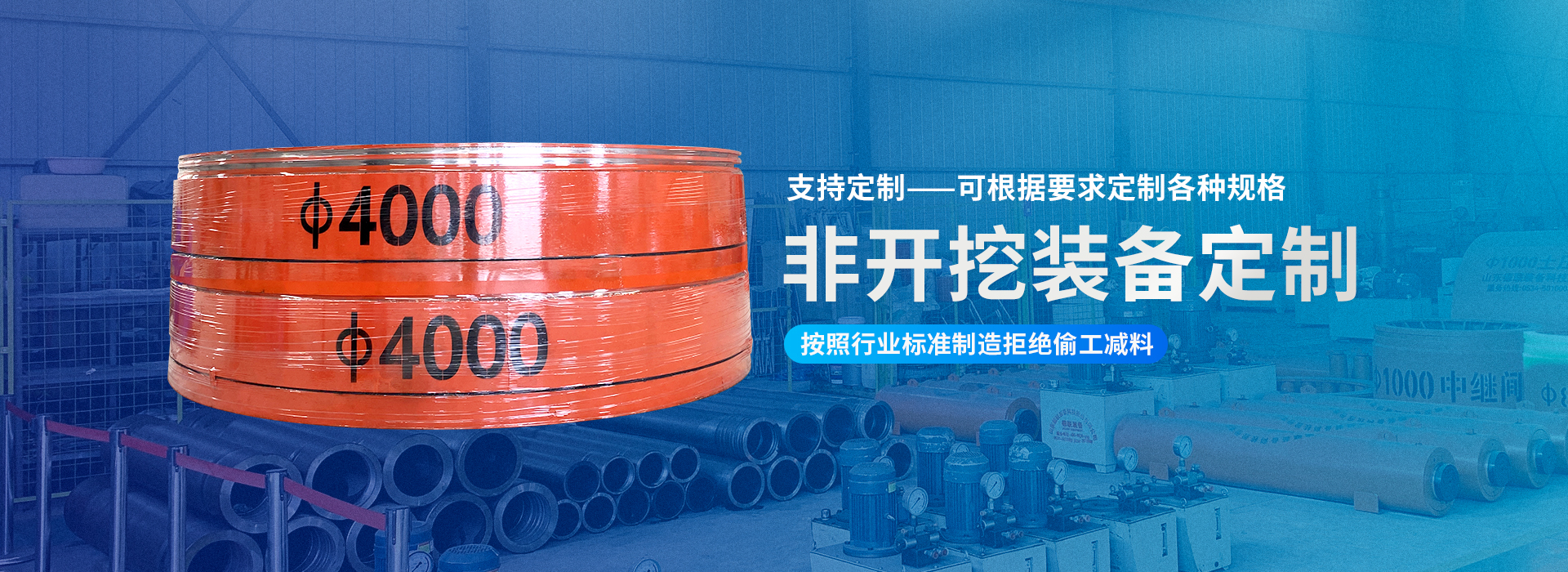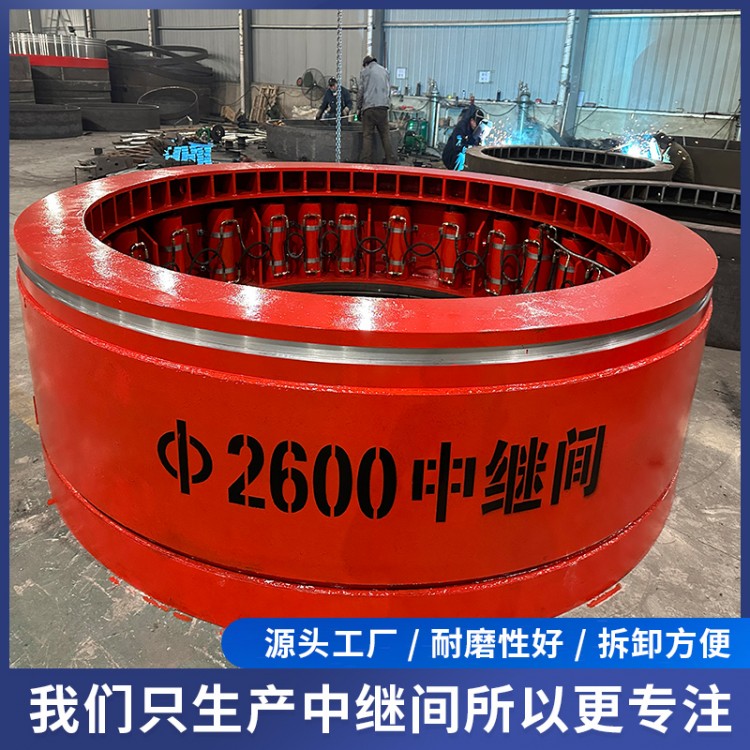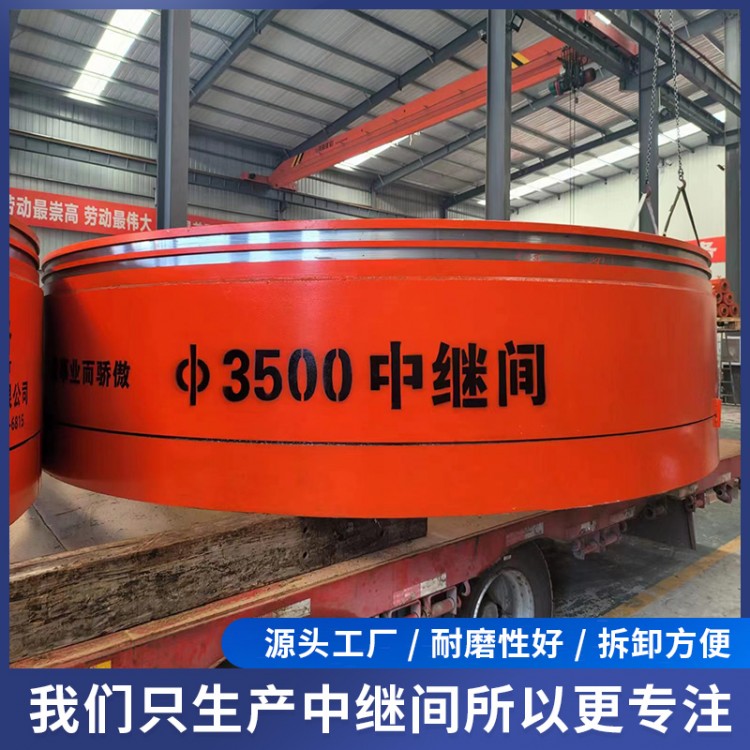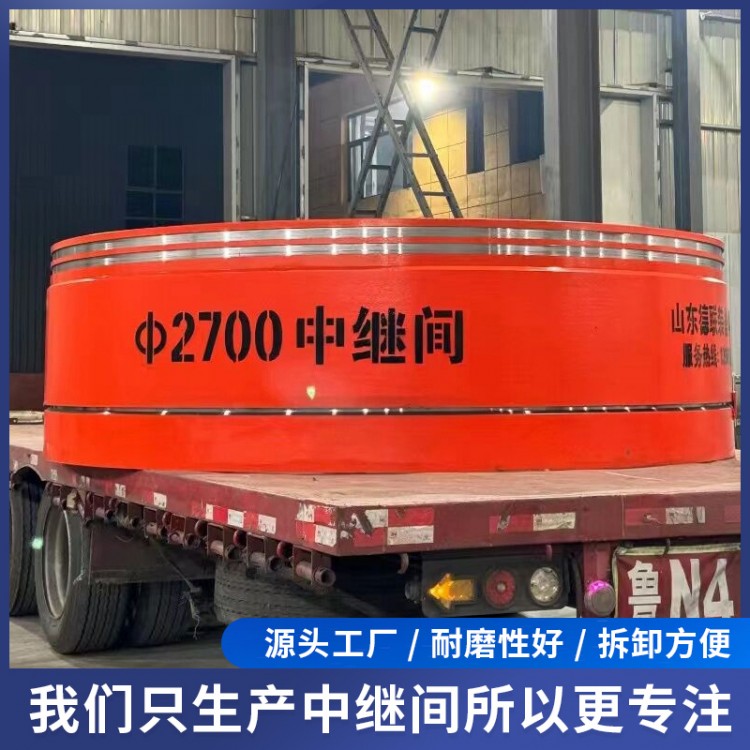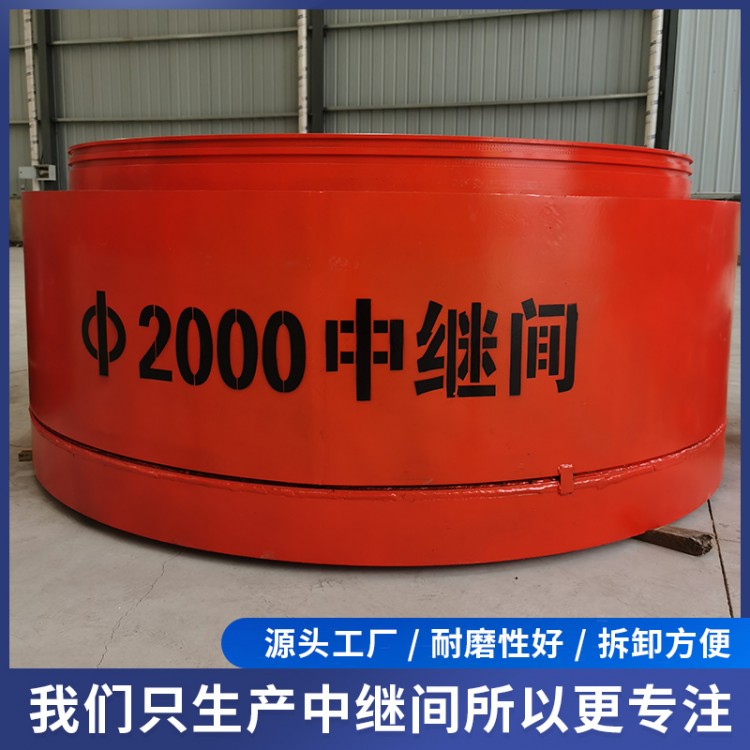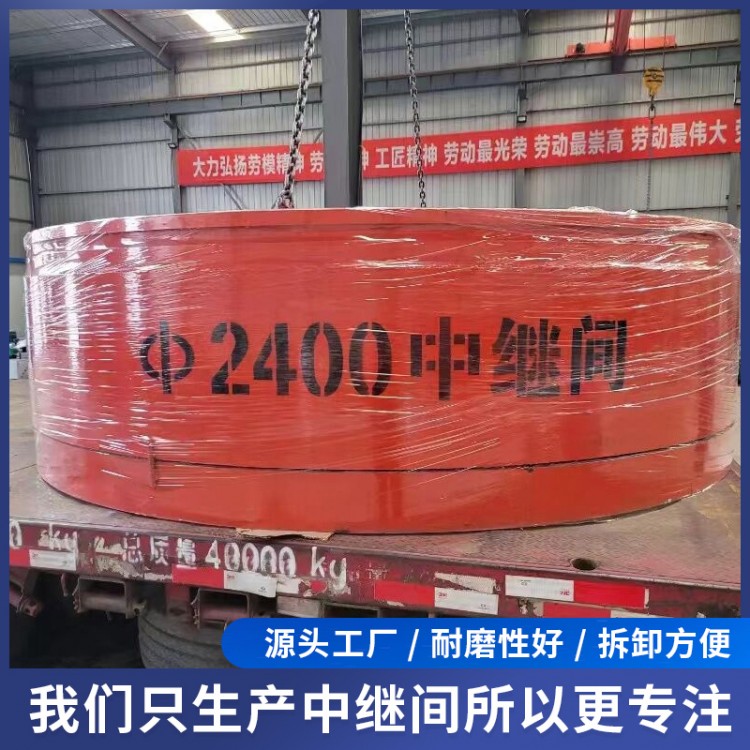
Relay room, tunnel relay room

During long-distance pipe jacking projects, it is necessary to set up relay stations between pipe sections for segmented jacking. When the distance of pipe jacking is too long and the main jacking force is insufficient, the relay station jacking method is an indispensable technical measure. The role of relay stations is to transfer the jacking force, pushing the pipe sections forward in segments through these stations, thereby dispersing the jacking force of the main jacking cylinder and reducing the jacking force of each section to within the allowable range.
The relay chamber is composed of the front shell, jacks, and rear shell. The front shell is connected to the front transition, while the rear shell is connected to the rear transition, with both shells joined in a socket and plug connection. They are sealed with rubber waterstop bands to prevent external soil, water, and slurry from flowing back into the pipeline. The steel shell structure undergoes precision processing to ensure no deformation during use. The outer diameter of the relay chamber matches that of the pipe section, reducing soil disturbance, ground settlement, and thrust resistance.
The number and installation position of the relay rooms should be calculated based on the thrust. After verifying that all components of the relay room are in normal condition, proceed with the installation. The relay room can be used only after successful trial operation and inspection. The relay room must be securely connected to the walls in front and behind to prevent rotation due to uneven distribution of equipment weight within the relay room during operation.
Following the completion of the pipe jacking construction, the jacking equipment within the relay section should be dismantled from front to back. The dismantling process should start with the removal of the jacks, oil lines, oil pumps, and electrical equipment. After the removal of the hydraulic cylinders, concrete filling should be done at the position of the relay section cylinders. Both the jacking and dismantling of the relay sections are carried out from front to back, with the dismantling sequence being: top first, then sides, and finally bottom. Starting from the relay section, dismantle backwards, and the space created will be continued to be jacked forward by the subsequent relay sections to connect the pipe ends.


b2b.china9.net © Zhongshang 114 Hebei Network Technology Co., Ltd.Address: Room 6009, Oriental New World Center, No.118 East Zhongshan Road, Qiaoxi District, Shijiazhuang City, Hebei ProvincePlatform Service Hotline: 4006299930