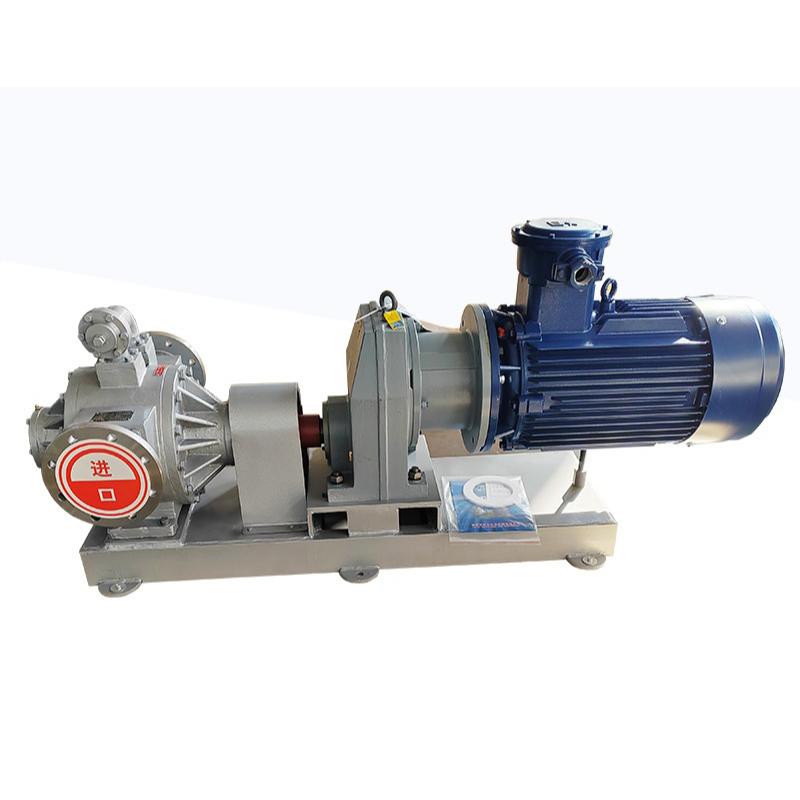
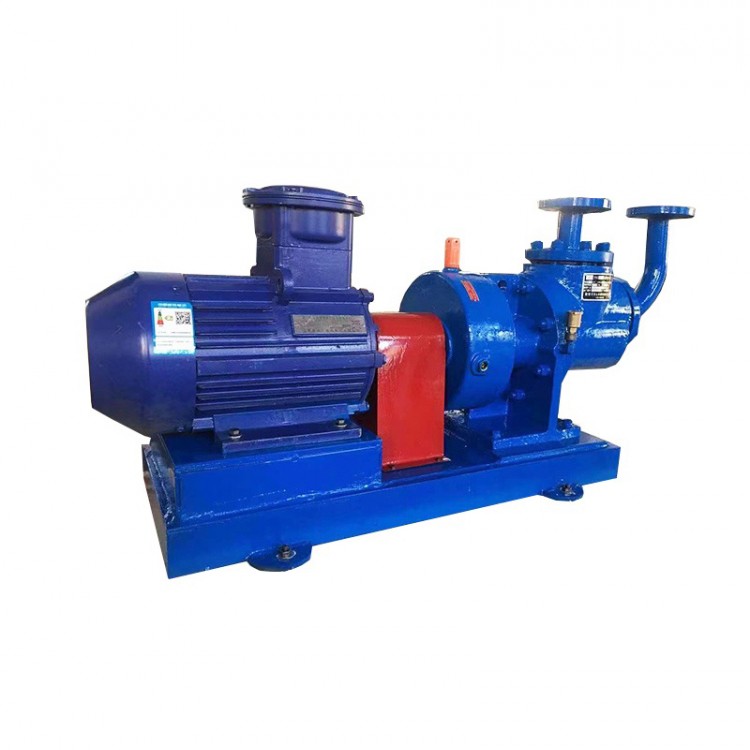
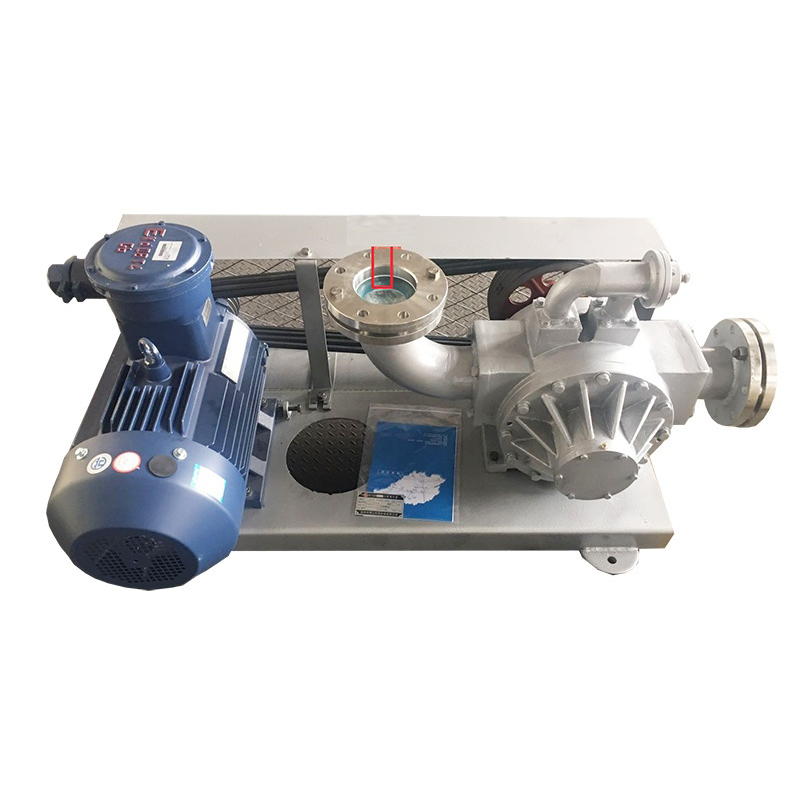
Gas Pumps, Leak-Free Pumps, Acid-Resistant Pumps, Chemica...

Important Usage Precautions for Kehai Machinery & Chemical Centrifugal Pumps
The working principle of chemical centrifugal pumps is as follows: when the pump is filled with water, the impeller rotates, generating centrifugal force. The water within the impeller channels is propelled outward, into the pump casing, resulting in a decrease in pressure at the impeller's center. This pressure is lower than that of the inlet pipe, causing water to flow from the sump into the impeller due to the pressure difference. This enables the pump to continuously draw and supply water. Besides the impeller's role, the spiral casing is also crucial. As the liquid, which has gained energy from the impeller, exits, it has significant kinetic energy. This energy is collected within the spiral casing and converted into pressure energy in the subsequent diffuser.
Chemical centrifugal pumps offer several advantages over other types of pumps, including simple construction, low wear, smooth operation, minimal noise, even water output, easy adjustment, and high efficiency. For these reasons, chemical centrifugal pumps have found widespread application.
Safety Precautions for Using Chemical Centrifugal Pumps:
Installation Instructions for Chemical Centrifugal Pumps
During installation, the pipeline weight should not be added to the pump; each should have its own support structure to prevent deformation that could affect operational performance and lifespan.
Pumps and motors are an integrated structure, so they do not require alignment during installation, making the process very convenient. Kehai Machinery
Tighten the base bolts during installation to prevent vibration from affecting the pump's performance during startup.
Before installing the pump, carefully inspect the pump's flow channel for any hard particles (such as stones, iron shavings, etc.) that could damage the impeller and pump body during operation.
To facilitate maintenance and operation, a regulating valve is installed on both the inlet and outlet pipes of the pump, and a pressure gauge is mounted near the pump outlet. This ensures the pump operates within the rated head and flow range, ensuring normal operation and extending the service life of the pump.
6. Pumps for suction applications should be equipped with a bottom valve, and the inlet pipeline should not have excessive bends. Additionally, there should be no leakage or air escape.
7. Reverse flow valves should be installed outside of the gate valves in piping systems.
After installation, when turning the pump shaft, there should be a rubbing sound or a jamming phenomenon in the impeller; otherwise, the pump should be disassembled to check the cause.
9. Pump installation methods include rigid and flexible connection setups.
Chemical Centrifugal Pump Start-up and Shutdown:
(1). Pre-startup Preparation
Manually rotate the motor's fan blades; the impeller should have no jamming or rubbing, and the rotation should be smooth and flexible.
Open the import valve, then activate the exhaust valve to fill the pump chamber with fluid, and subsequently close the exhaust valve.
3. Manually rotate the pump to introduce the lubricant to the mechanical seal face.
4. Verify the direction with the point motor.
(II). Startup and Operation
Fully open the import valve, close the discharge pipeline valve.
2. Power on, and once the pump reaches normal speed, gradually open the valve on the discharge pipe and adjust to the desired operating conditions.
3. Pay attention to the gauge readings, inspect for shaft seal leaks. Normally, mechanical seals should leak less than 3 drops per minute. Check for temperature rise at the motor and bearing areas, which should be ≤ 70 degrees Celsius. If any anomalies are detected, they should be addressed promptly.
(3). Parking
Gradually close the outlet pipeline valves and disconnect the power supply.
2. Shut down the import valve.
If the ambient temperature drops below 0 degrees Celsius, the liquid inside the pump should be fully drained to prevent freezing and cracking.
4. In case of long-term disuse, the pump should be disassembled, cleaned, and packaged for storage.
Section 3: Maintenance and Care for Chemical Centrifugal Pumps
(One). Maintenance and upkeep during operation
The pipeline is highly sealed.
Do not allow pumps to operate for extended periods in a cavitation state.
3. Prohibit the pump from running with an overcurrent in the motor during flow operation.
4. During routine inspections, it was noted that the motor of the pump was operating with excessive current for an extended period.
Pumps should be supervised by a designated person during operation to prevent any accidents.
6. Pumps should be lubricated for the bearings every 500 operating hours. Motors over 11KW are equipped with a lubrication device, which can be directly injected with a high-pressure oil gun to ensure optimal bearing lubrication.
7. After the pump has been in long-term operation, if mechanical wear causes increased noise and vibration, the unit should be stopped for inspection. Replaceable parts and bearings can be changed, and the general overhaul period for the unit is one year.
(II). Mechanical Seal Maintenance and Care
Mechanical seal lubrication should be clean and free of solid particles.
Absolutely no mechanical seals should operate under dry grinding conditions.
Before starting, rotate the pump (motor) a few times to prevent sudden start-up from causing the sealing ring to break and damage. Kehai Machinery


b2b.china9.net © Zhongshang 114 Hebei Network Technology Co., Ltd.Address: Room 6009, Oriental New World Center, No.118 East Zhongshan Road, Qiaoxi District, Shijiazhuang City, Hebei ProvincePlatform Service Hotline: 4006299930