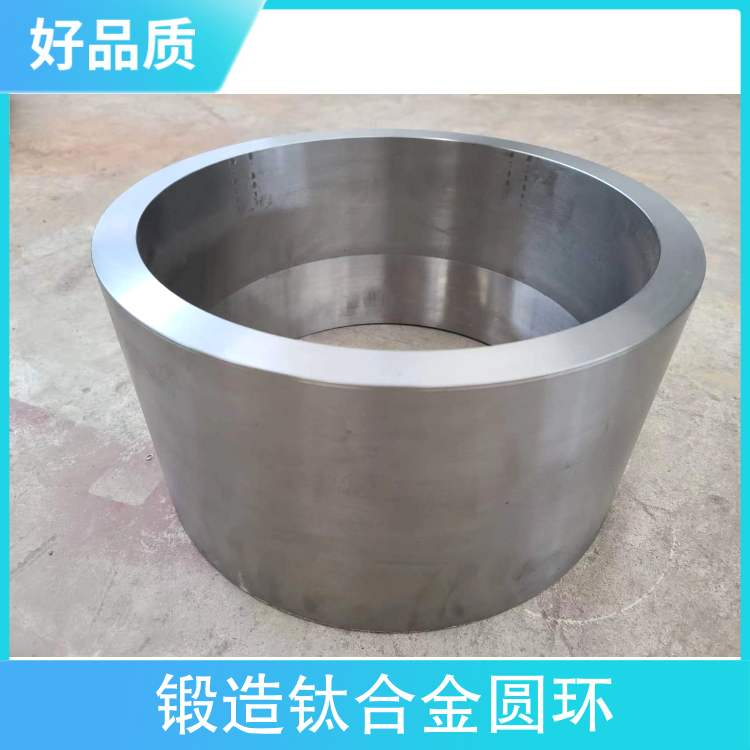
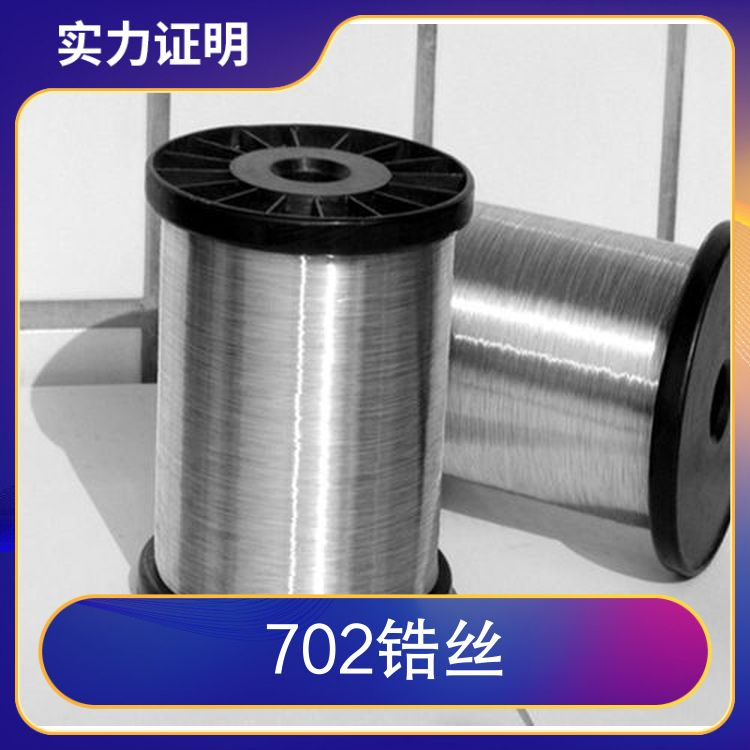
Titanium plate; Titanium sheet; Titanium bar; Titanium wi...


Product Recommendation
Flange types or structural styles are primarily classified based on the method of connection between the flange and pipe, and can be divided into: integral flanges, necked threaded flanges, weld neck flanges, neck plain weld flanges, neck socket weld flanges, plate plain weld flanges, A-type weld ring plate loose fit flanges, B-type weld ring plate loose fit flanges, plain weld ring plate loose fit flanges, pipe end rolled plate loose fit flanges (Type A), rolled short section plate loose fit flanges (Type B), and flange covers (also known as blank flanges).
Overall flanges are primarily designed for the inlet and outlet of mechanical equipment such as pumps and valves, specifically for connecting to flanges at pipe locations. These inlet and outlet flanges are usually integrated with the equipment's casing as part of the unit. Flanges are typically cast together with the equipment's casing, with a few being forged (such as the end flanges on forged steel valves).
Threaded flanges are designed with a threaded bore to mate with threaded pipes, providing a non-welding type of flange. Compared to焊接 flanges, threaded flanges offer easier installation and maintenance, making them suitable for pipelines where welding is not permitted. Alloy steel flanges have sufficient strength but may be difficult to weld or have poor welding properties, in which case threaded flanges can be an alternative. However, it is recommended not to use threaded flanges under conditions of rapid temperature changes in the pipeline, or when the temperature is above 260℃ or below -45℃, to prevent leakage.
The weld neck flange, also known as a high-neck flange, differs from other flanges by having a long, inclined high-neck section from the welding point between the flange and the pipe to the flange face. The wall thickness of this high-neck section gradually transitions to the pipe wall thickness in the height direction, improving the discontinuity of stress and thereby increasing the flange's strength. Weld neck flanges are primarily used in demanding conditions. Such as: situations where the flange area experiences significant or fluctuating stress due to pipe thermal expansion or other loads; pipes subject to large fluctuations in pressure and temperature; or pipes used under high, low, or extreme temperature conditions.
The flat welding titanium flange, also known as a lap joint flange, connects to pipes by first inserting the pipe into the flange bore to the proper position, followed by welding. Its advantages lie in the ease of alignment during welding assembly and its affordability, which has led to its widespread application.
b2b.china9.net © Zhongshang 114 Hebei Network Technology Co., Ltd.Address: Room 6009, Oriental New World Center, No.118 East Zhongshan Road, Qiaoxi District, Shijiazhuang City, Hebei ProvincePlatform Service Hotline: 4006299930