Olympus Phased Array Ultrasonic Flaw Detectors, Ultrasoni...

Waveguide is a crucial aerospace-related component installed on satellites, particularly geostationary satellites, for transmitting low-loss, high-power radio frequency (RF) signals. These hollow metal tubes are essential components for microwave and satellite communications.
In this article, we will delve into the challenges of inspecting metal tubes within waveguides and share how ultra-fine video endoscopes excel in effectively detecting waveguides.
Challenges in Testing the Internal Metal Tubes of Waveguides
The waveguide features a dedicated tubular structure for transmitting high-frequency signals. If burrs or dirt are left inside the waveguide during its manufacturing process, the waveguide will fail to operate properly and the signal transmission efficiency will be reduced. This could impact communication with ground stations and coordination with other satellites.
Additionally, since the satellite employs various sensors to monitor its surrounding environment, a malfunctioning waveguide can affect the sensors, leading to erroneous data collection. This can result in issues with attitude and orbit control.
Due to the necessity of the waveguide components operating accurately and effectively transmitting signals, internal inspections are crucial. Any defects on the inner surface of the metal tube, which transmits high-frequency signals, cannot be overlooked (Figure 1).
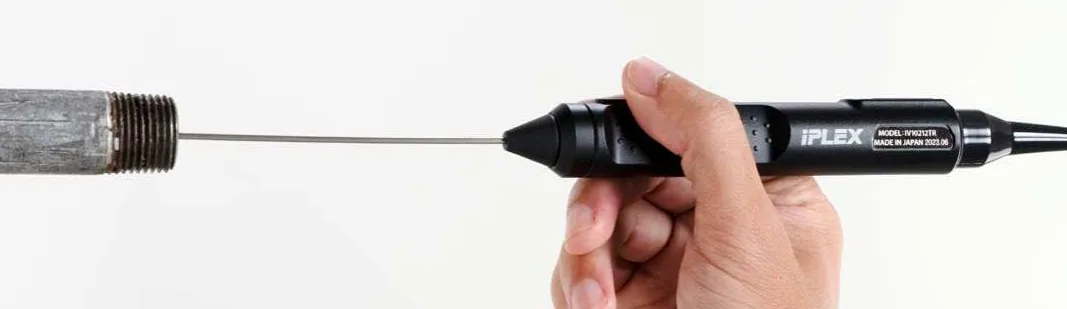 During internal inspections of waveguides used for satellite applications, standard endoscopes struggle to reach the interior of the metallic tubes. The diameter of the metallic tubes used in satellite waveguides is approximately 3 to 5 millimeters. In comparison, the outer diameter of the insertion part of endoscopes is typically 6 or 4 millimeters, making it difficult to access the waveguide interior. This highlights the utility of ultra-fine video endoscopes.
Endoscopic capabilities and technology for waveguide testing
It is recommended to use a video endoscope with an outer diameter of approximately 2 millimeters for internal waveguide inspections, as it can easily enter the space.
In addition to their small diameter, the flexibility of the endoscope is crucial, enabling operations in the narrow, curved sections of pipes. Waveguides can be simple, slender straight tubes or complex metal tubes with bends and branches.
Therefore, we recommend using ultra-fine video endoscopes, which can be inserted into waveguides following the branches and bends of the pipes. The bending feature assists the endoscope in tracking the bends and branches of metallic pipes.
Another factor is the difference in durability, as the outer diameter of the ultra-fine video endoscope insertion part is smaller than that of standard endoscopes. The external woven layer of the endoscope may be damaged due to friction with the inner wall of the metal tube or contact with the edges or branches of the metal tube.
Especially during the inspection process, the bendable portion of the endoscope is particularly susceptible to damage. Selecting a super-fine video endoscope with a highly durable bendable structure is crucial.
To avoid missing any defects within the metal pipeline, we recommend opting for a super-fine video endoscope with a 120-degree wide-angle view and a wider brightness adjustment range. These features allow users to observe images over a broader viewing area on a large monitor screen and adjust brightness during the inspection process to see more details.
Learn more about ultra-fine video endoscopes.
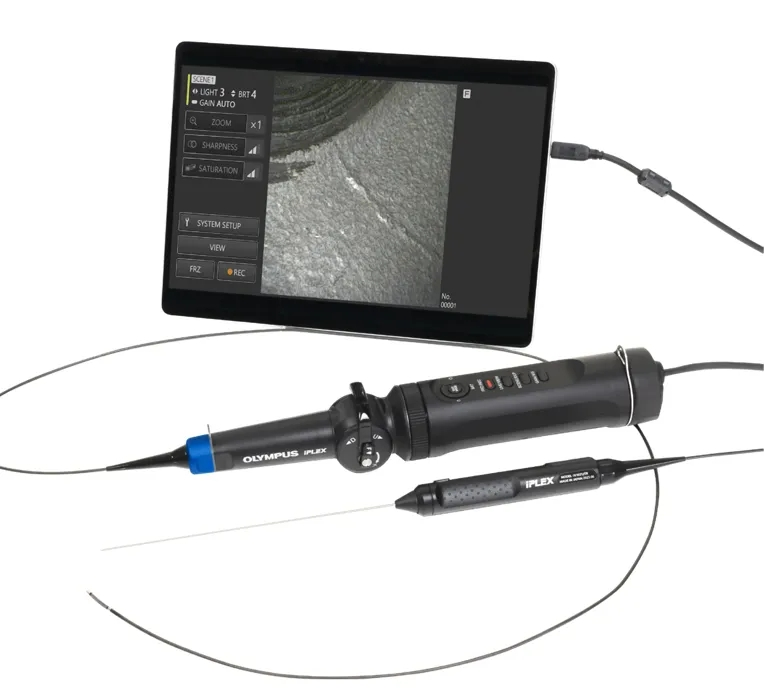
EvidentIPLEX TX II Ultra-Fine Video EndoscopeThis instrument features these capabilities. It boasts a small diameter, durable bend sections, a wide field of view, adjustable brightness, and is a high-performance device for detecting internal defects in waveguides. As one of the critical aerospace components on satellites, this visual inspection further enhances the reliability of waveguides.


b2b.china9.net © Zhongshang 114 Hebei Network Technology Co., Ltd.Address: Room 6009, Oriental New World Center, No.118 East Zhongshan Road, Qiaoxi District, Shijiazhuang City, Hebei ProvincePlatform Service Hotline: 4006299930