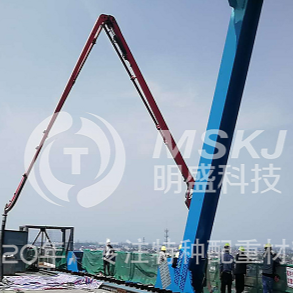
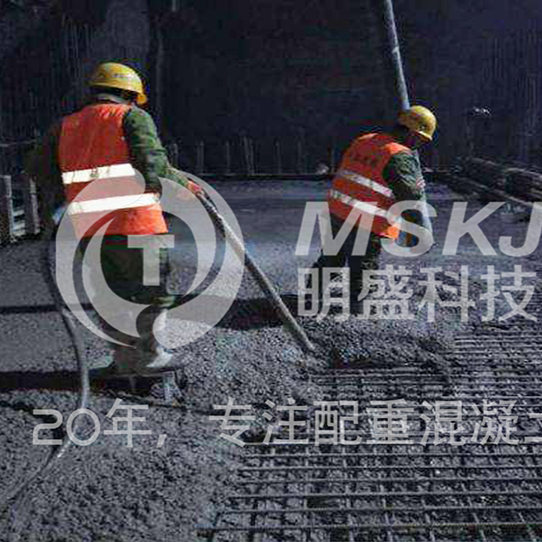
Our company's products include bridge ballast concrete, a...


Product Recommendation
Bridges span rivers, lakes, and seas, supporting highways and railways, playing a crucial role in our lives. Constructing a bridge requires anywhere from three to five years, to as many as a decade or more, from feasibility studies to construction drawings, with countless bridge engineers' dedication poured into it. Yet, those who are accustomed to using various bridges rarely know the secrets behind their design and construction. What are the different types of bridge designs? What factors determine the span of a bridge? Is bridge vortex vibration a normal occurrence? Recently, a journalist from "Science and Technology Weekly" interviewed two bridge design experts: Zhang Yanfei, the design leader of the Huzhou-Suzhou Bridge, and Professor Yuan Aimin from the School of Civil Engineering and Transportation at Hohai University, to unveil the mysteries within.
A variety of bridge shapes
Design should be "site-specific."
The key to bridge design lies in determining the span layout and bridge type, selecting appropriate materials, equipment, and construction techniques. Each bridge has unique construction conditions, and problems and design challenges vary. The distance between two bridge piers is commonly referred to as the bridge span, which is mainly determined based on the need to cross obstacles (waterways, highways, canyons, etc.). Zhang Yanfei, Vice President of the Second Design Institute of China Railway Bridge Survey and Design Institute and Project Manager of the Huzhou-Suzhou-Tongjiang River Cross-Bridge Design, told the weekly journalist, "For bridges on the Yangtze River, the bridge span is mainly decided by navigation and flood control requirements." He used the Huzhou-Suzhou-Tongjiang River Cross-Bridge as an example, "Its location is near the mouth of the Yangtze River, where shipping is extremely busy, with high navigation grades, large ship tonnage, and high ship density, making it a golden waterway for shipping in our country. To ensure navigation safety and the development of shipping on the golden waterway of the Yangtze River, the net width of the main navigation channel should not be less than 900 meters. Considering the turbulence width near the piers, adding the collision prevention facilities for the piers and the width of the bridge foundation itself, after calculation, we determined the main span to be 1,092 meters."
Zhang Yanfei stated, "For bridges with a main span exceeding one kilometer, special attention must be given to the design. The bridge must not only meet the load-bearing capacity and normal operational functions of a grand bridge but also fully consider its wind and seismic safety. It is crucial to pay attention to the nonlinear effects and stability safety of long-span flexible bridges, and the design should rationally select the structure, materials, construction equipment, and construction plans for long-span bridges."
From the world's earliest and best-preserved ancient single-arched stone bridge, the Zhaozhou Bridge, to the world's longest sea-crossing bridge, the Hong Kong-Zhuhai-Macau Bridge, various bridges exhibit diverse forms. "Selecting the appropriate bridge structure for crossing is a challenging aspect of bridge engineering. Generally, there are several types of bridges, including beam bridges, arch bridges, rigid frame bridges, cable-stayed bridges, and suspension bridges, each with its unique features and advantages." Professor Yuan Aimin, from the Bridge Engineering Research Institute at the School of Civil Engineering and Transportation at Hohai University, explains one by one: Beam bridges are commonly used for medium and small span bridges, with simple structures and convenient construction; arch bridges are typically used for spans of 500 meters or less, with smaller bending moments, shearing forces, and deformations compared to other bridges of the same span; rigid frame bridges have a force condition between beam bridges and arch bridges, suitable for spans under 300 meters; cable-stayed bridges have the characteristic that the main towers bear axial forces and bending moments, the main beams bear bending moments and axial forces, the stay cables are under tension, and due to the elastic support of the main beam bending moments by the stay cables, the structure has greater stiffness. The coordination between the piers, main beams, and stay cables enhances the spanning capability of cable-stayed bridges, making them suitable for spans between 400 meters and 1,500 meters; suspension bridges are characterized by the tension in the main cables and stay cables, the compression in the piers, the bending of the main beams, and the anchoring resistance against the horizontal forces of the main cables. They have smaller stiffness and belong to flexible structures, thus being competitive in bridge types with spans between 800 meters and 1,500 meters and being the sole standout in bridge types with spans above 1,500 meters.
Dual-mode (railroad and road)
Do people feel uncomfortable when passing through?
The HuSuTong Yangtze River Bridge is a dual-use cable-stayed bridge for both highway and railway. Why was this type of bridge chosen? Zhang Yanfei explains that the main span of the HuSuTong Yangtze River Bridge is 1,092 meters, and such spans are only suitable for cable-stayed or suspension bridges. Due to the wide river at the bridge site, to ensure the stability of the river channel, anchors cannot be set in the middle of the river, thus making suspension bridges infeasible. Cable-stayed bridges, being self-balancing systems, do not require anchors, making the cable-stayed bridge type more appropriate. "The HuSuTong Yangtze River Bridge combines the functions of national trunk railway, intercity railway, and expressway into a 'trinity,' fully utilizing the scarce cross-river passage resources," Zhang Yanfei said. Achieving multiple transportation functions within a single passage is beneficial for the valuable shoreline resources and developed riverfront economy in Jiangsu, enabling intensive utilization of passage resources. Moreover, for cross-river bridges, constructing a multifunctional bridge is more cost-effective than building several separate bridges.
Recently, several domestic bridges experienced abnormal vibrations, drawing public attention. Why do these abnormal vibrations occur? Are they a normal phenomenon? The answer is: As artificial structures, bridges, like skyscrapers and electricity towers, will undergo displacement and vibration under the influence of vehicles, trains, crowds, wind, and earthquakes, which is a natural response of the structure. "After wind loads act on the bridge cross-section, vortices form around it, alternately shedding and causing vibrations, which is what we refer to as 'bridge vortex vibration,'" Yuan Aimin told us. Every bridge will experience this phenomenon to varying degrees under wind loads. When the vibrations caused by vortex shedding exceed the regulatory limits or the perception range of humans (which varies from person to person), the bridge vibrations can lead to comfort issues. Prolonged and significant vibrations can result in fatigue problems.
Will the Hushu-Tong Yangtze River Bridge experience this situation? Zhang Yanfei stated that the bridge is a cable-stayed structure, with the main beam made of steel truss, featuring high rigidity, large structural weight, high structural damping, and significant air flow disturbance by the truss structure, which makes it difficult to form large vortices. After specialized wind resistance analysis and wind tunnel model tests, the Hushu-Tong Yangtze River Bridge will not suffer from issues of vortex-induced vibration affecting the bridge's safety, human comfort, and driving safety.
Breakthrough innovation
Looking forward to more outstanding bridge engineering projects.
Over the years, Chinese bridge builders have continuously set new world records in bridge construction. Whether it's the development and application of new theories, structures, materials, or the manufacturing of new equipment, there has been a significant breakthrough in China's bridge building compared to the past. The Hong Kong-Zhuhai-Macao Bridge, with the world's first deep-buried immersed tube tunnel, achieved an average settlement of about 6 centimeters for the tunnel, an alignment accuracy of 2.6 millimeters, and a 6-kilometer immersed tube with not a single drop of leakage, providing the world with "China's standard." The Huzhou-Suzhou Yangtze River Bridge has advanced the design theory of long-span railway bridges, adopted a new structure with three cable planes and three main girders, developed 2,000 MPa parallel wire stay cables with world-leading strength, Q500qE high-strength new steel with excellent toughness and welding properties, and produced the world's largest 1,800t step-type girder crane for lifting, all reaching international standards.
With the successful construction of large-scale cross-river and cross-sea bridges in our country in the 21st century, our level of bridge construction has taken the lead in the world. However, bridge construction has only commas, not periods. As Professor Lin Yuanpei, an academician of the Chinese Academy of Engineering and a bridge design expert, once said, "Our country is a developing nation with the Yangtze and Yellow Rivers, vast maritime borders, and numerous engineering opportunities, providing a platform for bridge engineers to showcase their talents. Bridge engineers should constantly innovate and build more outstanding bridge projects to lead our country towards becoming a bridge powerhouse." Academician Zhou Xuhong, who has long been dedicated to research in the field of architectural structural engineering, stated that we must continue to study the characteristics of bridge construction, innovate in systems and mechanisms, and fundamentally enhance the innovative and development capabilities of bridge construction.
原文缺失,请提供需要翻译的中文内容。


b2b.china9.net © Zhongshang 114 Hebei Network Technology Co., Ltd.Address: Room 6009, Oriental New World Center, No.118 East Zhongshan Road, Qiaoxi District, Shijiazhuang City, Hebei ProvincePlatform Service Hotline: 4006299930