




- AllProduct Category
-
Computer Cables
Electrical Cable
Silicone Rubber Cable
Variable Frequency Cable
Fire-Resistant Cable
High-Temperature Cable




详情描述
One. Applications for Fire-Resistant Cables
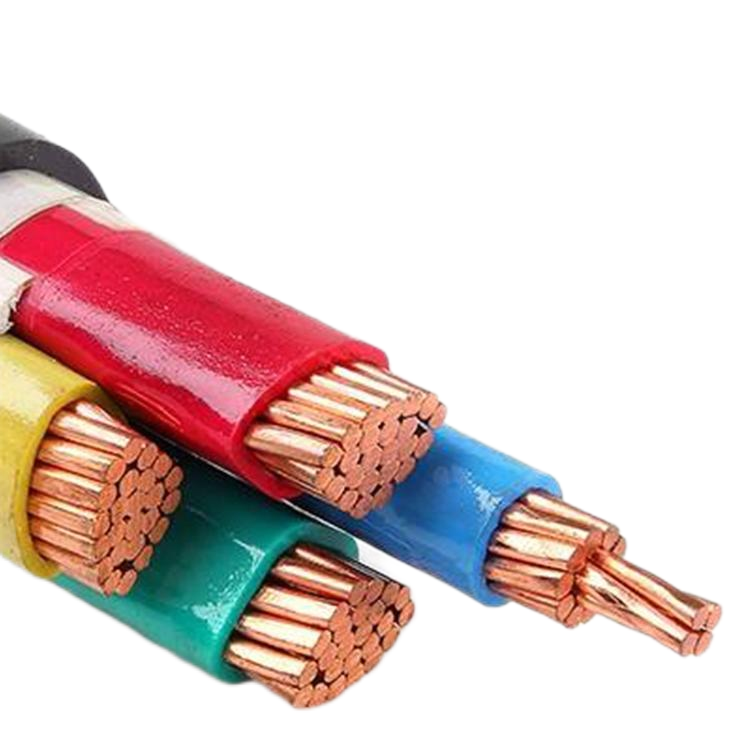
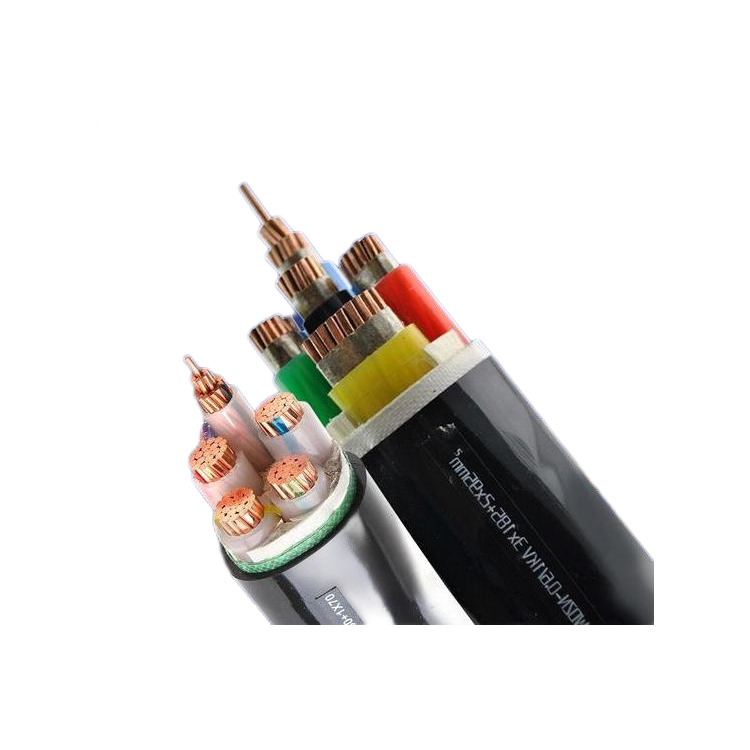
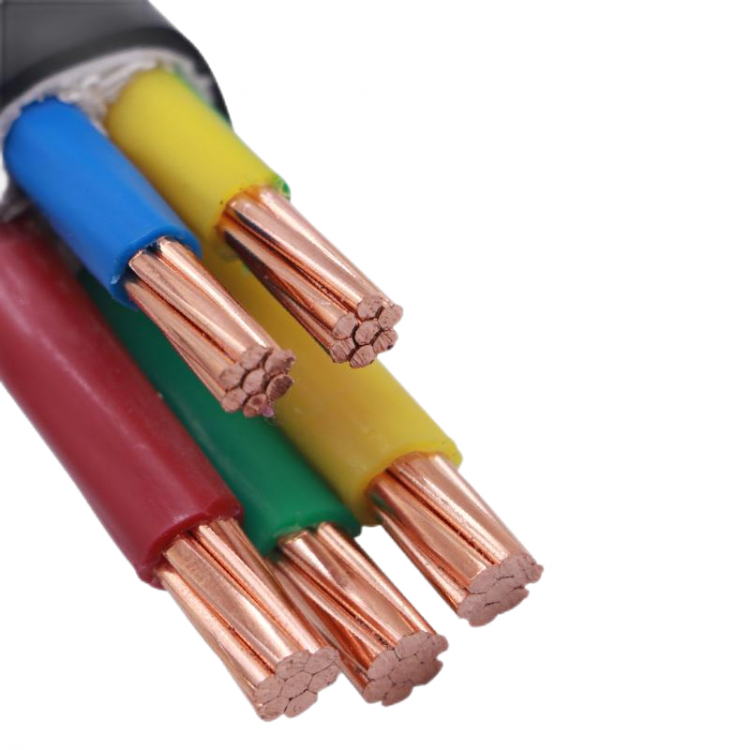
NH-FFP and NH-FFRP fire-resistant cables are primarily used in power supply circuits from emergency power sources to users' fire-fighting equipment, fire alarm systems, ventilation and smoke extraction equipment, guide lights, emergency power outlets, and emergency elevators.

Section 2: Precautions for Installing Fire-Resistant Cables:
(1) When fire-resistant cables are used in cable tunnels with dense cable arrangements, cable risers, or near flammable areas such as oil pipes and oil storage facilities, Class A fire-resistant cables should be selected first. In all other cases, and when the cable configuration is limited in quantity, Class B fire-resistant cables should be chosen.
(2) Flame-retardant cables are mainly used for power supply circuits of emergency power sources, which require normal operation during fires. Due to the sharp rise in environmental temperature during fires, for circuits with long power supply lines and strict voltage drop limits, NH-FFP and NH-FFRP cables should have their cross-sectional area increased at least one grade to ensure transmission capacity and reduce voltage drop.
(3) Flame-retardant cables should not be used as high-temperature cables. Additionally, to minimize the likelihood of failures at cable joints during fire incidents, the number of joints should be kept to a minimum during installation to ensure the circuit operates normally in the event of a fire. If branch wiring is necessary, proper fire-resistant treatment should be applied to the joints.
(4) Some users consider this conductor to be a flexible stranded structure, which necessitates shifting the focus of the company's communication from the reliability of cable usage to the circular and compact conductor. The flexibility of the stranded and flexible structure is prone to damaging mica tape, and mica tape is not suitable for use as a fire-resistant cable conductor. However, some manufacturers believe that the manufacturer should meet the user's requirements for which type of fire-resistant cable is needed. I believe the users do not fully understand the relevant details of the cable. Cables are closely related to human life, so cable manufacturers must clearly explain the related technical issues to the users.
(5) NH-FFP and NH-FFRP sector conductors are also not suitable due to uneven pressure distribution in the winding of sector conductor mica tape (65133). As shown in the figure, it can be seen that the pressure at the three sector angles of the sector core mica tape is high. Since mica is a lamellar silicate polymer, the interlayer molecular attraction is much weaker than the bonding force of the s1-0 covalent bonds in the crystal. The layers are prone to sliding, bonded with silicone, but the bonding strength is also low. When subjected to external scraping and squeezing forces, they are prone to shedding and cracking, especially when using a sector structure. When the winding core passes through the guide wheel, divider rod, and routing to the side panel edge of the work wheel, subsequent process squeezing of the insulation into the core is prone to scratching and abrasion, leading to a decline in electrical performance. Additionally, from a cost perspective, the cross-sectional perimeter of the sector conductor structure is greater than that of the circular conductor structure. Moreover, the addition of mica tape, which is a valuable material. Although the outer diameter of the cable with a circular structure increases and the amount of polyethylene sheath material increases, the overall cost of the cable with a circular structure is still lower compared to the total cost of the product materials. Based on the above description, from both a technical and economic perspective, the circular structure is the conductor for fire-resistant power cables.
Section 3: Product Execution Standards
GB9330-88
4. Usage Features
1. Rated Voltage: U0/U 450/750V
2. Operating Temperature: Flame-retardant insulation and sheath - 70℃ and 105℃
Fluoroplastic insulation and sheathing for temperatures up to 200°C and 260°C.
Cross-linked polyethylene insulation, 90℃
Low-smoke, halogen-free flame-retardant polyolefin at 70℃.
Low-smoke, halogen-free flame-retardant cross-linked polyolefin at 90°C and 125°C.
3. Environmental Temperature: Flame-retardant sheath -40℃ for fixed installation, -15℃ for non-fixed installation.
Fluorinated plastic insulation and sheath - fixed installation to -60°C, non-fixed installation to -20°C.
4. Fire-resistant properties
Meets IEC331 specifications for flame temperature of 750°C, combustion time of 3 hours, cooling time of 12 hours, additional rated voltage, and additional 3A current. Complies with GB12666.6-A requirements for flame temperature of 950-1000°C, combustion time of 90 minutes, additional rated voltage, and 3A current. Meets GB12666.6-B specifications for flame temperature of 750-800°C, combustion time of 90 minutes, additional rated voltage, and 3A current.


