


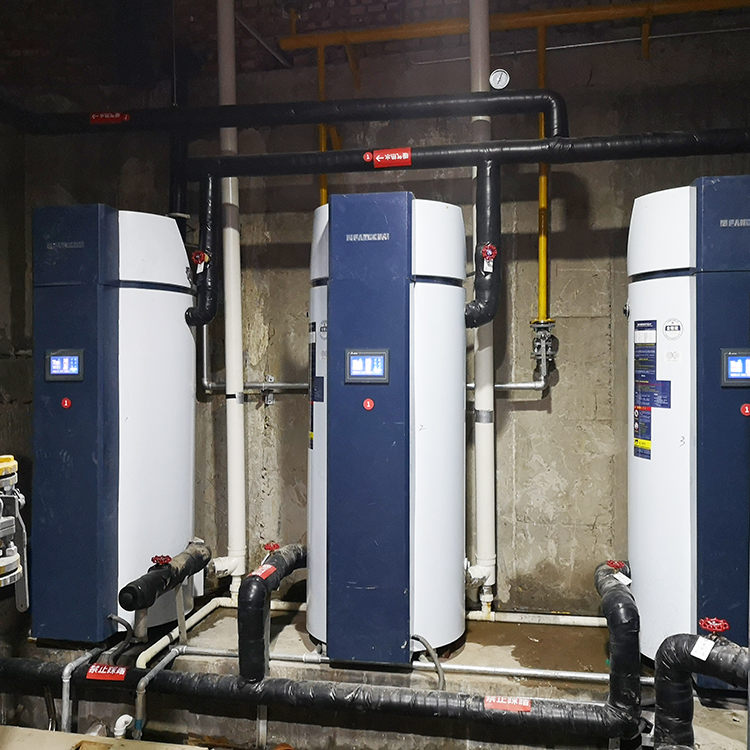


How to perform maintenance and care for a gas boiler during operation?
I. Cleaning and Maintenance Measures:
1. Open the burner door, remove the rear shell panel, and unscrew the boiler's rear cleaning port screws.
2. Clean gas pipelines with a wire brush.
3. Clean the combustion chamber with a soft bristle brush.
4. Remove the slag inside the boiler, tighten the clean outlet screw, close the combustion chamber door, and check if the sealing ring is intact.
5. If the boiler is installed in an area with temperatures below 0 degrees, commercial gas hot water heater manufacturers must take the following protective measures: If the boiler room is outdoors, the Jining commercial gas hot water heater should lower the indoor temperature to 15 or 18 degrees to keep the boiler running all day. If the room will be unoccupied for a long period, the water inside the boiler should be drained.
Cathodic Protection:
You know that the components of a boiler are made from different materials (such as cast iron, copper, aluminum, etc.). To prevent electrochemical corrosion, cathodic protection measures must be taken.
III. Boiler Sludge and Waste Water Treatment
Bottom drainage of gas-fired boilers can prevent condensation of flue gas. Condensation occurs due to moisture content in the flue gas (diesel) and excessively low flue gas temperatures, leading to the formation of water. Some of this water is expelled through the chimney, some is absorbed by the chimney walls, and the remainder settles at the bottom of the chimney.

The characteristics of gas combustion are its cleanliness, ease of transportation, absence of ash and slag, ease of combustion adjustment, good operability, and ease of adjusting heat output. The methods of gas combustion are generally classified into diffusion combustion, atmospheric combustion, and flameless combustion based on the supply method and quantity. Diffusion combustion refers to the combustion of gas without pre-mixing with air, meaning there is no primary air supply. The combustion features are that the mixing of gas with air is entirely achieved through the diffusion between them. This type of combustion has a low combustion rate, low flame heat intensity, and is prone to incomplete chemical combustion. Its advantages include no backfiring phenomenon, high flameout speed, and relatively stable combustion.

Regularly clean heating systems: Over time, using heating systems can lead to a gradual buildup of scale, significantly reducing thermal conduction efficiency. Moreover, as the sediment accumulates in the system, it may also cause noise issues in commercial gas water heating units.
Do not drain the heating system water: Draining the heating system water will create a moist oxygen-rich environment within the system, which can lead to corrosion of boiler waterway components and pipes. Since some maintenance procedures for gas boilers are quite professional, if the user is unable to complete them independently, they can call the manufacturer's service hotline for consultation.
