




Gas boilers are currently the energy supply equipment that meets national environmental protection requirements. They are widely used in industries such as food processing, dyeing, and chemical engineering. As mechanical equipment, proper maintenance is crucial for extending the lifespan of the equipment. Therefore, it is essential to be clear about the names, technical terminology, and locations of all components during maintenance.
Today, the technical director of Fangkuai Boiler will teach everyone how to accurately understand the heating surface of boilers.
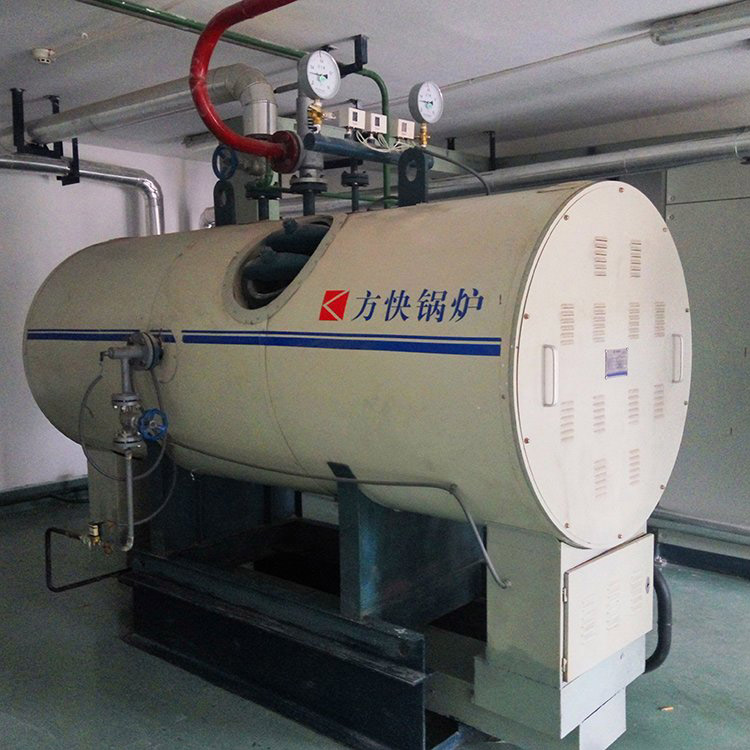
Let's first take a look at the definition of the boiler heating surface:
The boiler heating surface refers to the interface that absorbs heat from the heat-releasing medium and transfers it to the heating medium, including both convective heating surfaces and radiant heating surfaces.
Radiation heating surface
Radiant heat-absorbing surfaces primarily absorb heat from heat-emitting mediums through radiant heat exchange methods, such as water-cooled wall pipes and furnace shells.
Flow heat surface
The heated surface that absorbs heat from high-temperature flue gas by means of convective heat exchange is typically referred to as the surface through which flue gas passes, such as flue ducts, convective tube bundles, etc.
