


- AllProduct Category
-
Wastewater Treatment Equipment
Recirculating Water Treatment Equipment
Waste Gas Treatment Equipment
Environmental Protection Filler & Accessories





详情描述
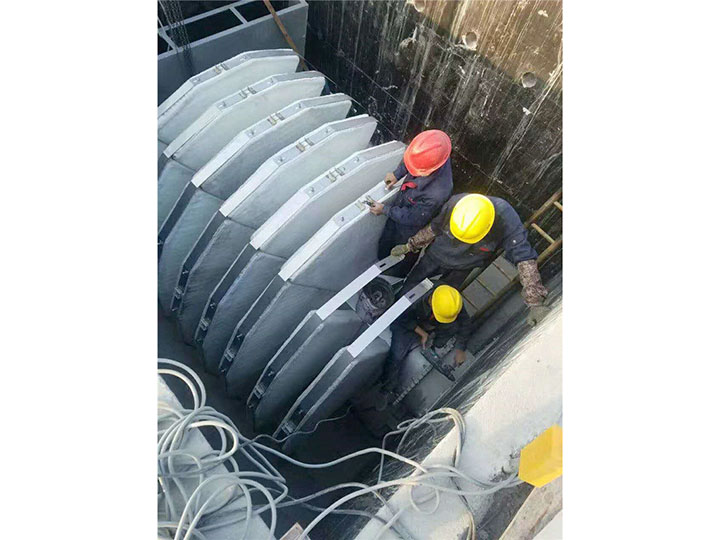
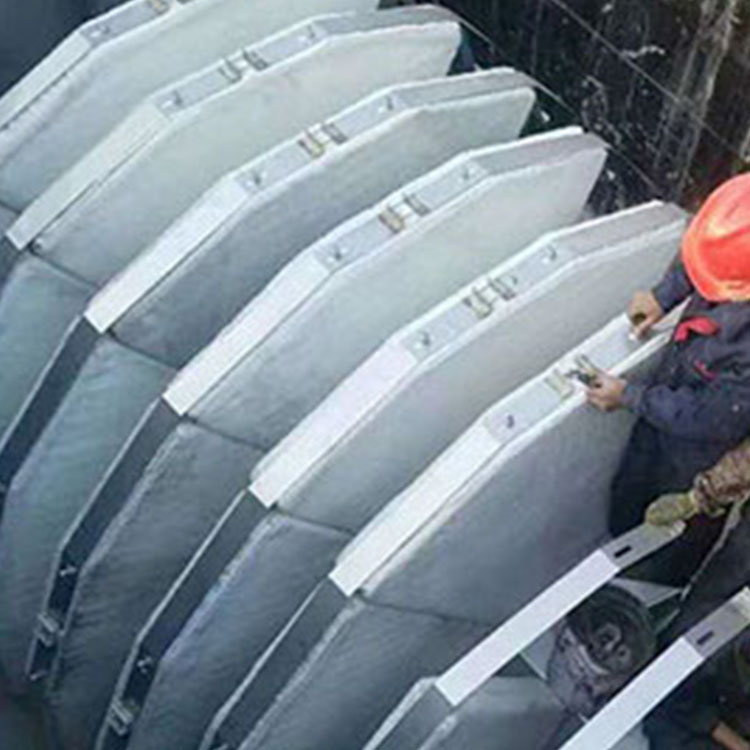
What are the structural features of the turntable filter?
(1) Good and stable water quality.
The rotary filter uses filter disks wrapped in filter fabric instead of traditional sand filter media, with very small pore sizes that can retain particles as small as a few micrometers (μm). Consequently, the water quality and stability of the effluent are superior to those of granular filter beds. Additionally, conventional filter beds have poor water quality before flushing due to penetration issues, and the effluent is affected after flushing due to the residual cleaning water in the filter layer. Moreover, the amount of filtered water varies with the resistance.
(2) Innovative design with high impact resistance.
The rotary filter basin is a combination of a filter basin and a sedimentation basin, featuring mud discharge capabilities. Large particles of sludge settle directly to the bottom of the funnel-shaped basin, thus not blocking the filter cloth, unlike conventional filter basins where all suspended solids (SS) must pass through the filter media. This results in a longer filtration cycle and cleaning interval, and it can withstand much higher hydraulic and sludge loads compared to standard sand filter basins. The suspended solids (SS) load is equivalent to 1.5 times that of a standard sand filter basin, and the filtration rate is 50% higher. Therefore, the fiber rotary disk filter basin is more resistant to high suspended solids concentrations and large particle loads.
(3) The equipment is simple and compact, with minimal auxiliary equipment, resulting in a low investment for the entire filtration system.
The rotary disk filter can continuously filter during the cleaning process. However, the sand filter cannot continuously filter during backwashing, so to ensure continuity, an intermediate storage pond must be set before the sand filter or multiple filter ponds should be alternately operated. The fiber rotary disk filter pool uses a small pump for negative pressure suction to automatically clean the filtered water, eliminating the need for many traditional filter ponds' backwashing ponds, water towers, etc. Traditional filter ponds require strong backwashing, which not only necessitates high-power pumps and blowers but also a large diameter pipeline and valve system for both air and water. The entire system is numerous and complex, with high investment costs. The automatic control system is extremely large and complicated.
(4) Low equipment idleness rate, low total installed power.
Due to the thin filter cloth, it is very easy to clean thoroughly, with highly efficient cleaning. During cleaning, the area cleaned on the filter disk is only 1% of the entire disk's area. The cleaning feature is frequent but with short duration (1 time/60-120 mins, 1 minute per time). The overall water usage for cleaning is also minimal. In contrast, traditional filter beds have more equipment like air-water backwashing pumps and blowers, numerous large automatic valves, and high power consumption, with a high idle rate.
(5) Operation automation ensures simple and convenient operation and maintenance.
The filtration process is computer-controlled, allowing for adjustable intervals and duration for the negative pressure suction cleaning and sludge discharge procedures. Basic maintenance and management by a dedicated person is not usually required.
The maintenance volume for the turntable filter is low. The fiber turntable filter pool has less equipment, the pump and motor operate intermittently, the filter cloth wears down less, and the filter cloth is easy to replace. If the filter cloth gets clogged for any reason, it can be easily replaced. For sand filter pools, if the filter medium gets clogged, a significant amount of cleaning work is required. Moreover, replacing the filter medium in sand filters is extremely difficult.
(6) Head loss is much lower compared to sand filters.
Fiber disc filter beds typically have a depth of 0.2m, whereas sand filter beds generally experience a head loss of over 2m. The head loss in sand filter tanks is higher than 5m, resulting in significant energy loss and increased operational costs.
(7) It occupies significantly less land area than other filter ponds.
Due to the vertical hollow tube design of the filter disk, a small footprint can ensure a large filtering area, thereby reducing the pool volume, material quantity, and earthwork volume, significantly lowering the construction cost. A filter pond with a daily treatment capacity of 10,000 tons occupies no more than 20 square meters of land and is 3.3 meters in height. It can address the difficulty of insufficient space for technical renovations.
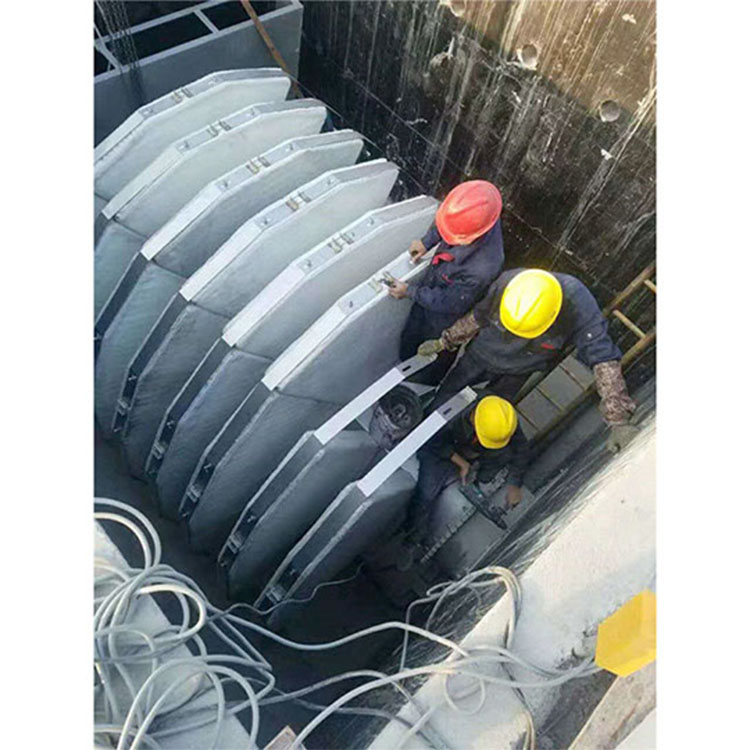
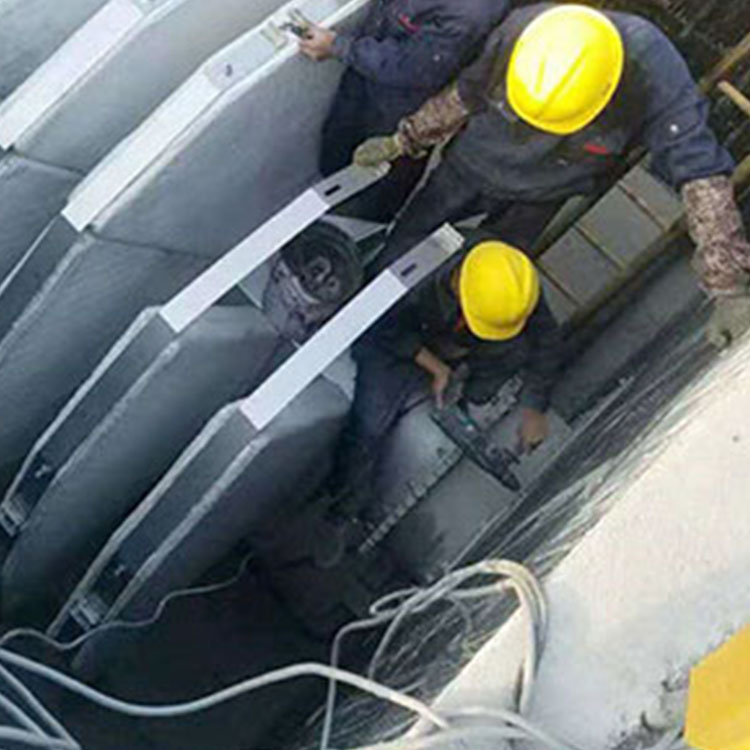
(8) The rotary filter is easier to install than the granular filter bed.
After connecting the on-site pipe fittings and electrical equipment, it is ready for use. Particle filter beds often require filter media installation.
(9) Short design and construction periods.
The rotary filter is fully integrated into a complete unit, suitable for easy shipment as a whole; its design and construction are convenient and quick; plus, it is easy to expand.
(10) Low ground bearing requirement; less investment needed for equipment foundations.
询价单


