

 Water-repellent Rock Wool Board,
 Jinhua, Zhejiang, manufacturer of
 Anhui Centrifugal Glass Wool Boar
 Factory in bulk for high-temperat
 Long-term supply of thermal insul
 Jinhua Centrifugal Glass Wool Boa
 Jiangxi hydrophobic rock wool boa
 Zhejiang Jinhua Glass Wool Board
Fujian Centrifugal Glass Wool Board, Fujian Centrifugal Glass Wool Board Price, Fujian Centrifugal Glass Wool Board Wholesale
Centrifugal glass wool exhibits good sound absorption properties for high frequencies. The main factors affecting the sound absorption performance of centrifugal glass wool are thickness, density, and air flow resistance, among others. Density refers to the weight of the material per cubic meter. Air flow resistance is the ratio of air pressure and air velocity on both sides of the material per unit thickness. Air flow resistance is the most important factor affecting the sound absorption performance of centrifugal glass wool. Too low flow resistance indicates the material is sparse, making air vibrations easy to pass through, thus reducing sound absorption; conversely, too high flow resistance suggests the material is dense, making it difficult for air vibrations to penetrate, also diminishing sound absorption. For centrifugal glass wool, there is a flow resistance in its sound absorption performance.
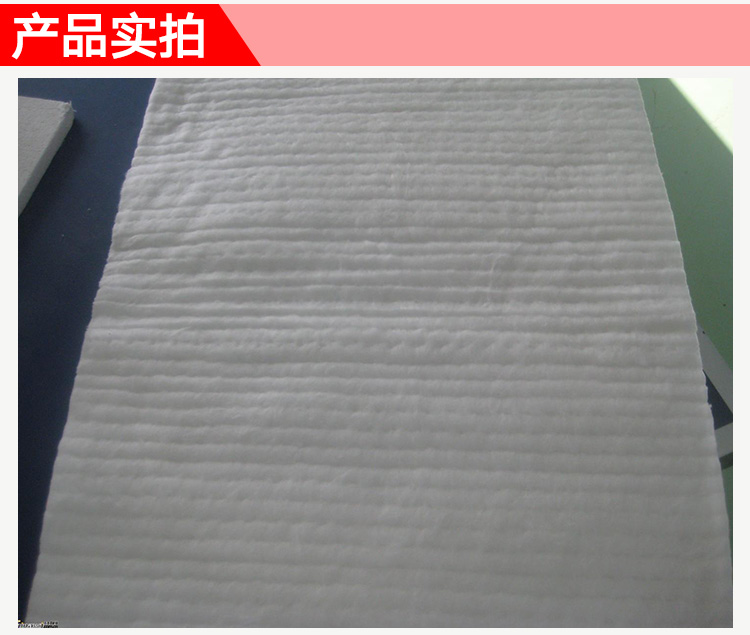
Glass wool is a category of glass fiber, a type of artificial inorganic fiber. It is primarily made from natural ores such as quartz sand, limestone, and dolomite, along with some chemical raw materials like soda ash and borax, which are melted into glass. In the molten state, it is blown or spun into fluffy fine fibers, with the fibers crossing and intertwining in a three-dimensional manner, creating many small gaps. These gaps can be considered as pores. Therefore, glass wool can be regarded as a porous material with excellent thermal insulation and sound absorption properties.
In actual engineering, measuring air flow resistance is quite challenging, but it can be roughly estimated and controlled based on thickness and bulk density.
As thickness increases, the absorption coefficient for mid-to-low frequencies significantly increases, but there is little change in high frequencies (high frequency absorption is always greater).
2. The thickness remains constant, but the bulk density increases, along with the absorption coefficient for mid-to-low frequencies. However, when the bulk density reaches a certain point, the material becomes denser, and the flow resistance exceeds the flow resistance, causing the absorption coefficient to decrease instead. For spun glass wool with a thickness over 5cm and a bulk density of 16Kg/m3, the low-frequency absorption coefficient at 125Hz is about 0.2, and the absorption coefficient for mid-to-high frequencies (>500Hz) is nearly 1. As the thickness increases beyond 5cm, the absorption coefficient for low frequencies gradually improves, and when the thickness is over 1m, the low-frequency absorption coefficient at 125Hz also approaches 1. When the thickness is constant but the bulk density increases, the low-frequency absorption coefficient of the spun glass wool also continues to rise, reaching a maximum absorption performance when the bulk density is close to 110kg/m3, with a thickness of 50mm and a frequency of 125Hz showing an absorption coefficient of nearly 0.6-0.7. When the bulk density exceeds 120kg/m3, the absorption performance actually decreases due to the denser material, significantly impacting the mid-to-high frequency absorption performance. When the bulk density exceeds 300kg/m3, the absorption performance decreases significantly. In architectural acoustics, commonly used thicknesses for absorption glass wool are 2.5cm, 5cm, and 10cm, with bulk densities of 16, 24, 32, 48, 80, 96, and 112kg/m3. Typically, spun glass wool with a thickness of 5cm and a bulk density of 12-48kg/m3 is used.