
 Quartz Crystal Microbalance (QCM) - Microbial Identification and Subtyping (MIPS)
 Aluminum Ion Detector MIPS
 Fluoride Ion Detector MIPS
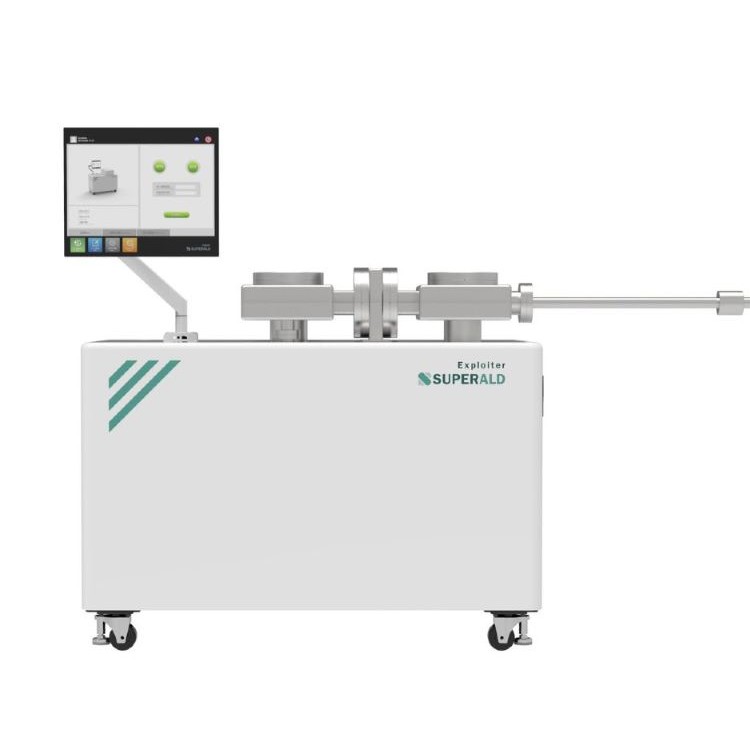 High-Vacuum Atomic Layer Deposition System UHV
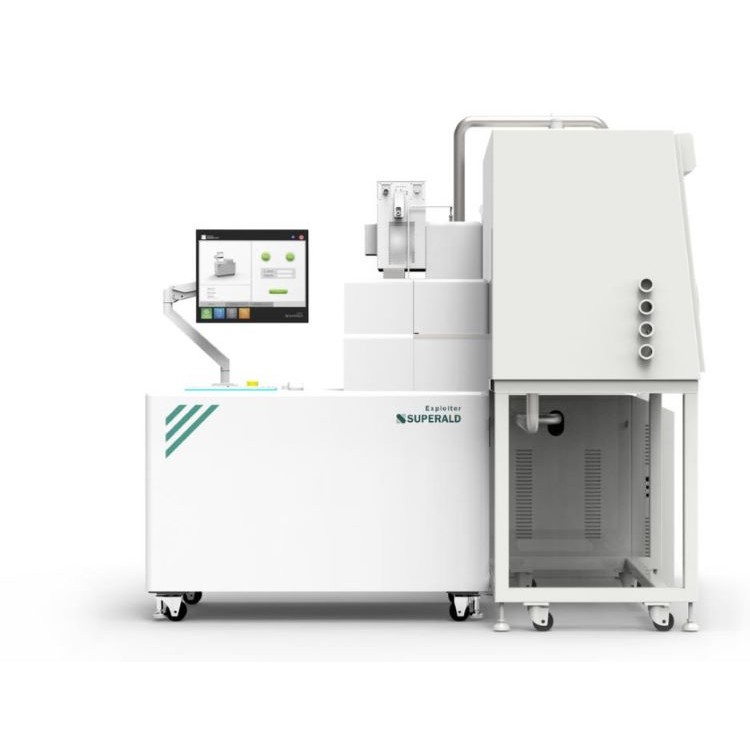 Gloved Box Integrated Atomic Layer Deposition System
 Plasma-Enhanced Atomic Layer Deposition System PEALD E200SP
Product Details

Atomic Layer Deposition Systems, Nanomechanical Testing Equipment, Molecular ...



产品Price Negotiable
最小起订Quantity:1 Tai 供货总Quantity: 100 Tai


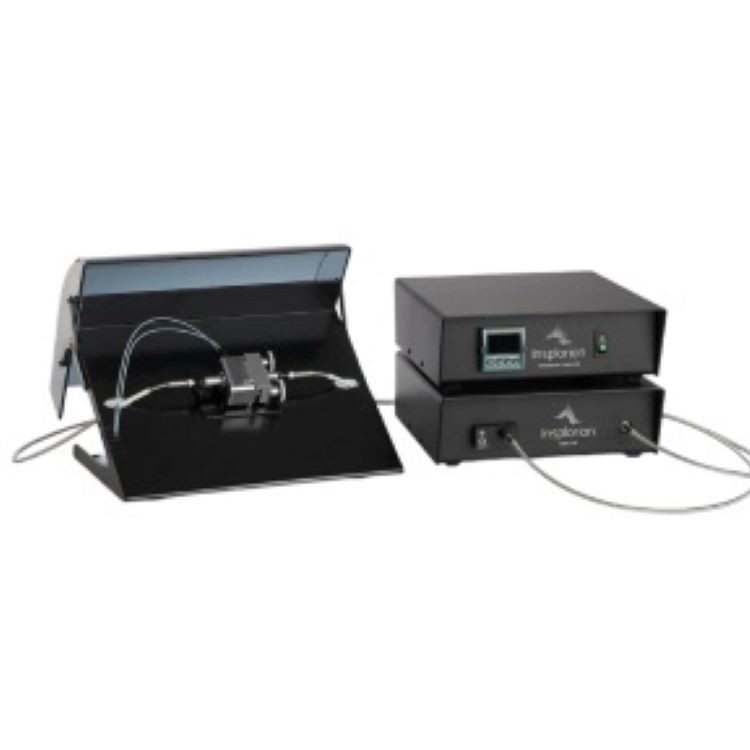
Product Information The Insplorion XNano features a flexible measurement unit capable of real-time refractive index measurement in both gas and liquid flow applications. The Xnano provides users with a multifunctional system, making all the exciting possibilities of the Insplorion NPS technology easily accessible. In summary, the entire Insplorion XNano system offers the following features: Ultra-sensitive measurement of refractive index changes on the sensor surface b. Measurement in liquid or gaseous environments c. Integrated temperature control, temperature range from room temperature to 80°C d. Flexible selection of sample material structure and properties e. Versatile selection of base materials and surface chemistry f. Real-time, in-situ monitoring of the process changes within nanoparticles and thin films Application Fields 1. Insplorion NPS for molecular binding and biometric recognition is suitable for bio-molecular interaction analysis. By monitoring the capture agent (ligand) immobilization on the insplorion sensor, followed by introducing the analyte through the fluid system of the insplorion instrument, quantitative information regarding the affinity constant can be determined. 2. The technology and instruments for monitoring lipid bilayers and vesicles, such as Insplorion, enable comprehensive experiments, including the observation of lipid bilayer formation and its interactions with biomolecules and nanoparticles. The sensitivity to the optical property changes near the surface can also yield structural information, such as information about the vesicle shape. The sensitivity to the optical property changes adjacent to the surface can also provide structural information, such as information about the vesicle shape. 3. Insplorion NPS technology is used for monitoring diffusion in polymer films (thickness ranging from micrometers to a few nanometers) and in porous networks. Insplorion sensors feature a high surface sensitivity, capable of detecting internal interfaces hidden within thick films. This enables you to determine the time when diffusing species reach the interface and saturate the film, as well as monitor the release process. Quantitative kinetic information, such as diffusion coefficients, has already been obtained from experiments in one case. 4. Hydrogen Sensor/Storage Insplorion's NPS technology offers researchers in hydrogen storage and solid-state reaction fields a new, powerful research tool to overcome numerous experimental challenges. The NPS measurement is focused on a clear model system, using a minimal amount of sample under "operational" conditions and in a controlled microenvironment. This results in various gradients of minimization, as well as distortion of a wide particle size distribution. High time resolution allows for the monitoring of rapid processes in solid-state reactions under high temperatures. Success Stories NPS technology has been successfully applied to address the following issues in the field of nanostructured storage entities for hydrogen storage: 1. The size-dependent kinetics of hydrogenation and dehydrogenation of palladium nanoparticles within the D<5nm size range. 2. Size-dependent thermodynamics of palladium nanoparticle hydride formation and decomposition within the D<5nm size range. 3. Study on the size-dependent hysteresis phenomenon between the formation and decomposition of hydrides in metal nanoparticles. 4. Thermodynamic Quantitative Single Particle Study of Magnesium and Palladium Nanoparticle Hydrides. 5. Ultra-thin polymer film and glass transition temperature of glassy nanostructures/nanoparticles In ultra-thin polymer films, the glass transition temperature Tg becomes size/thickness-dependent due to the presence of the near-surface layer (a few nanometers thick), where polymer segments exhibit varying fluidity. Insplorion's NPS technology offers a powerful tool for researchers in the field of polymer film research. Success Stories NPS technology has been successfully applied to address the following phenomena: 1. Thickness dependence of the glass transition temperature (Tg) of un取向 polymethyl methacrylate (PMMA) films. 2. Size-dependent glass transition temperature (Tg) in polystyrene (PS) nanoparticles. 6. Monitor the hidden interface between the porous membrane and the substrate Even for well-equipped laboratories, the small-scale diffusion of small molecules in and out of porous materials presents a challenge. For applications requiring the transport and slow release of materials, as well as the use of the maximum amount of material in porous matrices, NPS technology can prove to be an invaluable tool. Success Stories NPS technology has been used to track the following process changes: 1. The time dependency of mesoporous titanium dioxide dye impregnation for optimizing dye-sensitized solar cells. 2. Quantification of dye diffusion coefficient in mesoporous materials. 7. Solar Cells Enhance DSSC performance and knowledge. Insplorion NPS technology is applied in R&D to boost the performance of solar cells. Real-time sensor technology provides reliable and consistent measurements for different coatings in light-receiving layers. For instance, the dye-dipping step in dye-sensitized solar cells can be meticulously monitored using Insplorion instruments. Insplorion, in collaboration with researchers from the Prof. Michael Grätzel group at the KTH Royal Institute of Technology in Sweden and Chalmers University of Technology, has successfully applied Insplorion's nano-plasma sensing technology (NPS) to the research of dye-sensitized solar cells. This research focuses on the molecular adsorption of titanium dioxide films in solar cells and is featured in Nano Letters. Enhance solar cell performance: Michael Grätzel, as a researcher in the field of solar cells, said about insplorion's technology, "I find the technology of insplorion very intriguing for the dye coating process in the study of dye-sensitized solar cells. It has the potential to become a valuable tool for improving the dye coating process, thereby enhancing the performance of solar cells." Technical Specifications Flow-through poolChip Above Volume ~ 4 μL Minimum Sample Quantity ~ 100 μL Typical Flow Rate 20-100 μL/min Material Titanium and Fluorinated Rubber® Temperature Range Room temperature up to 80°C
Sensor ChipSubstrate Fused Quartz Dimensions 9.5 mm x 9.5 mm x 1 mm Surface Nanostructured Gold Surface Coating Au, SiO2, Si3N4, TiO2, Al2O3
Optical Reading CharacteristicsLight Source Tungsten-halogen lamps, lifespan 2000 hours Measurement Point Dimensions Circular area ~ Diameter 2mm Wavelength Range 450 - 1000 nm Temporal Resolution 10 sample points per second Typical Noise < 0.01 nm 

Phone Consultation