




Introduction and Uses of Tellurium Copper:
Tantalum copper, as defined in GB/T5233-2001 standard, is classified as QTe0.5, equivalent to the U.S. copper alloy C14500. Its composition (%) is as follows: 0.40~0.7Te, 0.004~0.012P, and 99.90 Cu (including Te+Su). The solubility of tellurium in copper is no more than 0.01% at 800°C, and tellurium has a minimal impact on copper's conductivity and thermal conductivity. Tellurium exists in copper as a dispersed, independent phase of Cu2Te, making chips easy to break and improving copper's machinability. To reduce the brittleness of tantalum copper, the Te content should not exceed 0.7% and it should be used in quenched and tempered conditions. Avoid annealing, as Cu2Te will precipitate along grain boundaries during annealing (around 600°C), making the material brittle. Tellurium also degrades copper's solderability.
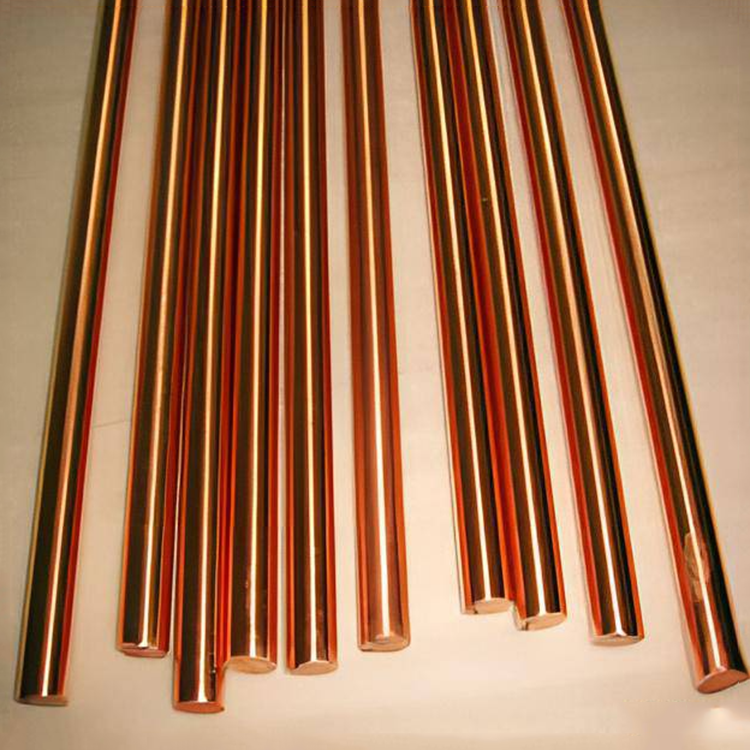
After understanding tellurium copper, let's take a look at tellurium copper rods. Tellurium copper rods are a type of important metal material, which is extruded or drawn from tellurium bronze. They play a crucial role in many aspects. For example, they are used as materials for manufacturing components in electronic appliances, instruments, automatic control systems, communication systems, aerospace, and other products. They offer high conductivity, excellent machinability, and corrosion resistance, and are environmentally friendly, lead and cadmium-free. They come in various shapes such as round, square, and hexagonal.
Applications of Tellurium Copper Rods:
The main applications of Tellurium Copper Rods: Used for components with high conductivity, machinability, and corrosion resistance, such as electrical connectors, automotive parts, switch components, pipe fittings, brazing tips, torch tips, transistor bases, and furnace assembly parts.

