
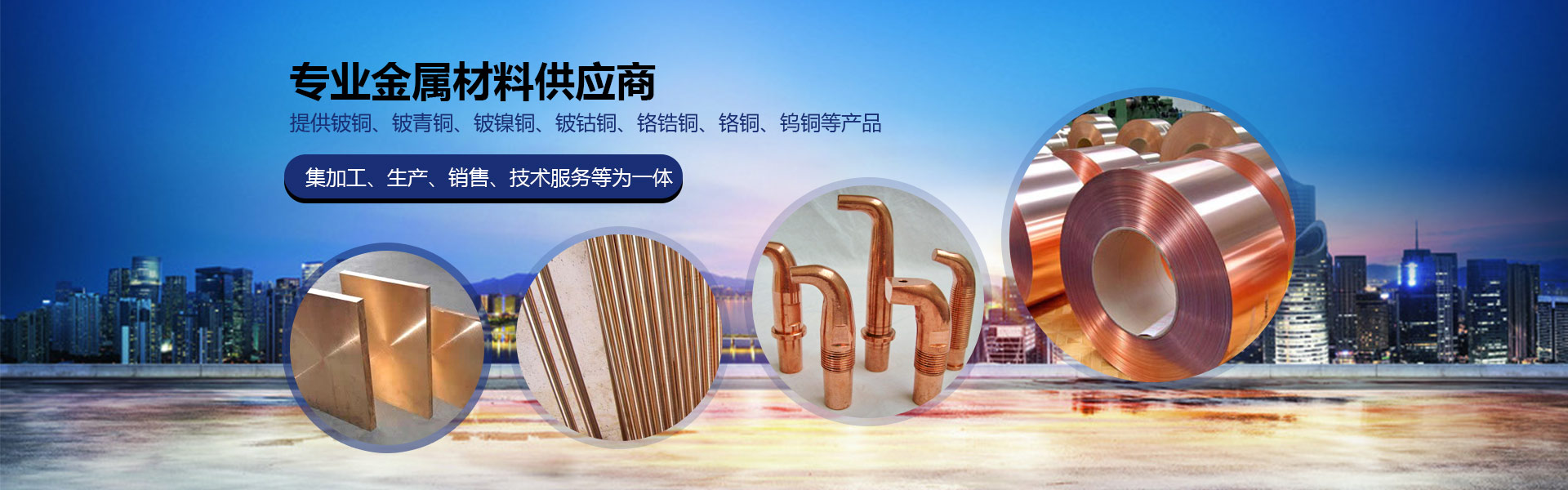
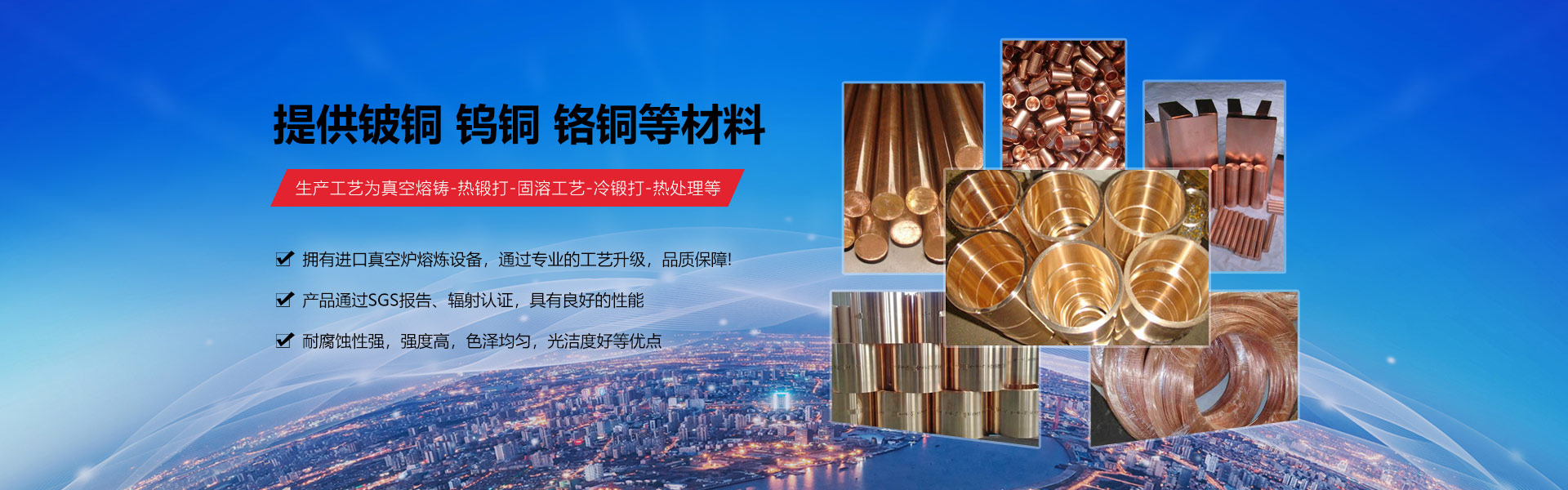


Alloys composed of tungsten and copper, commonly containing 6% to 45% copper, are produced using powder metallurgy methods. They exhibit excellent electrical and thermal conductivity, good high-temperature strength, and a certain degree of plasticity. At very high temperatures, such as above 3000°C, the copper in the alloy liquefies and evaporates, absorbing a large amount of heat and reducing the surface temperature of the material. Therefore, these materials are also known as metal sweating materials.
Tungsten copper is suitable for making electrodes for resistance welding, while copper is too soft for the job. Copper, also known as red copper, is a pure copper element named for its purple-red color. Industrial pure copper, it has a melting point of 1083°C, no allotrope transformation, and a relative density of 8.9g/cm³, which is five times that of magnesium. The same volume of copper is about 15% heavier than ordinary steel. Due to its rosy red color, the surface turns purple after forming an oxide film, hence the name "purple copper." It is copper containing a certain amount of oxygen, hence also known as oxygen copper.
Tungsten copper electrodes offer advantages such as high-temperature resistance, high strength at elevated temperatures, resistance to arc erosion, and excellent conductivity and heat dissipation. Their applications are focused on electrical discharge machining electrodes, resistance welding electrodes, and high-voltage discharge tube electrodes. The characteristics of electrical machining electrodes include a wide variety of types and specifications, with small batches but a large total quantity. Tungsten copper materials for electrical machining electrodes should have as high a degree of densification and structural uniformity as possible, particularly for slender rods, tubes, and non-standard electrodes.
