

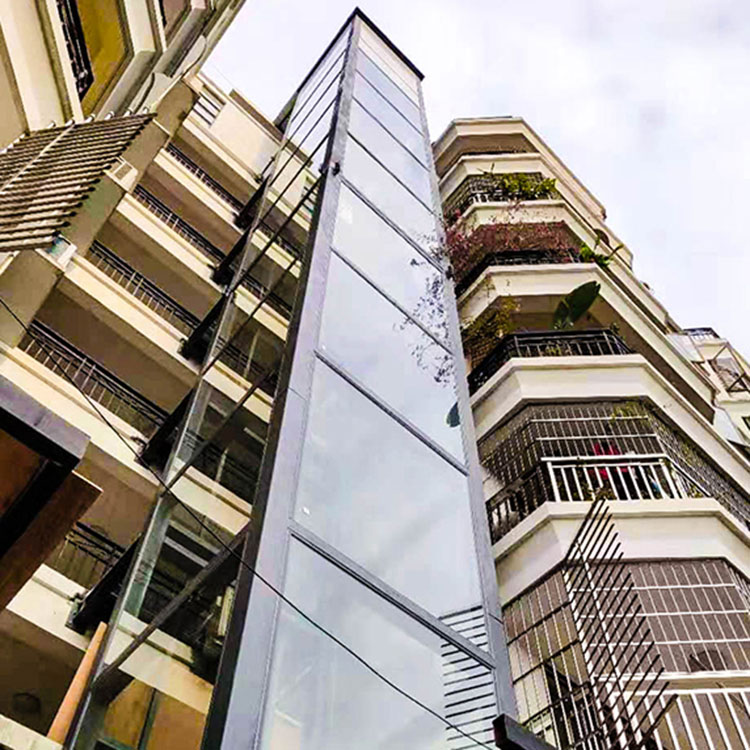


Currently, a significant portion of people in our country reside in multi-story residential buildings without elevators, and with the advancement of barrier-free urbanization efforts, the actual demand for installing elevators in such buildings is increasingly apparent. How to reasonably and safely add elevators to existing residential buildings has become a focus of attention for many medium to large cities.
Elevator shaft steel structure is energy-efficient, environmentally friendly, seismic-resistant, and safe. Installation is quick, with a short construction period. On-site noise pollution is minimized, and it does not disrupt residents' normal lives and travel. Materials are recyclable.

If the steel structure shaft is specifically designed for the elevator, simply select an H-beam or square tube based on the elevator shaft dimensions, and design directly according to the shaft size.
Certainly, collaboration with elevator manufacturers is crucial as well. Many basic data points are required, such as shaft width and depth, pit depth, overhead height, door dimensions, door jam and frame sizes, etc. Each manufacturer may have different specifications and requirements, so detailed coordination is essential.
Once the main frame dimensions are confirmed, the next step is to identify a specific manufacturer, involve them in the design process, provide parameters and feedback, weigh and reserve, etc. All the details should be determined by the specific manufacturer.

