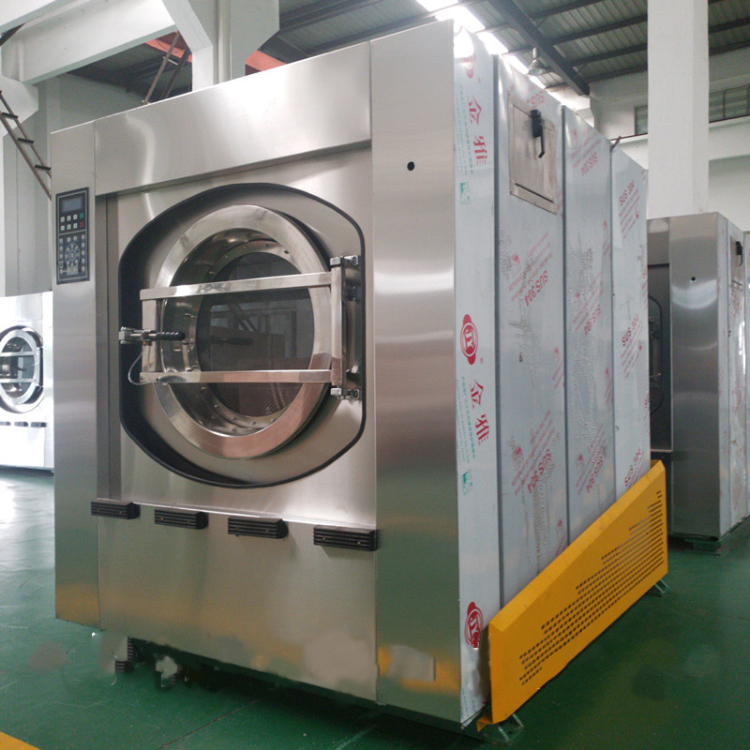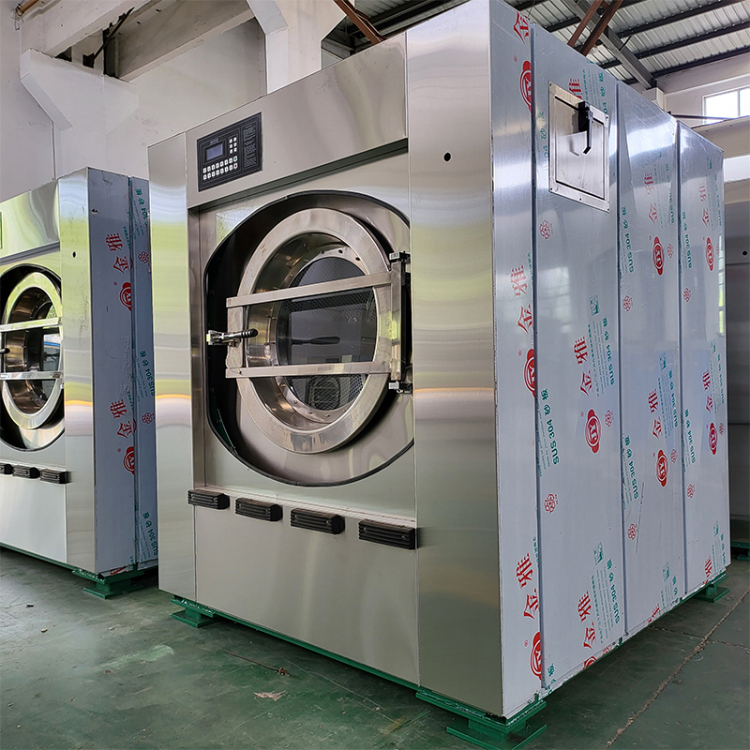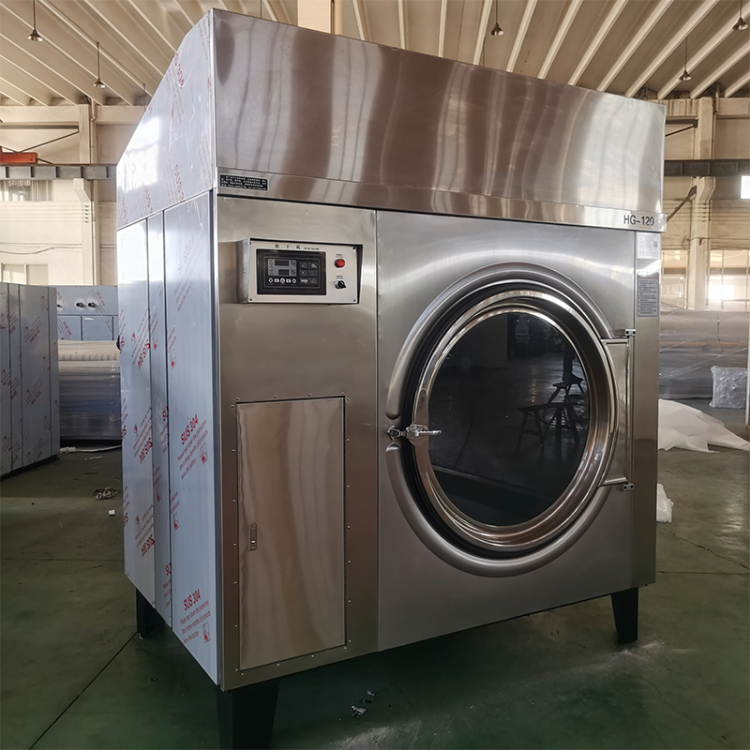
Research, manufacturing, sales, and installation of gener...

During the washing process at the laundry factory, the washing program determines the cleanliness and lifespan of the fabric. Adopting a reasonable washing program can enhance the washing effectiveness. Therefore, in the washing process, factors such as the washing temperature, duration, and force are particularly important key points.
Washing Temperature
Washing temperature refers to the water temperature used in the washing process for items such as clothing, bedding, and fabrics within washing machines. The washing temperature plays a significant role in the washing items, and increasing the temperature can yield several key benefits:
Enhanced detergent solubility, resulting in a higher concentration of cleaning solution, thereby boosting cleaning power.
(2) Significantly enhances the solubilizing capability of the detergent, thereby strengthening its ability to dissolve dirt and significantly improving its cleaning performance.
By enhancing the emulsifying action of the cleaning solution, general dirt can be quickly emulsified and removed from the fabric surface under the rinse of a high-concentration cleaning solution.
Due to the increased washing temperature, both dirt and fabric are heated simultaneously, thereby accelerating the movement of dirt and fabric molecules, weakening their bonding strength. Additionally, under the action of surfactants in high-concentration washing solutions, dirt easily detaches from the fabric carrier.
Increasing the washing temperature of laundry equipment (such as industrial washing machines) is highly beneficial for cleaning.
As the washing temperature increases, the effects of the aforementioned aspects become more pronounced. Generally speaking, the higher the washing temperature, the better the washing effect. Therefore, increasing the washing temperature is often considered a means to improve washing quality.
This method is proven to be suitable only for washing white fabrics; when cleaning colored fabrics, it is essential to control the washing temperature appropriately. If colored fabrics are washed at high temperatures, the dyes on the fabric, under the influence of the aforementioned factors, can be washed off as dirt, especially for fabrics with poor color fastness. This can lead to severe color fading. Therefore, when washing colored fabrics, it is necessary to control the appropriate washing temperature based on the fabric's fiber properties, color fastness, dyeing method, and color depth, and absolutely avoid the occurrence of color fading by pursuing high-temperature washing effects.
Moreover, when washing fabrics contaminated with protein-based stains, never use high temperatures. High heat can cause the protein stains to rapidly expand at the interface with the fabric, even penetrate into the fabric fibers, thereby enhancing the bond strength between the stains and fabric fibers, leading to the consequence that the stains cannot be removed from the fabric carrier.
Therefore, when washing fabrics stained with blood, milk, semen, and other protein-based dirt, they should be soaked in cold water first, followed by a low-temperature wash. Increasing the washing temperature not only promotes the solubility of the wash but also maximizes the detergent's cleaning power. Based on the consideration of the colorfastness and shape retention of the clothing, different washing temperatures should be chosen for fabrics of various properties and colors, as well as for garments with different types of stains.
Washing Time
There is a wide variety of laundry items. Due to the differences in categories, thickness, color, and degree of soiling, they require different handling, resulting in varying wash times.
As previously mentioned, various fabrics will experience changes in tensile strength and length when exposed to water. Due to the differing fiber structures and properties of these fabrics, the changes in tensile strength and length vary. For fiber fabrics with significant changes in elongation coefficient and a notable decrease in tensile strength, it is advisable to shorten the washing time to prevent damage to the fabric caused by excessive washing time. When washing garments made from different fabrics with varying elongation coefficients and tensile strength, determine the washing time based on the fabric with the largest changes in elongation coefficient and greatest decrease in tensile strength.
For example, when washing garments, some fashion and clothing items made of wool, silk, and blended fabrics may have adhesives applied to enhance the crispness of certain areas. Caution is required when washing these garments, as prolonged washing time can dissolve some adhesives. The fabric and辅料 may separate due to different coefficients of elongation when exposed to water. After drying, these garments may exhibit bubbles or deformation, reducing their original value and appearance. Therefore, effective cleaning methods should be used to shorten washing time while ensuring cleanliness. It is also important to remove excess water promptly. When washing colored or blended fabric garments, actions should be swift and efficient, and the garments should be spun dry immediately to prevent color fading or transfer. Only for white cotton fabrics and bedding, which require longer soaking time to enhance cleanliness, the washing time should not be excessively prolonged for other wool, silk, and colored garments.
Washing intensity
During the washing process, mechanical forces such as rubbing, scrubbing, agitating, and spinning are employed. Without these forces, clothes cannot be thoroughly cleaned. Due to variations in fabric properties and the age of the clothing, the tensile strength differs. Consequently, the mechanical forces used in washing are also varied. Applying the same mechanical force can be detrimental to fabrics with lower tensile strength.


b2b.china9.net © Zhongshang 114 Hebei Network Technology Co., Ltd.Address: Room 6009, Oriental New World Center, No.118 East Zhongshan Road, Qiaoxi District, Shijiazhuang City, Hebei ProvincePlatform Service Hotline: 4006299930