
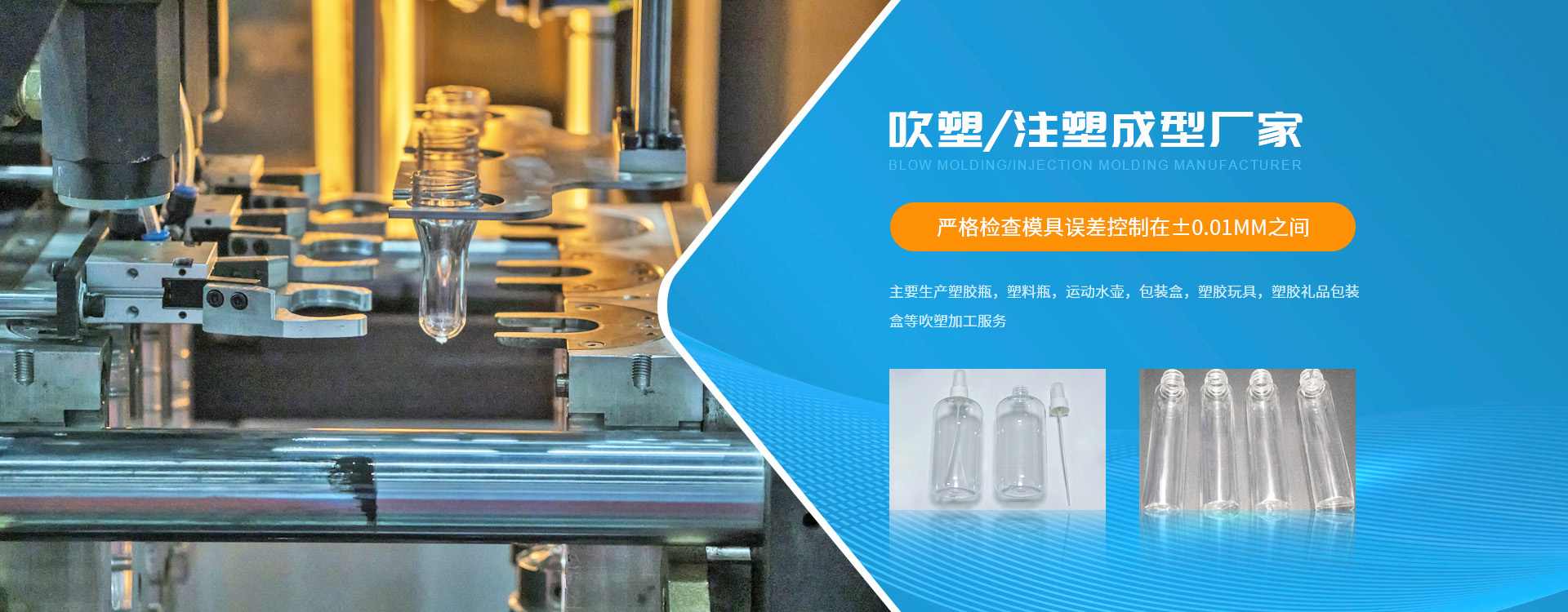
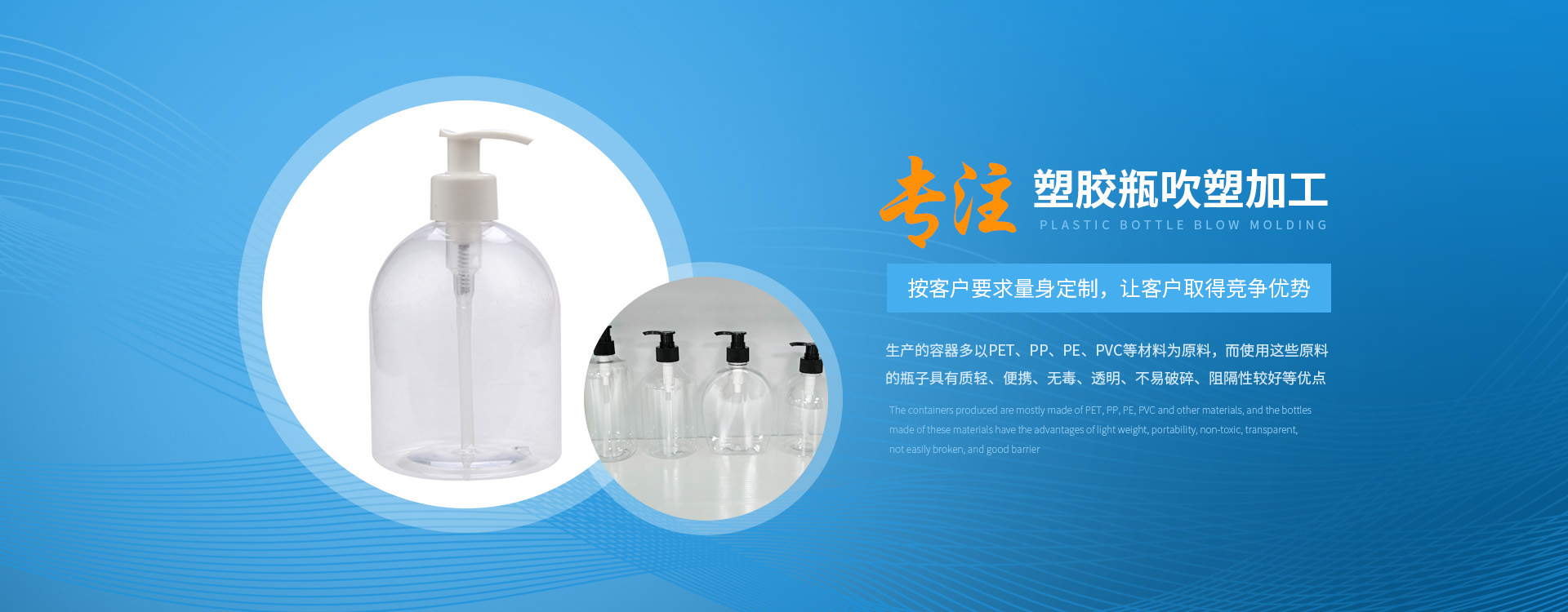




Thermoplastic resin tubes are obtained by extrusion or injection molding. These tubes are then heated (or softened) and placed in a two-part mold. Upon closing the mold, compressed air is immediately introduced into the tube, blowing it up and tightly adhering it to the mold's inner wall. After cooling and demolding, various hollow products are obtained. The manufacturing process for blowing film is conceptually similar to that of hollow products, but it does not use molds. From the perspective of plastic processing technology classification, the blowing film molding process is typically listed under extrusion. Blowing technology was first used during World War II to produce low-density polyethylene bottles. In the late 1950s, with the advent of high-density polyethylene and the development of blowing molding machines, blowing technology gained widespread application. The volume of hollow containers can reach thousands of liters, with some production processes already utilizing computer control. Suitable plastics for blowing include polyethylene, polyvinyl chloride, polypropylene, and polyester, and the resulting hollow containers are widely used as industrial packaging.
Process
Three-quarters of the blow-molded products are made by extrusion blow molding. The extrusion process involves forcing material through a hole or mold to create products.
The extrusion blow molding process consists of 5 steps: 1. Plastic parison extrusion (hollow plastic tube extrusion); 2. Close the valve mold on the parison, clamp the mold and cut the parison; 3. Blow up the parison in the mold cavity, adjust the mouth and maintain a certain pressure during cooling; 4. Open the mold and remove the blown part; 5. Trim the burrs to obtain the finished product.
Extrusion
Polymer blending is defined as a process that elevates the grade of polymers or polymer systems through melt mixing. The blending process ranges widely from the addition of a single additive to the handling of multiple additives, polymer alloys, and reactive blends. It is estimated that one-third of polymer production in the United States undergoes blending. Blended materials can be customized according to the performance requirements of the application. Blended products exhibit mixed properties, such as high gloss and excellent impact strength, or precise molding capabilities and good rigidity.
Blended polymers are typically granulated for further processing. However, there is growing industrial interest in combining blending with the next step, such as profile extrusion, to avoid reheating the polymer again.
Blend
People utilize various types of melt blending equipment, ranging from rolling mills and batch mixers to single-screw and twin-screw extruders. Continuous blending feed (for extruders) is a common piece of equipment as it provides consistent quality products and can reduce operational costs. There are two types of blending: Distributed blending allows the blending material to be uniformly distributed within the blend without the need for high shear stress. This type of blend is referred to as extensible blending or laminar blending.
Dispersive blending, also known as vigorous blending, involves applying high shear stress to break apart solid agglomerates. For instance, when additive lumps are crushed, the actual particle size becomes smaller.
Blending operations often require two different types of mixing within a single process.
