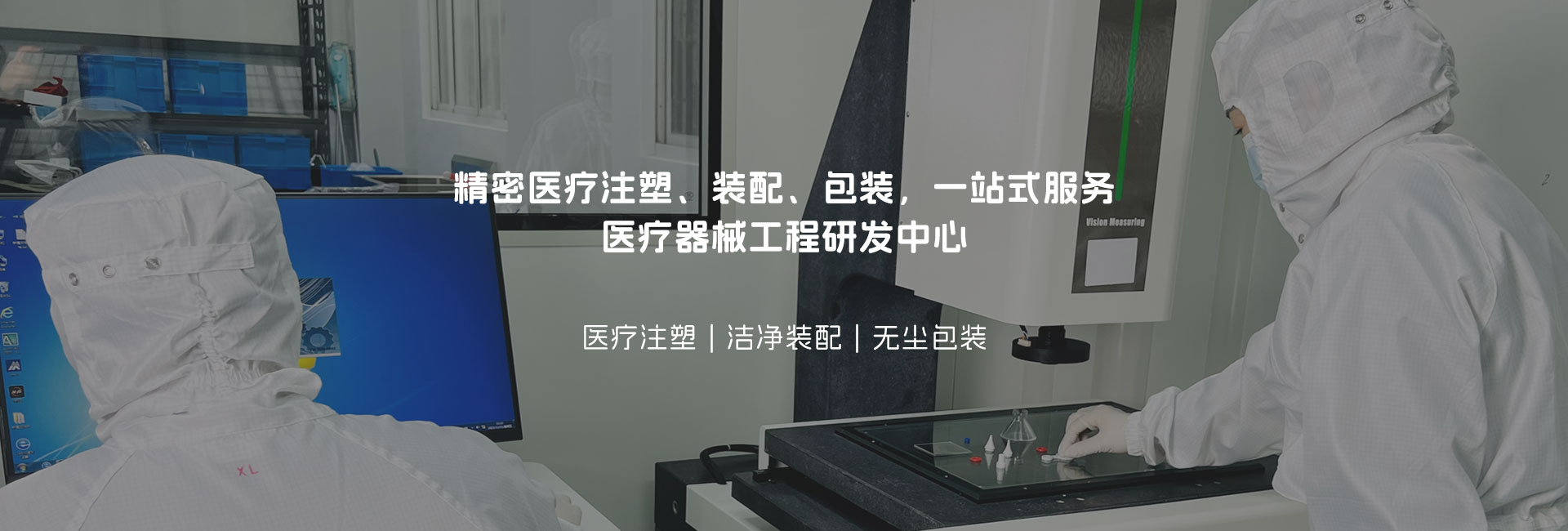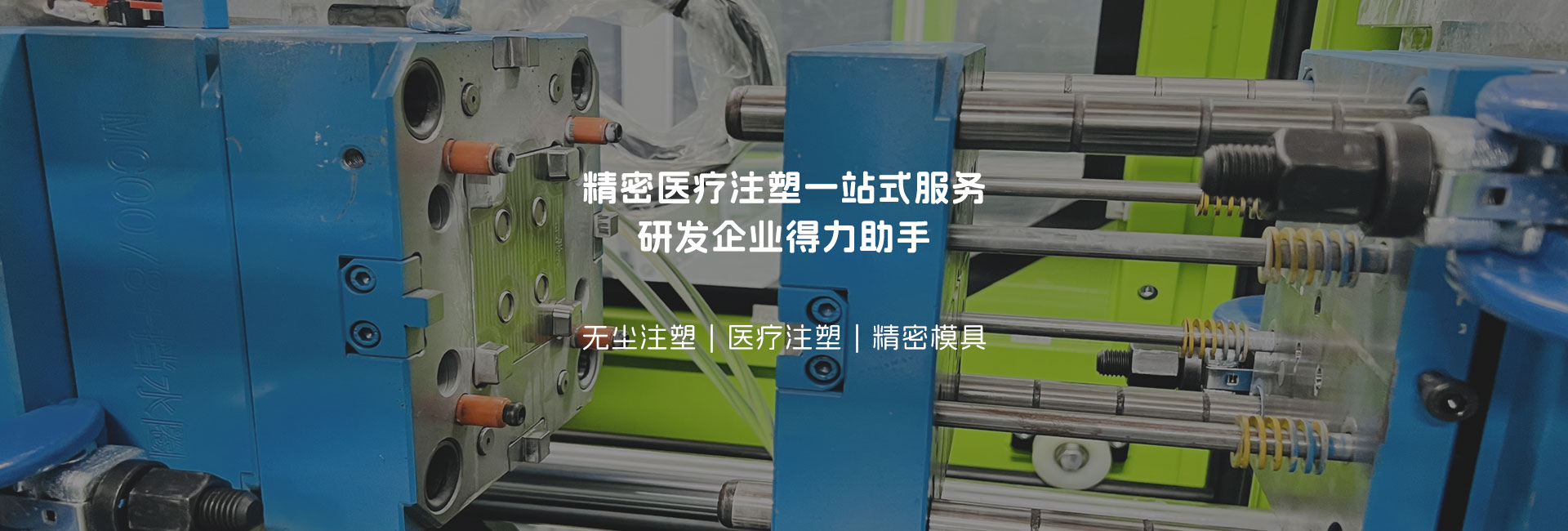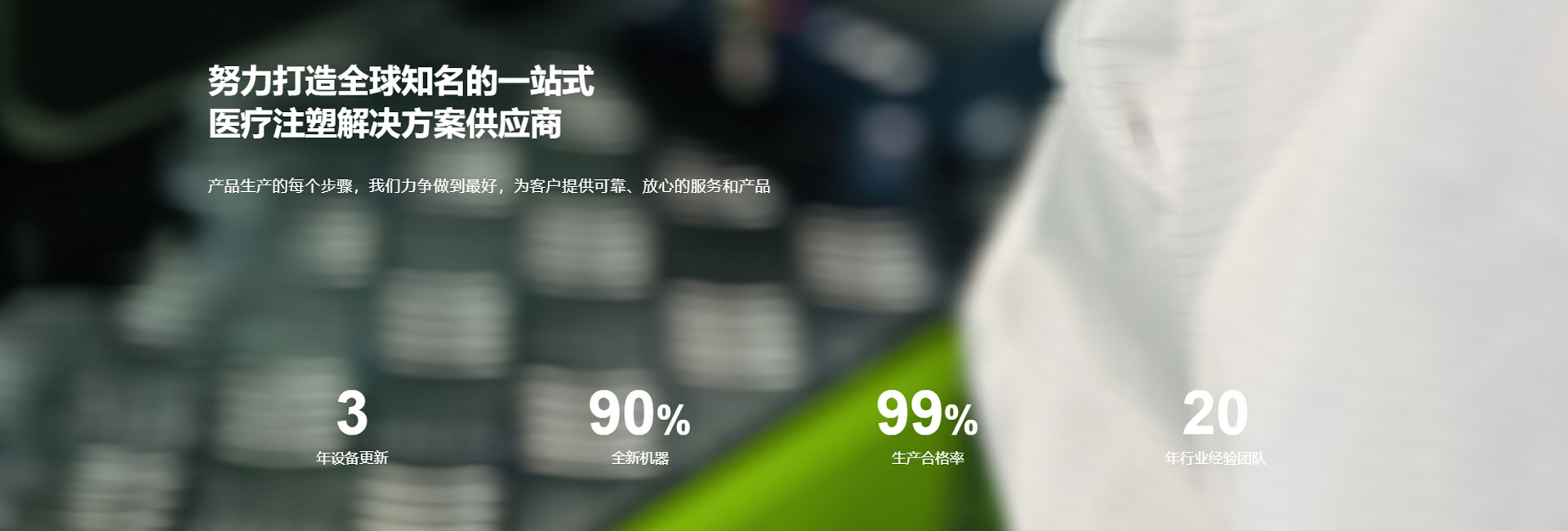
Precision Medical Injection Molding, Assembly, and Packag...

Recent industry analysis reports indicate that China's medical device plastic injection industry is entering a period of steady growth. The market size reached 48.76 billion yuan in 2024, a year-on-year increase of 8.3%; it is expected to further rise to 52.98 billion yuan in 2025, with a year-on-year growth rate of 8.6%. This growth momentum is driven by the combined efforts of upgraded medical infrastructure, accelerated domestic production of high-end medical equipment, and technological innovation.
From the demand side, the construction of grassroots medical care and the aging society have become core driving forces. In 2024, the number of newly built or expanded county-level hospitals across the country reached 1,428, a year-on-year increase of 9.6%, directly boosting the demand for basic consumables such as disposable syringes. The market size for these products has exceeded 29 billion yuan, with plastic injection parts accounting for over 85% of this category. At the same time, the rise in chronic disease management and the popularity of home health monitoring equipment have spurred demand for portable medical products, further expanding the market space for matching injection parts.
Industry development has received strong support from the policy level. The "14th Five-Year Plan for the Development of the Medical Equipment Industry" explicitly states the enhancement of the independent control level of high-end medical equipment and the promotion of the domestication rate of medical plastic components from 61.2% in 2023 to over 70% by 2025. The National Development and Reform Commission has also included key technologies for high-performance medical polymer injection molding in the encouraged industry directory, offering fiscal subsidies of up to 15% of the project investment to qualified enterprises. For instance, Ningbo Jianshen Machinery Technology Co., Ltd. was approved for a central fiscal special fund of 18.6 million yuan in 2024, intended for the construction of an intelligent medical plastic injection molding production line, with an expected increase in annual output value of 230 million yuan.
Technological innovation injects core momentum into the industry's development. On one hand, the performance of medical-grade polymer materials continues to improve, with materials like polycarbonate, polypropylene, and ABS making breakthroughs in biocompatibility, resistance to high-temperature sterilization, and compatibility with complex structures, propelling injection molding technology into high-end fields such as minimally invasive surgical instruments, in vitro diagnostic equipment, and wearable medical devices. On the other hand, the promotion of intelligent manufacturing and automated production lines is accelerating, with the penetration rate of fully electric injection molding machines in the production of Class III medical devices gradually increasing. Paired with technologies like in-mold vision inspection and digital twin, this not only raises the product yield to over 99.8%, but also shortens the production cycle by 22%, effectively reducing unit production costs.
In the regional development landscape, East China and South China remain as core industrial clusters. Provinces like Jiangsu, Zhejiang, and Guangdong, with their mature mold manufacturing foundations and comprehensive supply chain systems, account for over 60% of the national production capacity. Suzhou and Dongguan hold a 29% share in the needle market segment. Meanwhile, the central and western regions are capitalizing on the policy benefits of "medical new infrastructure," with medical plastic industrial parks in Hubei's Xiaogan and Chengdu, Sichuan, seeing their production capacity expanding rapidly, expected to double before 2028.
In the international market, Chinese companies are expanding their export share with the advantage of industrial chain integration and cost-performance competitiveness. In 2023, the export value of medical plastic products reached 9.7 billion yuan, with emerging markets such as Southeast Asia, the Middle East, and Latin America becoming significant growth points. Some companies with ISO 13485 certification and FDA registration have successfully entered the supply chains of mid-to-low-end consumables in Europe, the United States, and China, opening up new spaces for industry growth.
However, the industry also faces challenges. Moreover, the dependence on imported high-end molds and the uncertainty in exports due to global geopolitical changes require the industry's focus to address.
Industry analysts predict that over the next three years, the Chinese medical device plastic injection industry will maintain growth momentum exceeding the average for the manufacturing sector. Leading companies with strong R&D capabilities, automated production capacity, and green manufacturing qualifications will gain an advantage in domestic substitution and global competition, driving the industry's transformation from "scale expansion" to "high-quality development" and gradually constructing an innovative ecosystem with global competitiveness.


b2b.china9.net © Zhongshang 114 Hebei Network Technology Co., Ltd.Address: Room 6009, Oriental New World Center, No.118 East Zhongshan Road, Qiaoxi District, Shijiazhuang City, Hebei ProvincePlatform Service Hotline: 4006299930