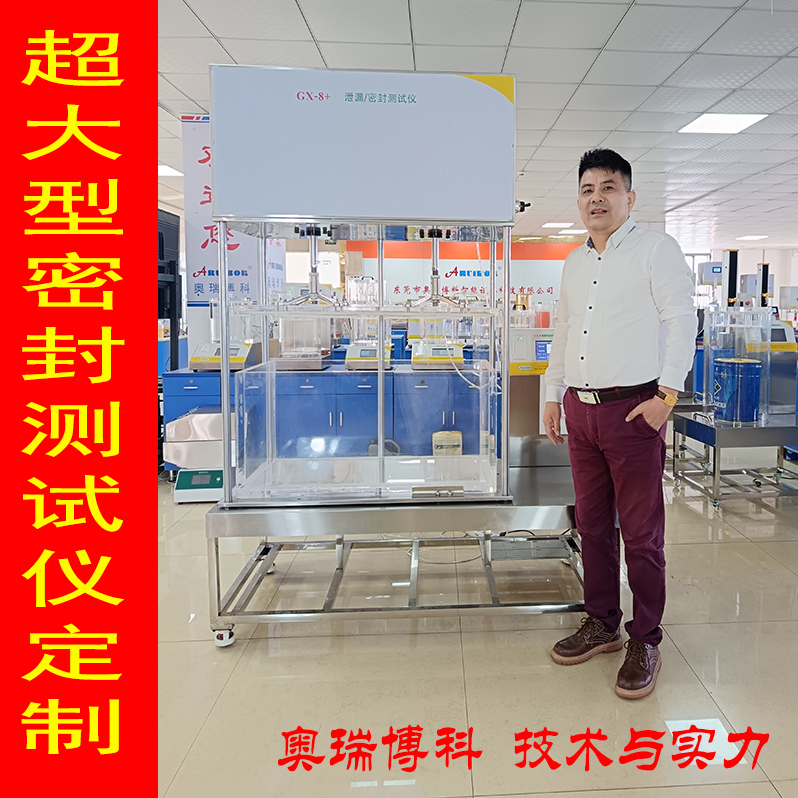
Full-set testing equipment for canned food and beverage i...

A two-piece can refers to a metallic container composed of two parts: the can lid and the seamless, bottomed body. The body of this type of metal container is formed through deep drawing techniques to achieve a specified shape. The molding method of this cup-shaped container is part of stamping processing, hence the two-piece can is also commonly referred to as a stamping can.
In the 1940s, Britons applied stamping technology to can production, creating aluminum alloy shallow drawn cans. Although this was just a new application of traditional manufacturing techniques, it sparked a revolution and development in can production technology. Subsequently, companies in the UK, the US, and other countries began to research and refine the manufacturing technology and production processes for aluminum drawn cans, with notable examples being the COORS Company and Reynolds (Reynolds) Company in the US. These companies developed the Draw-Redraw Draw (DRD) method and the Drawing and Ironing (D&I) method for can manufacturing in the 1960s. Concurrently, the Aluminum Company of America (ALCOA) developed the pull-tab lid manufacturing technology. The combination of these two technologies opened up vast markets for aluminum cans and promoted the improvement of can manufacturing technology and the development of the industry. By the 1970s, the technology for two-piece cans was quite refined and began to spread globally. Japan, Europe, and other regions and countries introduced the two-piece stamping can production technology and equipment in the 1970s. In the 1980s, China also started to introduce the production technology and production lines for two-piece stamping cans.
Aluminum is the second most used metal material in the production of metal containers, renowned for its abundant resources, lightweight nature, ease of processing, and corrosion resistance. However, due to the high energy consumption in the aluminum production process, global aluminum prices have been on the rise, limiting its usage. In response, many countries have initiated campaigns to recycle aluminum cans (the energy consumption for recycling aluminum is theoretically only one-tenth of that for smelting). At the same time, aluminum can manufacturers are striving to improve manufacturing processes and can designs, further reducing wall thickness and the diameter of the can lids to conserve material and lower costs. Initially, the weight of a batch of aluminum cans was around 20 to 22 kg for every thousand units. With advancements in aluminum properties and manufacturing techniques, the weight of aluminum cans has significantly decreased. According to available data, the weight per thousand cans has dropped from 18.8 kg in the 1960s to 15.4 kg in the 1970s, and to 13.6 kg by the mid-1980s.
While using aluminum materials for canmaking, people also attempted to produce two-piece stamping cans using thin steel plates. After solving the production technical issues, it is now possible to produce two-piece stamping cans with tin-plated steel and chrome-plated steel (ECCS). After entering the 1990s, the supply of aluminum materials became increasingly tight, and prices kept rising. Currently, the cost of aluminum cans is approximately double that of steel cans, so most manufacturers have been forced to switch to steel for can production.

Company Name
Dongguan Aoribo Technology Co., Ltd.

Service Hotline
18033488802
Company Phone
18033488801

Company Address
No. 5, Chawan Road, Chashan Town, Dongguan City, Guangdong Province, Room 701, 801
b2b.china9.net © Zhongshang 114 Hebei Network Technology Co., Ltd.Address: Room 6009, Oriental New World Center, No.118 East Zhongshan Road, Qiaoxi District, Shijiazhuang City, Hebei ProvincePlatform Service Hotline: 4006299930