


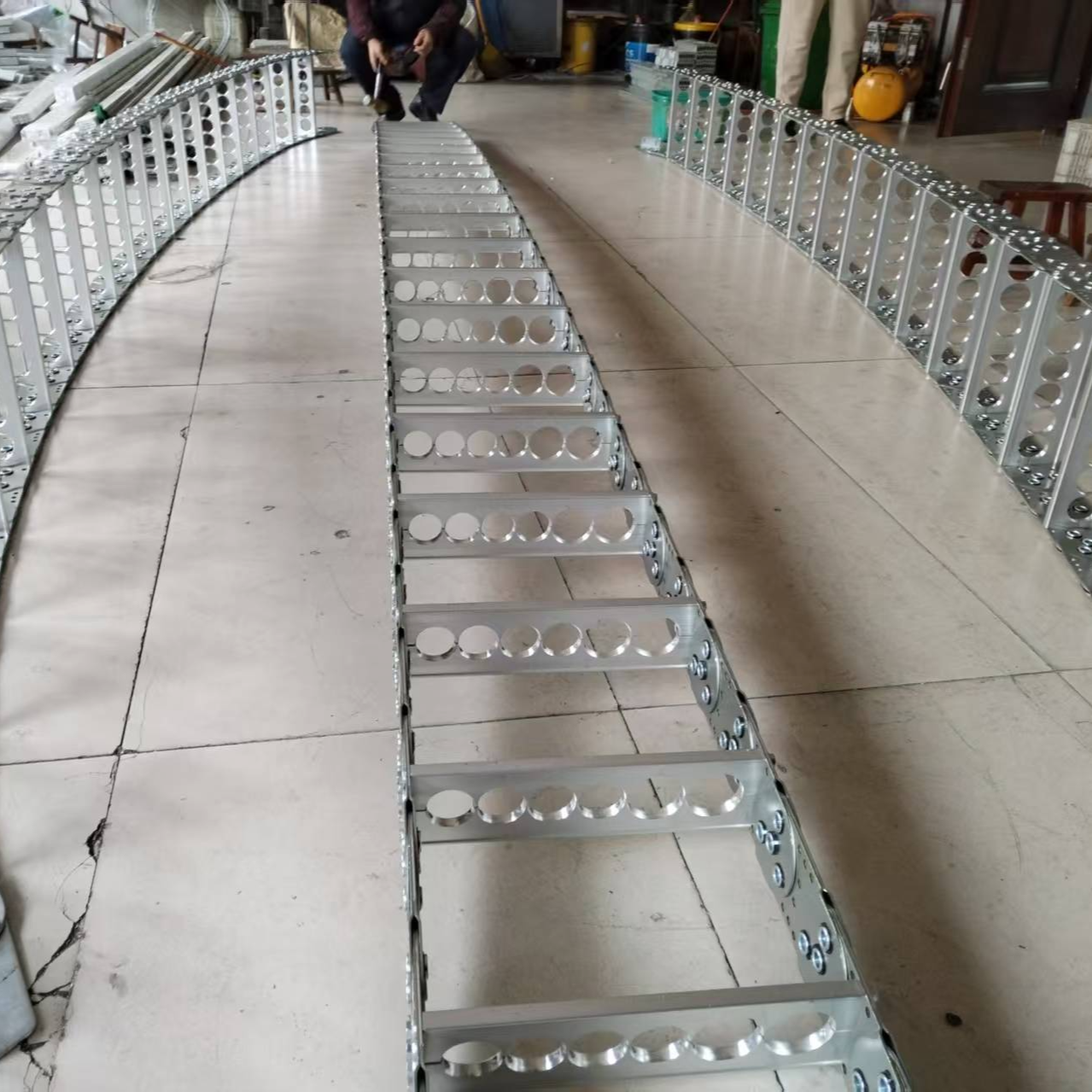

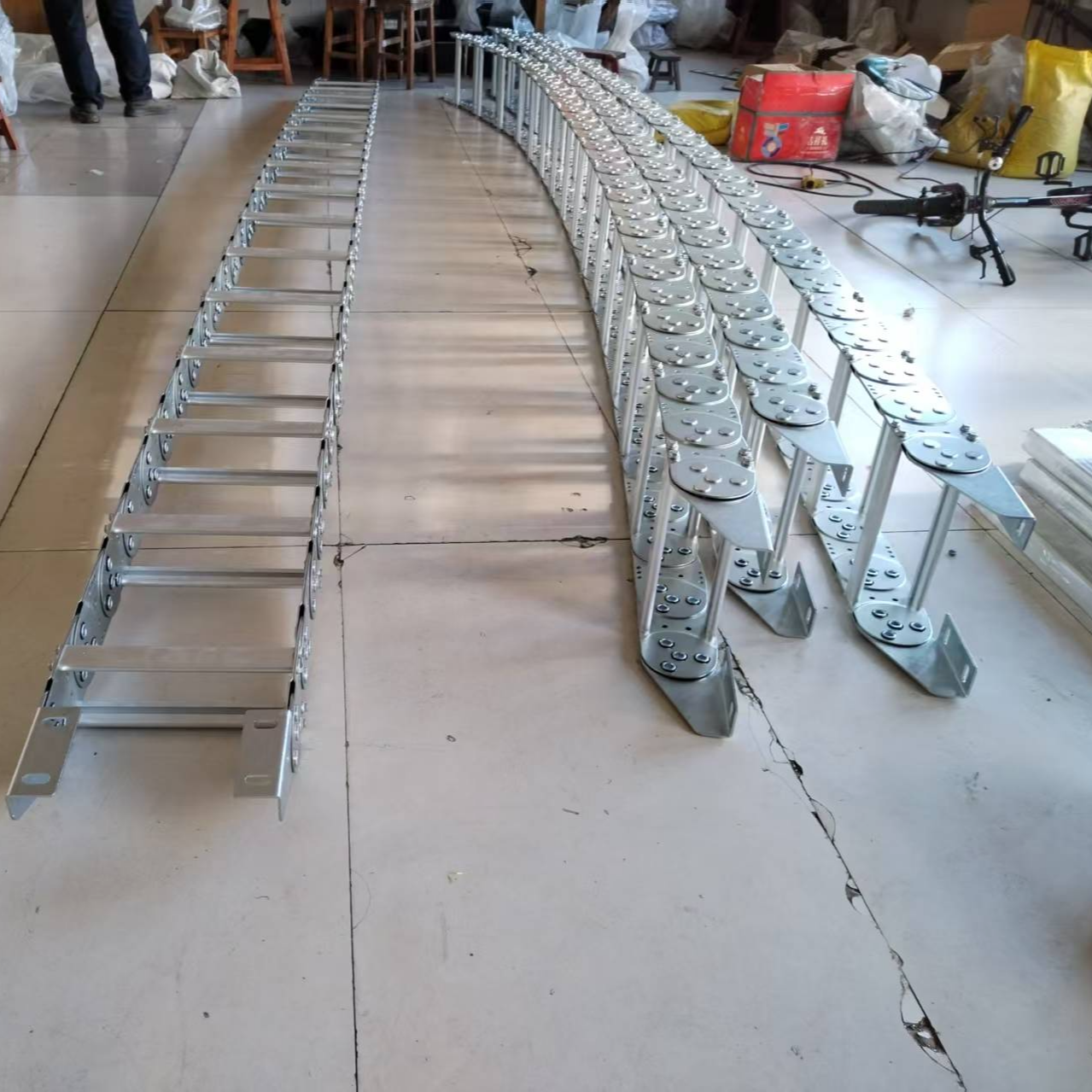
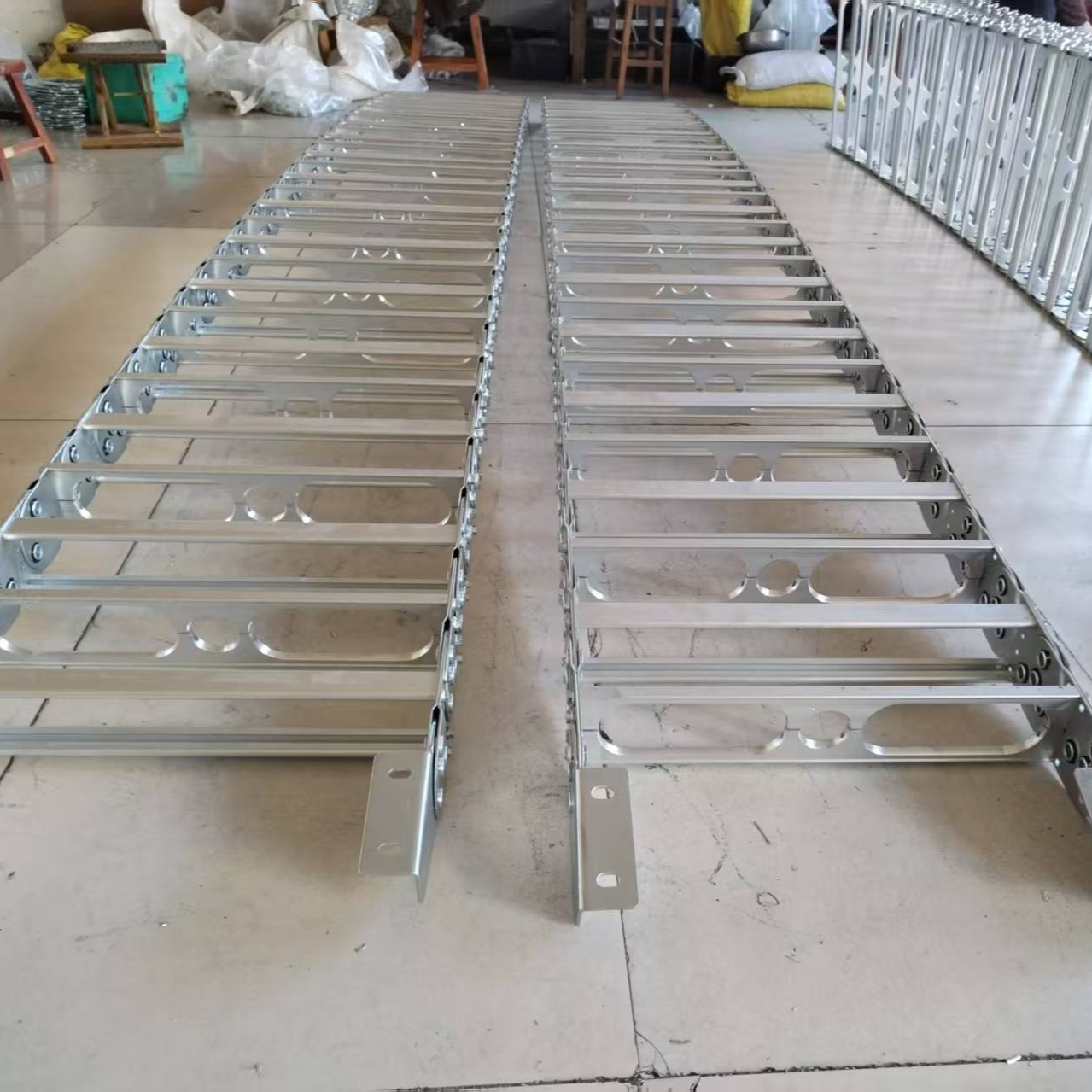












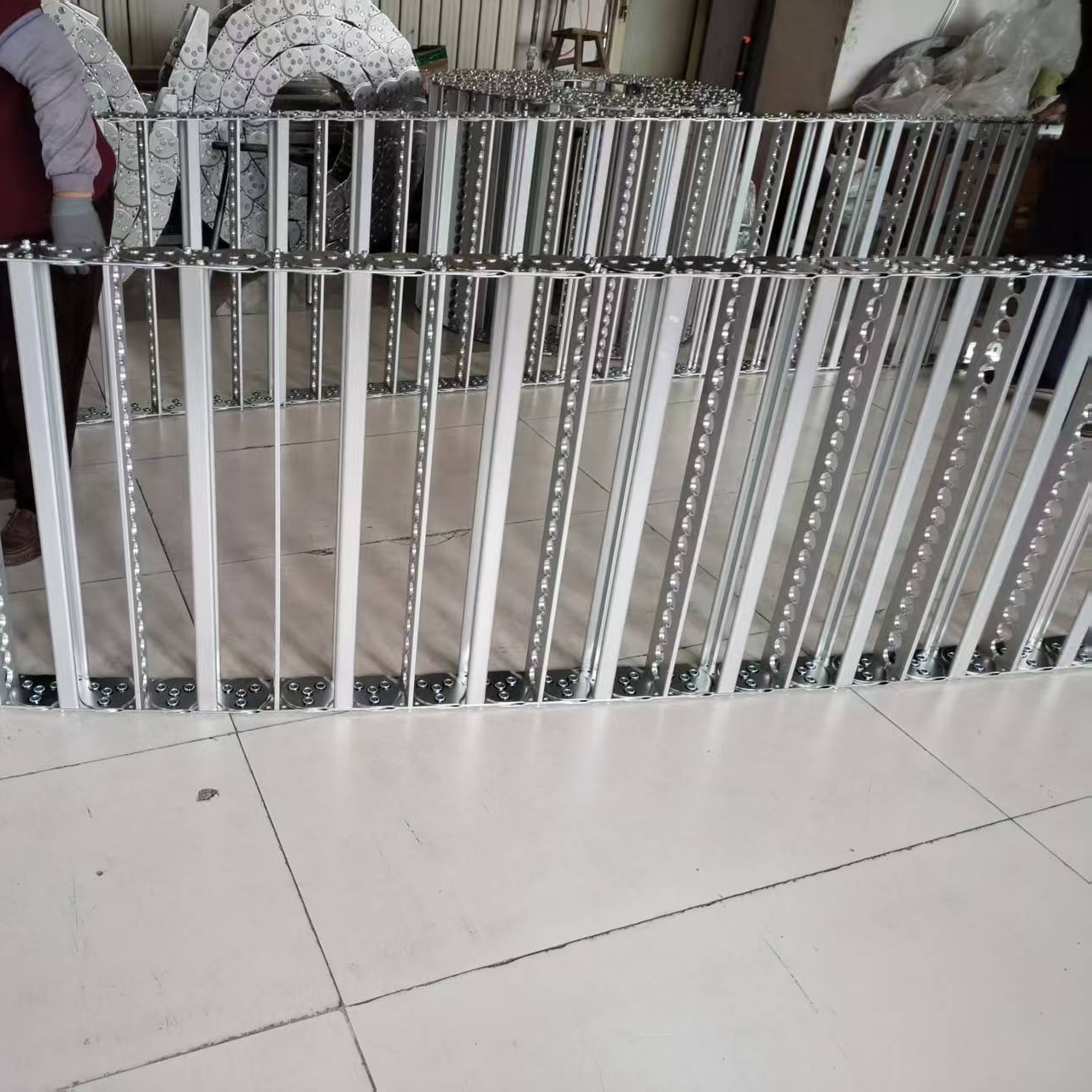
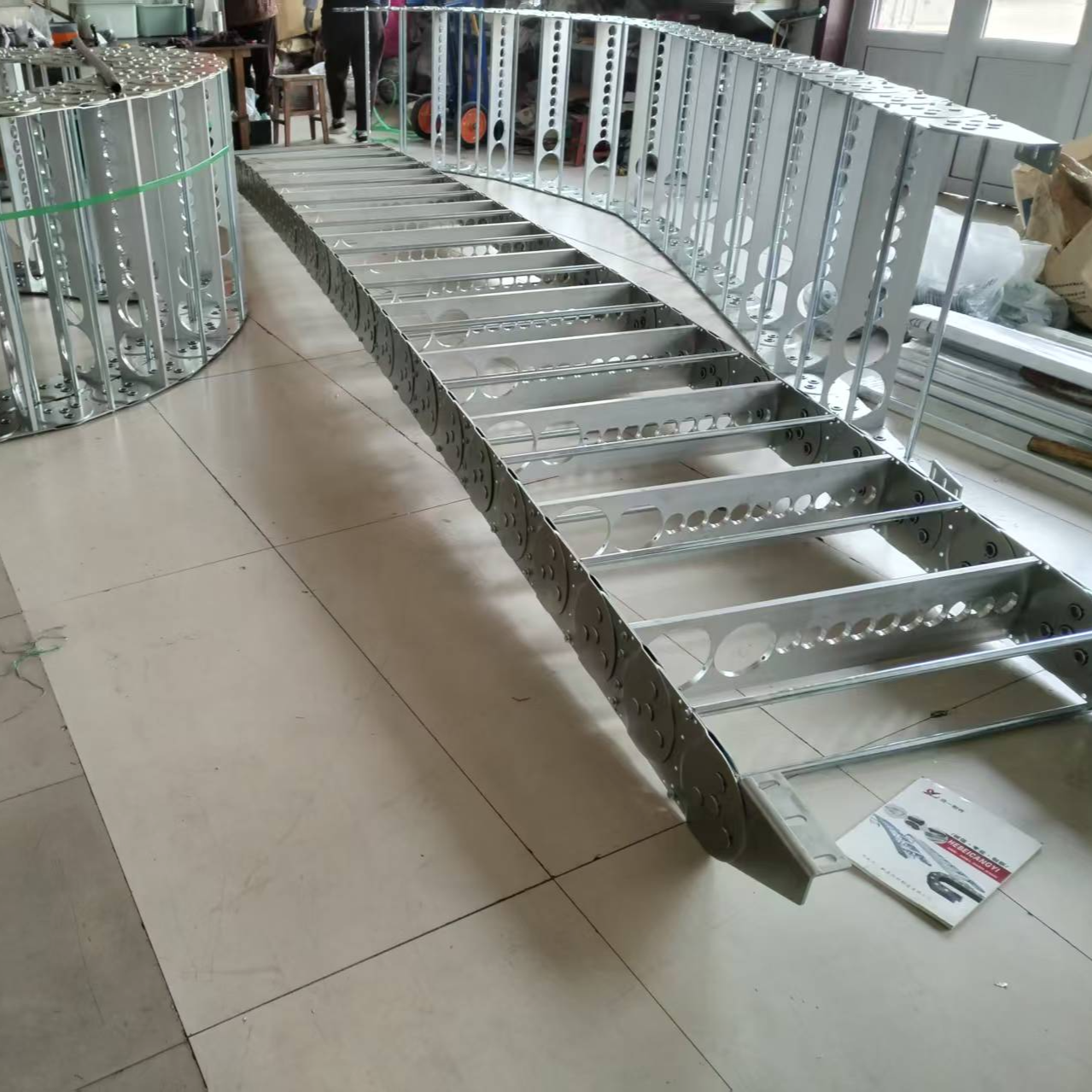
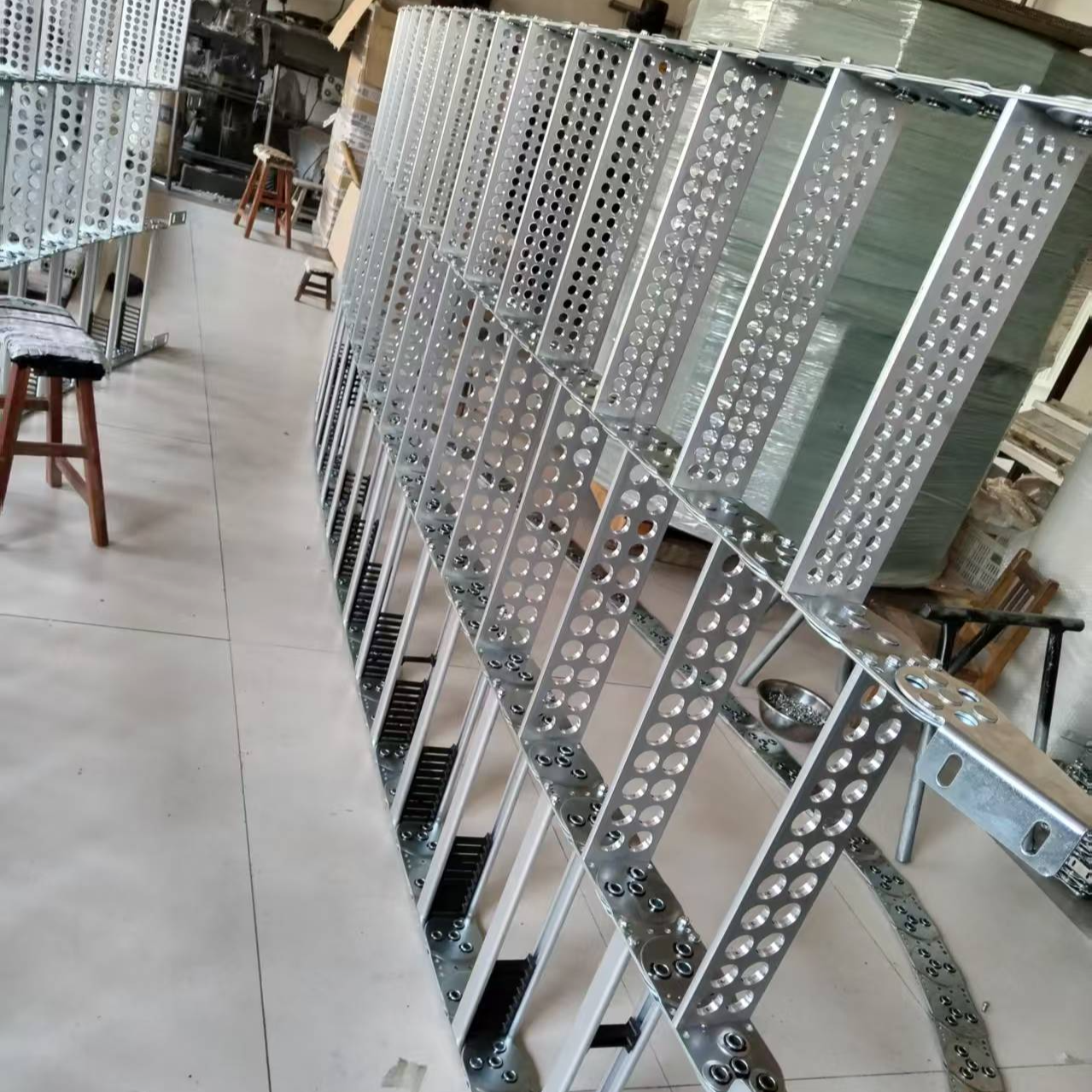
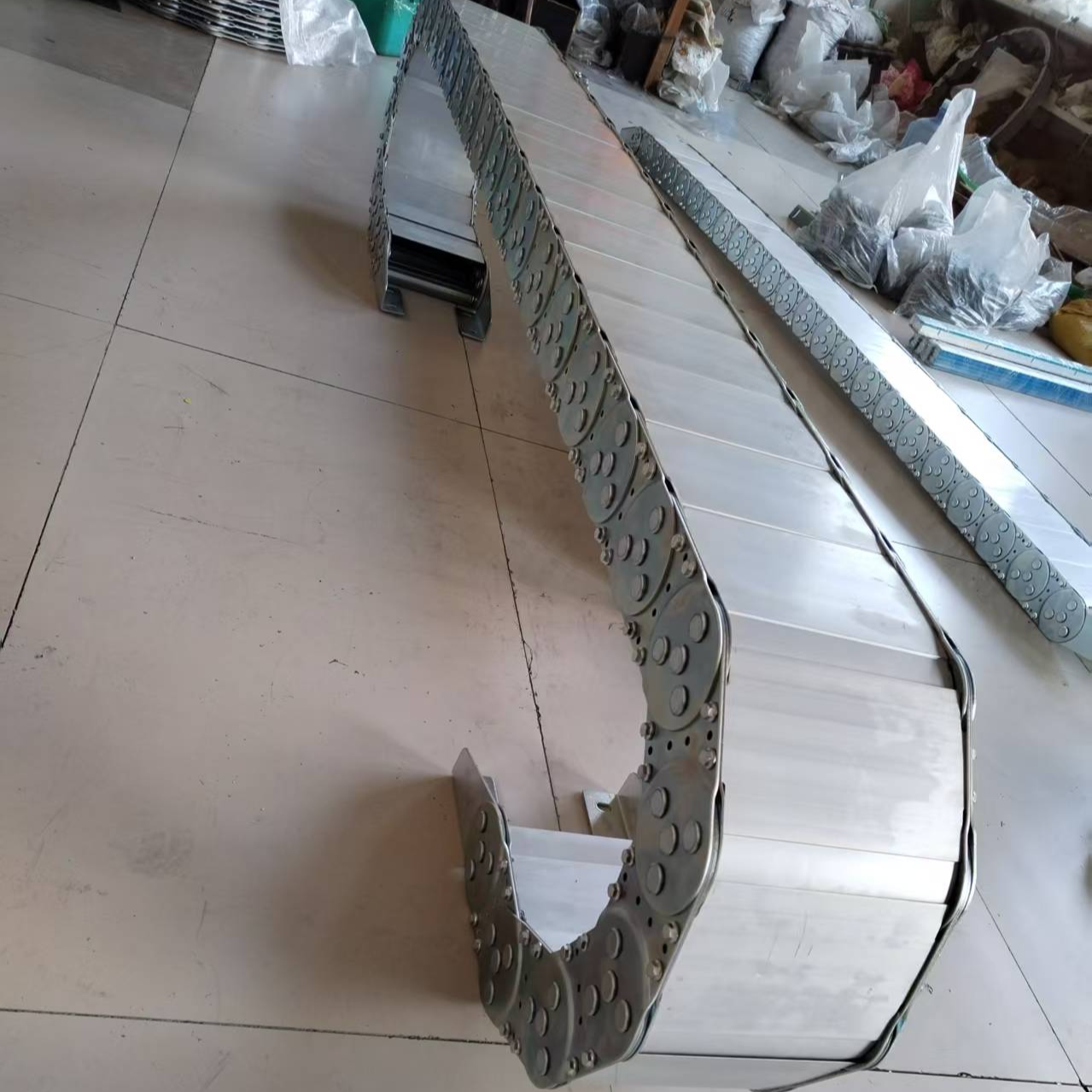
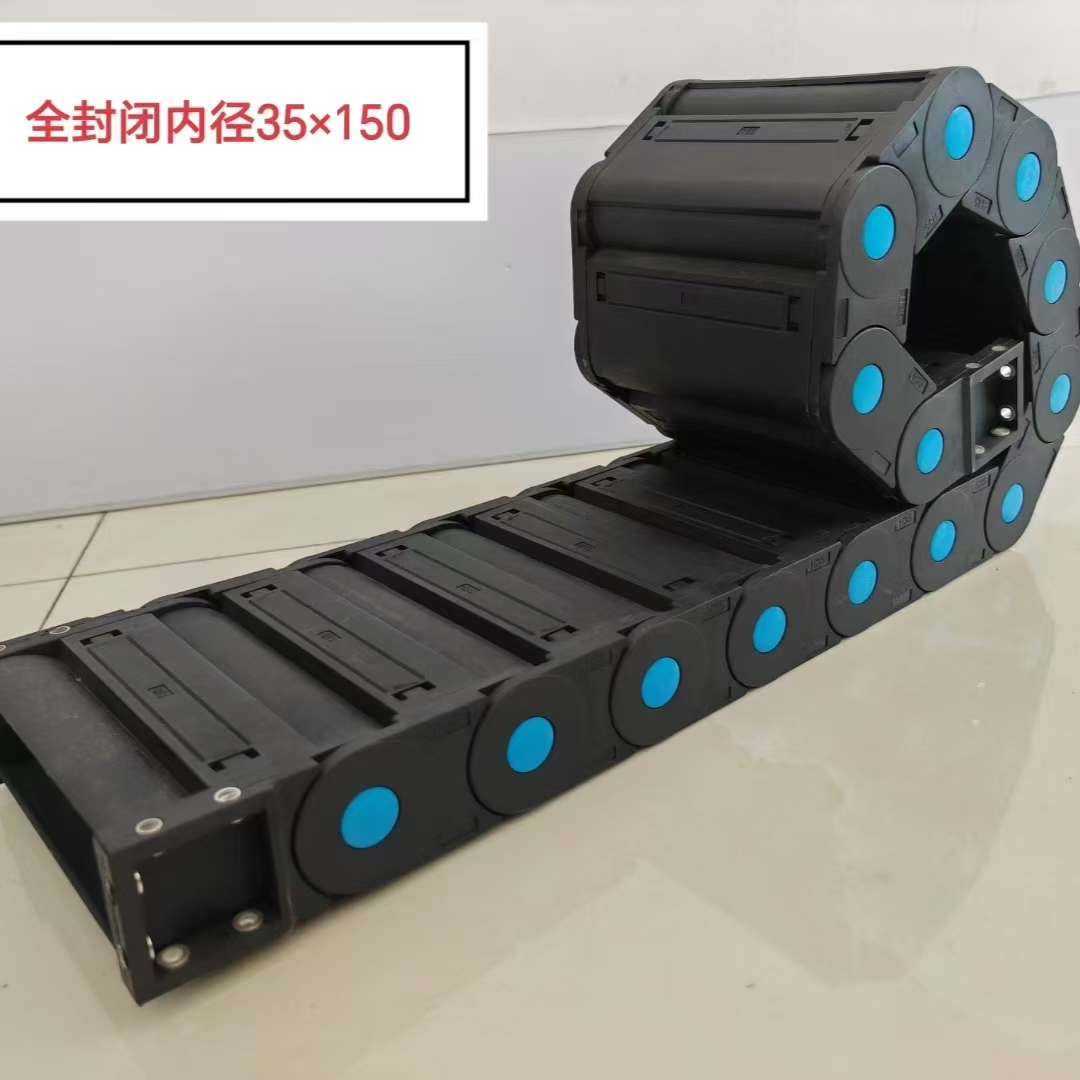
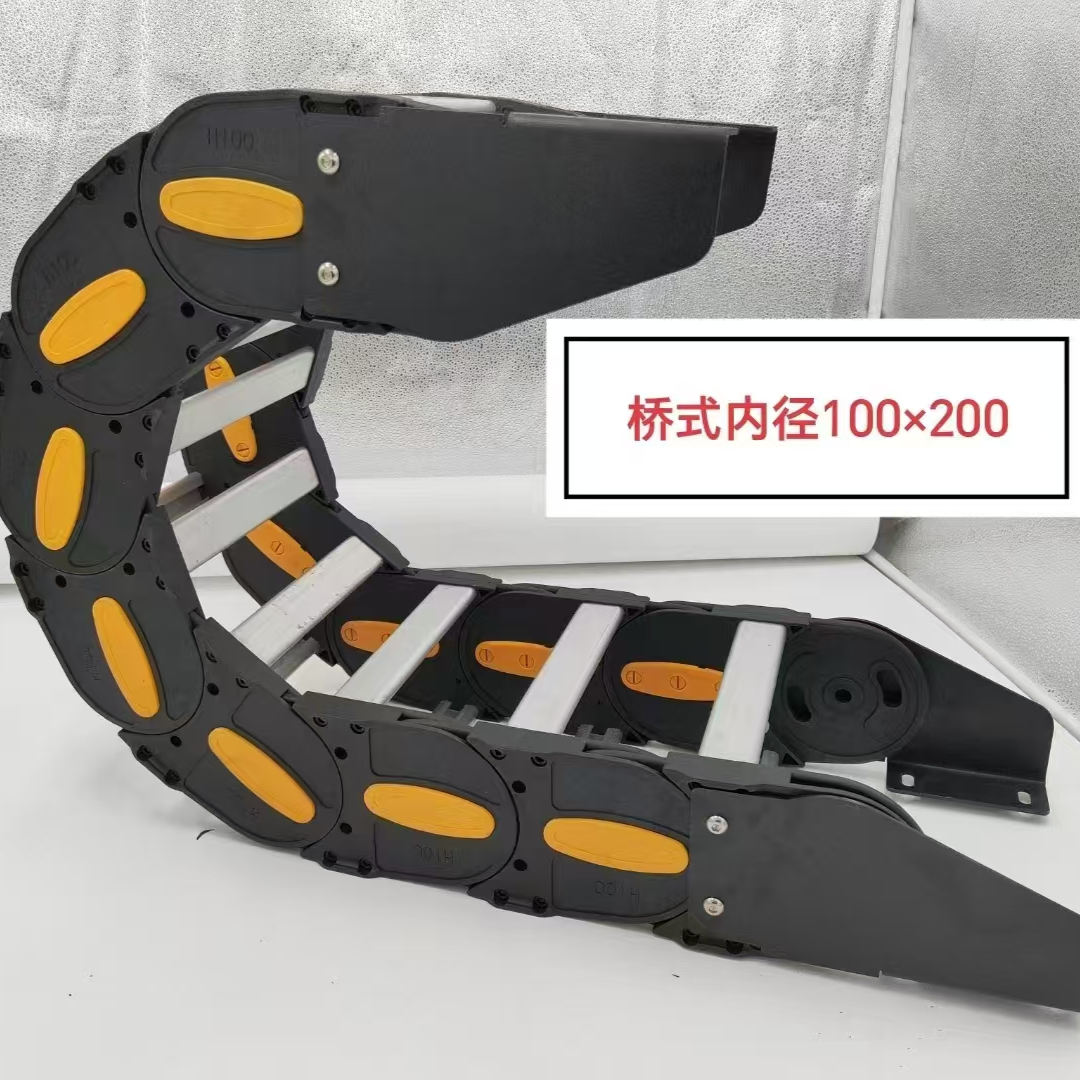
A steel conduit is a mechanical device used for protecting cables, oil pipes, gas pipes, and other pipelines in industrial equipment, featuring high strength, wear resistance, and low noise. It is widely used in CNC machine tools, automated machinery, and other fields.
Definition and Key Features
The steel drag chain is composed of chrome-plated steel chain plates, extruded aluminum alloy support plates, and alloy steel pivot pins. It is designed with modular construction to protect pipelines from friction, deformation, or external damage. Core functions include:
- Protection Performance: To prevent cables and oil pipes from wearing or deforming during reciprocating movement, the bending radius must be 10 times the diameter of the pipeline (e.g., for pipelines with a diameter of 50-800mm).
- Durability: Maximum travel speed of 40 meters per minute, safe lifespan ≥ 1 million reciprocations, operating noise ≤ 68 decibels.
- Convenient Design: Each link can be opened individually, supporting quick installation and maintenance, and multiple pipe specifications can be managed with separator plates.
Categories and Specifications
- Structure Type:
- Bridge Type: Ideal for light loads, with excellent ventilation.
- Full-enclosed: Dust and waterproof, suitable for heavy loads (such as steel mills, oil platforms).
- Semi-enclosed: Balances protection and cost, with strong versatility.
2. Model & Specifications:
- TL Type (Basic Model): Pitch 45-250 (e.g., TL45, TL125), Bending Radius 50-500mm.
- TLG Type (Enhanced Model): Higher load-bearing capacity, free suspension length up to 10 meters, bending radius 100-600mm.
3. Key Parameters:
- Width: 60-1000mm (over 300mm requires wider specification).
- Support Plates: Solid (for heavy loads), Split (for easy maintenance), Frame (for multiple pipelines).

















