



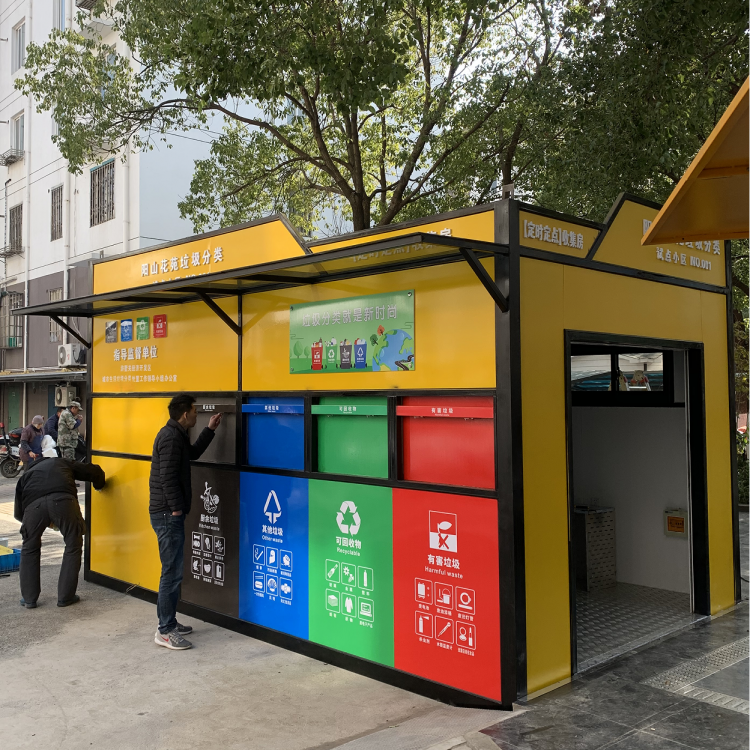

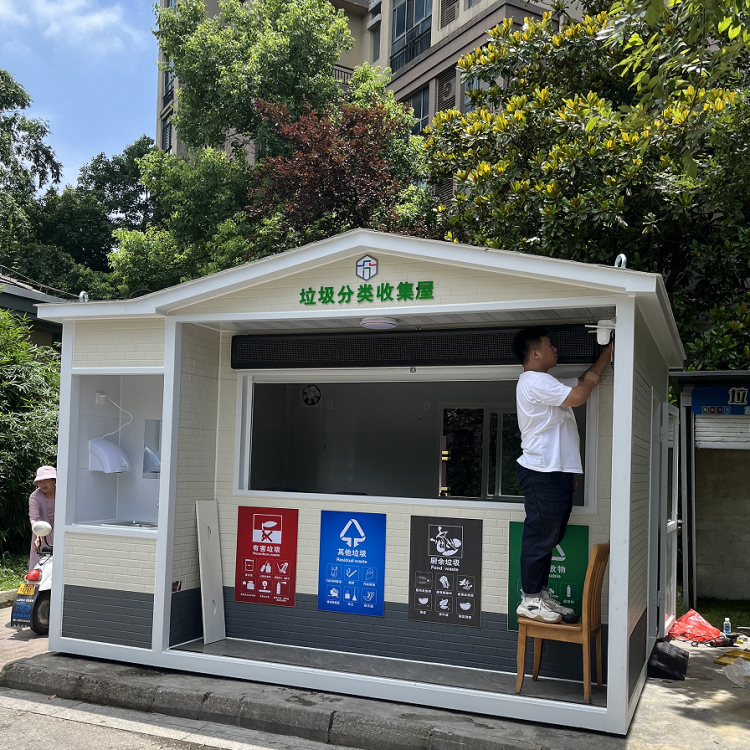
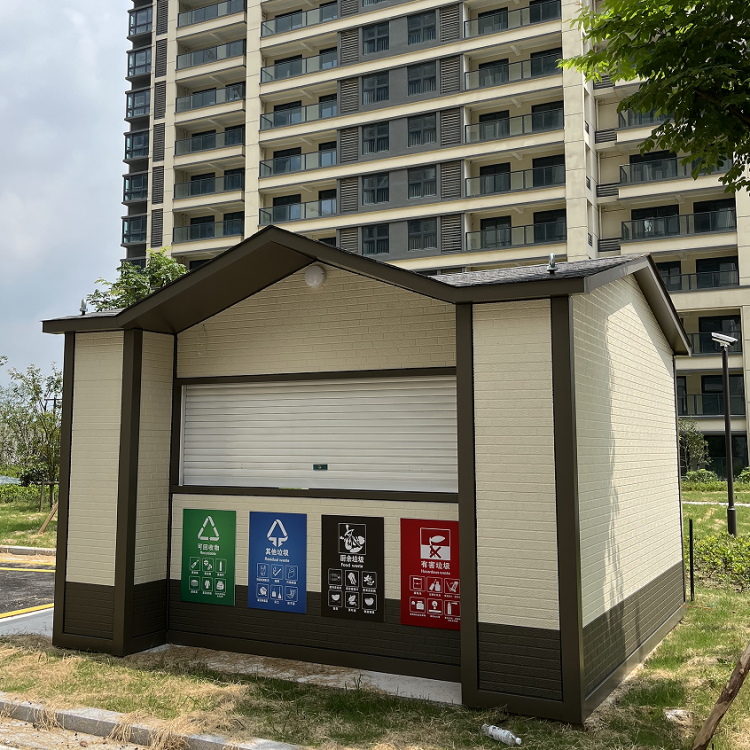
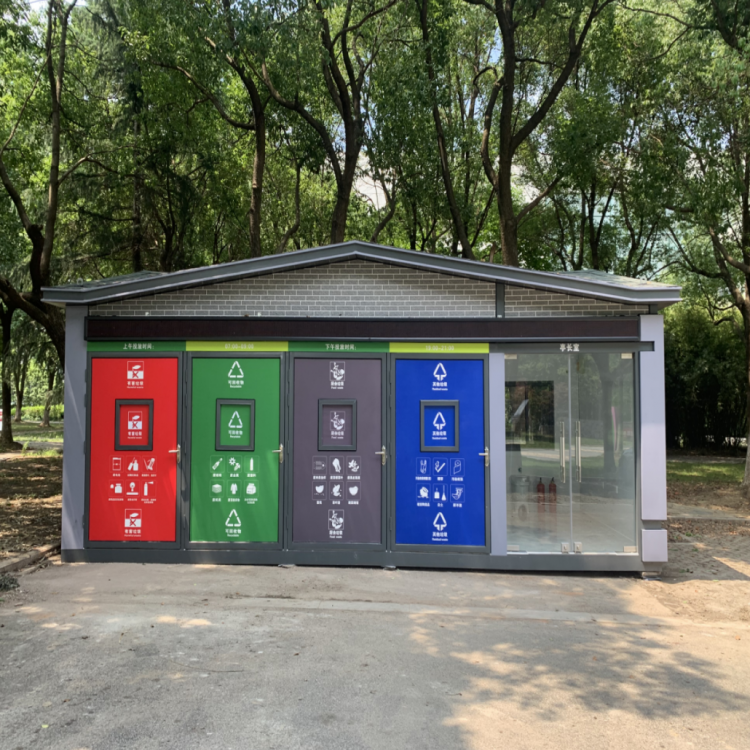











Customization Requirements for Duomai Eco-friendly Waste Rooms:
As times progress, the quality and demands of people's lives are further enhanced. In the past, garbage piles were everywhere; now, they are placed in designated locations. In cities, residential committees typically assign volunteers to supervise. They guide and sort improperly categorized waste for residents, then correctly dispose of it.
Residential areas will clean the classified waste rooms daily, and then the waste will be transported to the waste treatment station by garbage trucks. As individuals, the best we can do is learn to sort waste. Due to shortcomings in the main design function of the old waste rooms in various residential areas for waste classification policies, they need to be demolished and renovated. Therefore, nearby waste room manufacturers have come up with portable waste rooms.
I. Introduction to Waste Sorting Rooms:
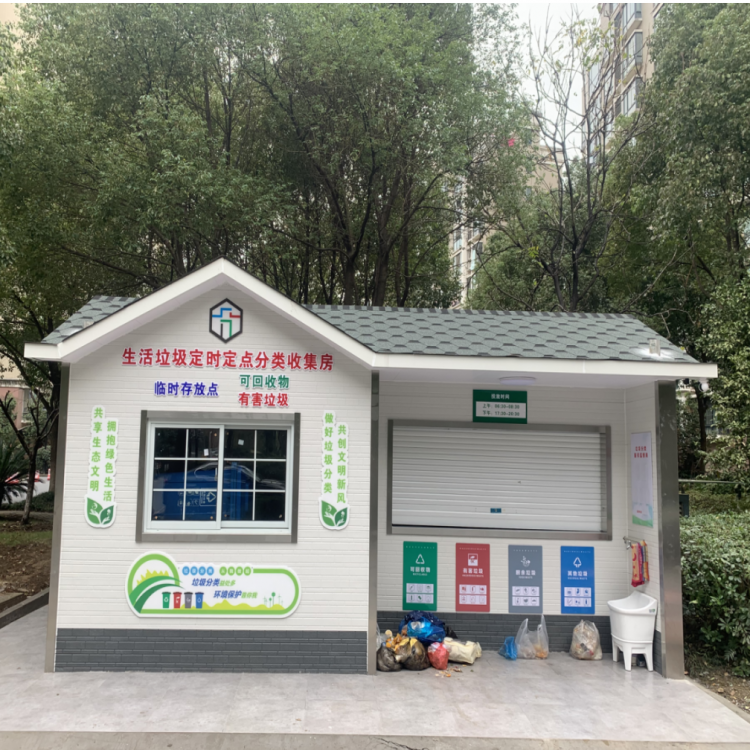
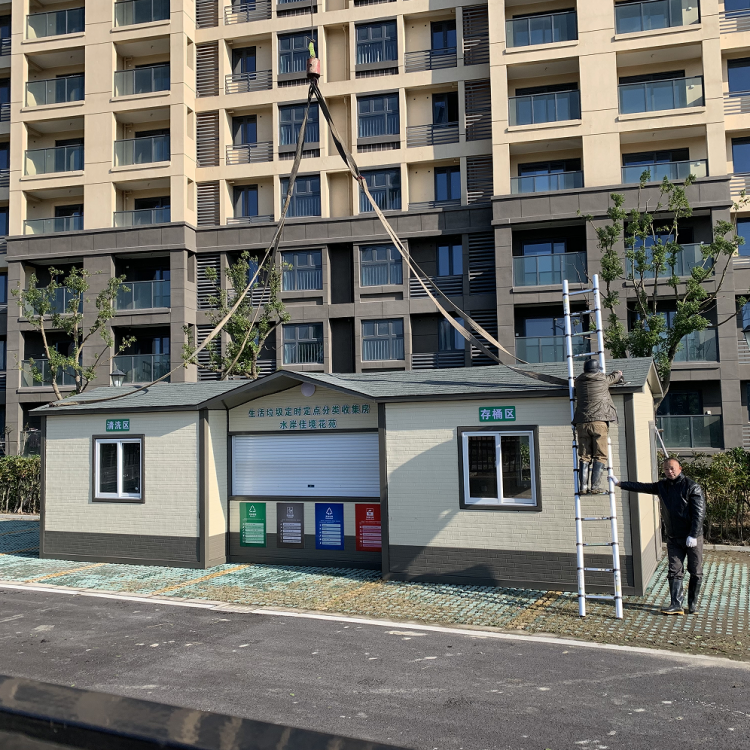
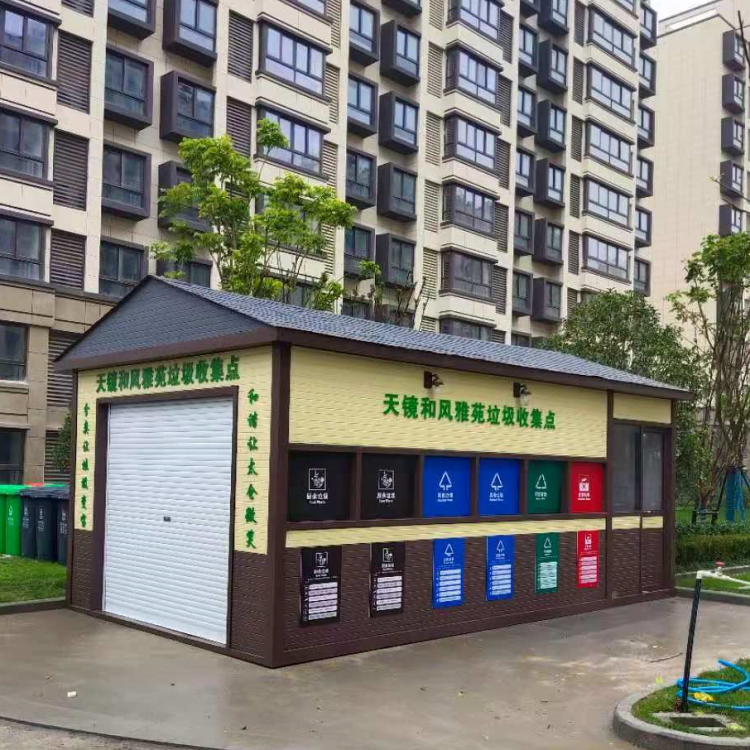
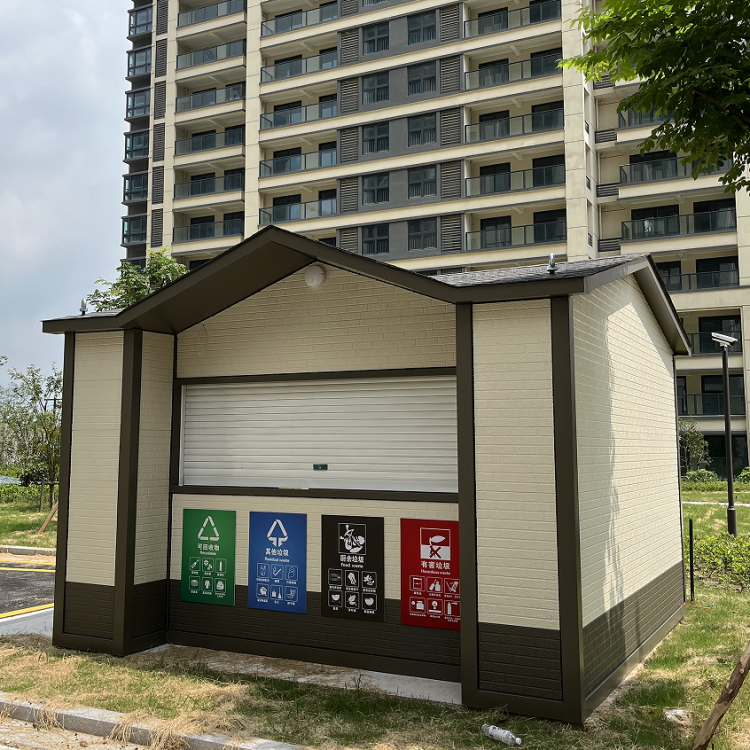
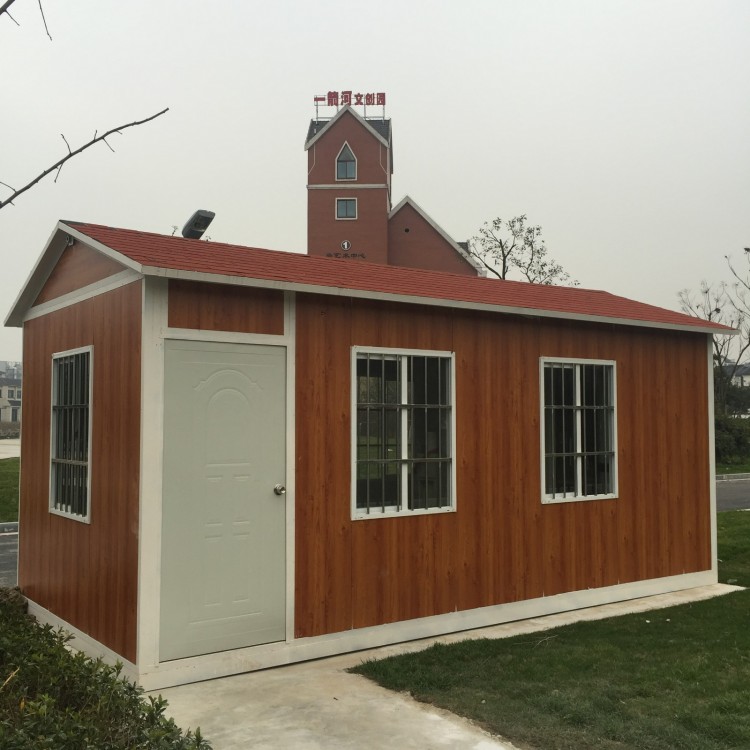
1、Create four separate spaces for waste sorting, add four categorized disposal windows, and use anti-corrosion and waterproof materials for the exterior wall.
2、The floor in the room is made of non-slip and corrosion-resistant materials.
3、Additional storage space for large waste is provided.
4、Waste sorting areas must have drainage channels.
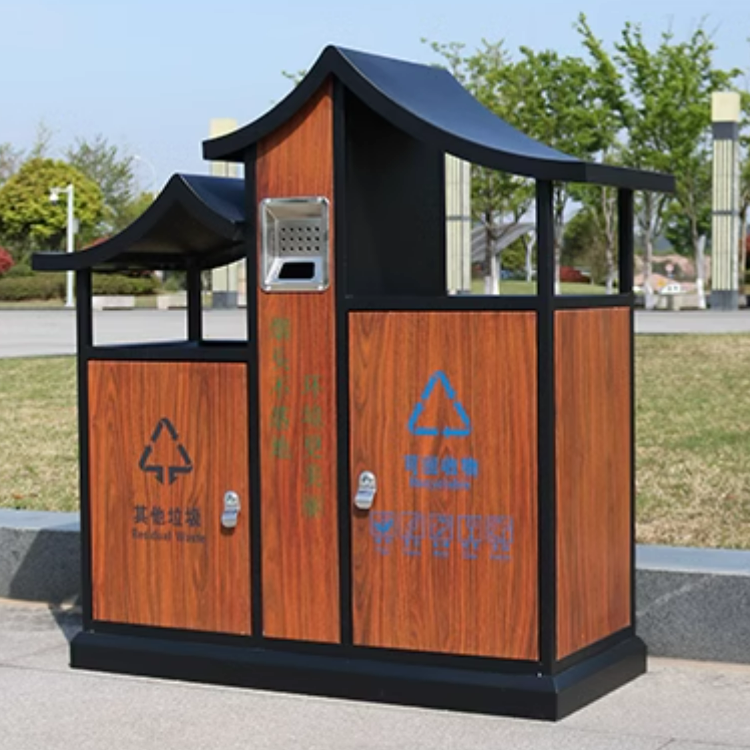
Two,Categorize waste bins based on key factors:
1、The size of the location selected. Smaller land equals smaller space, and the calculable size of the specifications is not large, thus naturally smaller. Sometimes, even on the same street, different communities can have different sizes.
2Feature:Sorting area, small vehicle and handcart loading/unloading zone, bucket washing area, temporary storage for conversion buckets, administration office, and tool room.
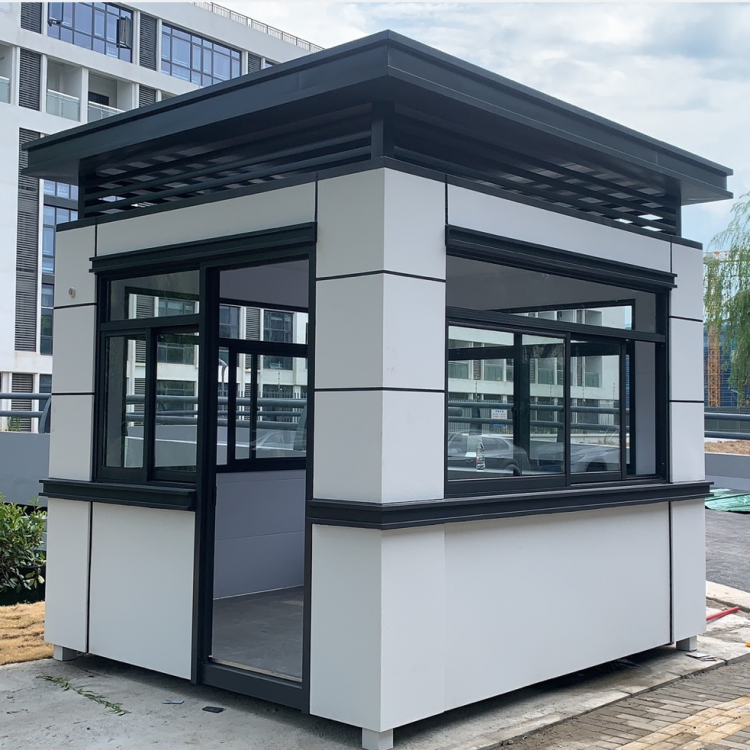
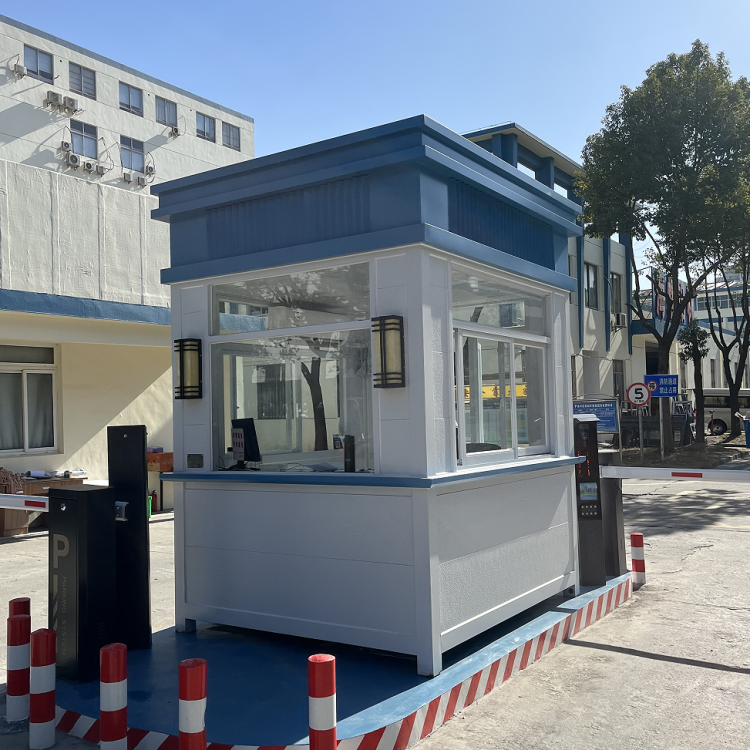
Manufacturer of waste rooms, designed according to the actual needs of customers. As a product of urbanization, classified waste rooms play an increasingly important role in society and daily life. They play a crucial role in maintaining social order and cleaning up the social environment. The convenience of kiosks reduces labor costs and improves work efficiency. Local manufacturers producing kiosks typically use steel structures, glass, stainless steel, marble, and genuine stone paint for construction, and can also design kiosks in different styles based on customer requirements.











