
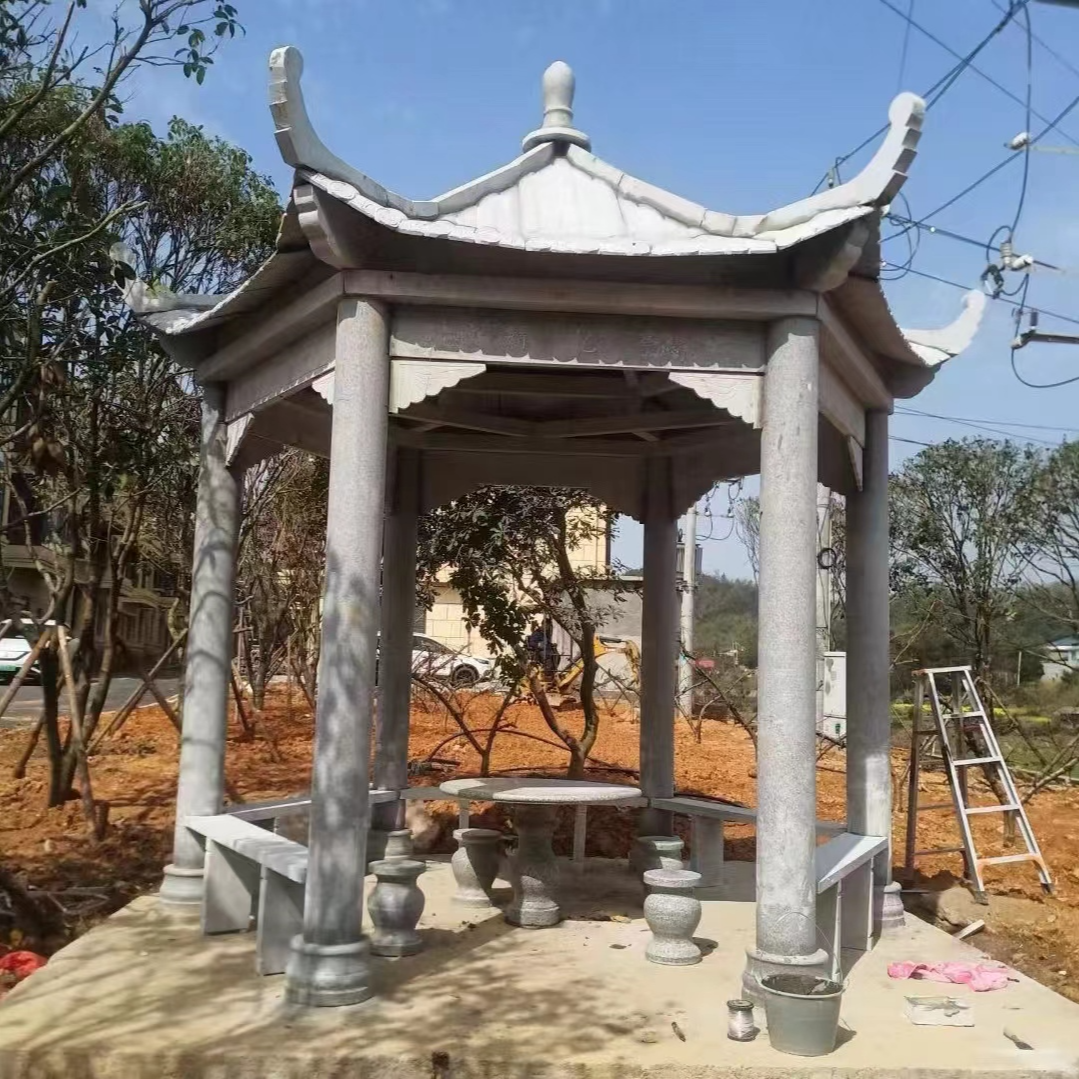

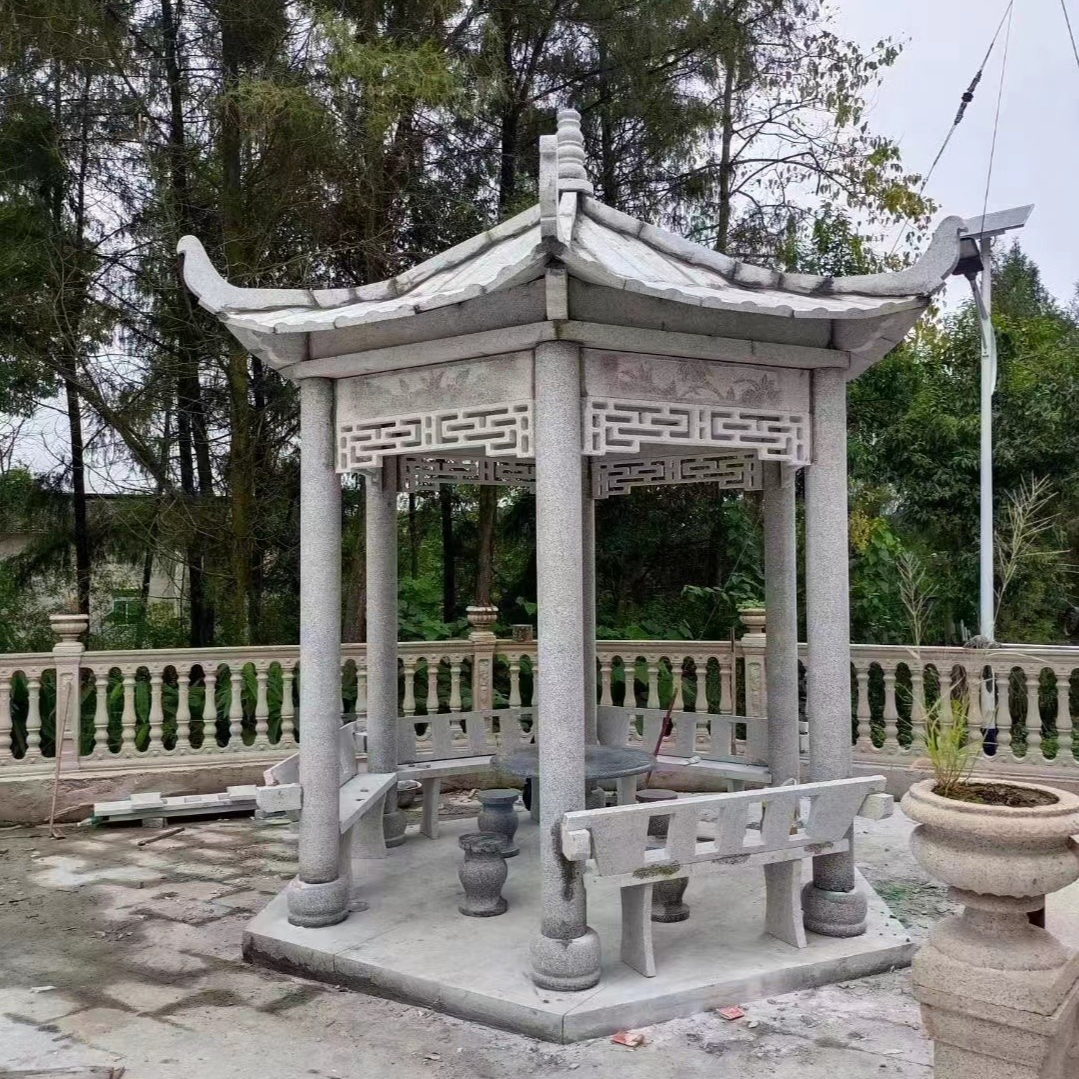
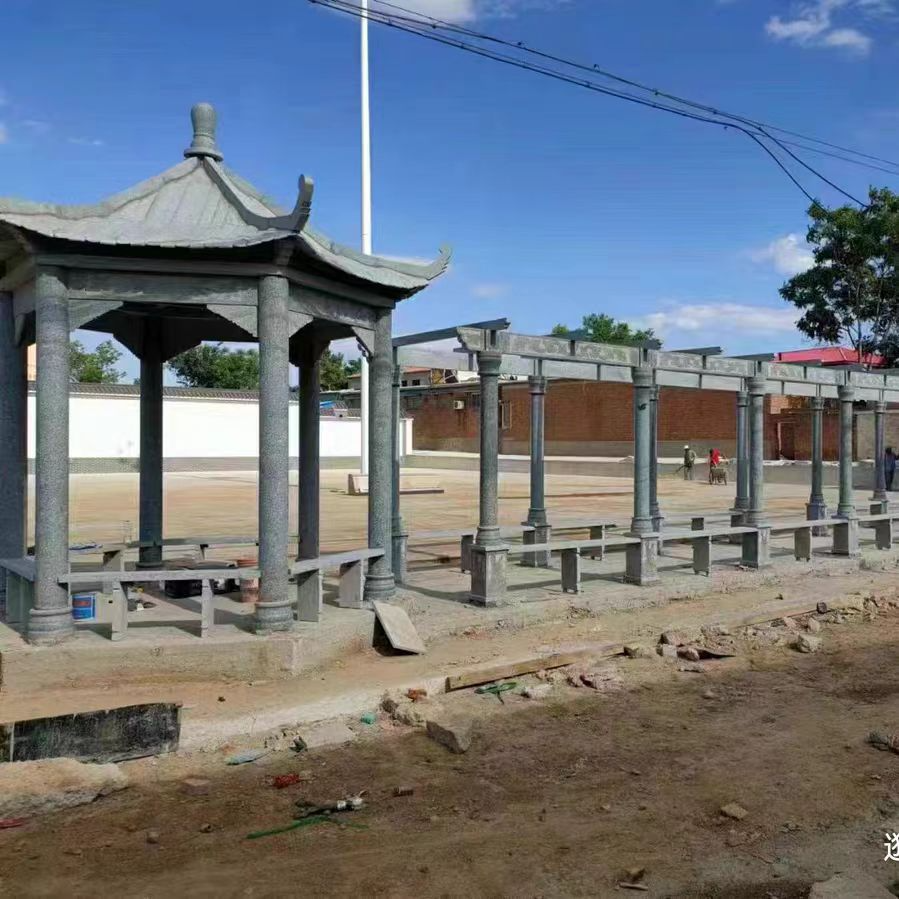














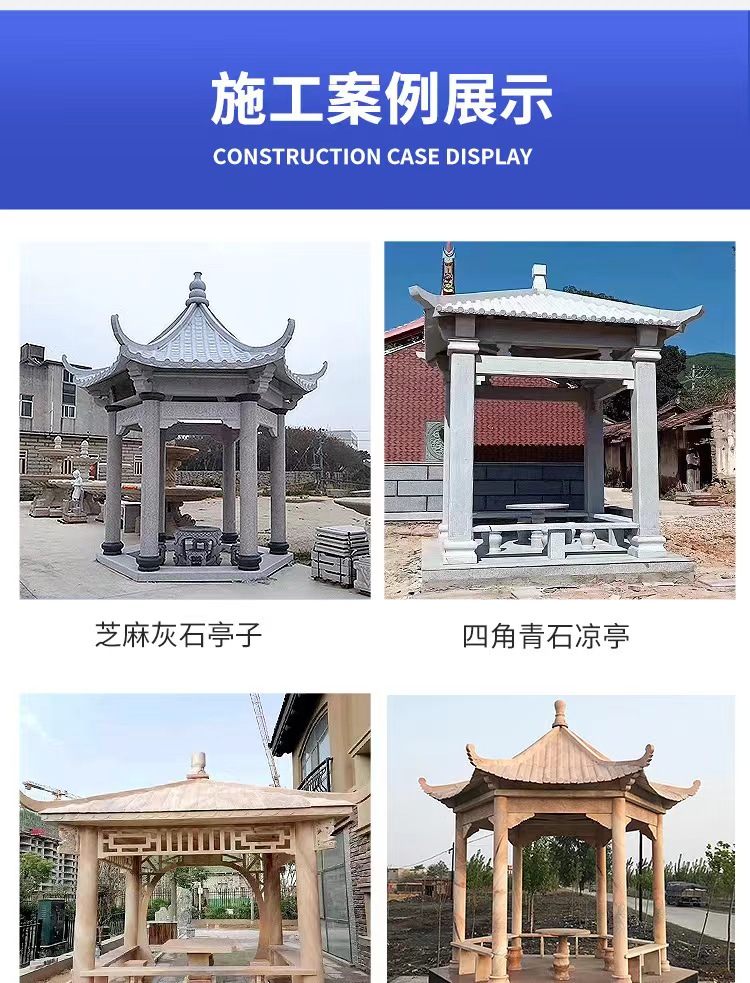
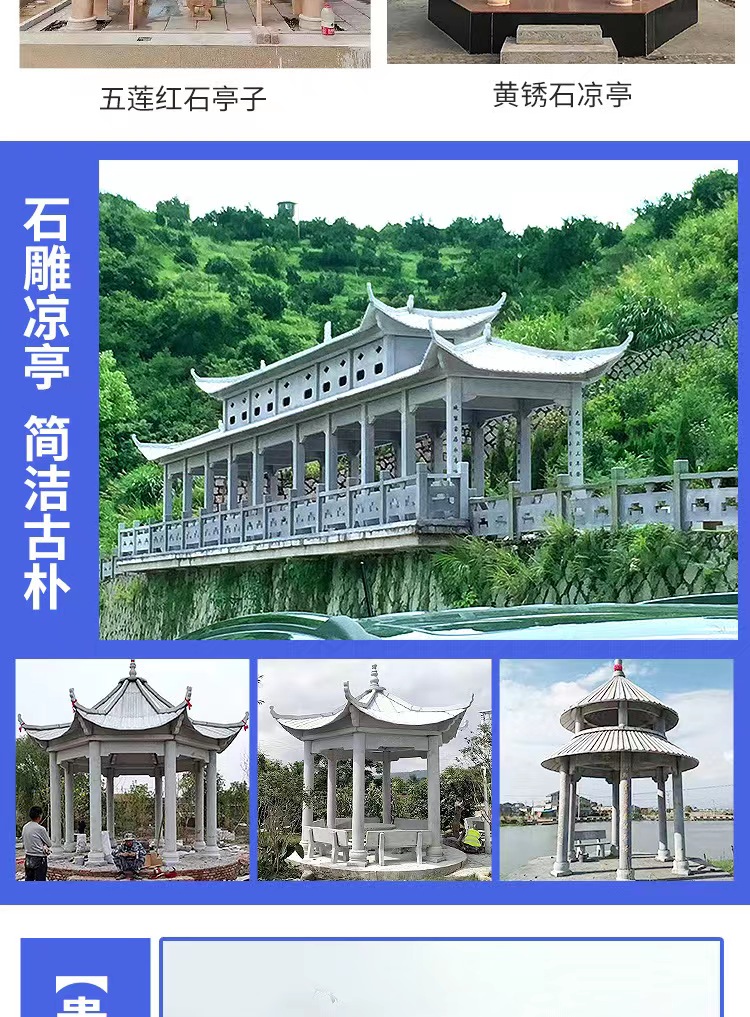
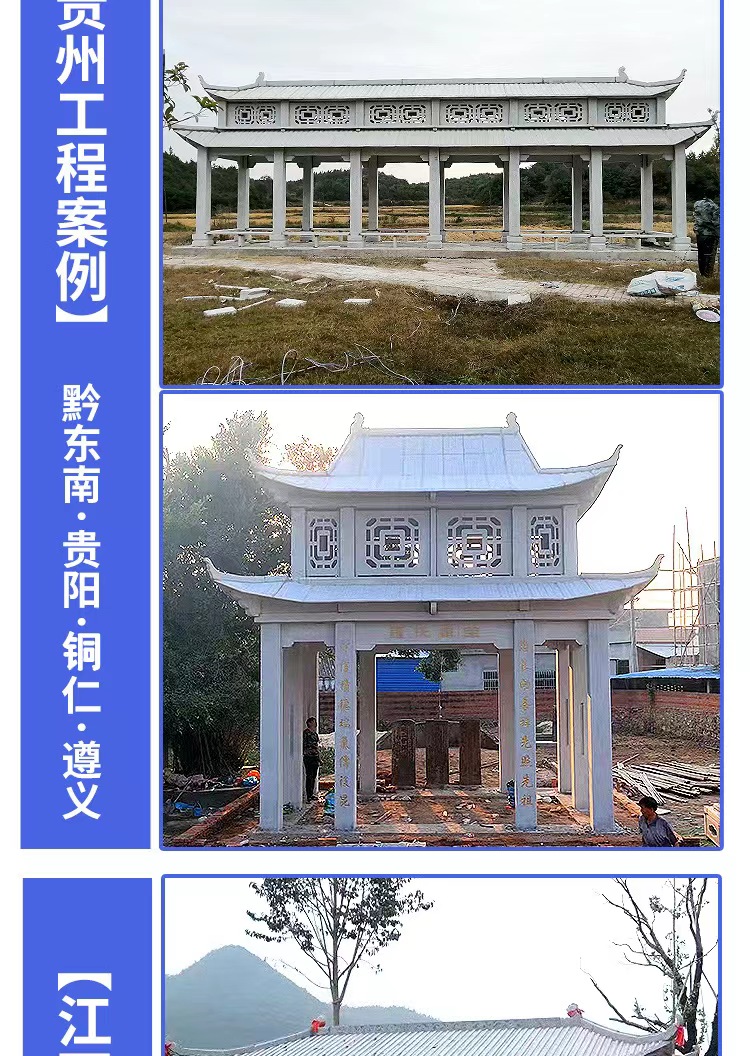
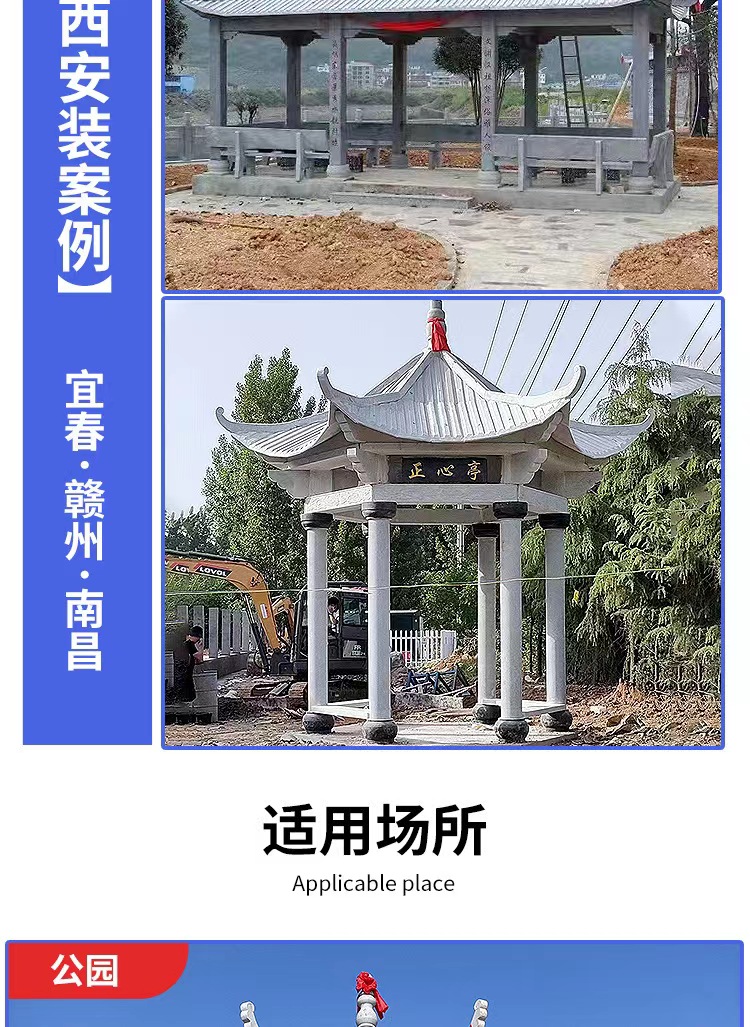
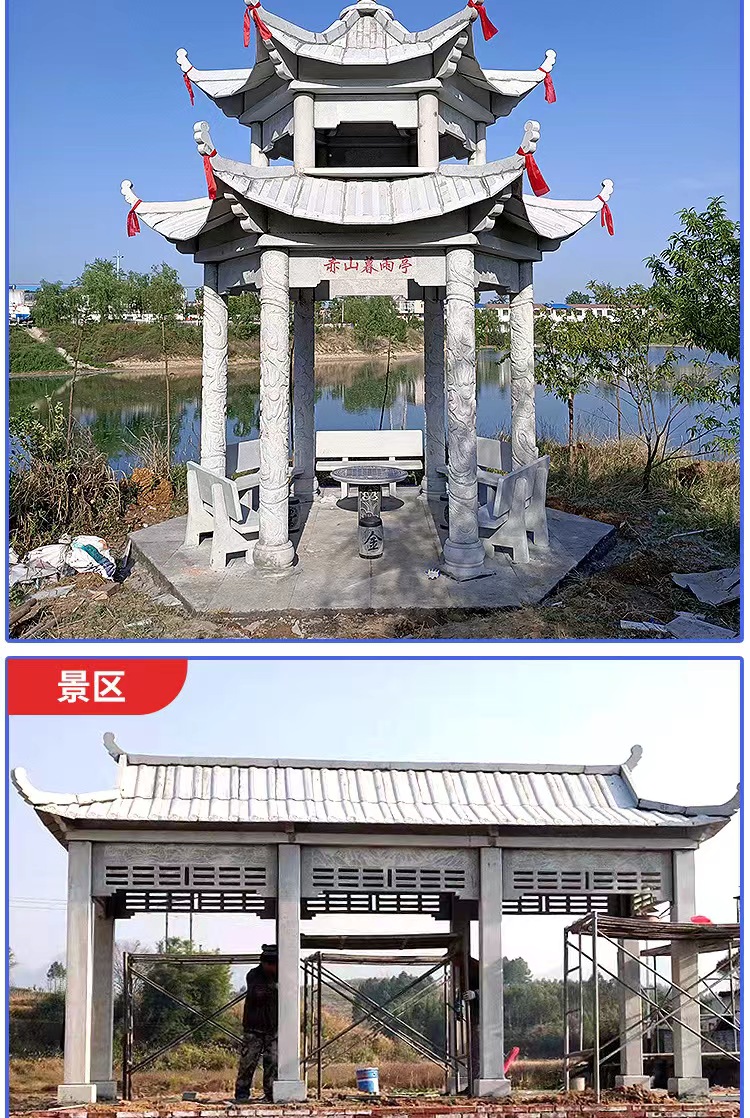
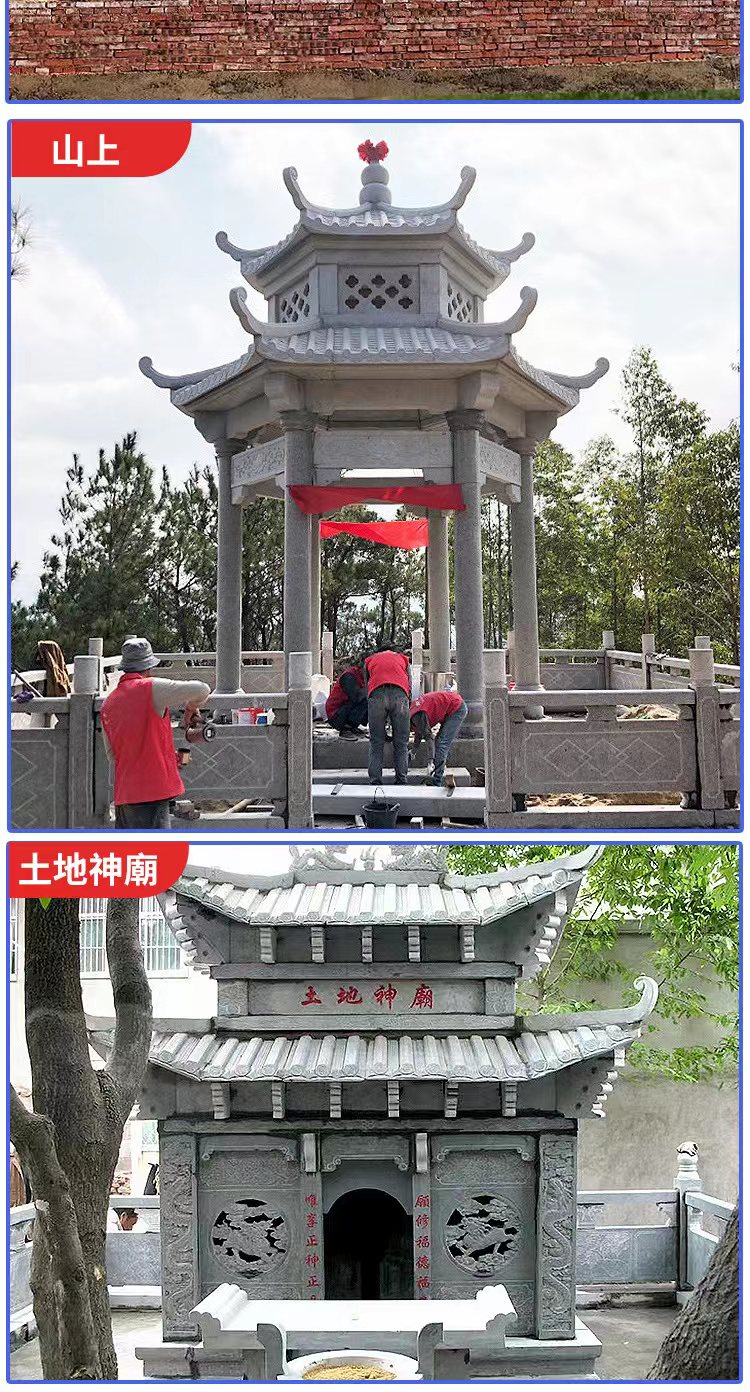
Stone pavilions are traditional landscape structures that blend the artistic conception of Chinese gardens with practical functions. Designed around the core concept of "a pavilion is a place to stop," they not only serve the practical purposes of "providing shade and shelter from rain, and a place to pause and view the scenery," but also embody the aesthetic philosophy of Chinese architecture, which is "delicate, compact, and harmonious with nature." Often, they are highlighted by the skillful combination of columns, beams, and roofs (such as upturned roofs or resting roofs), paired with bas-relief and openwork carvings that depict flowers, birds, landscapes, and auspicious patterns, turning the structure itself into a landscape highlight. In terms of material selection, high-quality stones like bluestone, granite, and marble are commonly used. Bluestone brings an ancient, smooth texture, fitting well with traditional garden styles. Granite is hard, resistant to weathering and abrasion, suitable for long-term outdoor use, while marble has a pure color that enhances the building's refinement. The production process involves site selection and design (determining dimensions and shapes based on the surrounding environment), stone processing (cutting and fine carving of components), and assembly (using mortise and tenon joints or reinforced steel to ensure structural stability). Craftsmen adjust the specifications of the pavilion (such as four-column pavilions or six-column pavilions) based on the usage scenario to ensure it meets functional needs while harmonizing with the environment. Their applications are versatile, from garden courtyards as resting and viewing spots for visitors, to park lakesides and mountain trails as shade and shelter for pedestrians. They can also be used in ancient architecture parks or cultural scenic areas to restore traditional landscape features and convey the charm of historical culture. They can also adorn private gardens, enhancing the elegance of the space. With high-quality stone and rigorous craftsmanship, stone pavilions offer advantages such as resistance to wind and rain erosion, aging resistance, and a long service life, requiring minimal maintenance. They not only satisfy the practical needs of resting and viewing but also inject the elegant artistic conception of Chinese gardens into the scene, serving as an important carrier for landscape creation and the inheritance of traditional architectural culture.


WeChat Official Account

Scan to follow Official Account