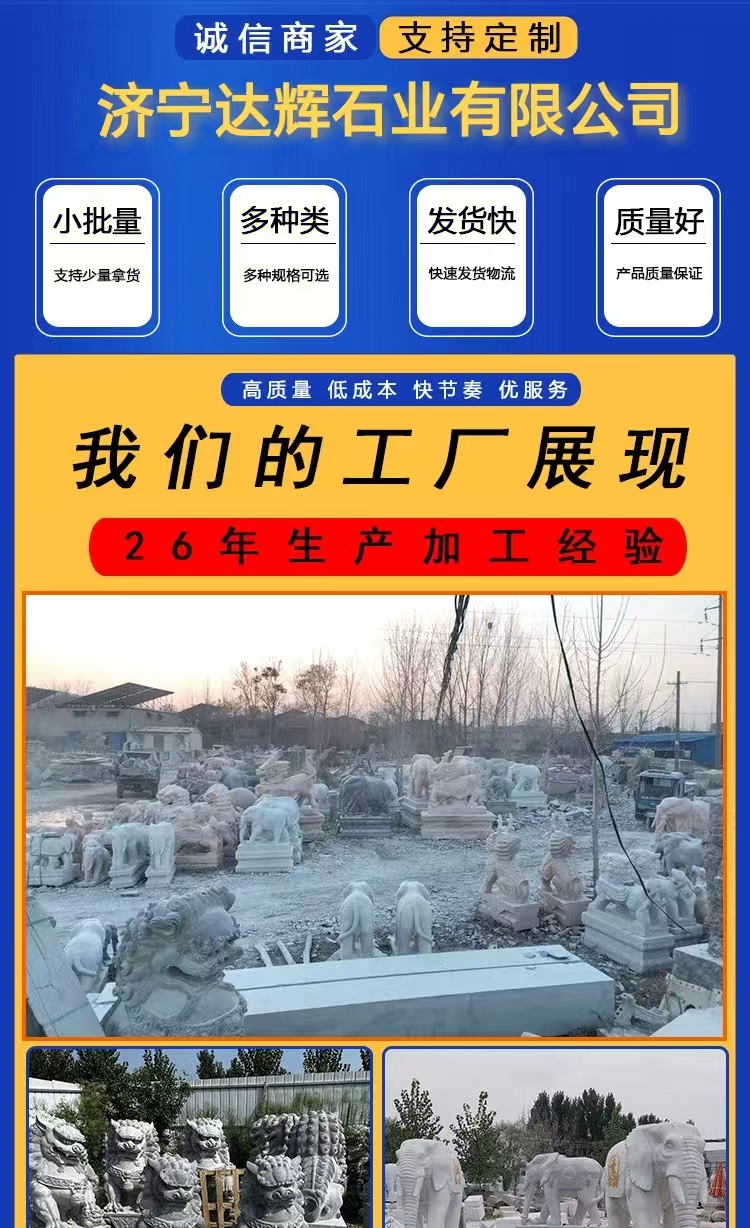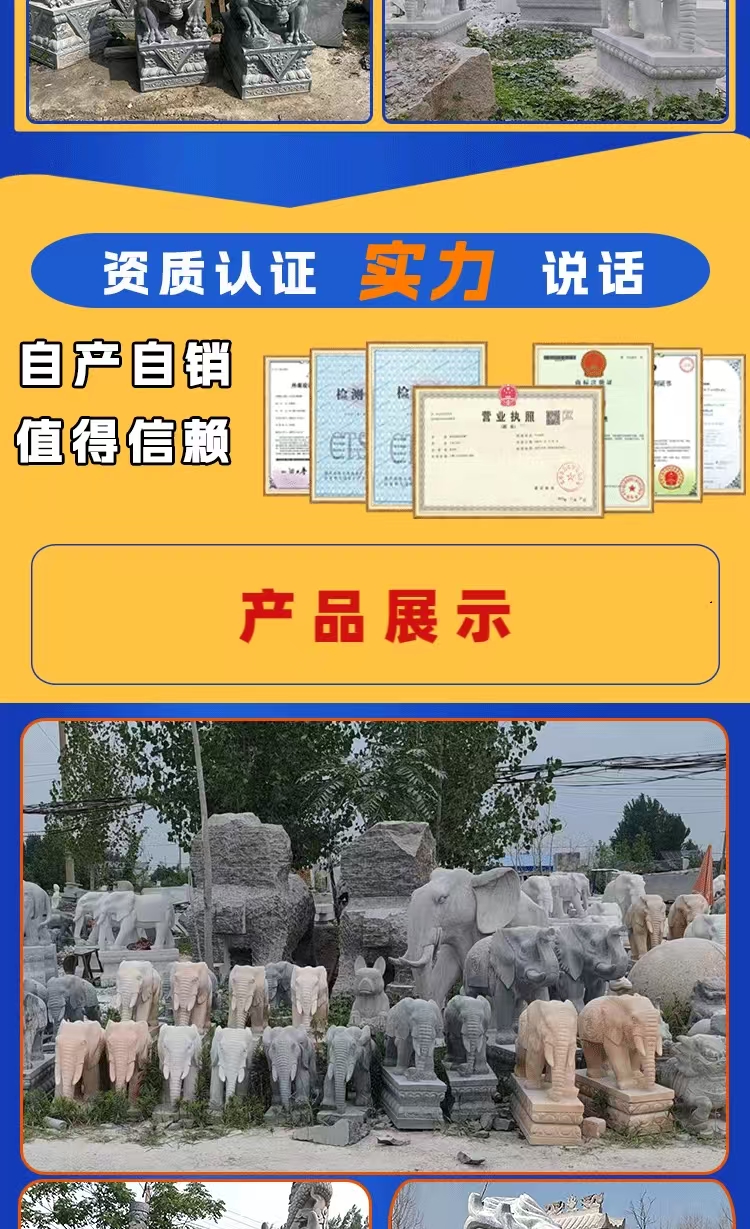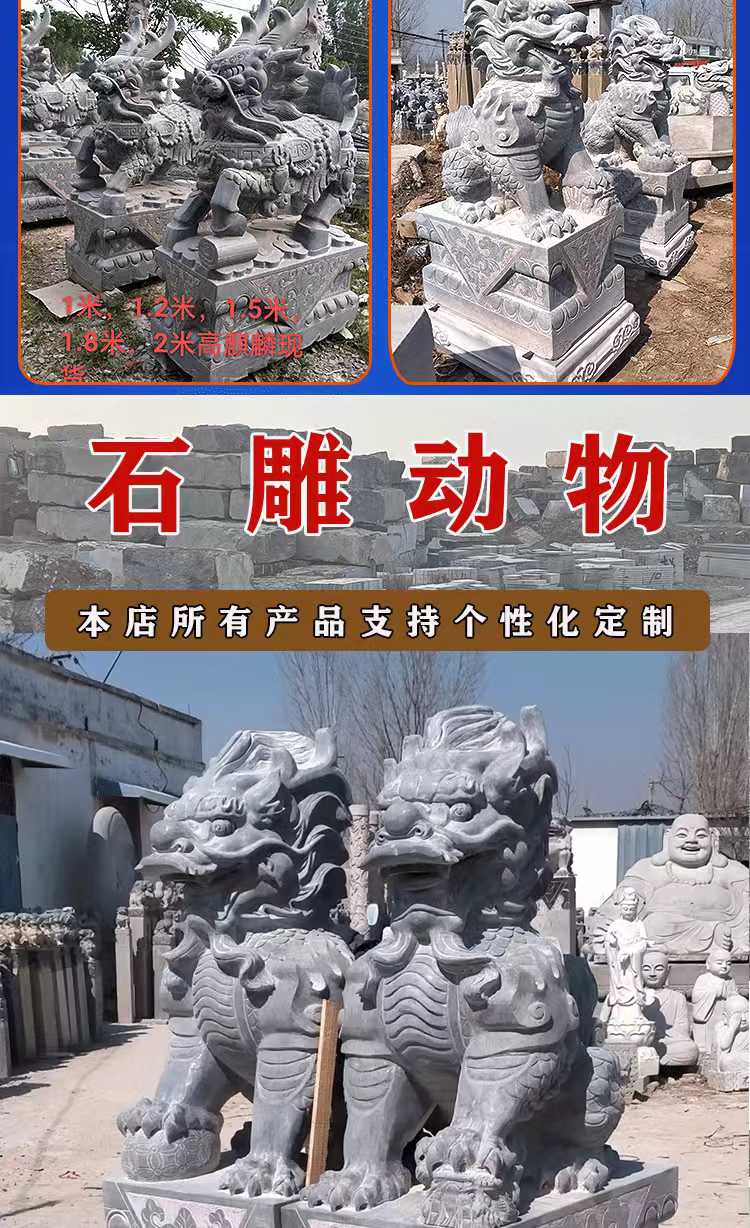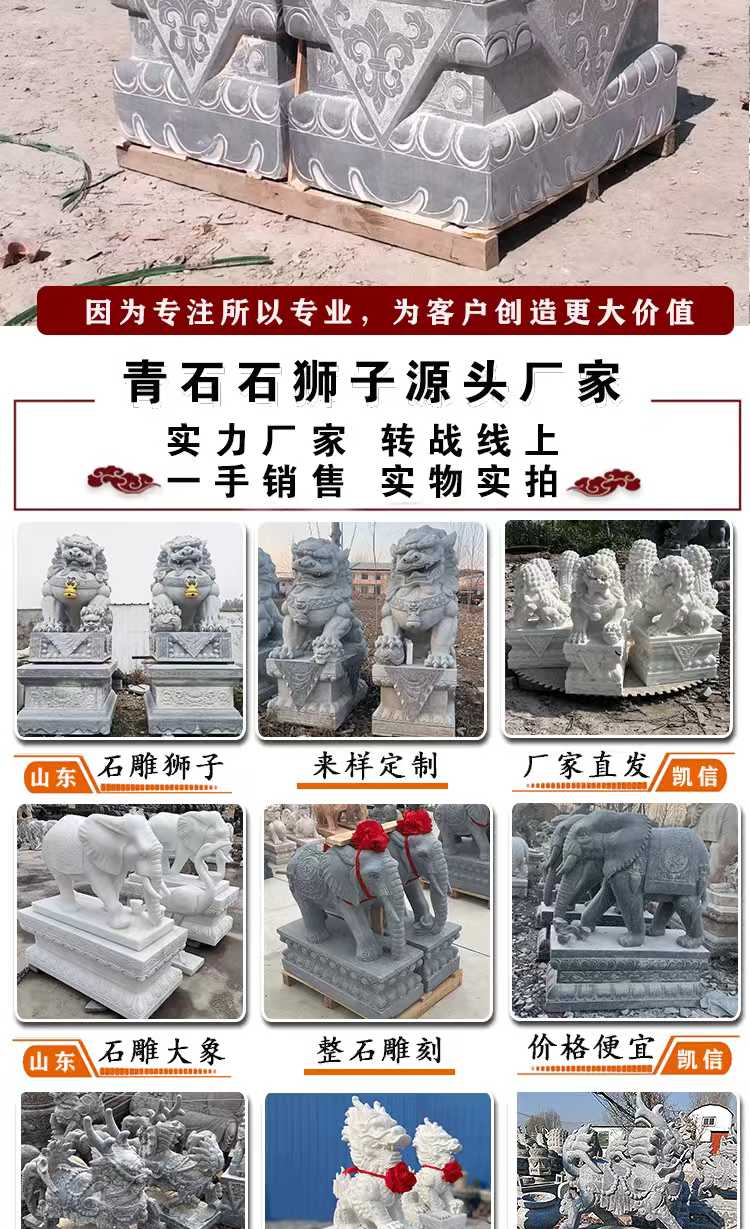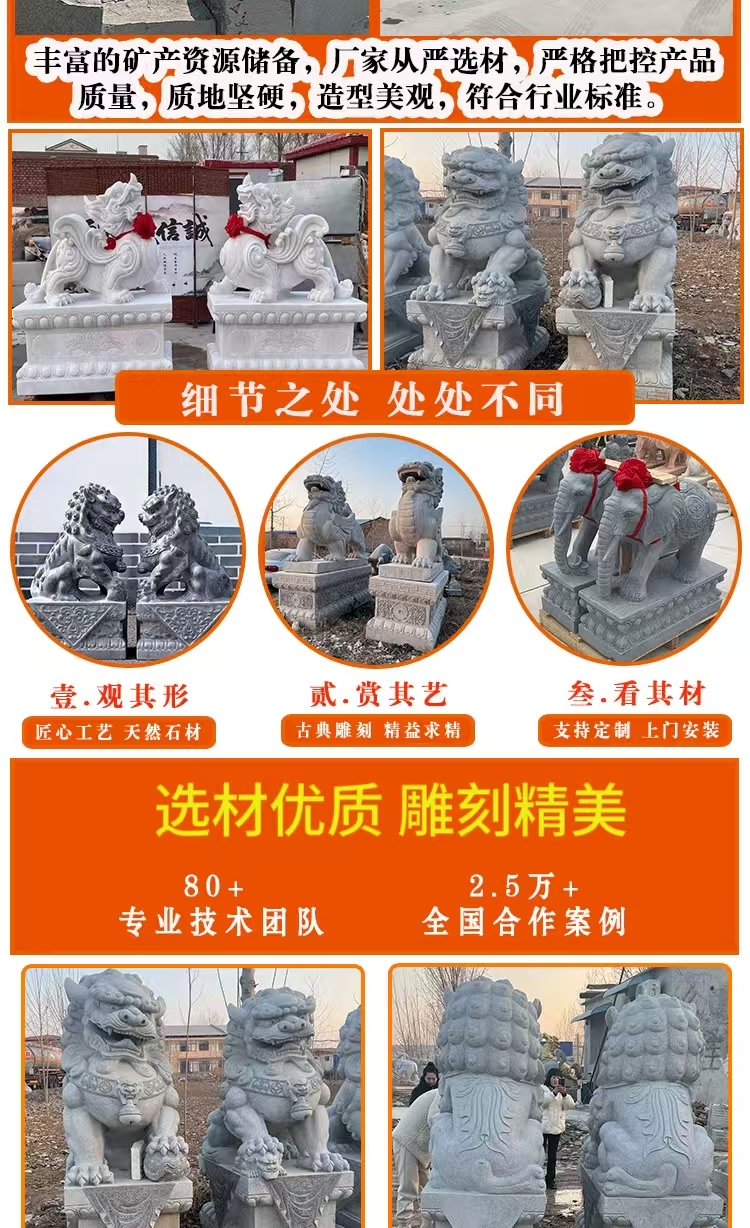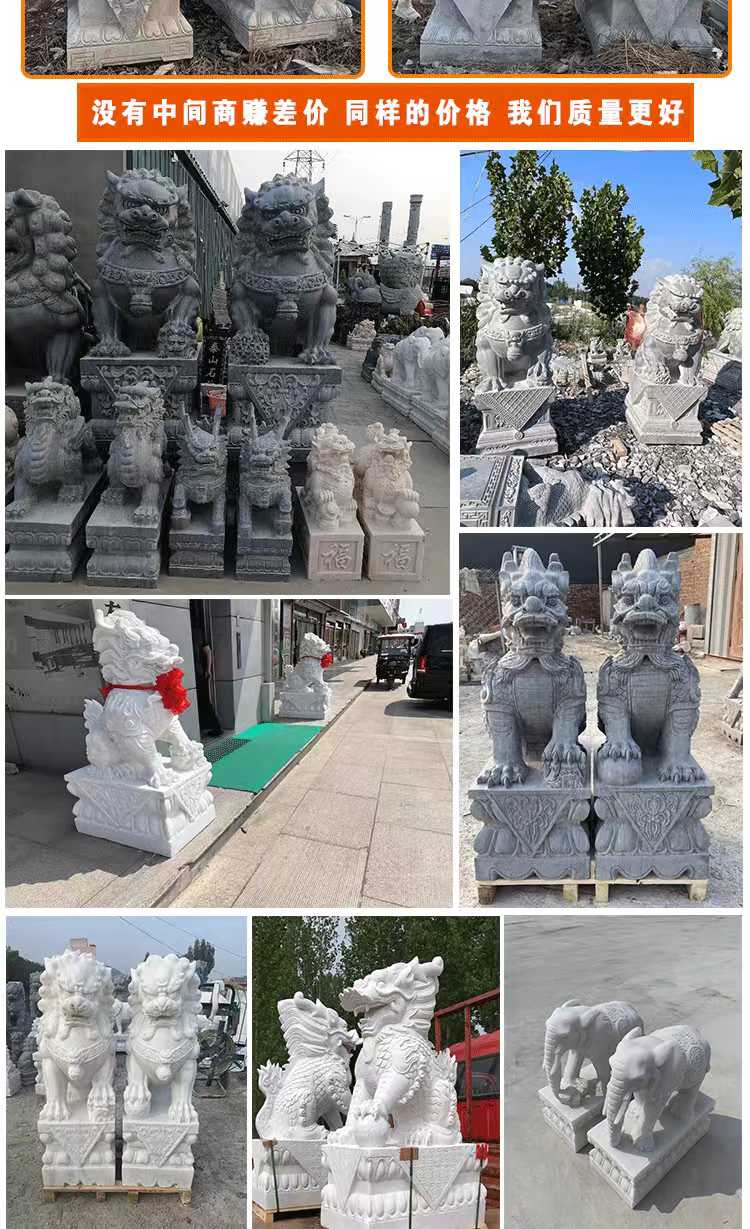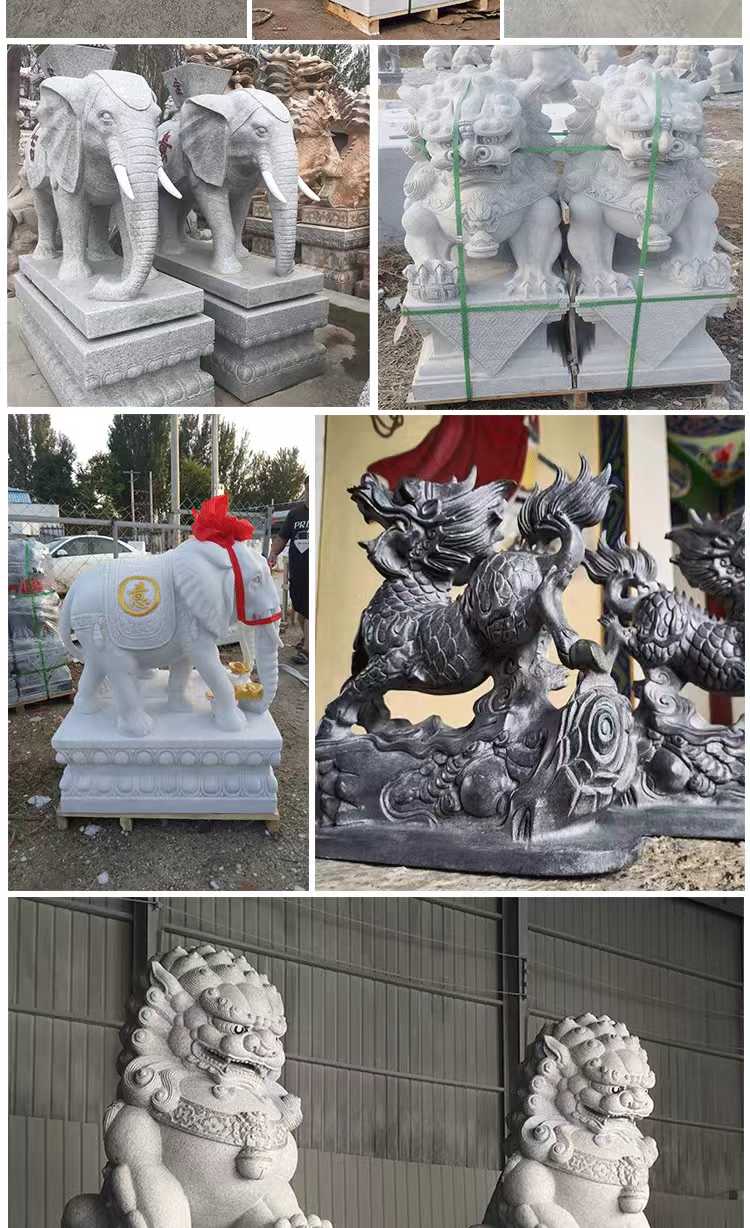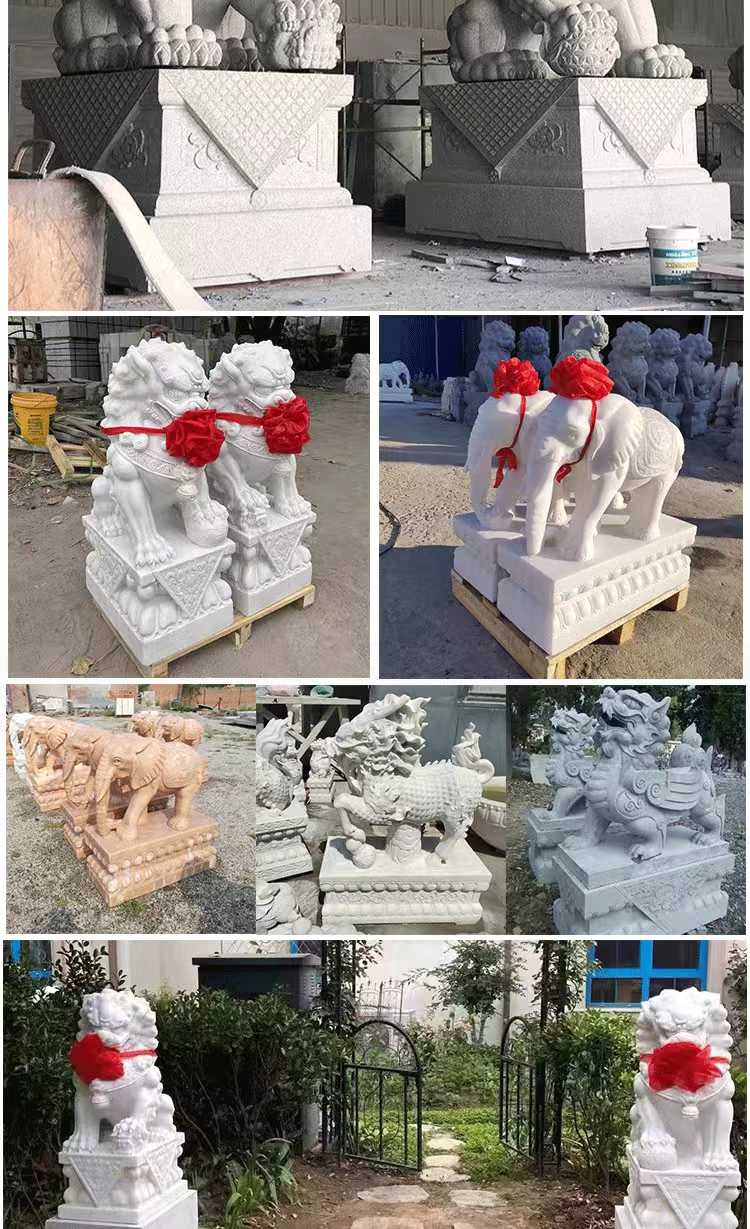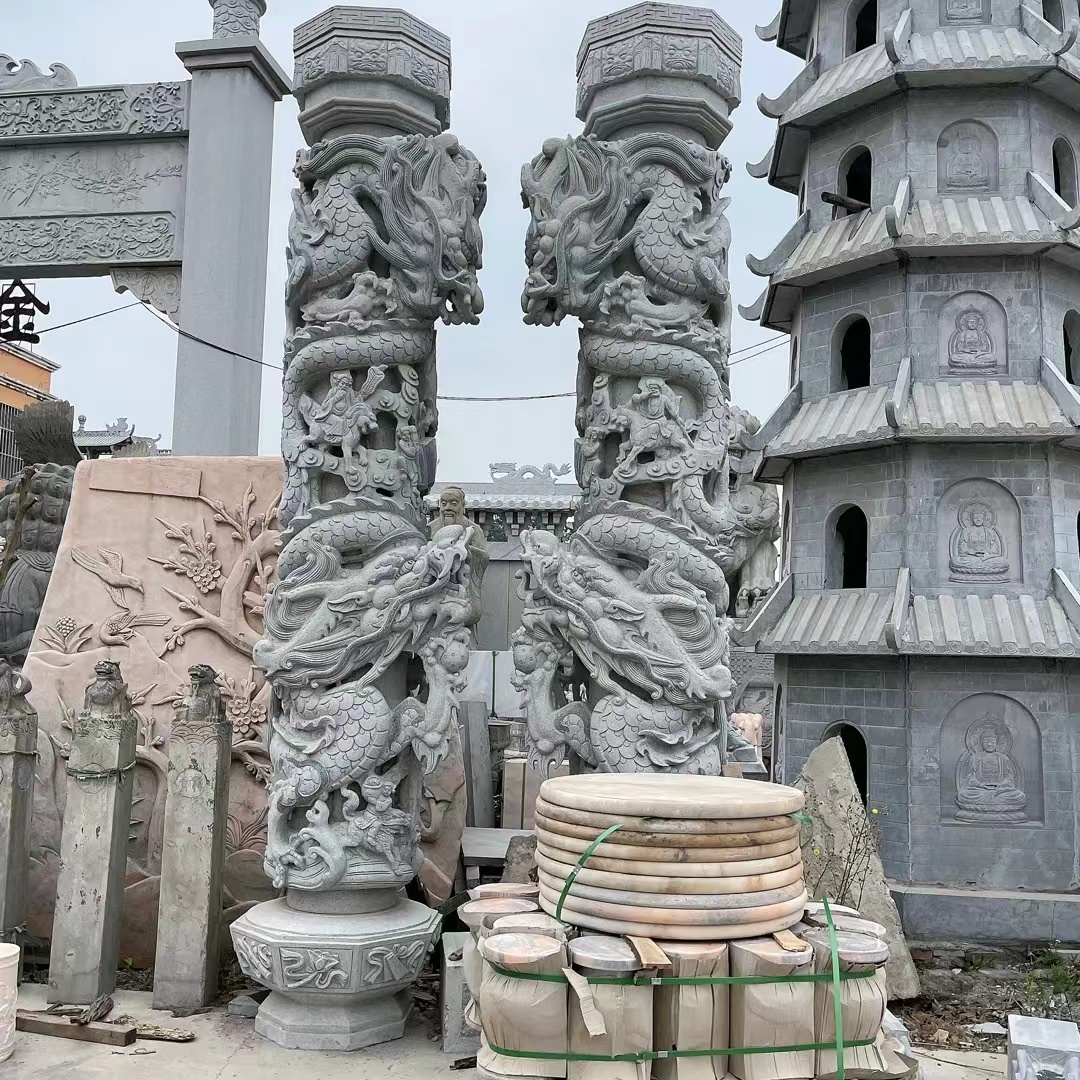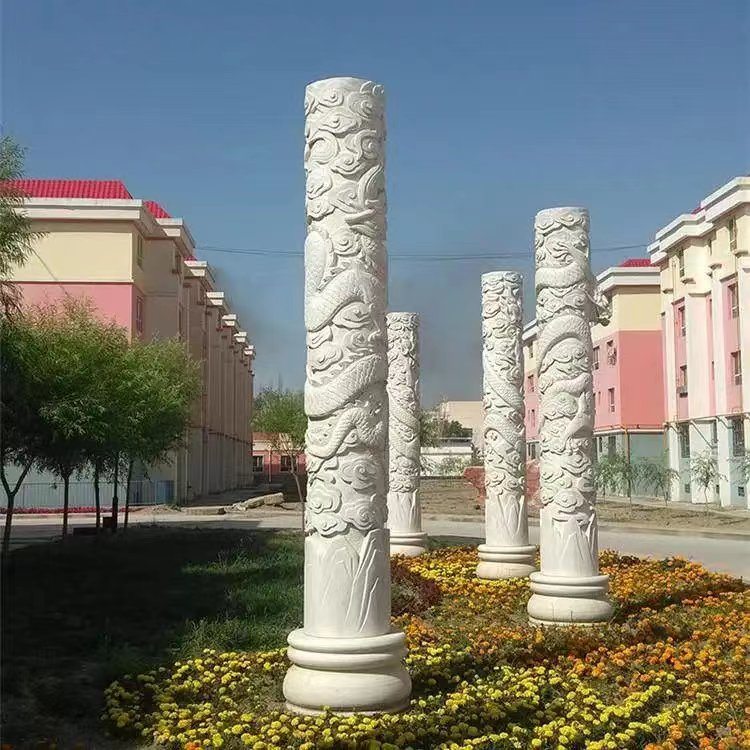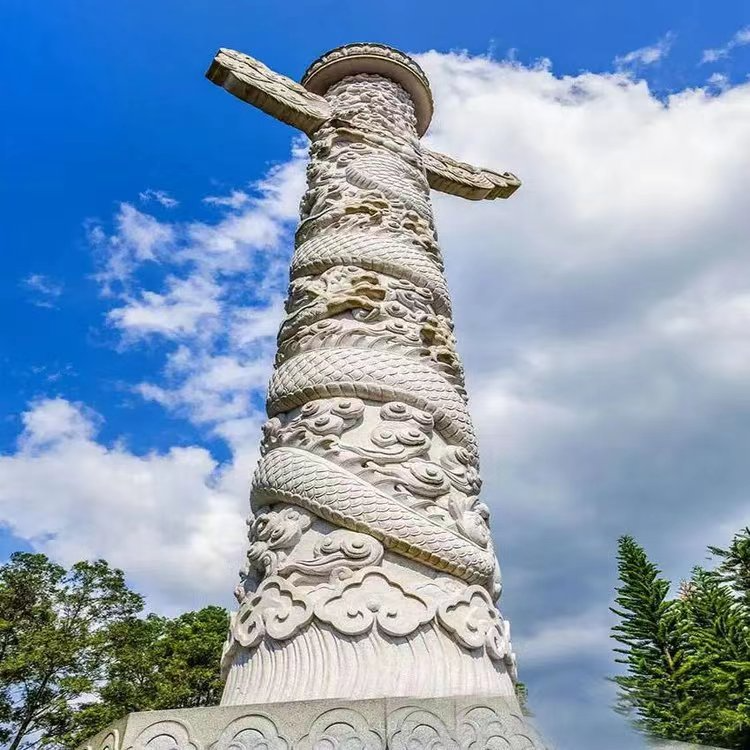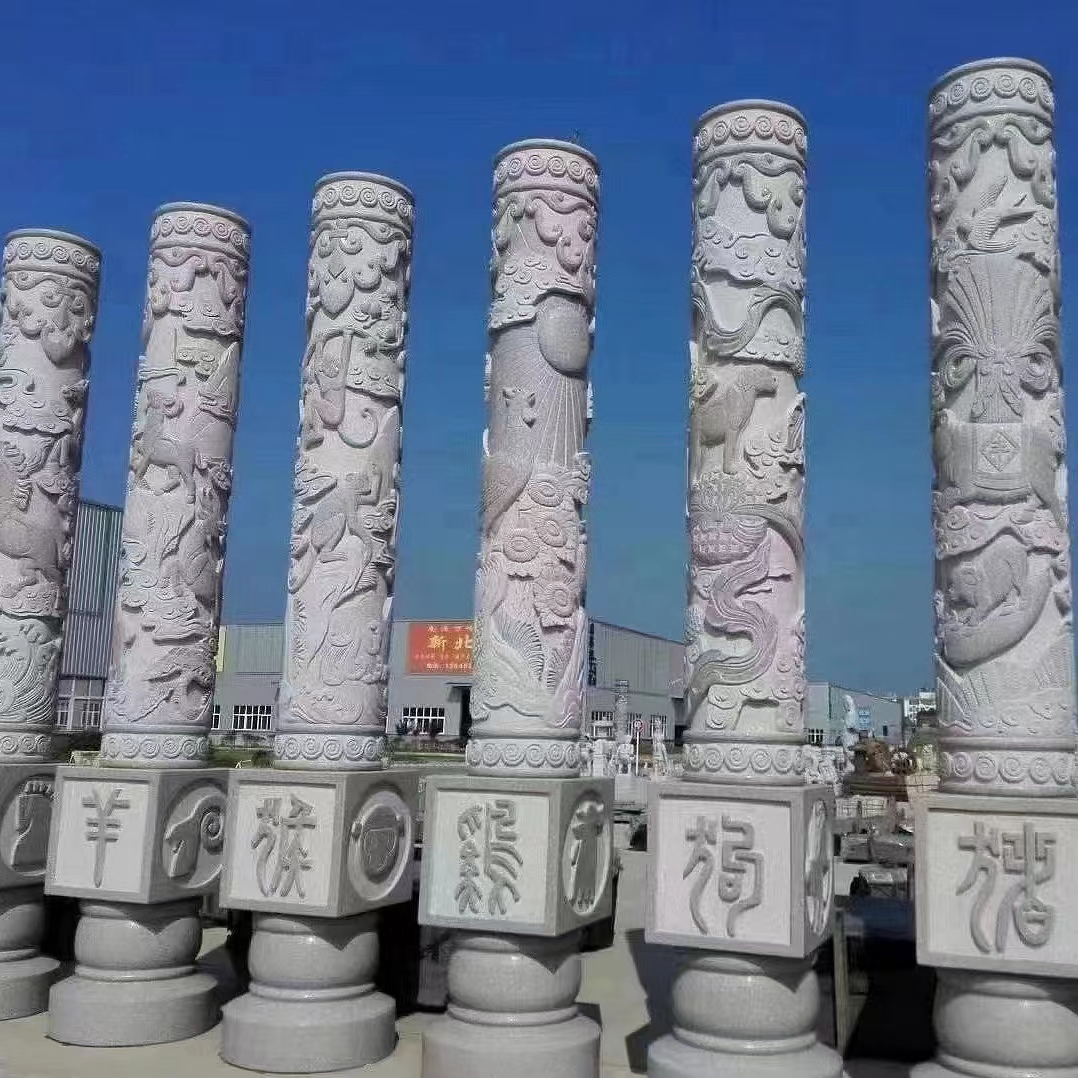

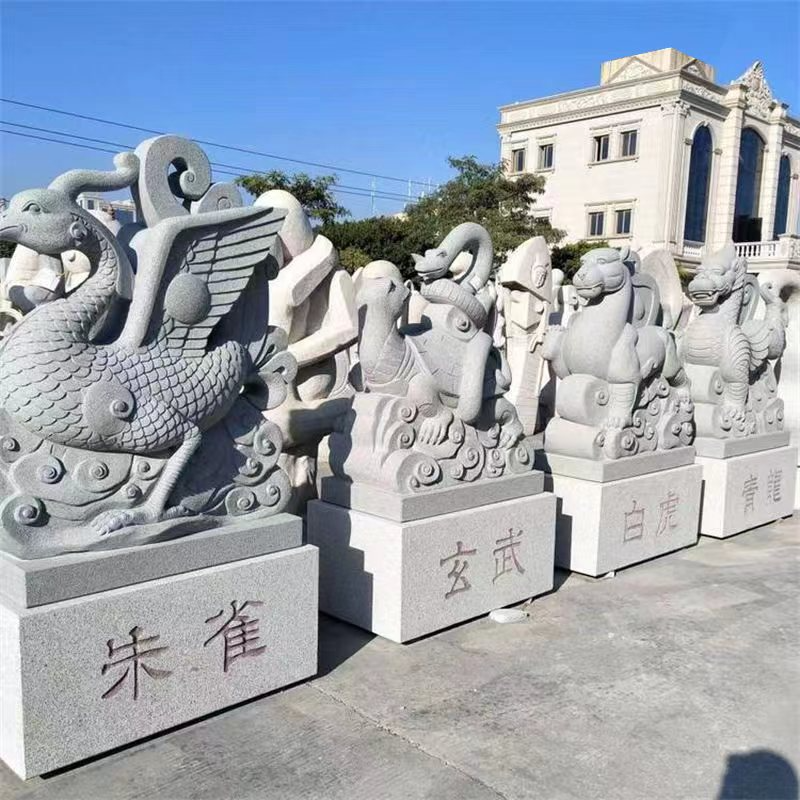

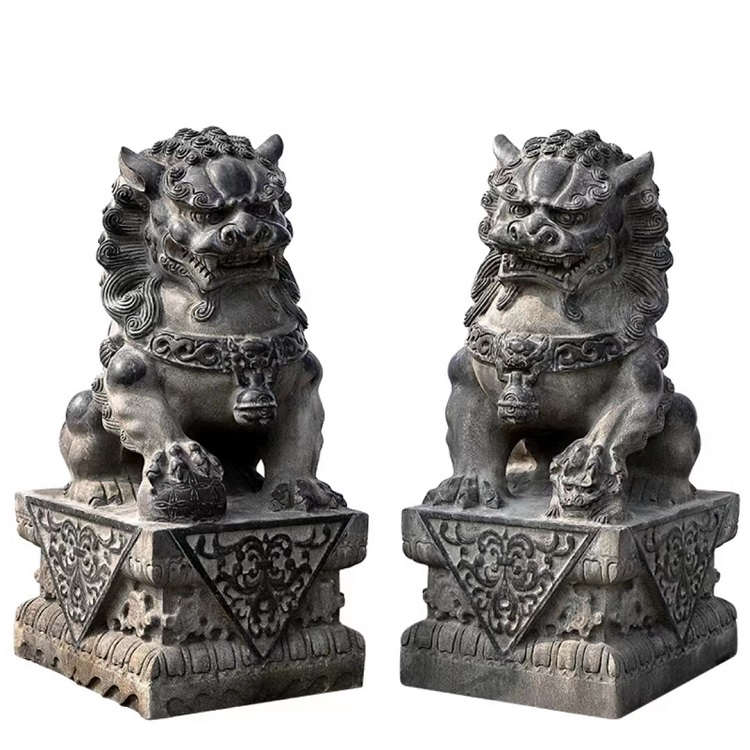
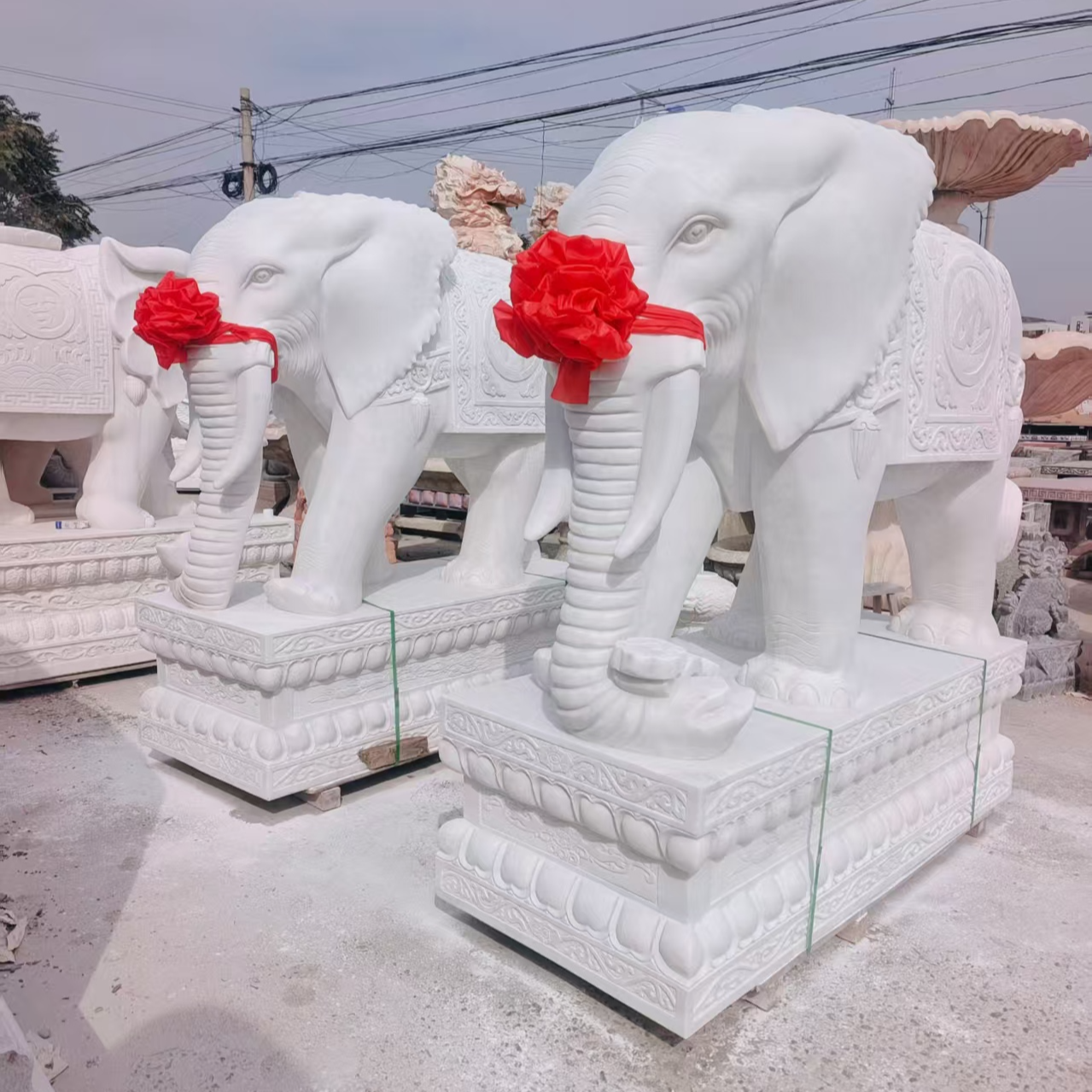








Animal sculptures are artistic creations that blend cultural significance with symbolic meaning. They embody the symbolic significance of animals across different cultures—such as the dragon representing majesty, the lion symbolizing protection, and the crane signifying good fortune—and precisely capture the morphological features and dynamic spirit of animals through techniques like round sculpture, bas-relief, and openwork. These sculptures seamlessly merge sculptural skills with the beauty of nature, offering both aesthetic appeal and cultural expression. In terms of materials, common choices include green stone, granite, marble, and bronze. Green stone is ideal for showcasing a rustic, heavy texture and can finely depict the hair and texture of animals. Granite's high hardness and resistance to outdoor weathering make it suitable for outdoor settings. Marble has a pure and soft color that accentuates the delicate feel of animal shapes. Bronze, with its inherent metallic luster and historical depth, is perfect for creating grand animal figures. The production process involves several stages: conceptualization, modeling, material processing, fine carving, and surface polishing. Craftsmen adjust the techniques based on the animal's characteristics and the material's properties to ensure the sculptures are lifelike and detailed. These sculptures have a wide range of applications, from gardens and landscapes to urban squares and parks, from temples and ancient architecture to home gardens. They serve as cultural symbols, public art installations, and decorative pieces that enhance the ambiance of any space. With high-quality materials and exquisite craftsmanship, animal sculptures offer advantages such as weather resistance, durability, and a long service life. They can convey auspicious meanings as cultural symbols and also serve as artistic decorations that illuminate various spaces, making them classic products that combine artistic value and practical function.