
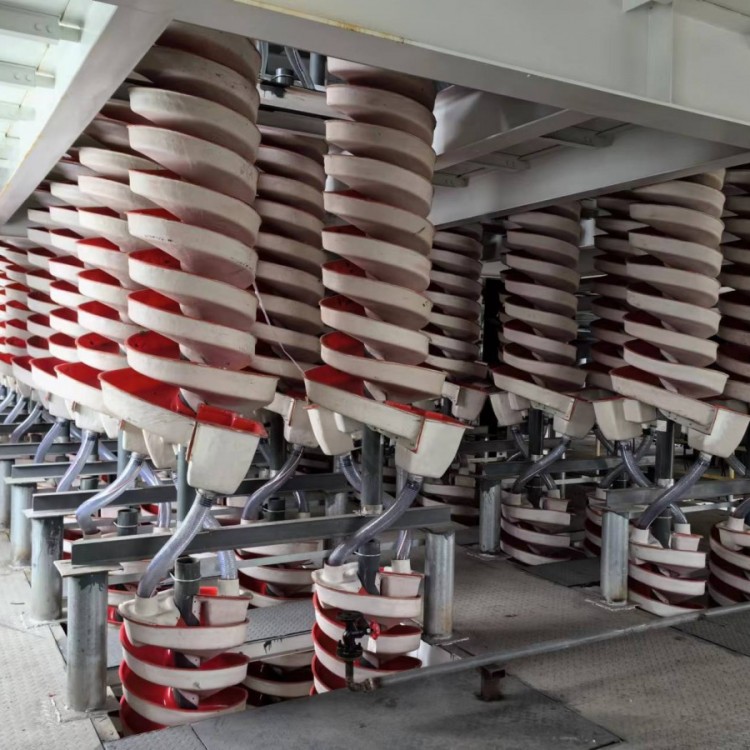
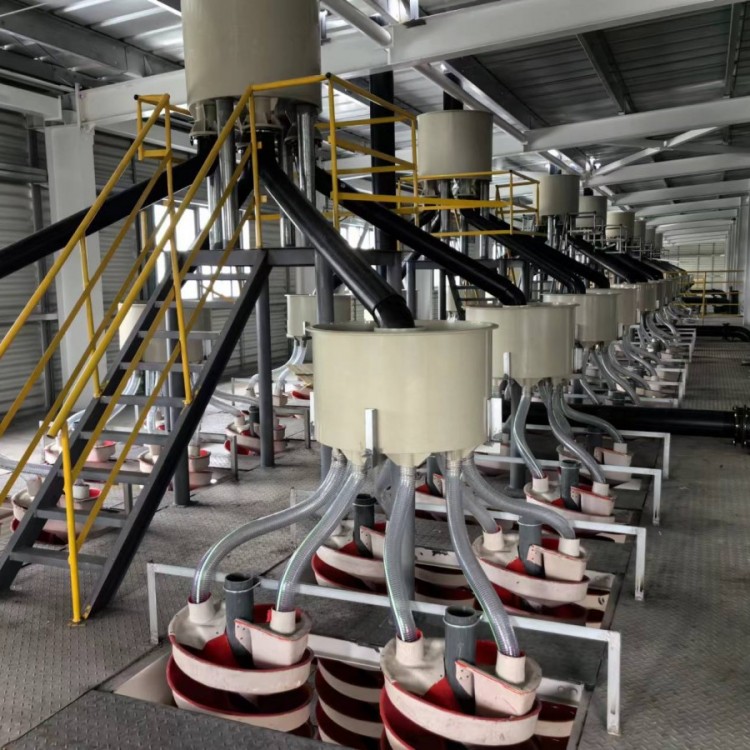
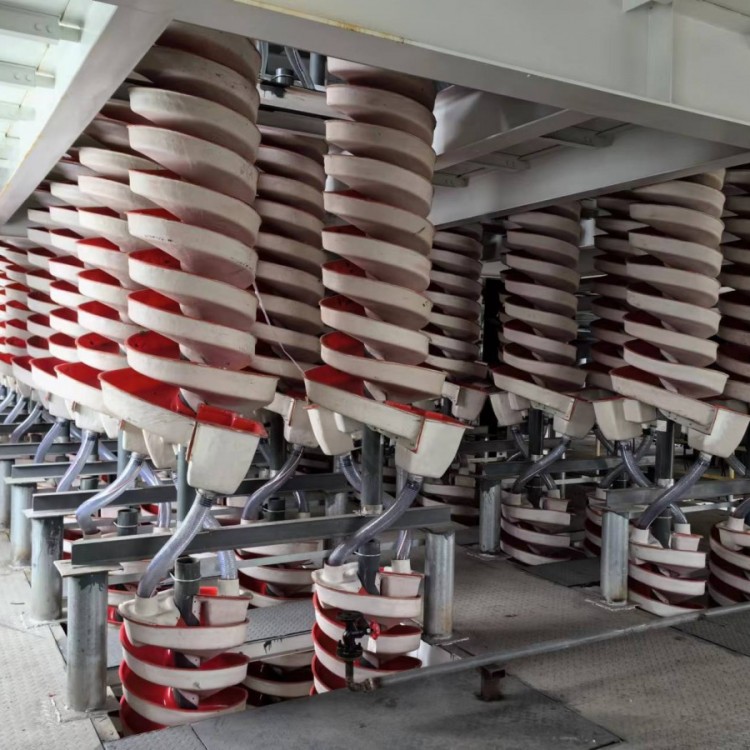












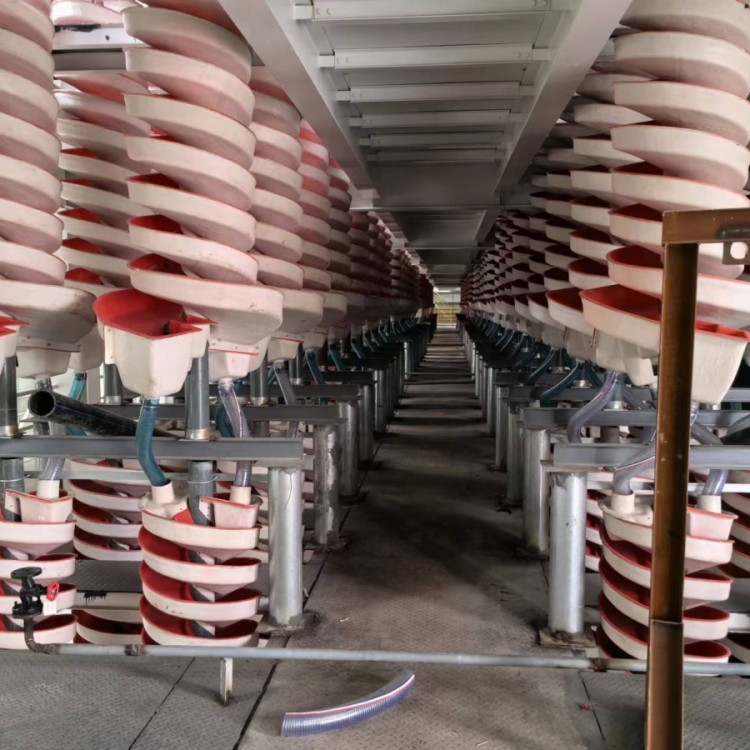


Spiral chute
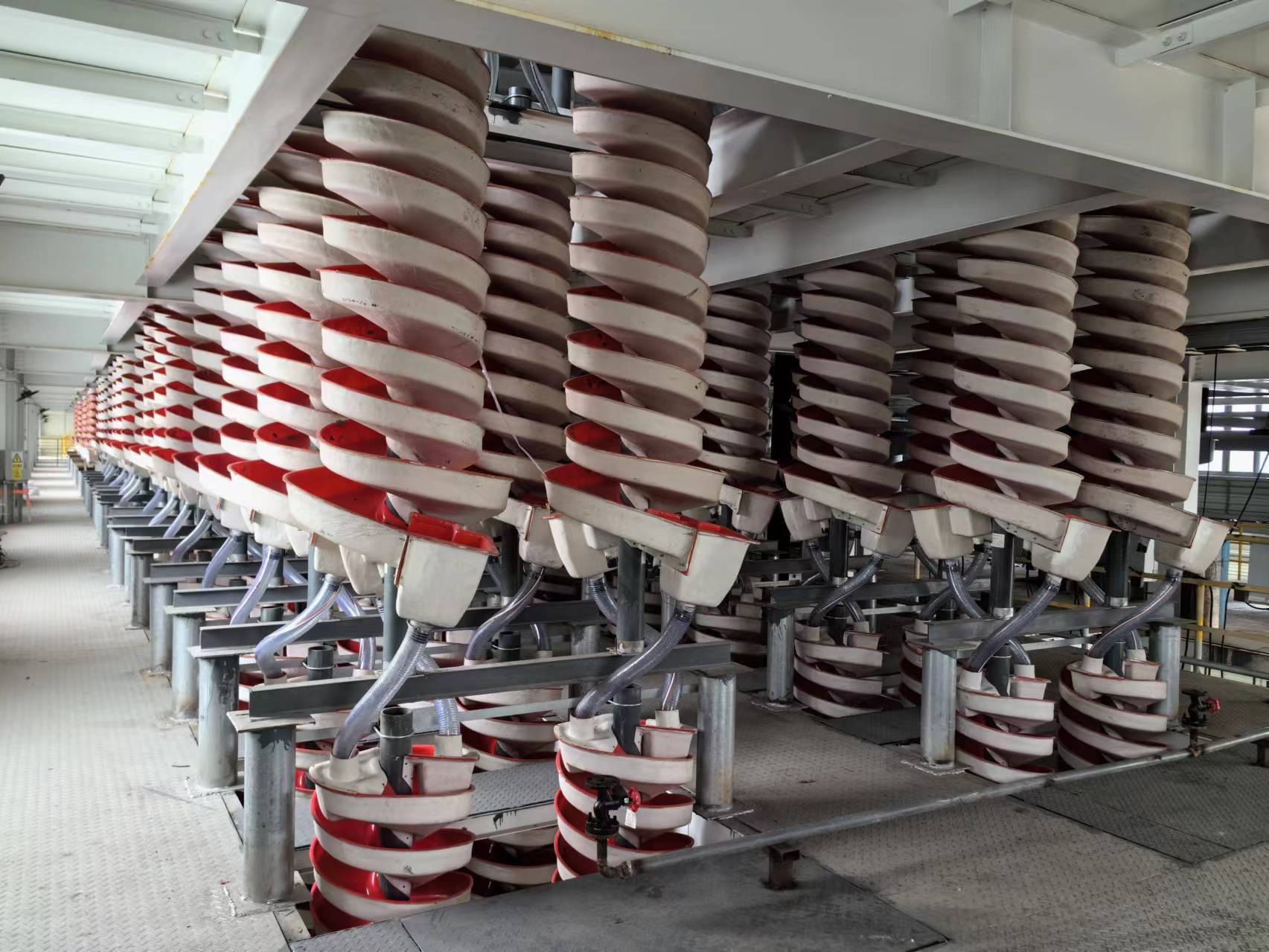
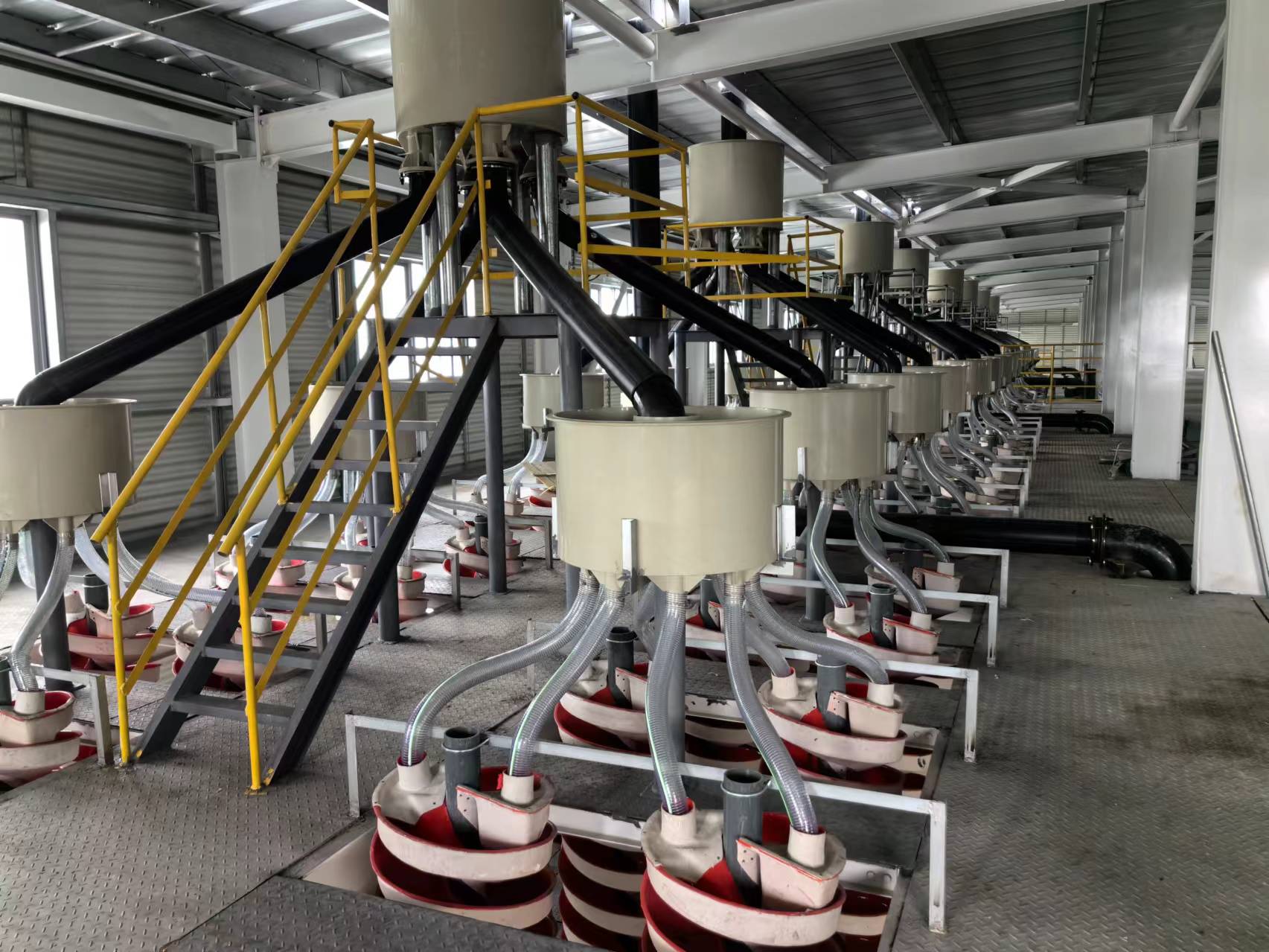
The spiral chute utilizes the differences in specific gravity, particle size, and shape between useful minerals and gangue minerals to create a centrifugal flow film on the inclined surface of the spiral. In a combined field of gravity and centrifugal force, it separates the useful minerals from the gangue by utilizing the gravity, hydrodynamic pressure, and friction on different particles. The water in the spiral chute, in addition to its downward spiral motion, also performs a lateral circulating flow. The upper water flow has a higher velocity, generating a larger inertial centrifugal force, which is ejected towards the outer edge of the chute. The lower water flow adjacent to the bottom has a slower rotational speed, less centrifugal force, and, under the influence of gravity, flows from the outer edge towards the inner edge, creating a secondary回流. Heavier mineral particles settle quickly, gradually moving towards the inner edge along the converging spiral line, forming concentrate. Lighter minerals settle slowly, remaining on the surface of the ore flow, with higher velocity and greater centrifugal force. Under the action of the lateral circulation, they gradually move towards the outer edge along the expanding spiral line, resulting in tailings.