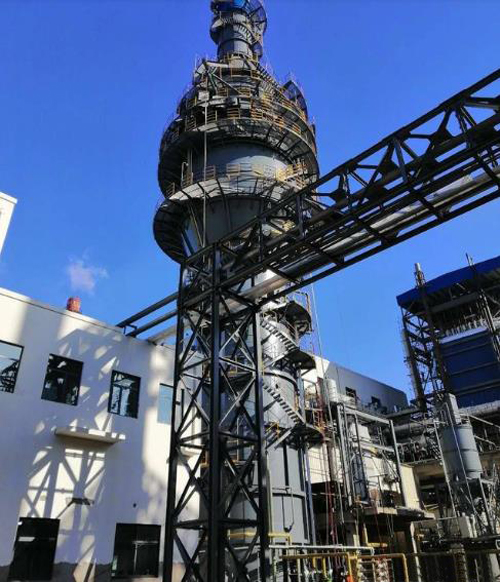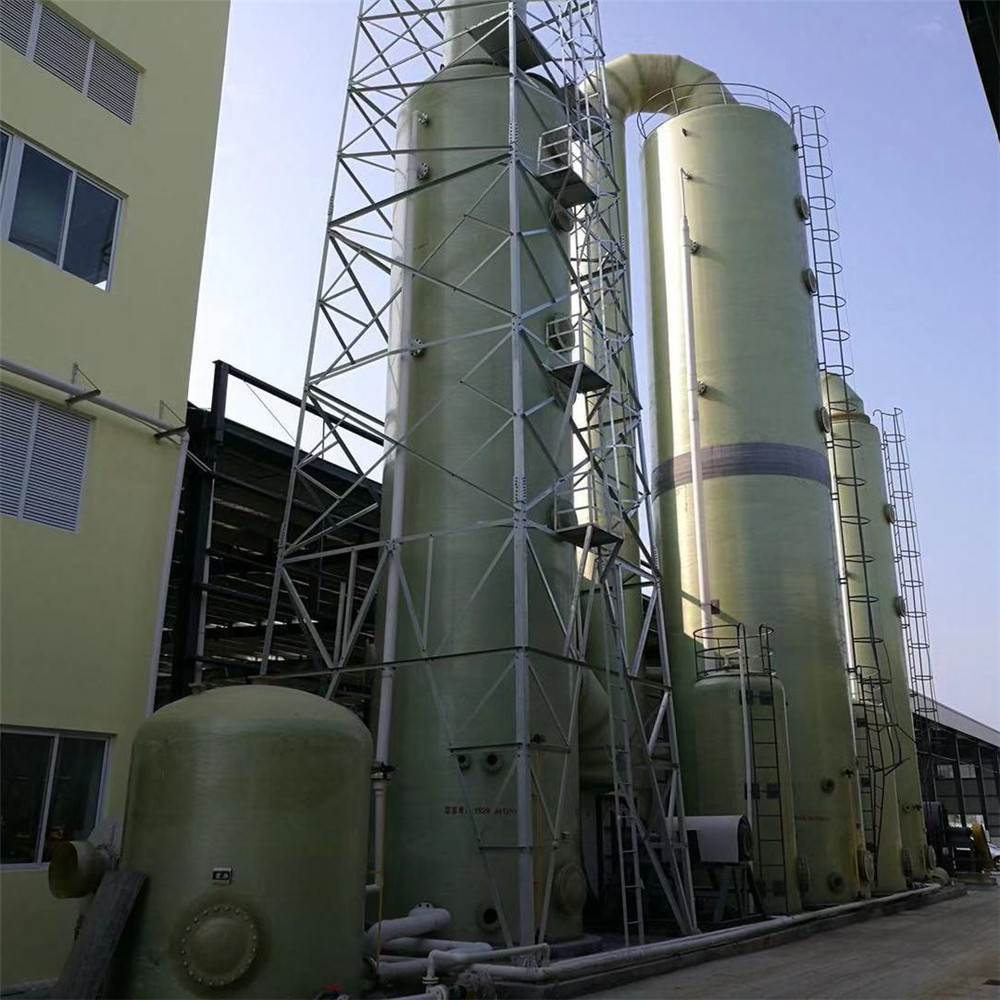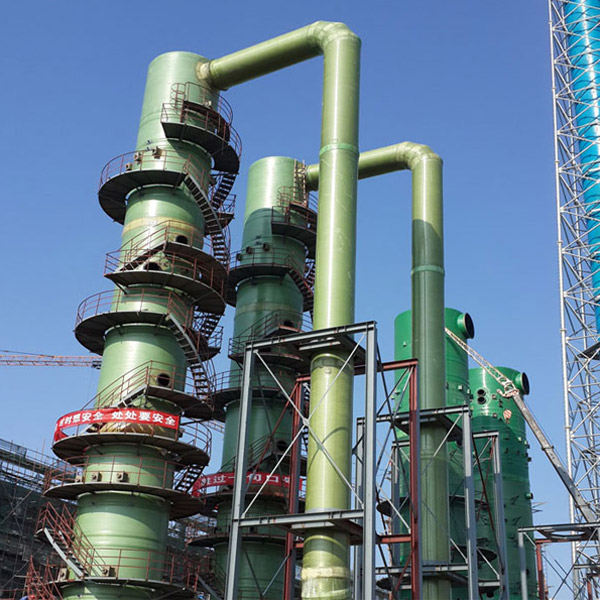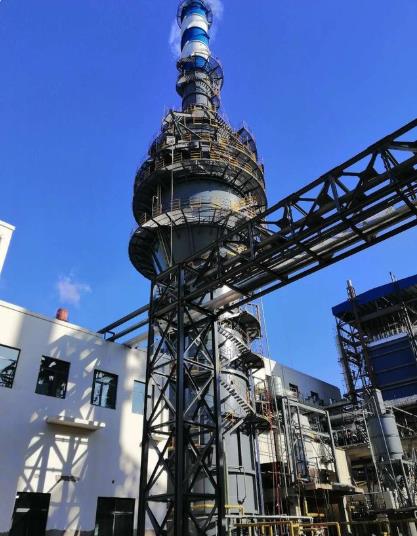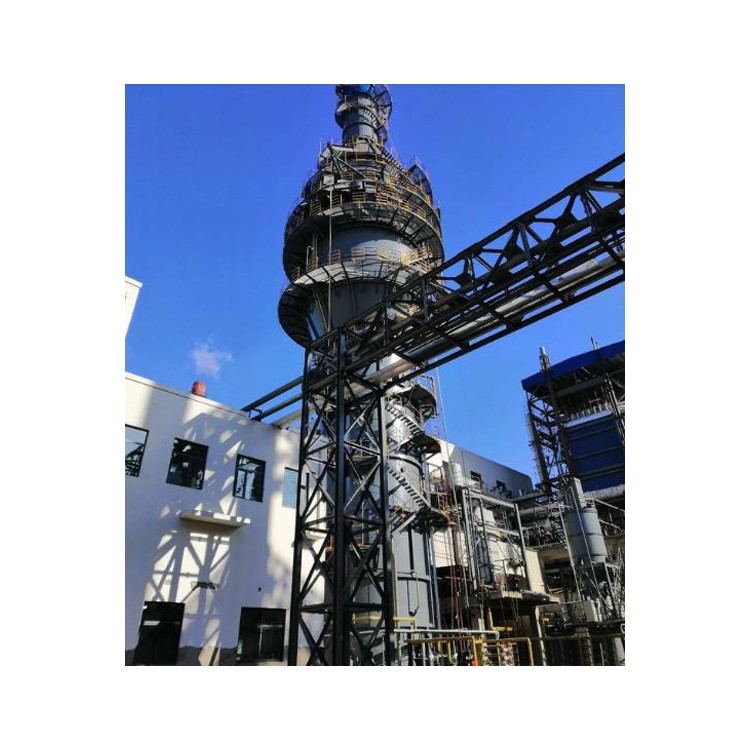










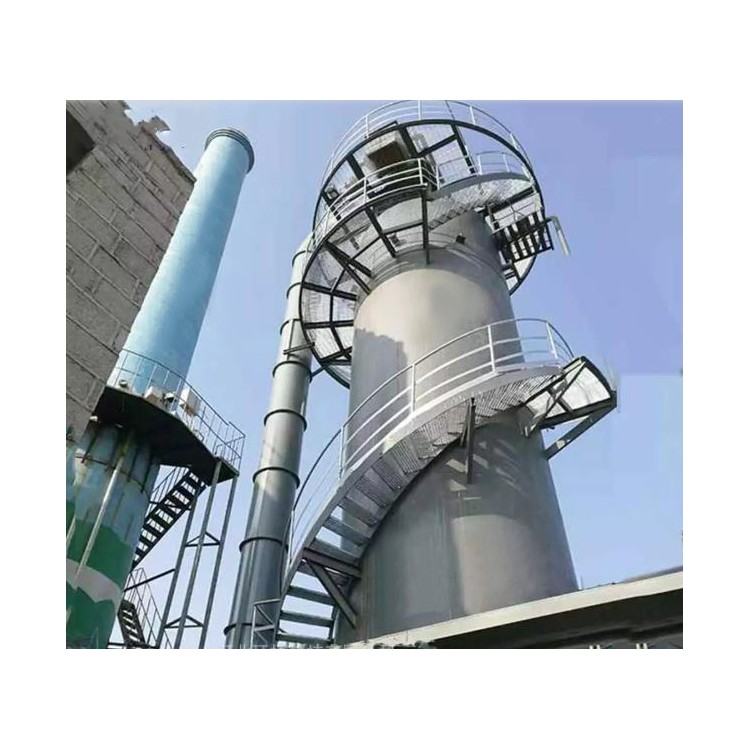
Overview of Glass-Fiber Reinforced Plastic Desulfurization Tower for Chemical Plants
Glass fiber reinforced plastic (FRP) desulfurization towers are highly resistant to corrosion, lightweight, and cost-effective, making them suitable for waste gas treatment in industries such as chemicals, metallurgy, and power. Their core function is to react with desulfurizing agents (such as lime slurry) through a spray system to remove sulfur dioxide (SO2) from flue gas.
I. Working Principle and Structure
1. Workflow:
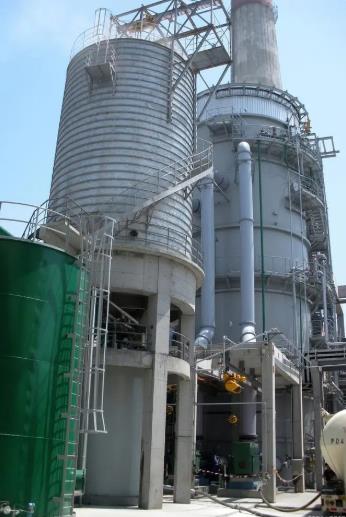
Sulfur-containing flue gas enters the tower body and comes into contact with the spray-laden desulfurizing agent (such as alkali solution), undergoing a chemical reaction to form sulfates.
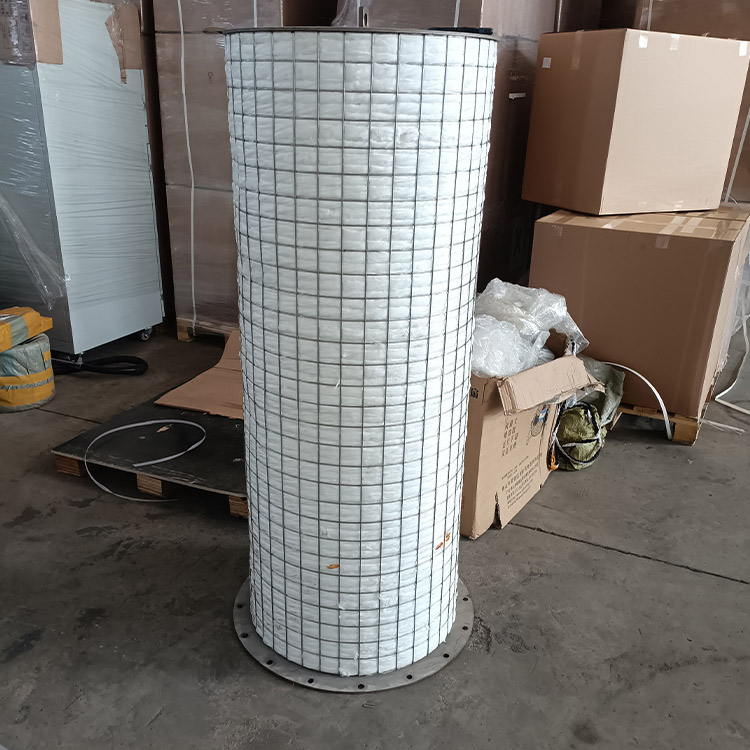
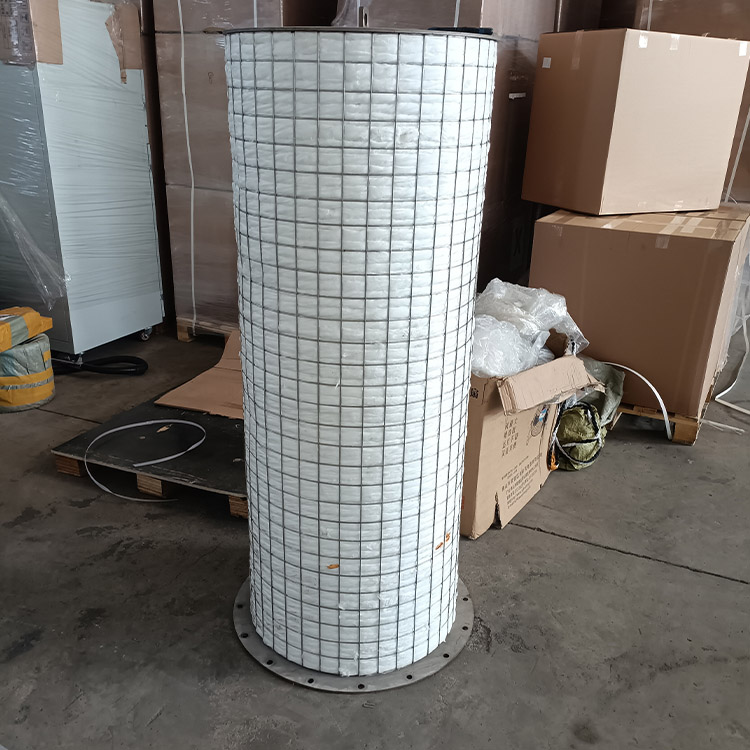
After passing through the packed bed filter, the mist is removed by the demister, and the emissions meet the standards.
2. Structural Features:
Layered design (such as cyclone plates, spray layer, and demisting layer) enhances desulfurization efficiency and supports modular maintenance.
High-temperature resistance (up to over 70℃) and strong pressure resistance (such as 0.8MPa).

3. Advantages in Chemical Plant Applications
Corrosion Resistance: Suitable for strong acid and alkali waste gases in the chemical industry (e.g., HCl, H2SO4).
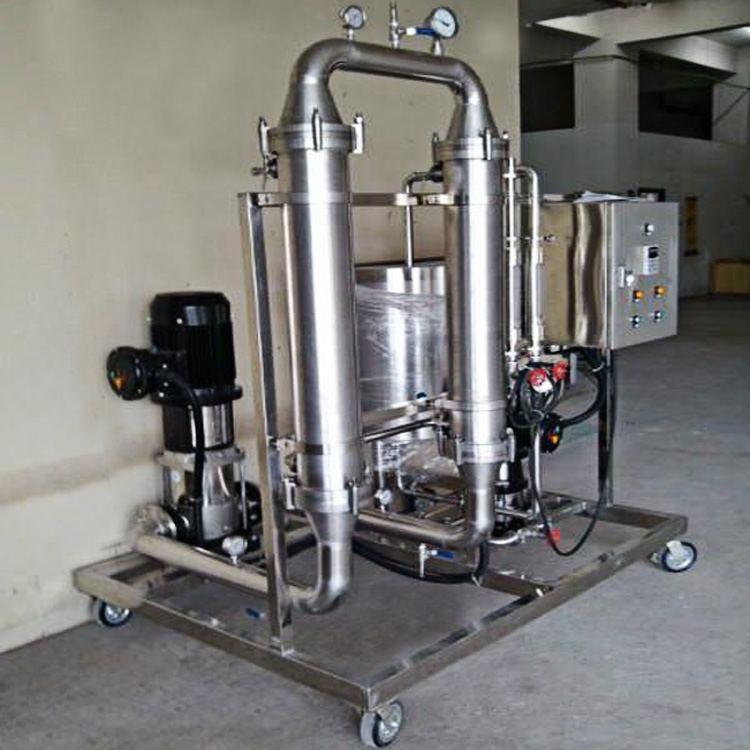
Customization: Support adjustment of processing concentration (100-1000mg/L), voltage (220V/380V), and specifications as required.
High-Efficiency Purification: Desulfurization rate generally ≥95%, with some models reaching 99%.