











I. Basic Definitions and Classification
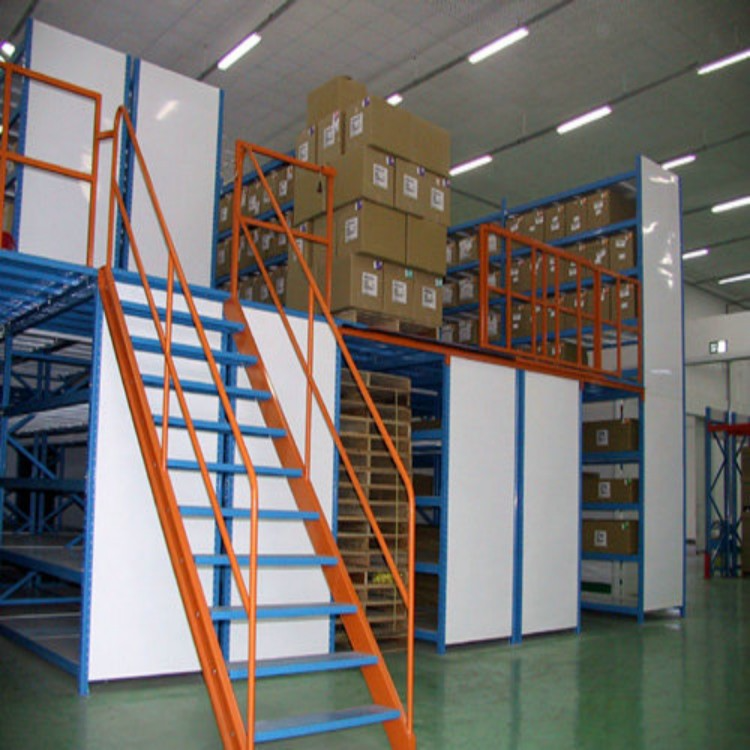
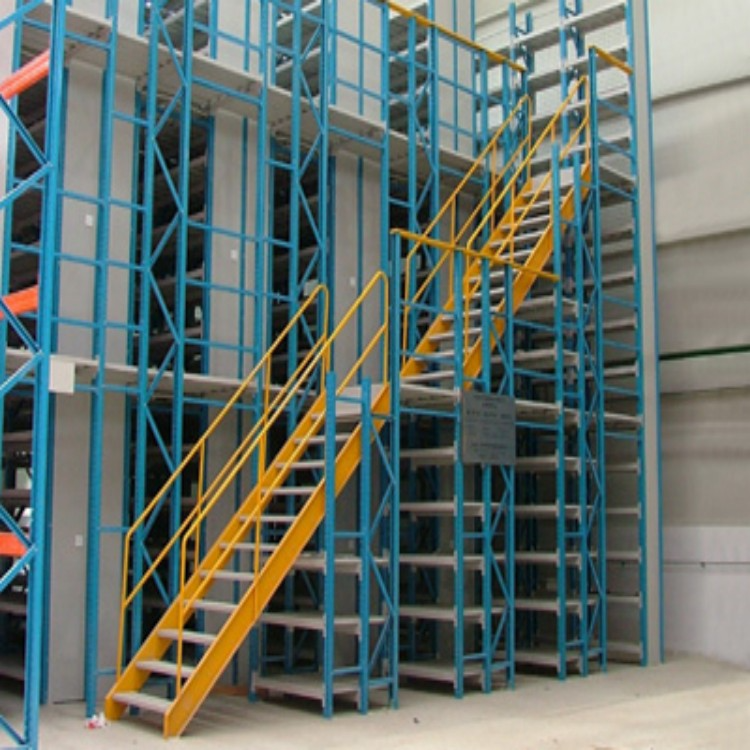
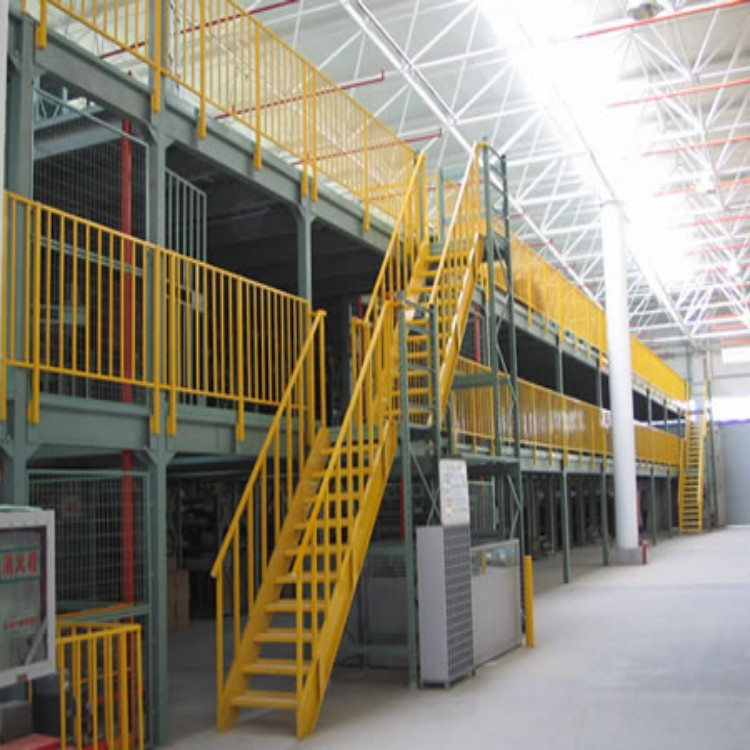
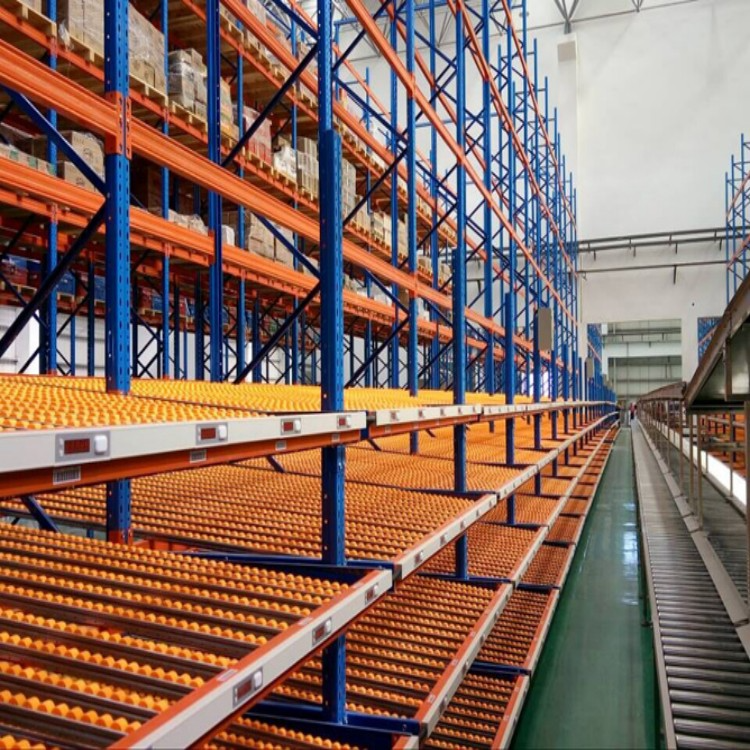
Mezzanine racking is a storage system constructed with a steel frame structure to create multi-layer storage spaces, designed to maximize the vertical space of a warehouse and increase storage density. Its core design concept is "claim space upwards," by adding two to three levels of platforms (mezzanines) on existing warehouses or racks, forming a three-dimensional storage model. Depending on load-bearing capacity and structural characteristics, mezzanine racking can be categorized into:
Medium-sized attic shelves: Ideal for storing small to medium-sized goods, with moderate load-bearing capacity and low cost.
Heavy-duty mezzanine shelving: Features thicker posts and beams for increased load capacity, suitable for storing heavy goods.
II. Core Structure and Materials
1. Structural Composition
The attic shelf's main structure consists of pillars, beams, joists, floor panels, stairs, guardrails, and other components, forming a stable multi-story frame.
Poles: As the main load-bearing components, the specifications of medium-duty shelf poles are typically 55×55×1.5mm, while heavy-duty shelf poles are 80×60×2.0mm. To enhance the load-bearing capacity of the upper platform, additional support poles can be installed separately.
Main Beam and Sub-Beam: Utilize cold-rolled P-shaped closed beams to enhance overall stability, ensuring uniform loading on the floor panels.
Floor panel:
Cold rolled steel floor deck: High load-bearing capacity (usually up to 1000kg/㎡), smooth surface, easy to lock, compatible with concealed wiring, suitable for most applications.
Patterned steel floor: Excellent anti-slip performance, suitable for areas requiring frequent human traffic.
Steel Grating Floor: Excellent ventilation, suitable for applications requiring fire resistance or ventilation.
Auxiliary Facilities: Includes staircases, side guardrails, loading/unloading flip bars, lifting platforms, and lighting systems, ensuring safe and convenient operation.
Material and Craftsmanship
Steel: Made of high-quality carbon structural steel, offering high strength and corrosion resistance.
Surface Treatment: Epoxy powder coating with strong adhesion, wear and corrosion resistance, and aesthetically pleasing appearance. The coating cures at 200 degrees Celsius, and the surface hardness passes the 2H pencil test without scratching, meeting the national GB6739-86 standard.
Welding Process: Utilizes high-precision welding technology to ensure secure component connections, free from cold welds or weld separations.
III. Features and Advantages
Space utilization significantly improved
Vertical layered design: By constructing two to three levels of platforms, storage area can increase by over 60%, particularly suitable for warehouses with heights exceeding 4 meters.
Three-dimensional Storage: Convert the originally unused upper space into a functional storage area, achieving "make full use of every inch."
2. User-friendly and flexible
Modular design: All components are connected with bolts, allowing for quick disassembly and reassembly without on-site welding. The construction period is reduced by 50% compared to concrete platform structures.
Customization Strong: Floor heights (standard height 2.2-2.7 meters), aisle widths, and shelf arrangements can be flexibly adjusted according to warehouse height, goods dimensions, and retrieval frequency.
Compatible with various access methods: supports manual handling and collaboration with light equipment (such as picking carts, hydraulic pallet trucks) to achieve rapid sorting of a variety of goods.
3. High load capacity and stability
Uniform Load Design: Floor panels are made of cold-rolled steel or patterned steel, ensuring good uniform load-bearing properties and long-term safety.
Seismic Design: Optimized structural rigidity through modal analysis, with a seismic fortification level of 6, adaptable to various geological conditions.
4. Easy management and maintenance
Product categories are clearly defined: facilitating management and search, especially suitable for storage needs of diverse categories in large quantities or multiple varieties in small batches.
Integrated intelligent management system: Equipped with smart sensors, capable of real-time weight monitoring and automatic overload alerts, enhancing management efficiency.