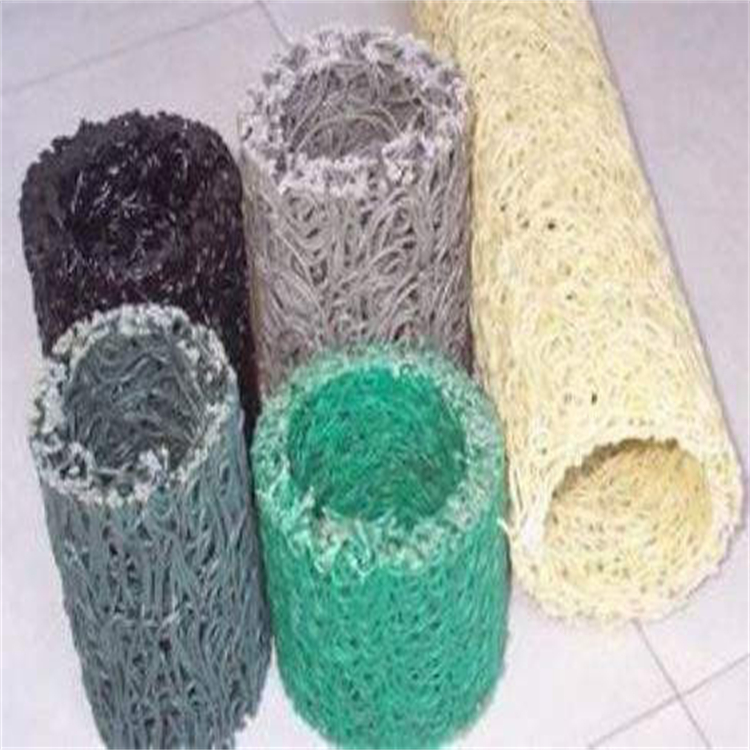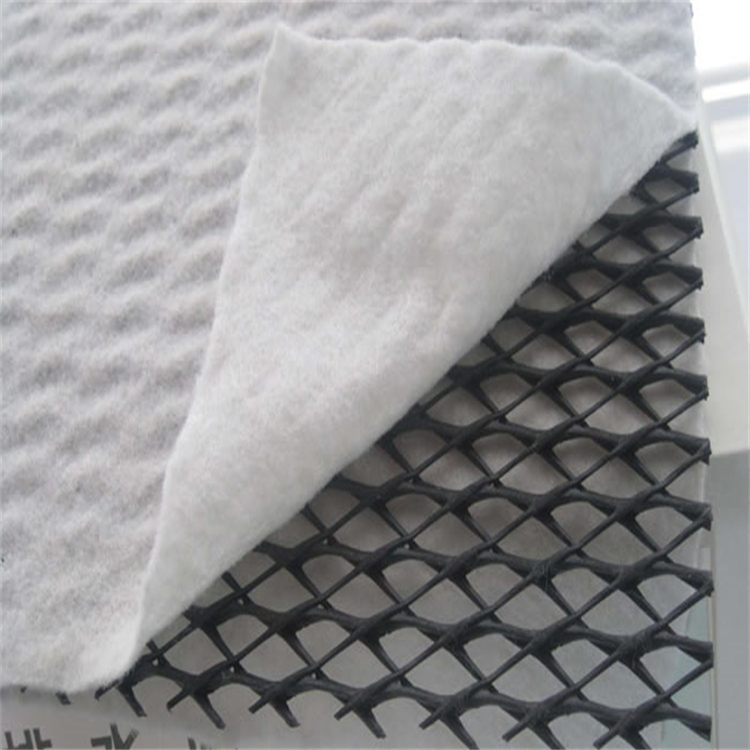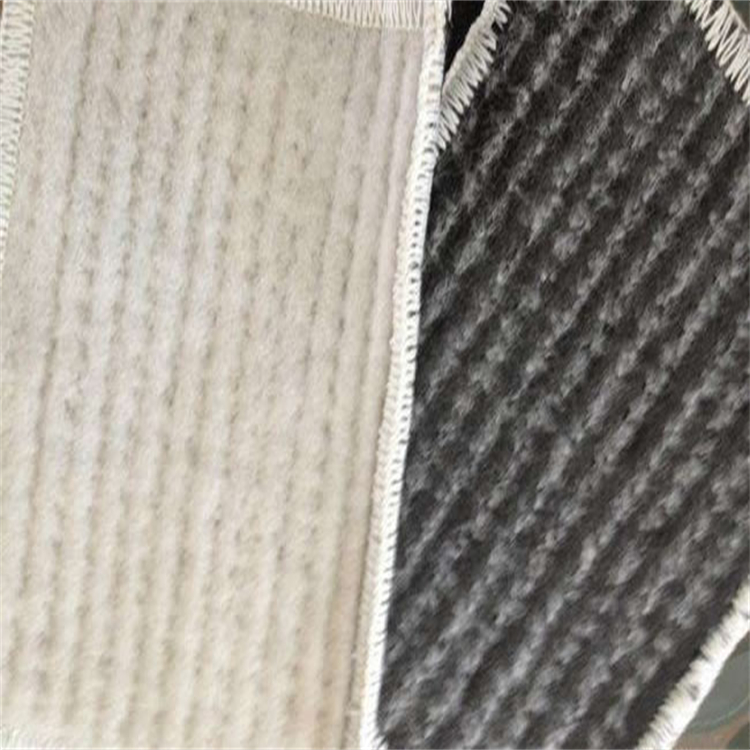

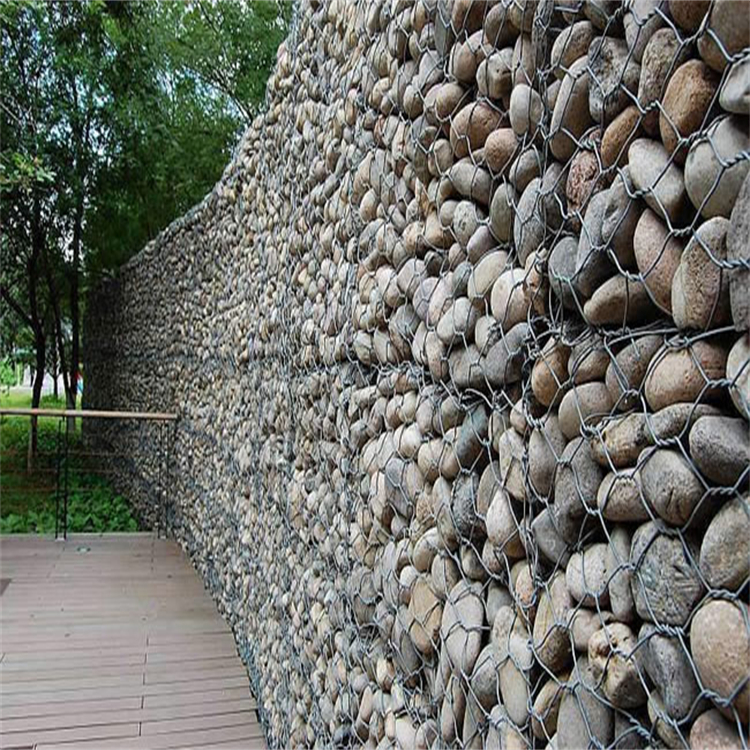

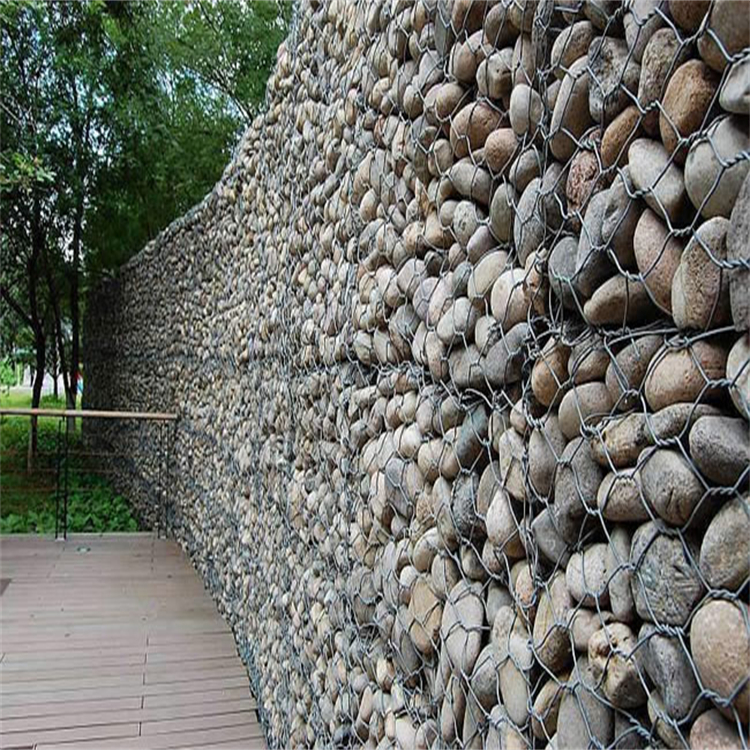


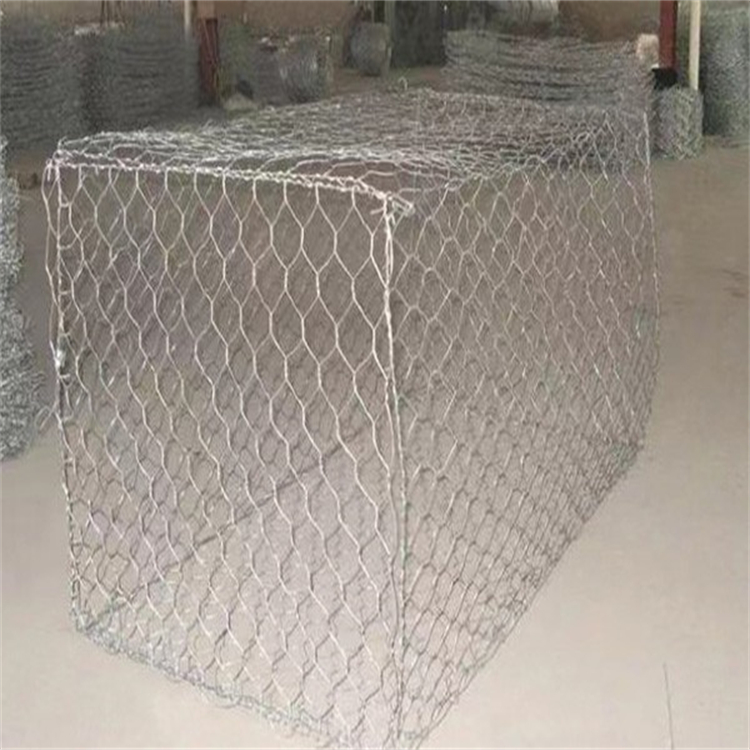
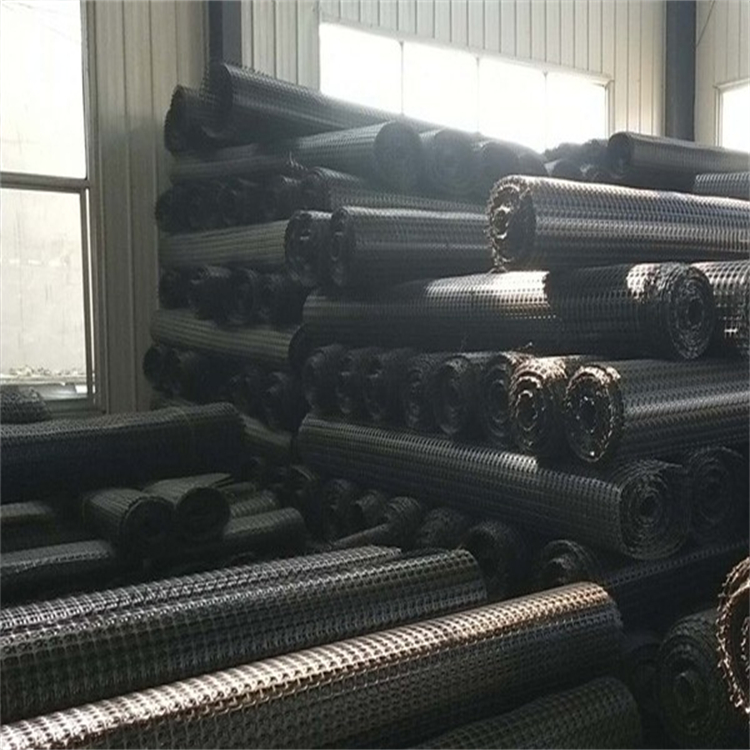





Roc baskets, also known as "rock baskets, wire baskets, or gabion mesh." Depending on the material and structure, the names vary, generally categorized into baskets, matting (below 0.5m), and bags.
I. Classification of Gabion Mesh
1. Twisted wire mesh
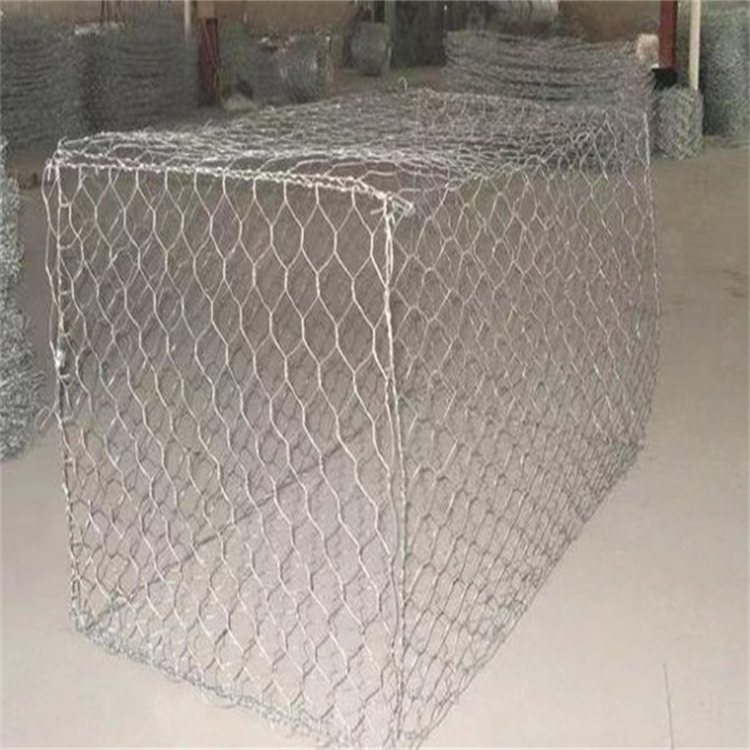
Hexagonal wire mesh, also known as twisted wire mesh, is a wire mesh made by weaving metal wires into angular shapes (hexagons), with the wire diameter varying according to the size of the hexagon. It is widely used in petrochemicals, construction, aquaculture, and more, such as wrapping pipelines, boiler insulation, frost prevention, residential protection, and landscaping. It can also be used for animal enclosures like fish, chickens, ducks, and rabbits. Gabion mesh, also known as heavy-duty twisted wire mesh, is a woven mesh box made from metal wires into angular shapes (hexagonal mesh), with the wire diameter varying according to the size of the hexagon. Gabion mesh is extensively used for controlling and guiding rivers and floods, spillways and weirs, rockfall protection to prevent soil erosion, bridge protection, soil stabilization structures, coastal defense projects, port engineering, retaining walls, and road protection.
2. Stone笼wire mesh boxes
Stone笼boxes are box-like mesh containers made of heavy-duty hexagonal wire mesh, hence also referred to as "stone mesh" or "stone mesh boxes." In Europe, they are also called gabion boxes. Stone笼boxes are filled with stones at construction sites to form flexible, permeable, and integral structures, such as erosion control works for retaining walls, riverbank revetments, embankments, etc. The stone笼boxes are divided into several cells by partitions 1 meter apart (double twisted hexagonal metal mesh sheets). To enhance the structural strength of the stone笼boxes, all face mesh panel edges are made with thicker diameter steel wire. They are used for controlling and guiding river and floodwater, damming and guiding flood discharge, rockfall protection, preventing soil and water loss, bridge protection, stabilizing soil structures, coastal defense projects, port engineering, retaining walls, and road protection.
Features of stone笼 mesh boxes:
(1) Economy: Simply load the stones into the cage and seal it. (2) Easy installation, no special skills required. (3) Highly resistant to natural damage and corrosion, as well as harsh weather conditions. (4) Can withstand significant deformation without collapsing. (5) The silt between the stones in the cage promotes plant growth and blends seamlessly with the surrounding natural environment. (6) Excellent permeability to prevent damage caused by hydrostatic pressure. (7) Saves transportation costs. Can be folded for transport and assembled on-site.
The primary uses of stone笼net boxes:
(1) River and flood control and guidance; (2) Spillways and conduits; (3) Rockfall protection; (4) Prevention of soil and water erosion; (5) Bridge protection; (6) Soil stabilization structures; (7) Coastal defense works; (8) Port engineering; (9) Retaining walls; (10) Road protection
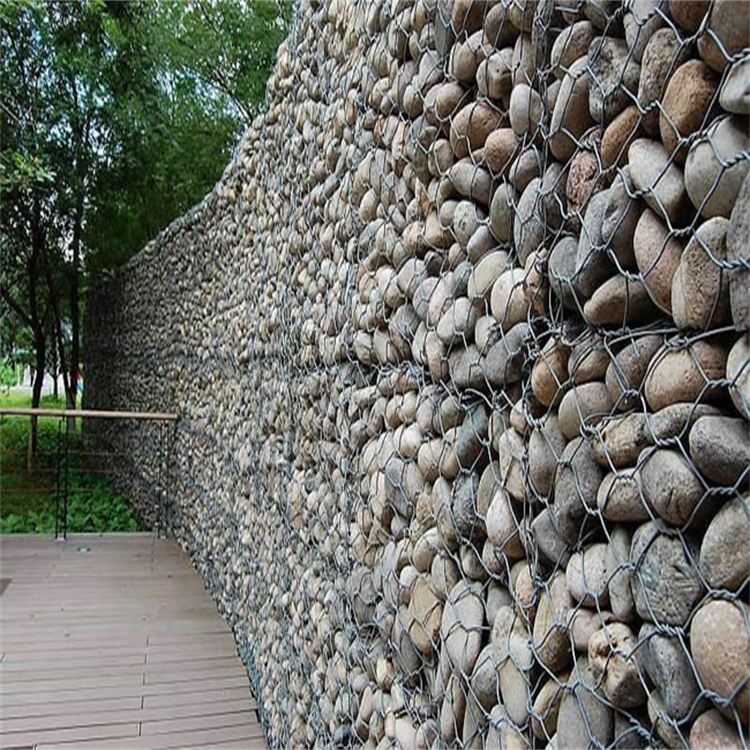
The mesh baskets of gabion nets can also be made into triangular or trapezoidal shapes. Such gabion net baskets, when stacked to form embankments, have a sloping surface on a single plane. Gabion net baskets are often used in hydraulic engineering for retaining walls, where the retaining walls are constructed from stacked gabion net baskets ranging from 0.5 to 1.0 meters in height. These gabion net retaining walls are primarily used on steep slopes to control mud and rock flows, prevent landslides, and protect the subgrades of roads and railways. The reason for using gabion net baskets is their unique ecological function. A thin layer of soil can be sprinkled on the surface of the protective structure for greening. Due to the gaps between the stones, which accommodate soil, it promotes the growth of plant roots, creating a favorable ecological environment. Even without sprinkling soil, over time, the gaps between the stones will fill with soil, allowing for the growth of herbaceous plants, forming a natural ecological environment.
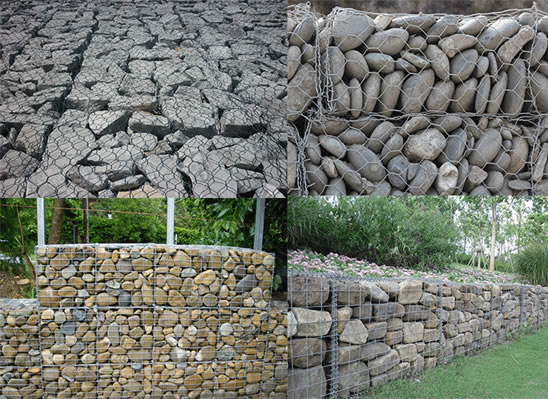
3. Reinforced stone笼 mesh
There are two types of reinforced stone笼nets: one is made from a reinforced mesh, and the other has an additional mesh added to or trailing behind the stone笼net.
1). A reinforced mesh refers to a mesh that, during the weaving of wire mesh, incorporates steel wires of the same material as the hexagonal wire mesh, either vertically or parallel to the weaving direction. The tensile strength of a reinforced hexagonal mesh is higher than that of a standard hexagonal mesh, with the diameter of the reinforcing wire generally not less than that of the edge wire. Installed on the subgrade, especially under high foundation tensile stress, it can absorb and fundamentally reduce the tensile stress values caused by cracks or traffic.
2). Reinforced stone笼mesh is a mesh panel connected to a heavy-duty hexagonal mesh at the back, the panel being embedded into the soil as the reinforcing connection mesh for the cage. It utilizes the friction between the soil and the mesh panel to provide a certain amount of anti-slip resistance, and has good environmental affinity.
4. Zinc Aluminum Alloy Mesh Box
Welded wire mesh rectangular box made of zinc-aluminum alloy wire, with a service life of approximately 2 times that of standard galvanized wire, lasting around 70-80 years.
5. Welded Wire Mesh Gabions
Electro-welded stone cage mesh is a cage made of high-quality steel wire. It is filled with block stones or natural cobblestones inside the box and is suitable for use in highway protection, slope protection, well and tunnel protection, bridge protection, retaining walls, etc. It boasts permeability and integrity advantages.
6. Secant gabion, also known as stone cage netting or alloy wire mesh.
Secant gabions are cylindrical engineering structures composed of machine-woven double twisted hexagonal metal mesh, filled with materials like blocks of stone, forming a flexible and permeable structure. They are applied in various emergency engineering projects such as sand control and rivercourse regulation. Due to their flexibility, they can serve as special protective measures.
During the construction process, the net bags are filled with stones to form a sturdy structure. There are gaps between the stones, which enhance the permeability. Stone笼net bags are used for preventing erosion in river channels, river embankments, and various emergency construction projects. In the weaving process of the net bags, heavier hexagonal wire is embedded with thicker iron wire for easier knotting. The stone笼net bags undergo strict standard tests at every stage of production.
7. Renault Pad
The Reno Pad is named so because it was first used along the Reno River in Italy. Also known as Gabion Pad or Stone笼Pad, the Reno Pad is a thin, pad-like engineering component made of machine-woven double twisted hexagonal metal mesh, with a thickness much smaller than its length and width. Once filled with stone and other fill materials and integrated as a unit, it forms a protective structure against erosion, primarily used in hydraulic embankments, riverbanks, and sea defenses, offering flexibility and adaptability to the ground. The Reno Pad is a mesh box structure with a thickness of 0.15-0.3m (including 0.3m). It is primarily used as a slope protection structure for riverbanks, embankments, and road shoulders. It not only prevents riverbanks from being damaged by water flow and wind waves but also facilitates natural convection exchange between the water body and the soil below, achieving ecological balance. Planting greenery on the slope can enhance the landscape and greening effects. The Reno Pad is divided into several cells by partitions, and to strengthen the structure, all panel edges are made with steel wire of a larger diameter.
Renault Pad Product Specifications and Features:
Enhance the stability of riverbed slopes.
Protect riverbeds from erosion.
Provide the predetermined value of the riverbank roughness coefficient (M).
Greening and ecological protection of slopes and embankments, as well as the development and management of waterways, involve the construction technique of laying cross-sectional geotextile pads.
Section 2: Characteristics of Gabion Mesh Stone Cages Structure:
(1) Economical. Simply place the stones into the cage and seal it.
(2) Easy installation, no special skills required.
(3) Excellent resistance to natural damage, corrosion, and adverse weather conditions.
(4) Can withstand a wide range of deformation without collapsing.
(5) The silt between the stones of the cage is conducive to plant growth and can seamlessly blend with the surrounding natural environment.
(6) Excellent permeability to prevent damage caused by hydrostatic pressure.
(7) Save on transportation costs. Can be folded for transport and assembled on-site.
Section 3: The Uses of Gabion Mesh Baskets
(1) River and flood control and guidance
(2) Floodgates and Diversion Dams
(3) Rockfall Protection
(4) Prevent Soil and Water Erosion
(5) Bridge Protection
(6) Soil Stabilization Structure
(7) Coastal Defense Engineering
(8) Port Engineering
(9) Retaining Wall
Road Protection
Section 4: Assembly of Stone Mesh Fencing
The stone笼 units are delivered to the construction site as a complete set. Construction personnel first stand up the individual panels, ensuring they are in the precise locations.
(2) Tie the four corner points of the wire mesh baskets; binding can be done with binding wire or metal ring fasteners.
(3) Connect the separator and the mesh body using binding wire or metal rings.
Reinforced Mac Pad
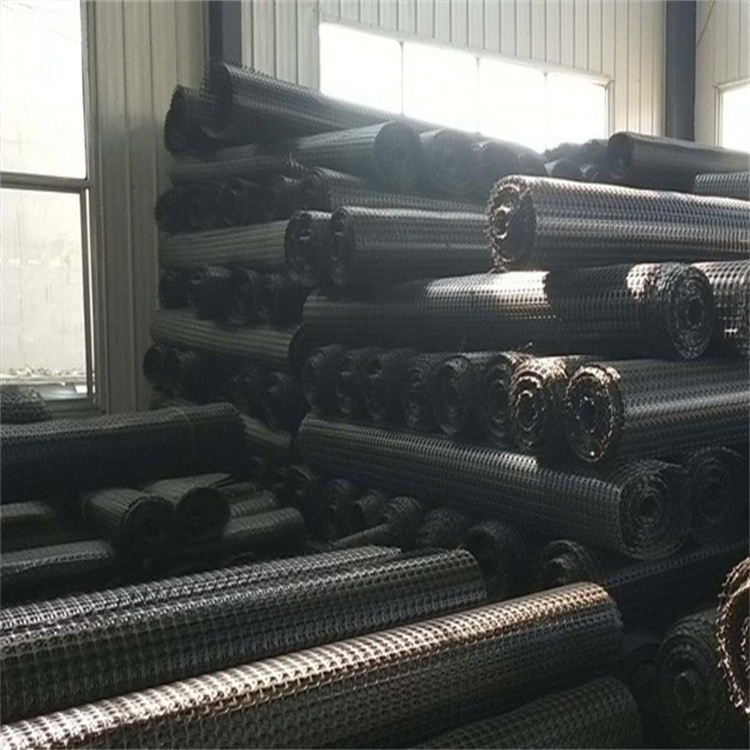
Reinforced Macadam Mat Definition: A composite product made by combining geosynthetic materials with green wire mesh, offering the benefits of both. The geosynthetic material is made of polypropylene, and the green wire mesh typically uses galvanized steel wire with good corrosion resistance, coated with 10% aluminum-zinc alloy.
Reinforced Mac Pad Features:
1. The structural voids facilitate the deposition of natural soil, promoting natural grass growth.
2. Offers some elasticity, accommodating basic changes.
3. Easy installation with manual laying, saving on construction costs.
4. Made with high-quality steel wire, boasts a long service life.
Reinforced Macadam Mats Applications: Ecological Natural Restoration, Municipal Landscape Engineering, Riverbank Protection, Road and Railway Subgrade Stabilization Projects
Reinforced Macadam Pad Applications:
(1) River and flood control and guidance
(2) Floodgates and Diversion Weirs
(3) Rockfall Protection
(4) Prevent soil and water erosion
(5) Bridge Protection
(6) Soil Stabilization Structure
(7) Coastal Defense Engineering
(8) Port Engineering
(9) Retaining Wall
Road Protection