

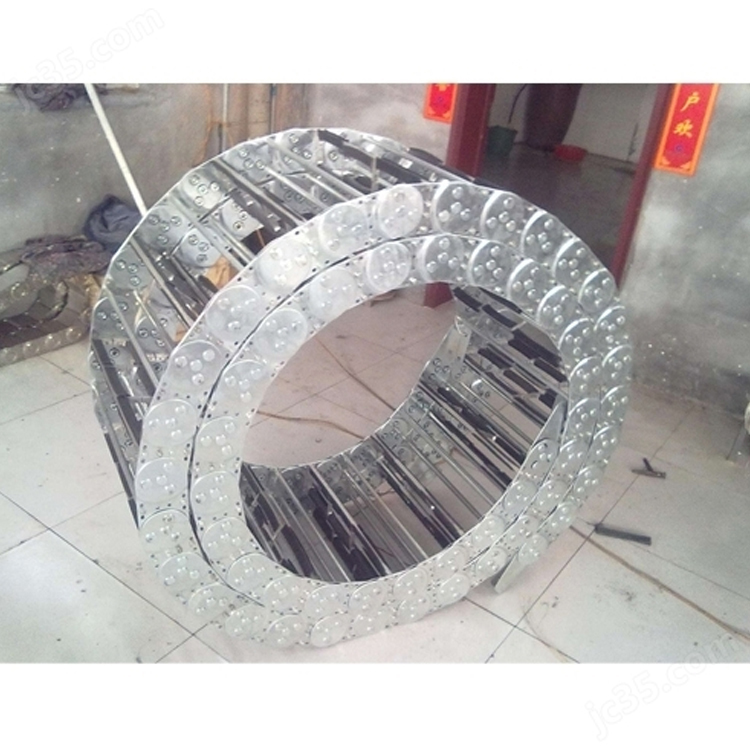


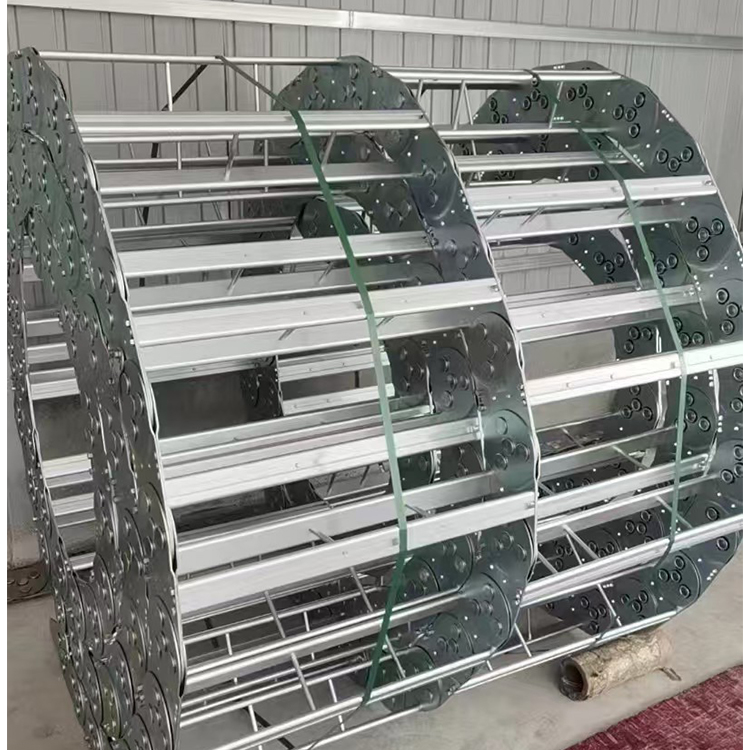

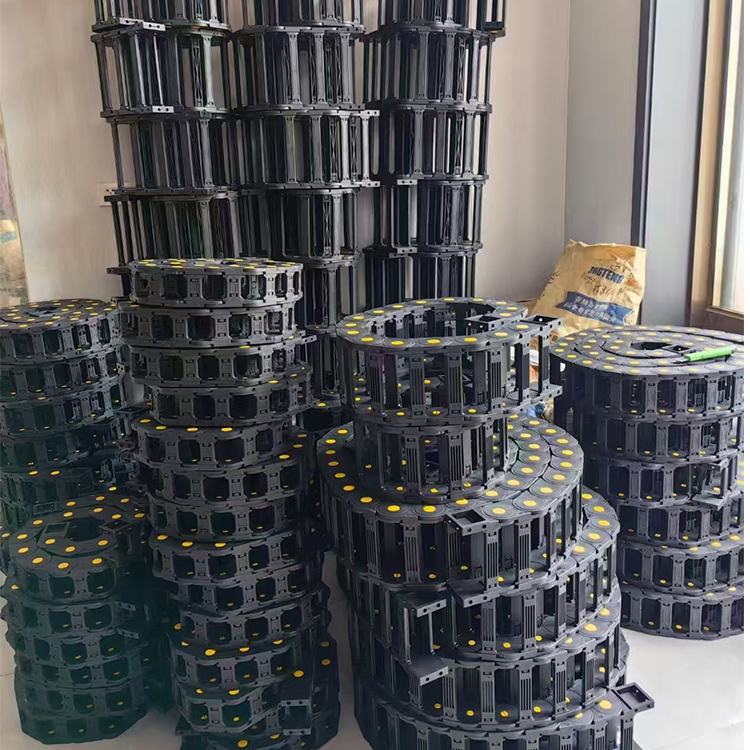
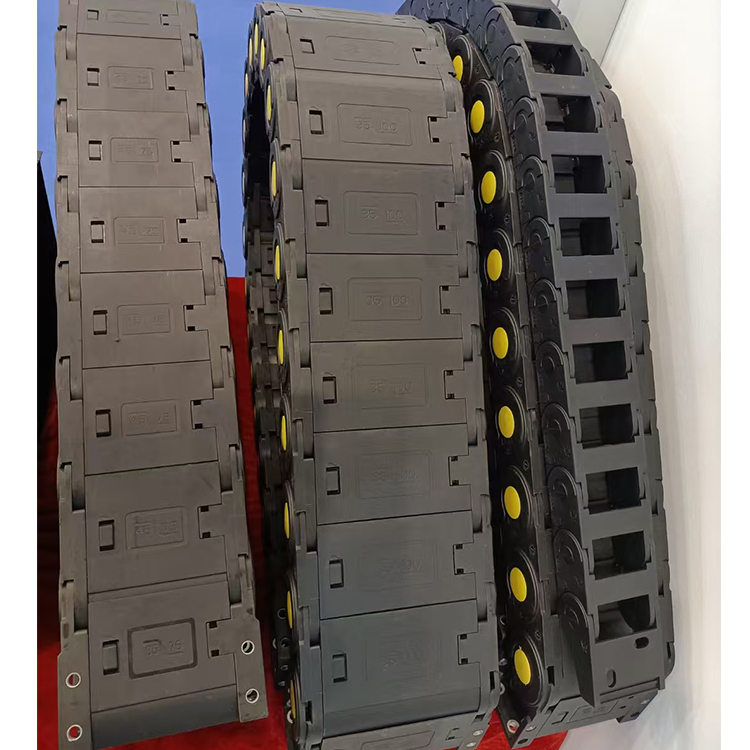






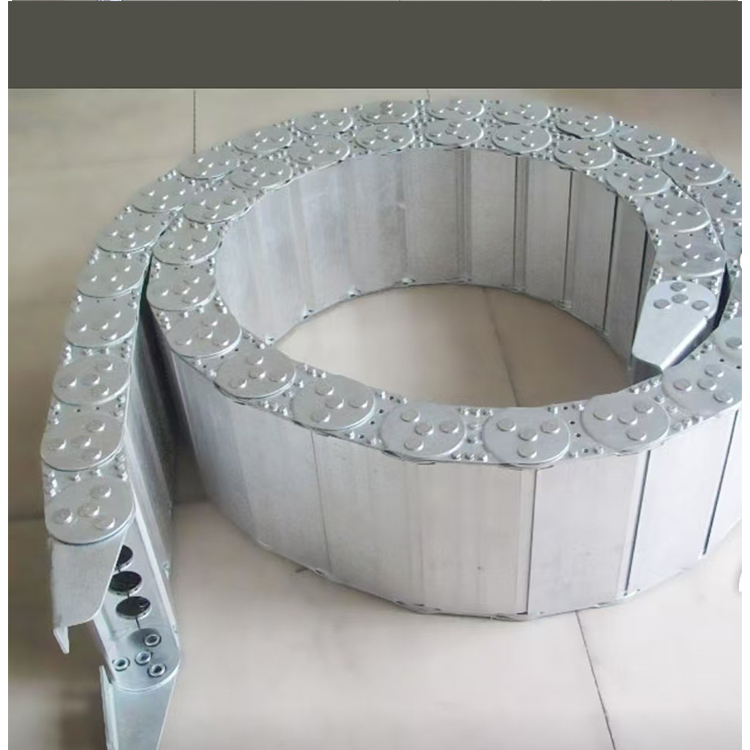
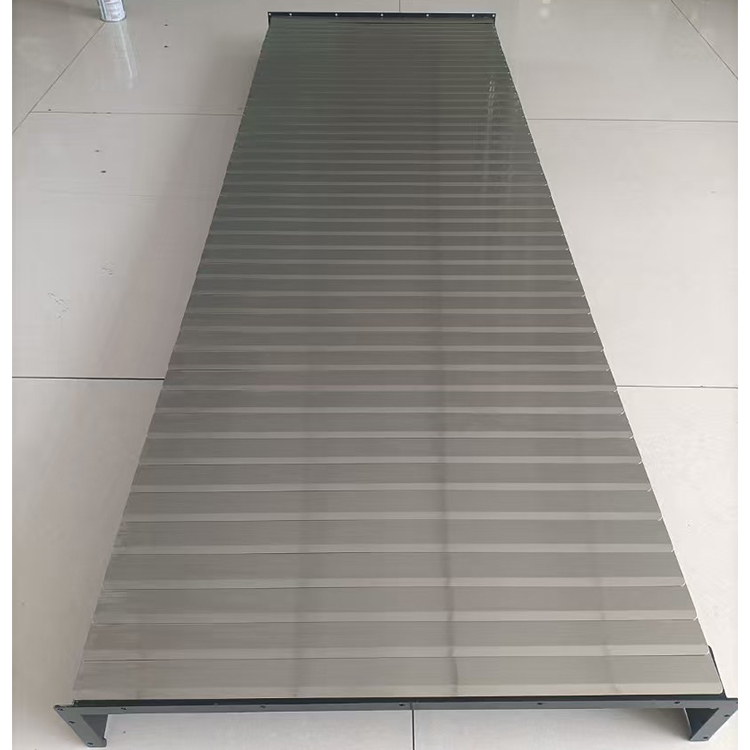
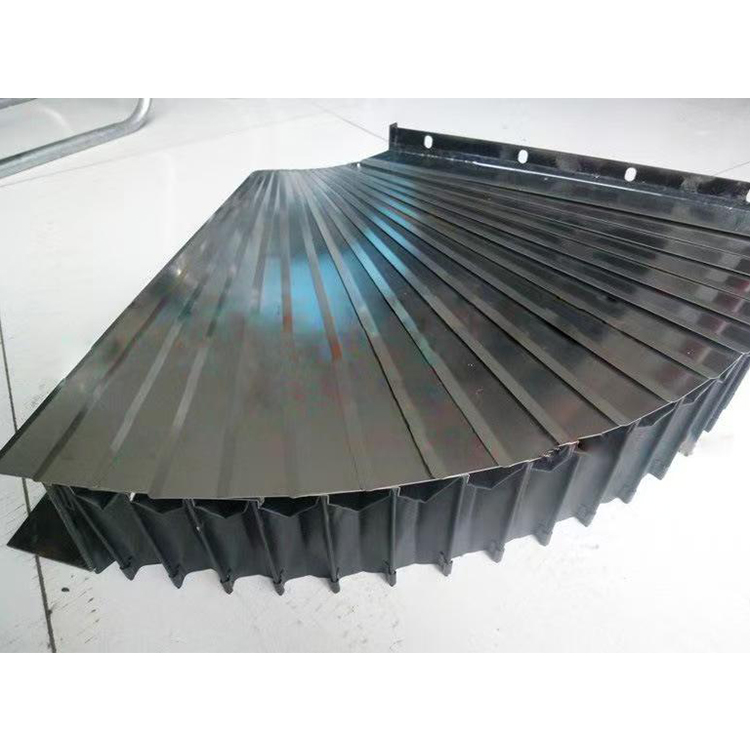
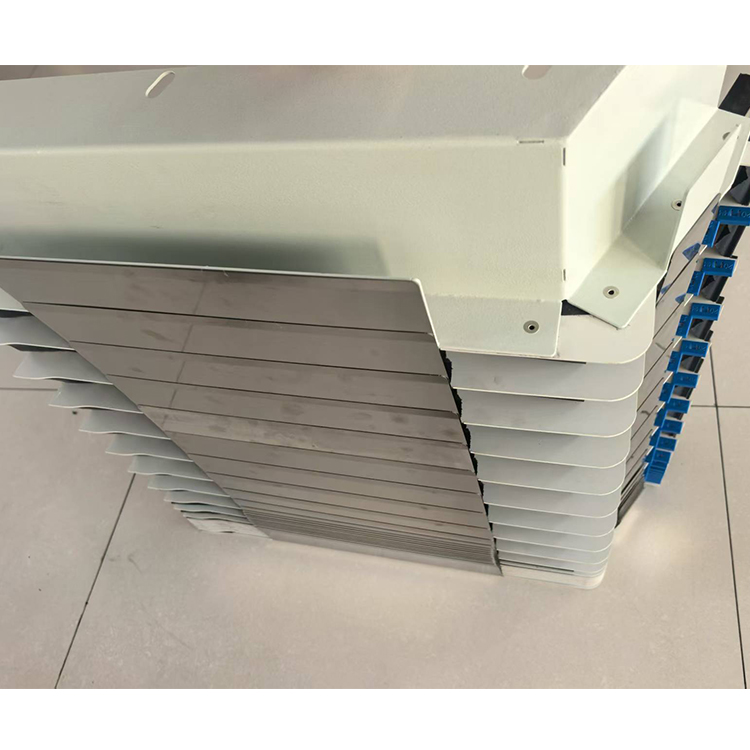
Principles for selecting steel and aluminum conduits:
1. Determine the chain plate height (hg) and conveyor model based on the support plate's large aperture (Dma).
2. The inner diameter of the support plate cavity, D1, is approximately d + 0.1d (round to the nearest integer). Here, d refers to the outer diameter of wires, cables, liquid, and gas hoses.
3. Determine the bend radius of the chain guide based on the functional requirements of the chain guide and the type of support plate.
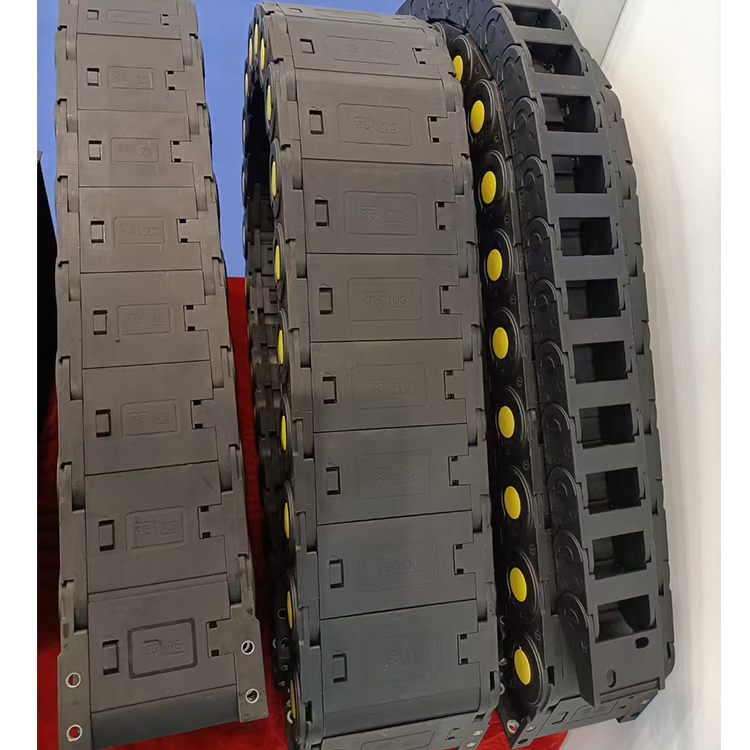
1) When the pipe fitting size of the pipeline is larger than the inner diameter of the support plate or requires frequent disassembly and maintenance, a split-type support plate can be chosen.
2) When the chain needs to bear heavy loads of pipes and cables, select a high-strength, solid-plate support type.
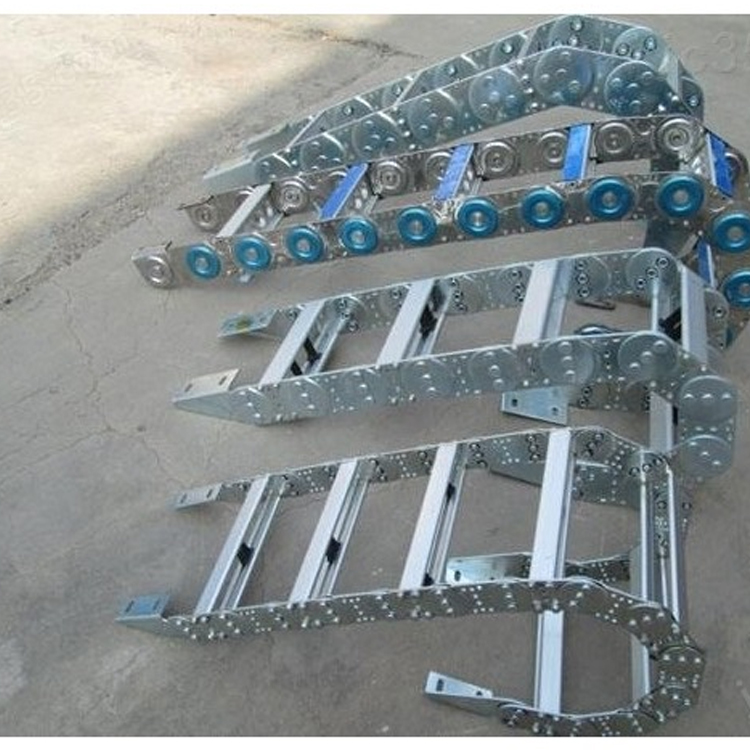
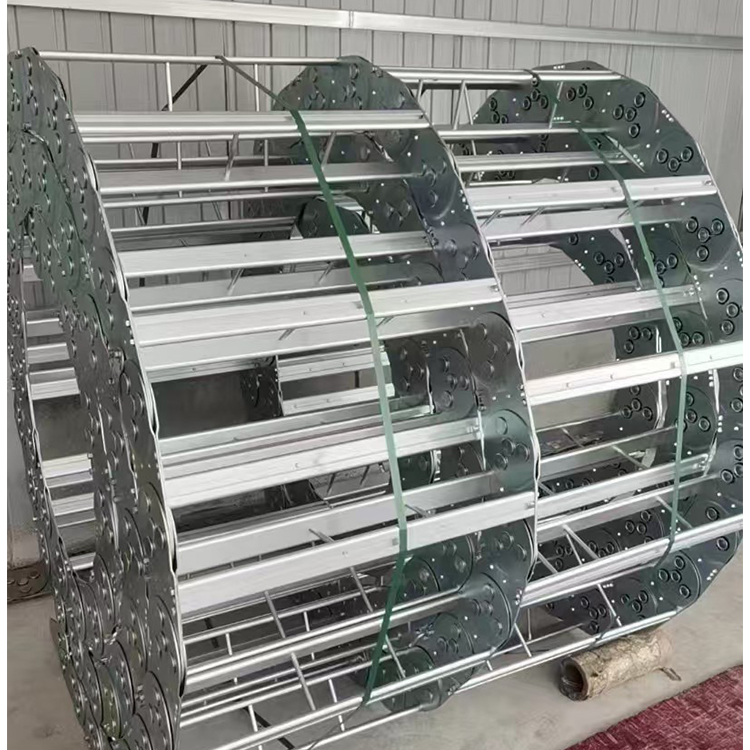
3) When there are many specifications and types of pipeline installations, frame-type support plates can be used.
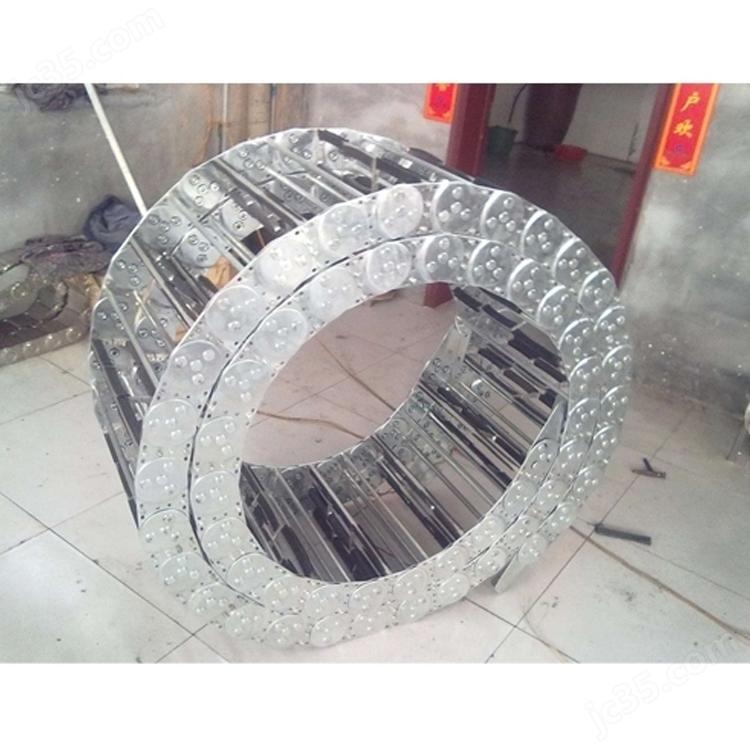
4. In cases where machine tool chain guides are restricted by conditions or affected by environmental factors, steel belt protective supports are required.
5. Determine the width of the support plate (b1) based on the number of installation conduits, which in turn determines the chain-link width (B).
Steel and Aluminum Conduit Specifications
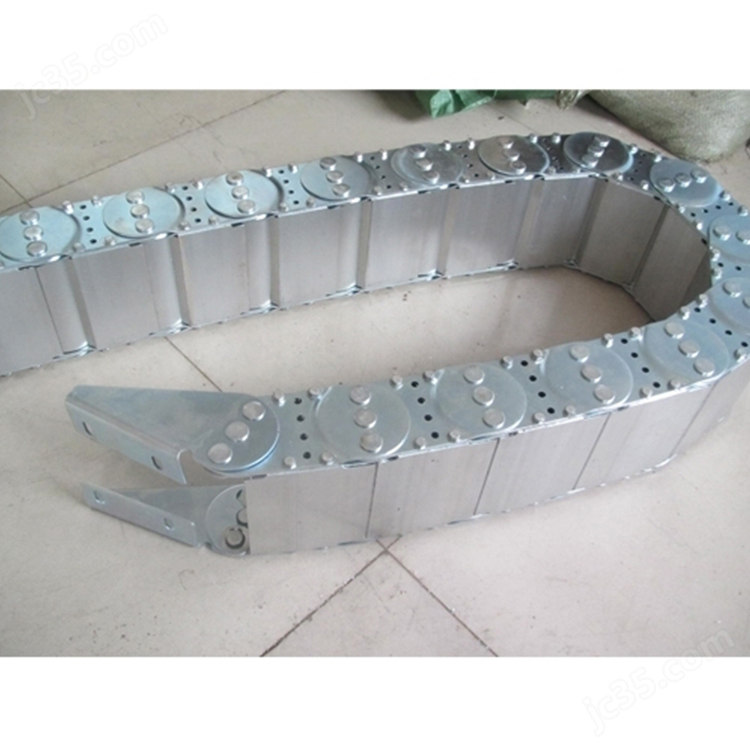
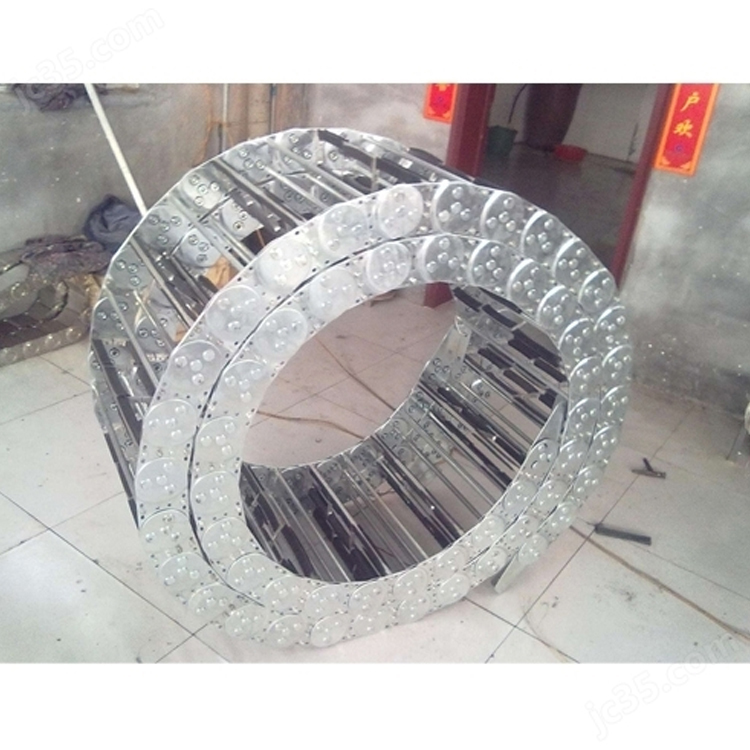
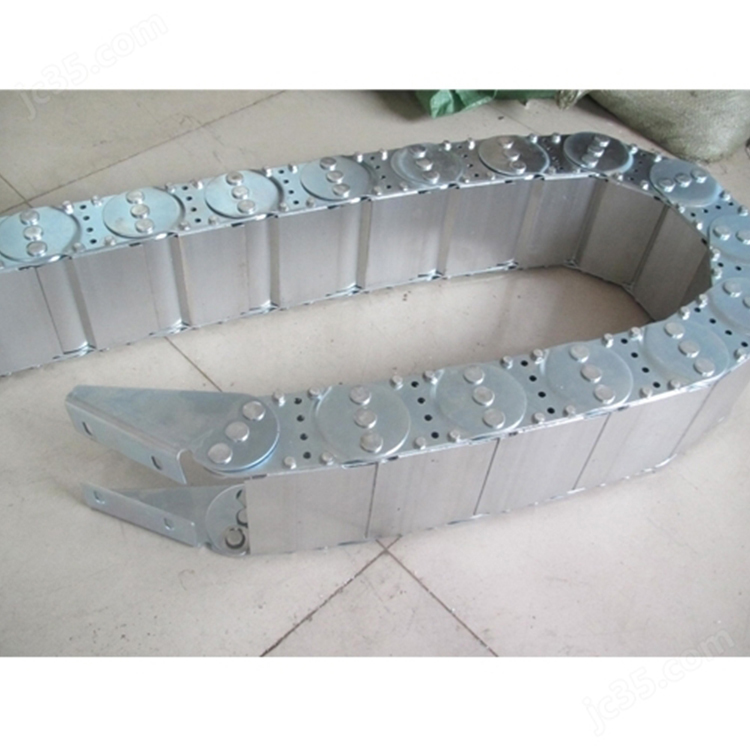
The structure can be divided into TL steel chain and TLG steel chain. The steel chains are categorized by pitch into types 45, 65, 75, 95, 100, 125, 180, 225, and 250.
The chain-link width can be customized to meet customer requirements, with a bending radius ranging from 50 to 800 mm. There are three types of support plates available.
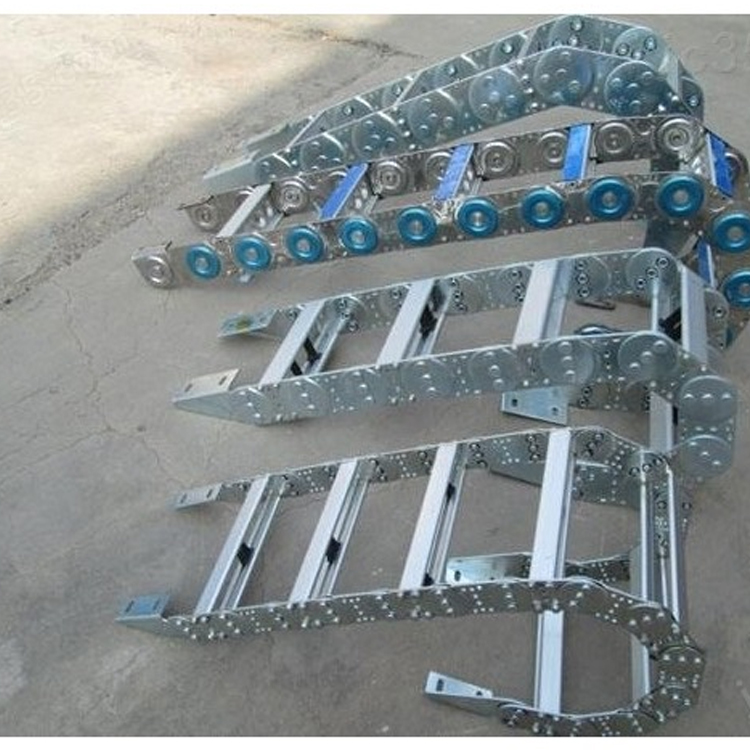
(1) When the chain needs to bear larger pipe and cable loads, it is advisable to choose a high-strength support plate—solid block type
(2) When the size of the pipe joint exceeds the diameter of the cavity in the support plate, or when frequent disassembly and maintenance is required, a split-type support plate can be chosen.
(3) When there are many specifications and types of piping to install, a frame-type support plate can be used.
Points to note while in use:
1. The TLG and TL steel chain drives have a stroke of up to 40 meters, suitable for all transmission methods. They can be easily extended or shortened. Moreover, the bending radius can be altered by changing the pin shaft.
The bending radius should be selected based on the cable's large diameter and should reach 10 times the cable's diameter; for shorter travel, a smaller radius can be chosen accordingly.
2. The width of the steel chain support plate ranges from 150mm to 800mm, with a spacing of 10mm between holes. The height of the chain plate, which is also the height of the support plate, is determined by the large diameter of the cable.
When the machine tool operates at maximum capacity, if the width of the steel conduit exceeds 300mm and the length exceeds 4m, consider selecting a larger size chain due to stability reasons.