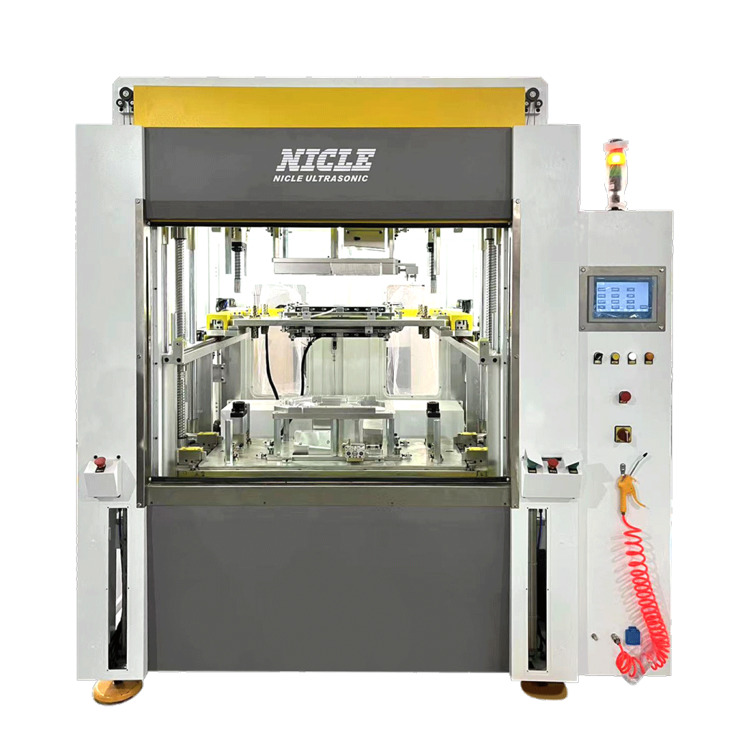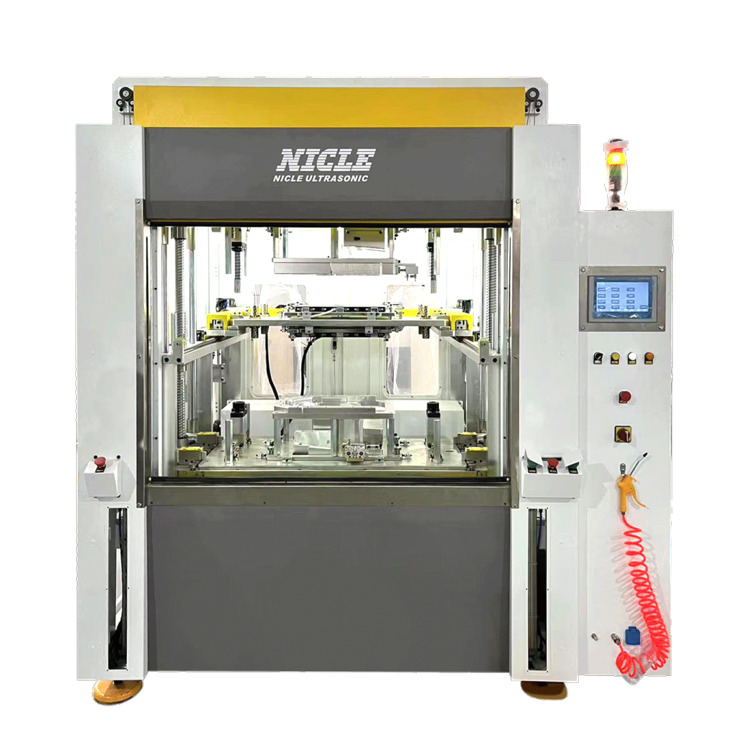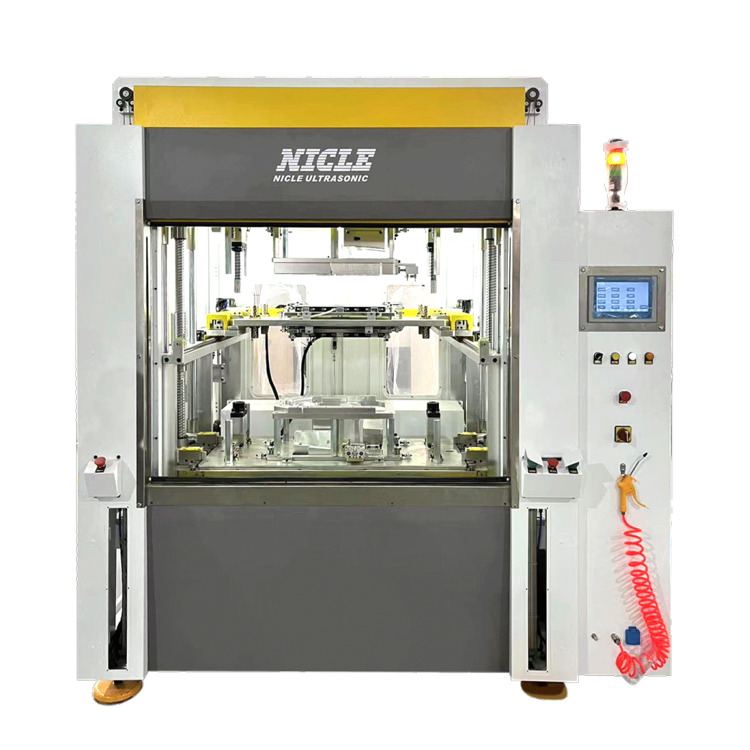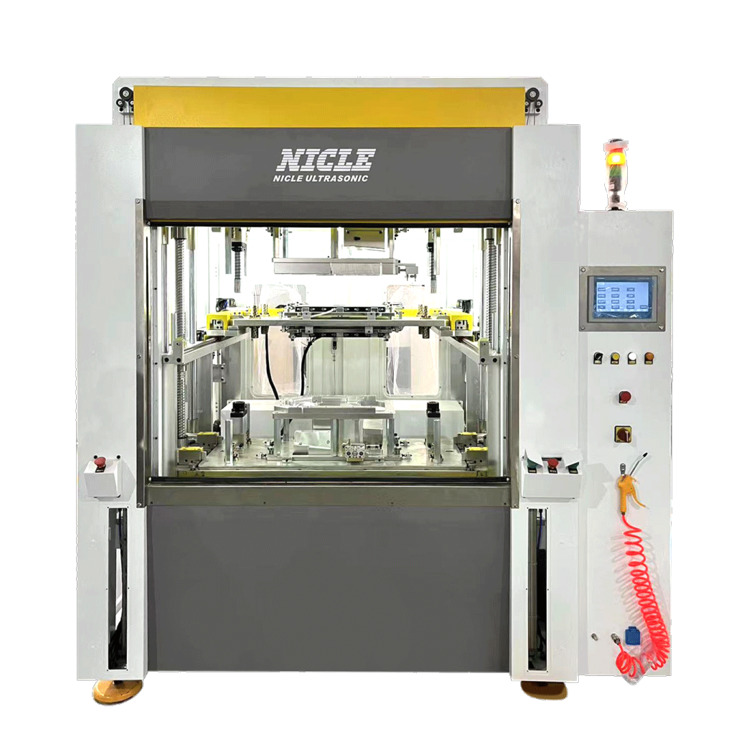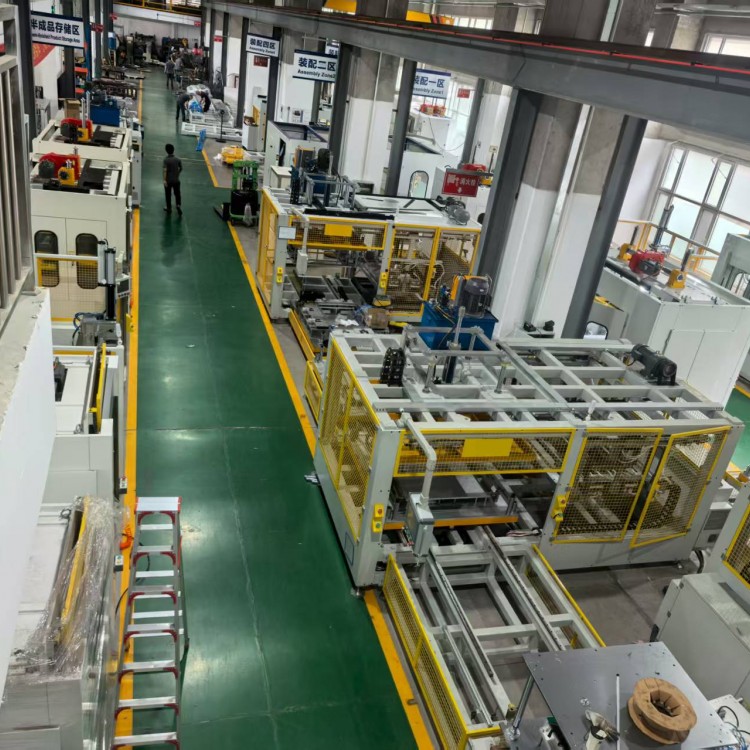


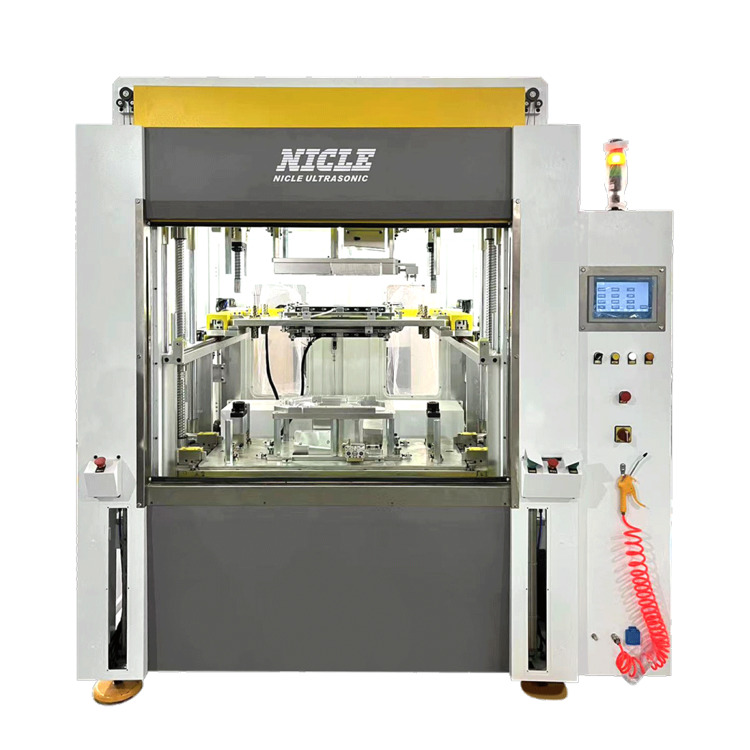

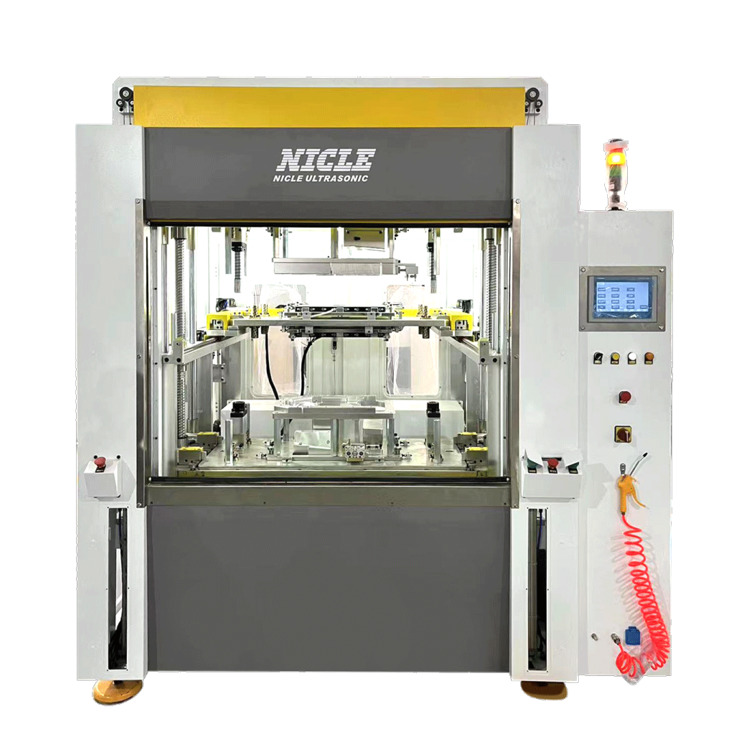












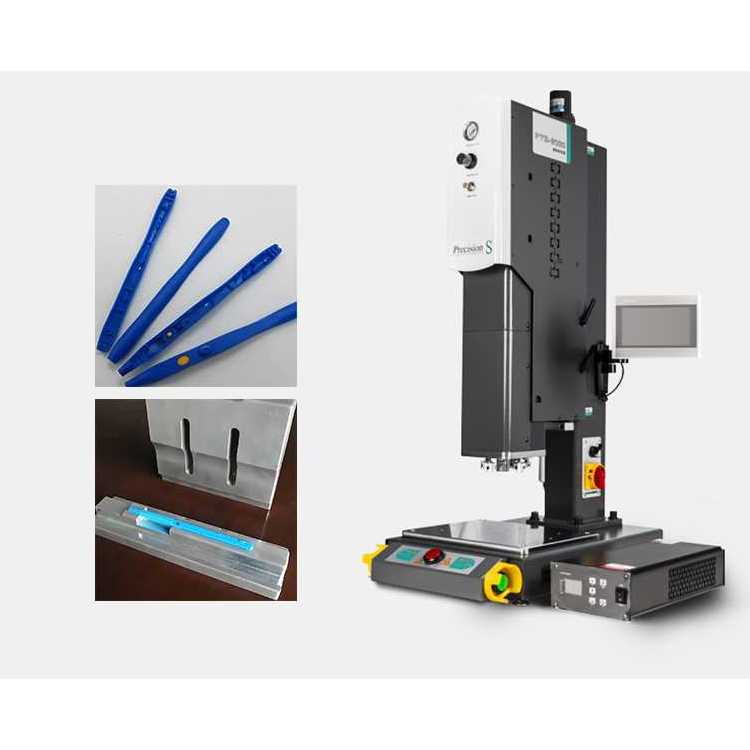
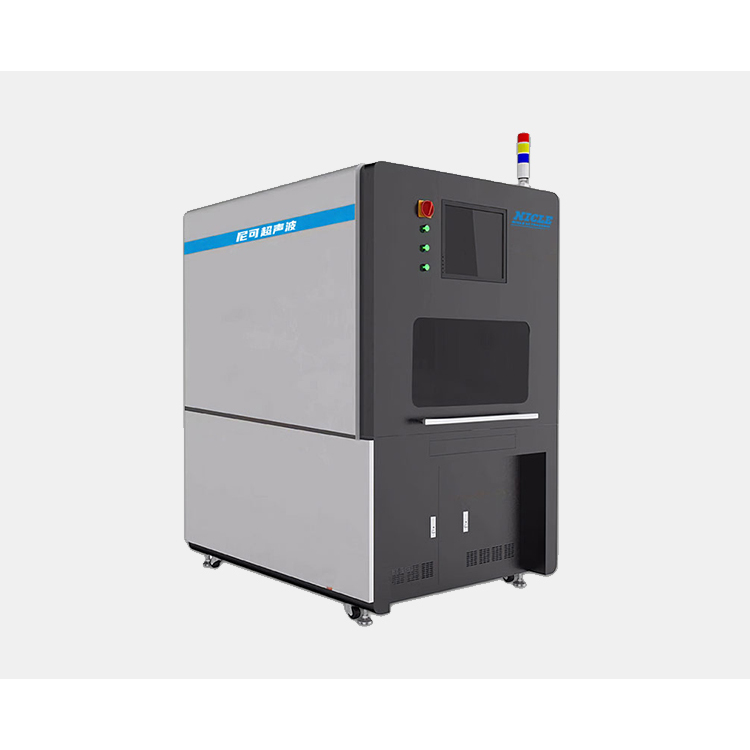
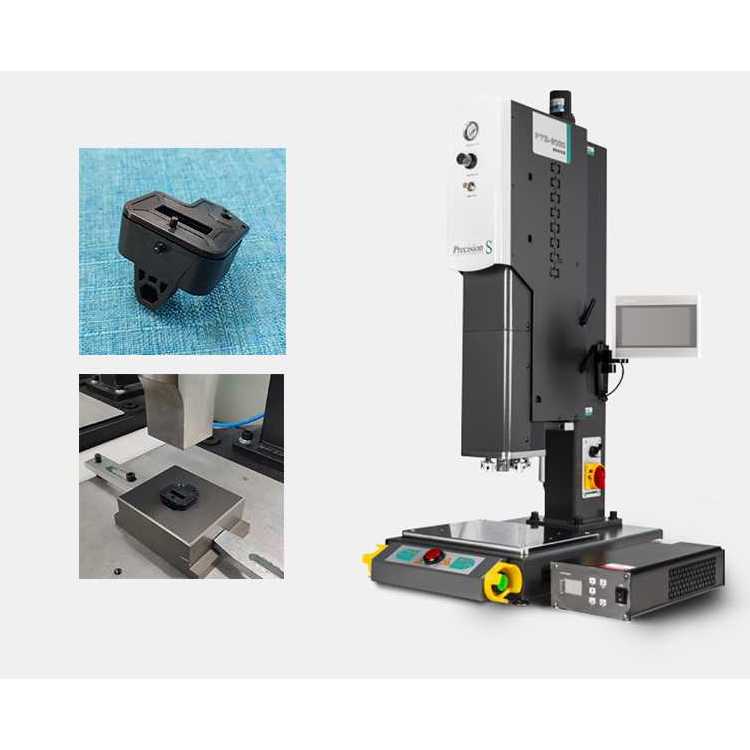
The plastic hot plate welding machine primarily welds plastic parts through temperature-controlled heating plates. During the welding process, the heating plate is placed between two plastic components. As the parts approach the heating plate, the plastic begins to melt. After a predetermined heating time, the surface plastic of the parts will reach a certain degree of melting. At this point, the parts will separate from both sides, the heating plate is removed, and then the two parts are joined together. The entire welding process is complete once a certain welding time and depth are achieved.
Plastic Heat Plate Welding Machine Application Range
Suitable for tray welding in specifications and dimensions up to 1200mm x 1200mm, with a maximum size of 1800mm x 1500mm.
The main features of the plastic hot plate welding machine are its simple structure, ease of operation, and high production efficiency. After welding, it meets requirements for water tightness, air tightness, and durability. Suitable for welding various sizes of plastic tray parts and thermoplastic materials. It is a widely used, cost-effective, and high-efficiency welding process.
Key Technical Parameters of Plastic Heat Plate Welding Machine
Power Supply: 380VAC
Power: 75 kW
Gas Source: 0.8MPa 1m³ Air Compressor
Control System: PLC (Programmable Logic Controller) and Human-Machine Interface Operation Screen
Plastic Pallet Welding Machine Work Surface Travel Space:
Dimensions: 1800mm x 1500mm x 200mm
1800mm x 1500mm x 200mm
Machine Dimensions: 2500*3500*2120mm
Weight: 4,500 kg
Plastic Heat Plate Welding Machine Design Concept
1. Designed according to customer specifications, this equipment features a maximum welding area of 1.8m x 1.5m. The upper cold mold and hot mold are bolted to the equipment's movable plate, while the lower cold mold utilizes a roller structure. The side employs an air-powered positioning mechanism, allowing for automatic part positioning and removal. Electrical and pneumatic connections are both made with quick connectors for convenience, speed, and time-saving. Mold change mode: manual. The upper cold mold and hot mold are of an integrated modular design for easy assembly and disassembly; the lower cold mold's fixed fixture is adjustable.
3. Equipment Structure: The entire machine is a frame structure, with an outer casing featuring a hinged door frame for easy mold replacement and equipment maintenance.
4. Transmission: The transmission part employs linear guides (Taiwan ABBA), ensuring stable operation and high precision of the equipment. Cylinders are used as power sources.
5. Electrical Control Section: The electrical control system of the equipment uses a PLC control method (Delta) and a Chinese display touch screen (Delta).
Plastic pallet welding machines, standard thermal plate welders with non-standard design.